
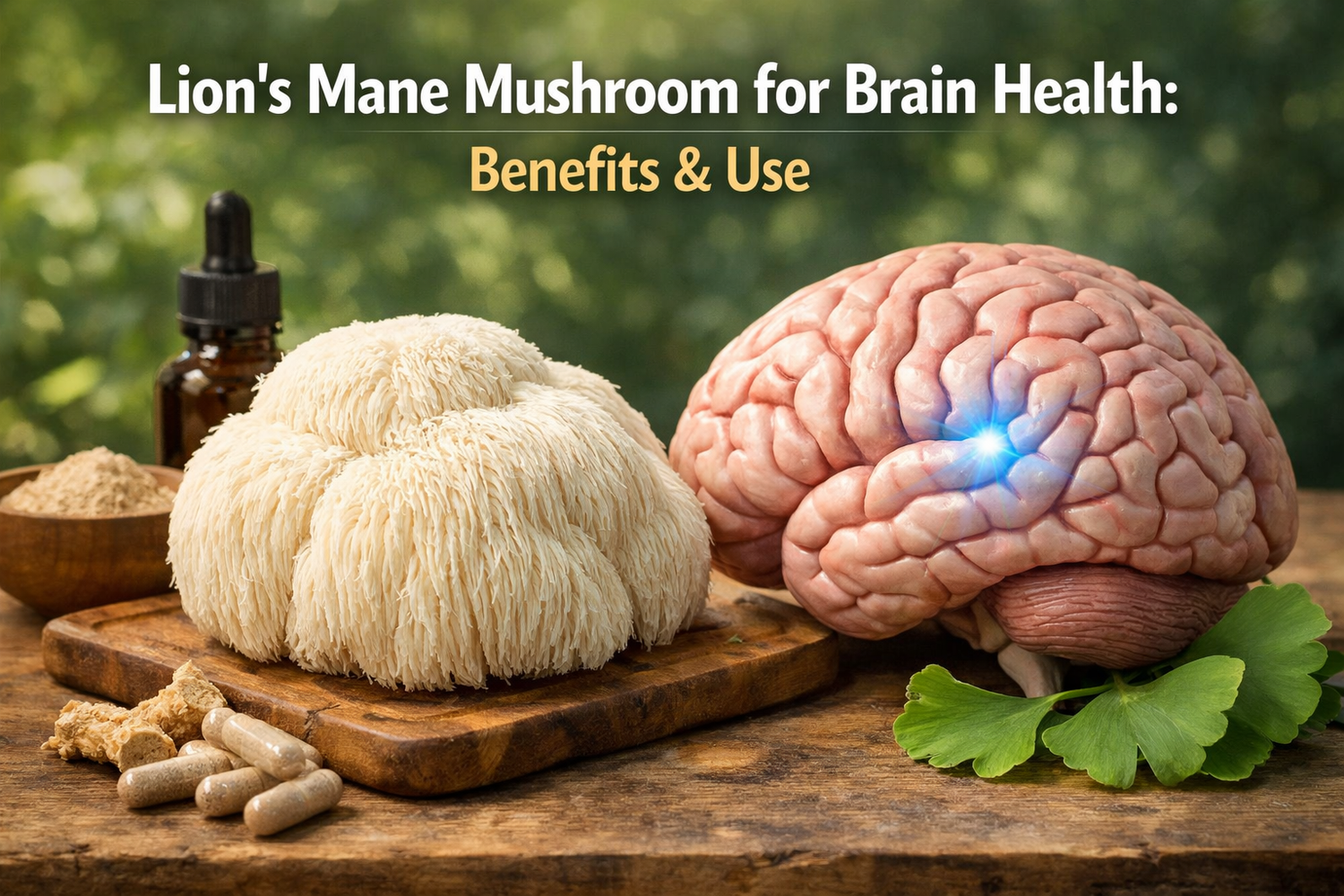
If you’re serious about cognitive performance, you’ve probably heard whispers about lion’s mane. Among natural nootropics, Lion’s Mane Mushroom for Brain Health stands out because it doesn’t just stimulate you the way caffeine does—it supports the structure and function of your neurons over time.
At Synchronicity Health, we focus on high-potency, third-party tested formulas that appeal to biohackers, longevity seekers, athletes, and busy professionals who want measurable results without burning out their nervous system.
“Think of lion’s mane less like espresso and more like strength training for your neurons—slow, steady, compounding gains.”
— Synchronicity Health clinical team
This guide breaks down how Lion’s Mane Mushroom for Brain Health works, what the research shows, how to dose it, and how to pair it with other tools like NAD+ therapies and smart stacks.
Why High-Performers Are Turning To Lion’s Mane Mushroom For Brain Health
People reach for Lion’s Mane Mushroom for Brain Health because they want:
-
Better focus without jitters
-
Long-term support against age-related decline
-
Help with mood, stress, and sleep
-
A natural add-on to nootropic and NAD+ stacks
Lion’s mane (Hericium erinaceus) has been used for centuries in East Asian medicine and cuisine. Modern research now focuses on its effects on:
-
Memory and attention
-
Neurodegenerative conditions like mild cognitive impairment (MCI) and early Alzheimer’s
-
Mood, stress resilience, and sleep quality
-
Nervous system repair after injury
What makes lion’s mane different from other “brain boosters” is its impact on nerve growth and brain plasticity at a cellular level. For people who care about long-term performance—students, executives, creators, and caregivers—it fits well as a daily brain-support tool rather than a once-in-a-while stimulant.
What Makes Lion’s Mane A True Brain-Targeted Mushroom
The power of Lion’s Mane Mushroom for Brain Health comes from a cluster of compounds found in both the fruiting body and the mycelium (the root-like network).
Key Bioactive Compounds
-
Hericenones – mostly in the fruiting body
-
Erinacines – concentrated in the mycelium
-
Polysaccharides and phenolic compounds – provide antioxidant and immune-supporting effects, including beta-glucans
Hericenones and erinacines are small enough to cross the blood–brain barrier. That means they can act directly on your central nervous system, not just in the gut or general circulation.
For best results, many practitioners look for products that clearly state whether they use fruiting body, mycelium, or both, and that standardize at least some of these active components.
Nerve Growth Factor (NGF): Structural Support For Neurons
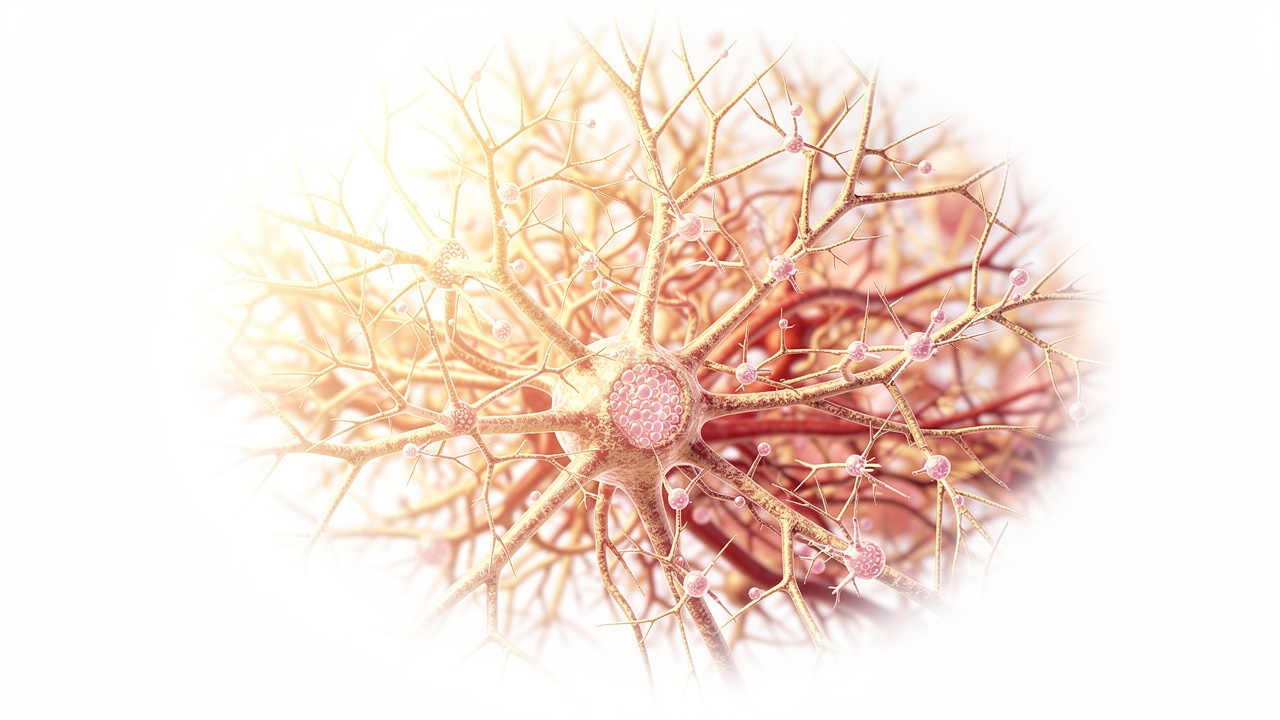
One of the most important effects of lion’s mane is its ability to stimulate nerve growth factor (NGF), a protein that:
-
Supports survival of existing neurons
-
Encourages growth of new nerve fibers
-
Helps repair damaged nerve cells
Preclinical research shows that multiple erinacine variants are strong NGF stimulators. This NGF activity is a major reason Lion’s Mane Mushroom for Brain Health is so interesting for people focused on long-term cognitive resilience and recovery after stress or injury.
Brain-Derived Neurotrophic Factor (BDNF): Learning And Memory
Lion’s mane may also influence brain-derived neurotrophic factor (BDNF), another protein that:
-
Helps synapses form and strengthen
-
Supports learning and memory consolidation
-
Plays a role in mood regulation and stress resilience
-
Contributes to overall neuroplasticity
Human and animal studies suggest lion’s mane can raise circulating pro-BDNF levels. That connection between NGF and BDNF helps explain why users often report better mental clarity, faster learning, and a steadier emotional state over time.
Inflammation, Oxidative Stress, And Brain Aging
Chronic inflammation and oxidative stress speed up brain aging. Lion’s mane contains antioxidants and anti-inflammatory compounds that:
-
Neutralize free radicals
-
Lower inflammatory markers such as IL-6 and TNF-α in animal models
-
Protect neurons from damage related to plaques, toxins, or reduced blood flow
“Chronic, low-grade inflammation is one of the quiet forces that age the brain.”
— Common theme across modern neurology research
By lowering this background “noise” of inflammation and oxidative stress, Lion’s Mane Mushroom for Brain Health may help preserve cognitive function as the years pass.
What The Research Says: From Cognitive Impairment To Peak Performance

Mild Cognitive Impairment And Early Alzheimer’s
Several human trials have examined lion’s mane in older adults with MCI or mild Alzheimer’s:
-
Adults with MCI taking around 3 g/day of lion’s mane powder for 16 weeks improved their cognitive scores compared with placebo. Scores dropped again after stopping, suggesting benefits may depend on continued use.
-
In people with mild Alzheimer’s, daily capsules of erinacine A–enriched mycelium for nearly a year improved standard cognitive test scores and daily functioning (shopping, meal preparation, etc.) versus placebo.
These studies are relatively small but promising. For longevity-focused individuals, they support the idea of using Lion’s Mane Mushroom for Brain Health as a long-term tool, not just a quick boost before a big project.
Healthy Adults: Faster Processing, Mixed Memory Results
In healthy adults, especially younger people at their cognitive peak, results are more nuanced:
-
A study in young adults found that a single 1.8 g dose improved performance speed on the Stroop task (a test of executive function and processing speed) about an hour after intake.
-
The same trial reported less impressive results on memory tasks, with some measures showing no advantage—or even a slight disadvantage—versus placebo after several weeks.
-
Other small trials in healthy adults over 50 showed modest improvements on some, but not all, cognitive tests after 12 weeks.
So, in high-functioning, healthy brains, Lion’s Mane Mushroom for Brain Health may give subtle benefits in processing speed and resilience to mental fatigue, rather than dramatic jumps in test performance. The effects appear stronger when there is existing cognitive strain or decline.
Mood, Stress, And Sleep

For many users, the “felt” benefits show up more in mood and stress than in raw IQ-style metrics:
-
Menopausal women eating lion’s mane–containing snacks daily for four weeks reported less irritation and anxiety than those on placebo.
-
Overweight adults taking lion’s mane extract for eight weeks reported lower depression, anxiety, and sleep disturbance scores, along with increased pro-BDNF levels.
-
Young adults supplementing for about a month showed a trend toward reduced subjective stress compared with placebo.
Mechanisms likely include:
-
Neurogenesis and support of the hippocampus (key for mood and memory)
-
Restoration of dopamine, serotonin, and norepinephrine in stressed animals
-
Anti-inflammatory effects in brain regions linked to mood disorders
For busy professionals and athletes, this makes Lion’s Mane Mushroom for Brain Health appealing not only for focus, but also for emotional steadiness under pressure and smoother sleep.
“You can’t separate mental performance from emotional balance. A calmer brain usually thinks better.”
— Synchronicity Health coaching team
Beyond The Brain: Systemic Benefits That Support Cognition
A high-performing brain depends on the rest of the body. Lion’s mane also shows benefits in systems that indirectly influence cognitive function.
Metabolism, Heart, And Blood Sugar
Preclinical research suggests lion’s mane may:
-
Improve fat metabolism and reduce triglycerides
-
Limit cholesterol oxidation, a step in plaque formation in arteries
-
Slightly slow blood clotting via compounds like hericenone B
-
Lower blood sugar by inhibiting carbohydrate-digesting enzymes
-
Reduce diabetic nerve pain in animal models
Better metabolic health, blood flow, and vascular integrity all support long-term brain health, since your neurons depend on steady oxygen and nutrient delivery.
Gut, Immunity, And Inflammation
Lion’s mane appears to:
-
Help protect the stomach lining from ulcers and H. pylori
-
Support intestinal immune function and beneficial gut bacteria
-
Reduce inflammatory markers in models of bowel disease and liver stress
Because the gut–brain axis heavily influences mood, immunity, and cognitive function, these systemic effects reinforce the appeal of Lion’s Mane Mushroom for Brain Health in a whole-body health strategy.
How To Use Lion’s Mane Mushroom For Brain Health
Dosage Ranges Used In Human Studies
There is no single “official” dose, but clinical studies give practical ranges:
-
Mild cognitive impairment: ~3,000 mg/day of dried fruiting body powder
-
Mild Alzheimer’s: ~1,050 mg/day of erinacine A–enriched mycelium
-
Mood and sleep in overweight adults: ~1,200 mg/day of extract
-
Cognition and stress in young adults: ~1,800 mg/day
For most healthy adults seeking cognitive support:
-
General range: 1,000–3,000 mg/day
-
Split into 1–3 doses with meals
-
Commit to at least 8–12 weeks before judging full effects
-
Consider starting at the lower end for 1–2 weeks to assess tolerance
“Start low, go slow, and track how you feel over weeks, not days.”
— Guiding principle for nootropic use at Synchronicity Health
Always work with a healthcare professional, especially if you have medical conditions or take prescription medications.
Forms: Food, Powders, Capsules, And Tinctures
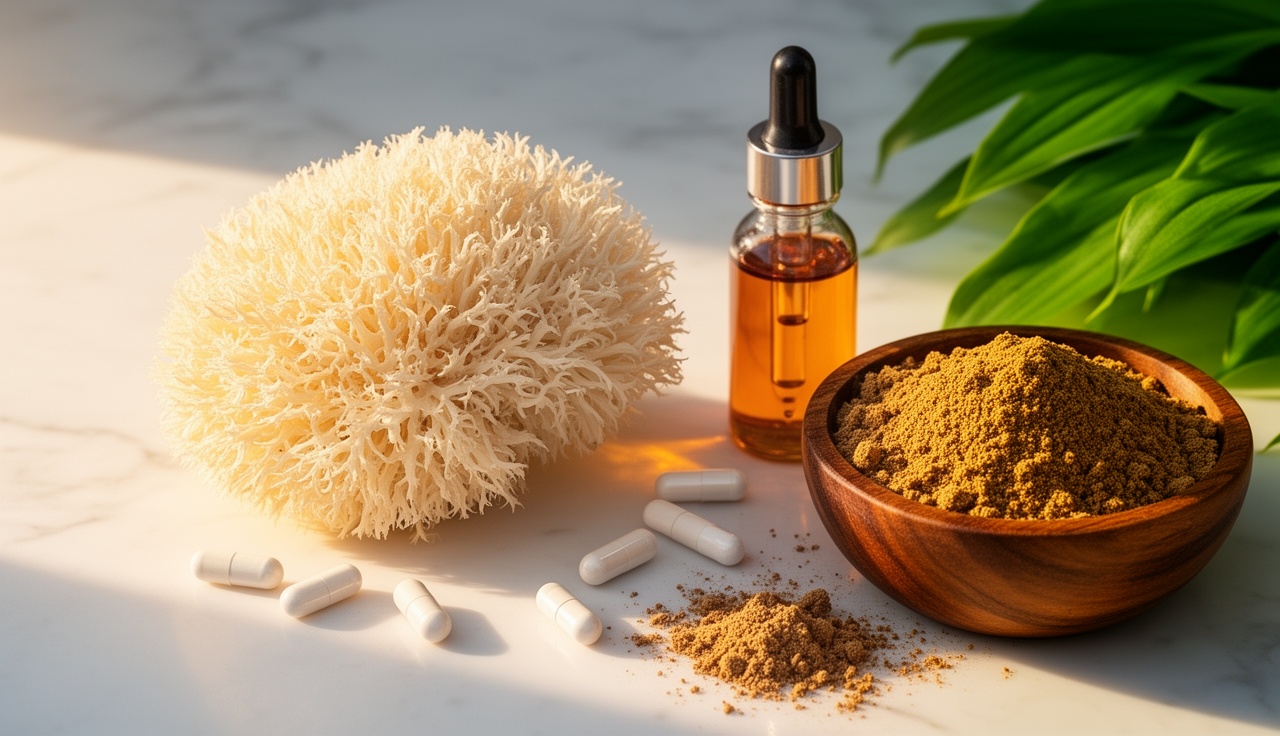
You can use Lion’s Mane Mushroom for Brain Health in several formats:
-
Fresh or dried mushroom
-
Sautéed as a seafood-like “steak”
-
Added to stir-fries, soups, or broths
-
Steeped as a tea
-
-
Powder
-
Stirred into coffee, tea, smoothies, or protein shakes
-
Easy to blend into a daily ritual
-
Can be combined with other powdered adaptogens or collagen
-
-
Capsules or tablets
-
Precise dosing and convenient for travel
-
Helpful if you dislike the taste or texture
-
-
Tinctures (liquid extracts)
-
Concentrated, fast to take, can be added to water or placed under the tongue
-
Useful for fine-tuning dose by the dropper
-
For targeted nootropic use, standardized extracts in capsules, powders, or tinctures are usually more reliable than culinary doses alone.
Stacking Lion’s Mane With NAD+ And Other Nootropics
For biohackers and NAD+ clinic clients, lion’s mane fits well into more advanced stacks:
-
With NAD+ (IV or oral):
-
NAD+ focuses on mitochondrial energy and cellular repair.
-
Lion’s mane focuses on neurotrophic support, growth factors, and inflammation.
-
Combined, they support both energy production and structural brain health.
-
-
With omega-3s (DHA/EPA):
-
Omega-3s support neuronal membranes.
-
Lion’s mane supports NGF/BDNF and synaptic connections.
-
Together they offer both membrane and growth-factor support.
-
-
With B-complex and magnesium:
-
Support neurotransmitter synthesis and electrical stability.
-
May smooth out tension and promote more restful sleep.
-
-
With non-stimulant nootropics (e.g., L-theanine, phosphatidylserine):
-
Can round out a calm-focus profile without heavy reliance on caffeine.
-
If you stack Lion’s Mane Mushroom for Brain Health with other agents, change one variable at a time and track sleep, mood, and performance so you can see what genuinely helps.
Safety, Side Effects, And Who Should Avoid It
Human and animal data suggest lion’s mane is generally very well tolerated:
-
Animal studies show no toxicity even at very high doses.
-
Human trials report mostly mild reactions when they occur.
Possible side effects include:
-
Mild digestive upset (bloating, nausea, loose stools)
-
Itching or skin rash in sensitive individuals
You should avoid or use extra caution with lion’s mane if:
-
You have a known mushroom allergy or sensitivity
-
You have a history of asthma or severe allergic reactions
-
You take blood thinners or have a bleeding disorder (because of potential effects on clotting)
-
You are pregnant, breastfeeding, or managing a complex medical condition without medical supervision
Practical safety tips:
-
Stop use and seek medical advice if you notice wheezing, swelling, or severe rash.
-
Introduce only one new supplement at a time so you can spot which one causes symptoms.
When in doubt, speak with a clinician familiar with both nootropics and your health history before adding Lion’s Mane Mushroom for Brain Health to your regimen.
How To Choose A High-Quality Lion’s Mane Supplement
Because supplements are not standardized, quality varies widely. For serious brain support, the details matter.
Look for:
-
Clear labeling of mushroom part used
-
Fruiting body, mycelium, or both
-
Many experts prefer products that emphasize fruiting body for hericenones and standardized mycelium for erinacines.
-
-
Standardized extract information
-
Documented levels of key compounds (e.g., polysaccharides, beta-glucans)
-
Clear daily serving amounts in milligrams
-
-
Third-party testing
-
Independent verification for potency, heavy metals, pesticides, and microbial contaminants
-
-
Transparent sourcing and manufacturing
-
cGMP-compliant facilities
-
No hidden fillers or undisclosed blends
-
A quick way to compare products is to check a few key points side by side:
|
What To Check |
Why It Matters |
|---|---|
|
Fruiting Body vs. Mycelium |
Different parts contain different active compounds. |
|
Standardized Actives Listed |
Helps you match research doses more closely. |
|
Third-Party Lab Testing |
Adds a layer of safety and potency verification. |
|
Additives And Fillers |
You see exactly what else you’re ingesting. |
At Synchronicity Health, our formulations of Lion’s Mane Mushroom for Brain Health are built around:
-
High-potency extracts calibrated for consistent dosing
-
Comprehensive third-party testing
-
Formulas designed to pair with advanced protocols, including NAD+ support, recovery programs, and performance-focused stacks
The Bottom Line On Lion’s Mane Mushroom For Brain Health
Lion’s mane is not a stimulant and not a quick fix. Instead, it’s a long-game ally for people who care about keeping their brain sharp for decades.
Research suggests that Lion’s Mane Mushroom for Brain Health can:
-
Support memory, attention, and daily functioning in adults with early cognitive decline
-
Improve mood, stress resilience, and sleep in several populations
-
Promote nerve growth and protect neurons through NGF, BDNF, antioxidant, and anti-inflammatory effects
-
Support systemic health—metabolic, cardiovascular, gut, and immune—that feeds into brain performance
For biohackers, busy professionals, athletes, and NAD+ clinic clients, lion’s mane fits naturally into a performance-focused, longevity-minded protocol. Combine consistent supplementation with sound basics—sleep, movement, and metabolic health—and you give your brain a strong foundation for the years ahead.
“Supplements can help, but your daily habits still do the heavy lifting for brain health.”
— Synchronicity Health education team
As always, partner with a qualified healthcare professional before starting or changing any supplement program, especially if you take medications or manage chronic conditions. With informed use and high-quality sourcing, Lion’s Mane Mushroom for Brain Health can be a powerful part of your strategy for sustained cognitive performance.


Leave a comment
All comments are moderated before being published.
This site is protected by hCaptcha and the hCaptcha Privacy Policy and Terms of Service apply.