

Biohacking is the intentional modification of lifestyle, nutrition, and environment to measurably improve health, cognition, and resilience, using data, small interventions, and evidence-based tools.
This guide explains what biohacking means, how simple mechanisms—like sleep regulation, nutrient timing, and targeted antioxidant support—produce measurable improvements, and why a beginner should prioritize low-risk, high-impact changes first.
Many readers seek practical self-improvement health strategies that deliver clearer thinking, better recovery, and stronger immune response without unnecessary complexity.
This article maps foundational concepts, a prioritized starter protocol, the role of supplements (including an example product from Synchronicity Health), and practical sleep-hacking techniques with tracking options.
Follow these sections to build a safe, testable biohacking routine that emphasizes habit-first changes, thoughtful supplementation, and objective tracking.
What is Biohacking and How Does It Improve Your Health?
Biohacking is a systems-oriented approach that treats the body as an improvable system, combining lifestyle adjustments, targeted supplements, and wearable technology to optimize function.
The mechanism works by altering inputs—sleep, nutrients, light exposure—and measuring outputs such as sleep quality, heart rate variability (HRV), and cognitive performance to close feedback loops.
The specific benefit is that data-driven, incremental changes compound into better recovery, clearer cognition, and more resilient immunity when consistently applied. Understanding these fundamentals prepares you to choose high-impact beginner techniques and to interpret simple biometrics that indicate progress.
Understanding Biohacking Concepts and Benefits
Biohacking can be thought of in three ascending layers: foundational lifestyle changes, selective supplementation, and device-aided monitoring, each providing distinct levers for improvement.
Recent studies through 2024 reinforce that foundational changes—consistent sleep, nutrition quality, and stress management—yield the largest measurable gains for most people. Below are core benefits you can expect when interventions are applied consistently and monitored.
- Improved Recovery: Better sleep and nutrition enhance tissue repair and metabolic regulation.
- Enhanced Cognition: Focused habits and low-risk cognitive aids support concentration and memory.
- Stronger Immunity: Antioxidant support and reduced inflammation lower infection susceptibility.
These benefits highlight why beginners should prioritize low-cost, high-impact lifestyle changes before escalating to advanced tools or frequent supplementation.
How Biohacking Enhances Immune Function and Cognitive Performance
Biohacking enhances immune function mainly by reducing oxidative stress and chronic inflammation through antioxidants, sleep optimization, and balanced nutrition, while cognitive performance improves via sleep-dependent consolidation, nutrient support, and targeted cognitive practices.
Antioxidants neutralize reactive oxygen species that impair immune signaling, and sleep stages (deep and REM) facilitate memory consolidation and executive function improvements.
As a practical example, prioritizing deep sleep through a consistent schedule and reducing late-night light exposure supports both immune recovery and sharper next-day cognition.
Recognizing these linked pathways helps craft interventions that serve dual goals: better thinking and better resilience.
Which Biohacking Techniques Are Best for Beginners?
Beginners should adopt a prioritized, safety-first approach that emphasizes high-impact, low-risk strategies: consistent sleep schedule, nutrition quality, hydration, basic cognitive practices, and simple tracking to measure changes over time.
The mechanism is straightforward—stabilize foundational inputs, then layer targeted adjustments while monitoring objective metrics. The result is a manageable starter protocol that minimizes risk while producing visible benefits in weeks rather than months.
Below is a compact starter checklist to guide initial choices and keep the experimentation controlled.
- Consistent Sleep Window: Set a 7–9 hour nightly schedule with fixed bed and wake times.
- Whole-Food Nutrition: Emphasize protein at meals, hydration, and minimized processed sugars.
- Daily Movement and Stress Breaks: Short, regular activity and brief mindfulness sessions.
Starting with these basics creates the stability needed to evaluate later tools like nootropics or antioxidant supplements with clarity.
Top Biohacking Methods: Nutrition, Sleep, and Cognitive Hacks
Nutrition, sleep, and simple cognitive practices are the three highest-return domains for beginners because each has clear mechanisms and measurable outcomes.
Nutrition stabilizes blood glucose and supplies neurotransmitter precursors; sleep enables physiological restoration and memory consolidation; cognitive hacks (mindfulness, focused work blocks) train attentional systems.
Practical starter actions include prioritizing protein at breakfast, implementing a 30–60 minute pre-bed wind-down, and using the Pomodoro technique for focused work. These changes are easy to track via simple metrics like mood, work output, and morning HRV.
Summary: Focus on nutrition, sleep, and focused practice as the primary levers before introducing supplements.
How to Start Safe and Effective Self-Improvement Strategies
A three-step protocol—Assess → Implement → Track—keeps experimentation safe and informative.
- Assess: Baseline metrics: sleep duration, subjective energy, stress, and one simple biomarker if available.
- Implement: One to two changes for a 4–6 week trial (for example, consistent sleep and a dietary tweak).
- Track: Outcomes with a journal and a wearable or basic logs, then iterate based on objective trends.
When considering supplements, treat them as adjuncts to lifestyle work rather than substitutes, and consult a clinician for interactions or chronic conditions. This measured approach reduces risk and sharpens learning from each intervention.
What Role Do Supplements Like Glutathione Nasal Spray Play in Biohacking?
Supplements act as adjunct tools that can support targeted pathways—antioxidant balance, neurotransmitter precursors, or micronutrient sufficiency—while lifestyle measures remain primary.
The mechanism is that supplements can modulate specific biological processes (for instance, antioxidants reduce oxidative stress) to complement habit changes.
The practical value is situational support: supplements help when diet or other interventions are insufficient or when a targeted, short-term boost is appropriate.
Below is a quick comparison of common supplement classes and their typical applications to help you choose evidence-aligned options.
|
Supplement Class |
Primary Mechanism |
Typical Application |
|
Glutathione (nasal) |
Antioxidant support, local/systemic glutathione delivery |
Adjunct immune support and detox pathways |
|
Nootropics (class) |
Neurotransmitter modulation or neuroprotection |
Short-term focus and learning support |
|
Multinutrients |
Micronutrient repletion |
Correct deficiencies that impair recovery |
This comparison clarifies that supplements should be selected for specific, measurable goals and monitored for effect and safety.
Benefits of Antioxidants and Nootropics for Health Optimization
Antioxidants mitigate cellular oxidative damage, which supports immune signaling and recovery, while nootropics influence neurotransmitter systems to improve focus and learning through defined neural pathways.
Evidence levels vary: some antioxidant effects on biomarkers are well-supported, whereas many nootropic benefits are modest and context-dependent. Below are practical, evidence-informed points to consider when evaluating these classes.
- Antioxidants: Reduce oxidative stress markers and may support immune responsiveness.
- Nootropics: Some compounds improve short-term attention or alertness when used responsibly.
- Evidence Caveat: Use products with transparent sourcing and avoid polypharmacy without clinician oversight.
Understanding these nuances helps you integrate supplements as targeted adjuncts, not primary solutions.
How to Use Glutathione Nasal Spray for Immune Support
Glutathione nasal sprays deliver an antioxidant compound via a mucosal route to support local and systemic antioxidant status as part of a broader protocol; they are best considered when oxidative stress markers or clinical context suggest adjunctive antioxidant support.
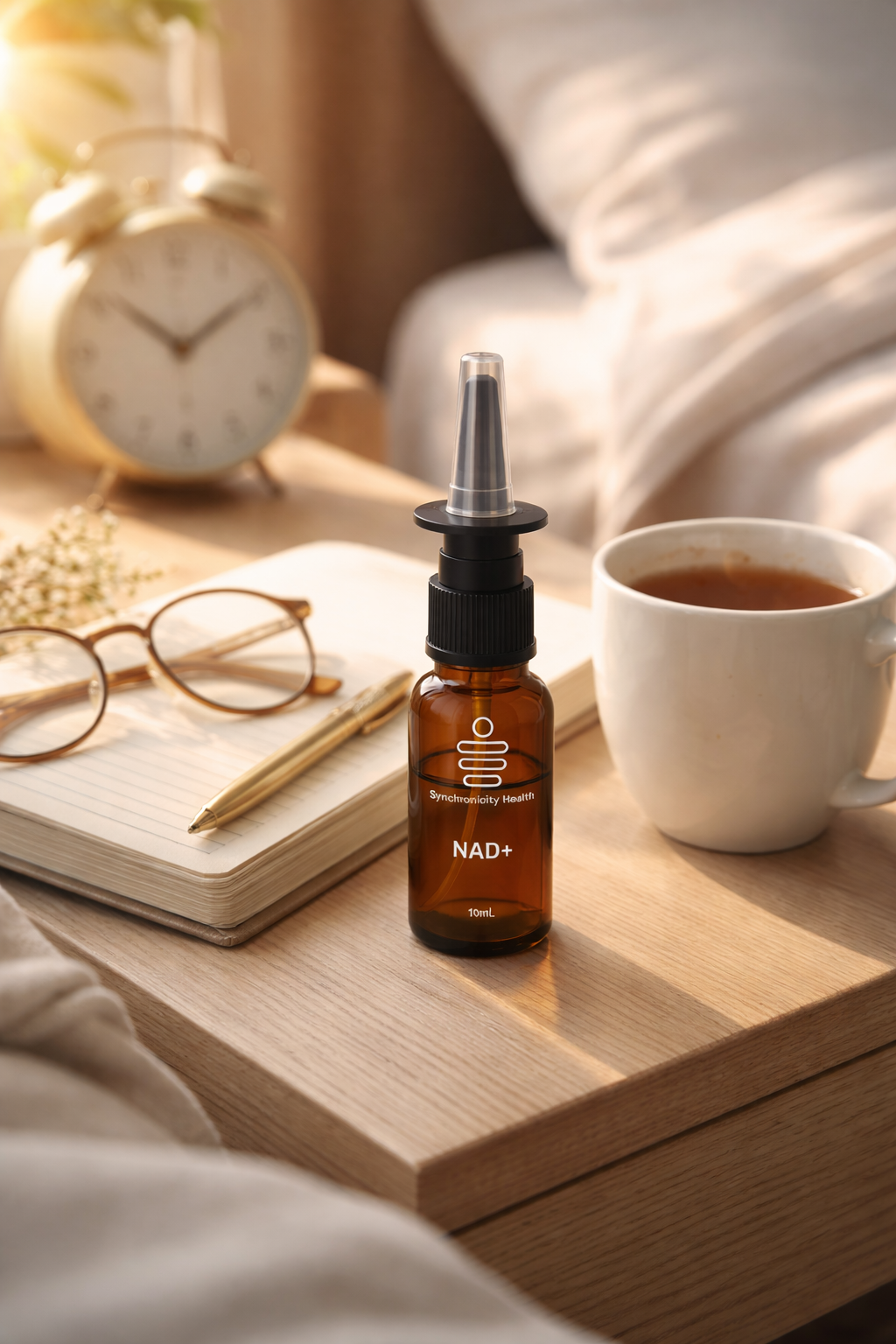
Usage should follow product instructions and be framed as an adjunct to lifestyle changes like sleep and nutrition rather than a replacement. Synchronicity Health’s Glutathione Nasal Spray is an example of such a targeted antioxidant option for those exploring adjunctive support.
Before beginning any supplement, consult a healthcare professional if you have medical conditions or are taking medications to ensure safety and appropriate monitoring.
Summary: Use targeted antioxidant sprays as adjuncts, monitor outcomes, and consult clinicians as needed.
How Can Sleep Hacking Methods Boost Your Overall Wellness?
Sleep hacking improves wellness by enhancing recovery, cognitive consolidation, hormonal balance, and immune function through interventions that increase sleep efficiency and restorative stages.
The mechanism ties improved sleep to measurable downstream effects: better glucose regulation, lower inflammatory markers, improved memory, and more resilient stress responses.
Implementing straightforward sleep hygiene and measuring outcomes allows you to refine interventions and quantify benefits in daily function and biometrics.
Effective Sleep Optimization Techniques for Beginners
Simple, high-impact sleep optimizations include a consistent sleep schedule, an evening wind-down routine, and environmental controls like darkness and cool temperature.
These techniques work by aligning circadian signals and reducing arousal before bed, leading to deeper sleep and more REM and slow-wave sleep. Practical actions to try immediately are shutting off screens an hour before bedtime, dimming lights, and keeping the bedroom cool.
These small changes often yield measurable improvements in sleep quality within 1–3 weeks.
Summary: Prioritize schedule, wind-down, and environment to rapidly improve sleep quality.
Integrating Wearable Technology to Track and Improve Sleep
Wearables can track sleep duration, sleep stages, heart rate variability (HRV), and movement to provide actionable feedback that guides behavioral adjustments and measures intervention effects.
For beginners, focus on a minimal set of metrics—total sleep time, sleep efficiency, and morning HRV—and use them as trend indicators rather than absolute diagnostics. The table below contrasts common device types and their practical uses so you can select the simplest, most informative tracking setup.
|
Device Type |
Metric Tracked |
Practical Use |
|
HRV monitor (wrist) |
HRV |
Guides recovery and stress management |
|
Actigraphy (wearable) |
Sleep duration & movement |
Tracks total sleep time and schedule consistency |
|
Sleep stage tracker (bed sensor) |
REM/deep sleep estimates |
Helps evaluate restorative sleep changes |
Summary: Start with one or two metrics, use trends to guide changes, and escalate measurement only if needed.

Leave a comment
All comments are moderated before being published.
This site is protected by hCaptcha and the hCaptcha Privacy Policy and Terms of Service apply.