

Glutathione Nasal Spray For Brain Fog: Science, Benefits, And Safety
Brain fog can feel like your brain is running through molasses—slow recall, scattered focus, and low mental energy. For health enthusiasts, biohackers, busy professionals, and athletes, that drag on cognition is more than an annoyance; it gets in the way of performance and quality of life.
One emerging approach is glutathione nasal spray for brain fog—sometimes called intranasal glutathione. By delivering the body’s primary antioxidant directly through the nose, this method aims to support brain chemistry and cellular defenses more efficiently than standard oral supplements.
This guide from Synchronicity Health walks through what glutathione is, how intranasal delivery works, what human research actually shows, who might consider it, and how to use it safely alongside other nasal nootropics.
Brain Fog 101: What It Feels Like And Where It Comes From
“Brain fog” is not a formal medical diagnosis, but it describes a recognizable cluster of symptoms:
-
Trouble focusing or staying on task
-
Slower processing speed or “blanking out” mid-conversation
-
Word-finding issues or short-term memory lapses
-
Mental fatigue that doesn’t match your sleep
-
Irritability, low motivation, or feeling emotionally flat
Common contributors include:
-
Chronic stress and high cortisol
-
Poor sleep quality, circadian disruption, or shift work
-
Blood sugar swings and processed diets low in micronutrients
-
Chronic inflammation and oxidative stress
-
Environmental exposures, such as pollutants or mold
-
Post-viral states and other immune challenges
-
Medications or substance use that affect the nervous system
Many of these factors increase reactive oxygen species (ROS) and inflammation in the brain. Over time, that oxidative stress can impair mitochondria, alter neurotransmitters, and interfere with normal signaling—exactly the processes that glutathione helps regulate.
"When people describe brain fog, they are often feeling the combined impact of stress, poor sleep, and oxidative stress dragging down their mental clarity."
— Synchronicity Health
Glutathione: The Brain’s Master Antioxidant
Glutathione is a small, three–amino acid molecule (glutamate, cysteine, and glycine) produced inside nearly every cell in the body. In the brain, it serves several key roles:
-
Primary antioxidant defense against ROS
-
Detox support, binding and helping remove certain toxins and heavy metals
-
Mitochondrial protection, helping maintain energy production
-
Regulation of cell survival and repair, including controlled cell death (apoptosis)
-
Support for other antioxidants, including vitamins C and E
Glutathione exists in two main forms:
-
GSH (reduced glutathione) – the active, protective form
-
GSSG (oxidized glutathione) – the “used” form after neutralizing free radicals
The ratio of GSH to GSSG is a sensitive indicator of cellular redox balance. A higher ratio suggests a resilient, low–stress environment; a lower ratio indicates elevated oxidative load.
"Think of glutathione as your brain’s in-house clean‑up crew, continuously neutralizing oxidative messes before they damage cells."
— Synchronicity Health
Research shows that glutathione levels tend to fall with age and in many conditions tied to cognitive decline and fatigue, including:
-
Parkinson’s disease
-
Alzheimer’s disease and mild cognitive impairment
-
Diabetes
-
Chronic infections and immune dysregulation
-
Multiple chemical sensitivity and chronic inflammatory states
Since oxidative stress is closely linked to brain fog, restoring glutathione—especially in the central nervous system (CNS)—is an appealing strategy.
Why Intranasal Delivery? The Case For Glutathione Nasal Sprays
Supplementing glutathione is not as straightforward as swallowing a capsule:
-
Oral glutathione has poor bioavailability; much of it is broken down in the gut before it reaches the bloodstream.
-
Intravenous (IV) glutathione raises systemic levels but is invasive, costly, and inconvenient for ongoing use.
This is why intranasal delivery has attracted attention, particularly when the target is the brain.
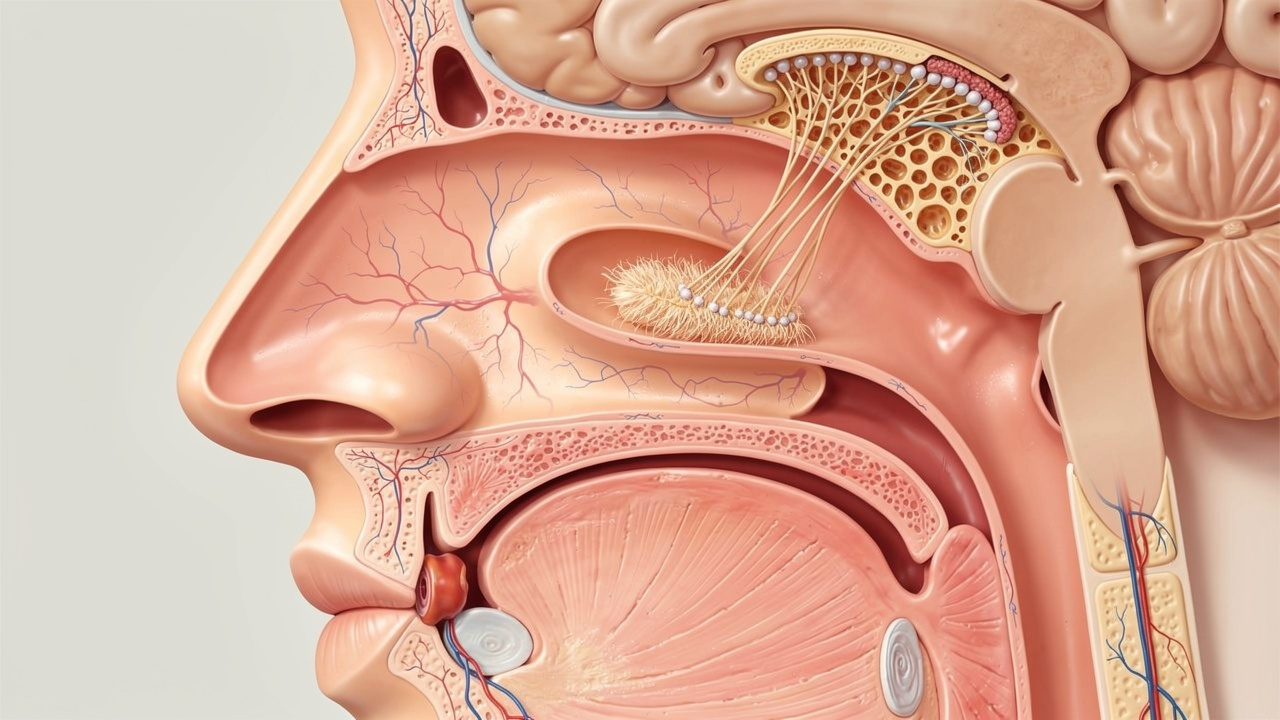
Two Main Nose-To-Brain Pathways
When you use a glutathione nasal spray, absorption can occur through:
-
Direct Neural Pathways
-
Glutathione can move along the olfactory and trigeminal nerves from the nasal cavity toward the CNS.
-
This “nose-to-brain” route may deliver compounds directly to brain tissue without needing to cross the blood–brain barrier in the usual way.
-
-
Indirect Systemic Absorption
-
The nasal mucosa is rich in blood vessels. Glutathione can enter the circulation here and then move from the bloodstream into the brain.
-
Glutathione is a small, polar molecule (~307 Da), a size and structure that generally favors absorption through the nasal mucosa without needing strong chemical enhancers.
Advantages And Limitations
Potential advantages of intranasal glutathione:
-
Bypasses digestive breakdown and liver first-pass metabolism
-
May reach the CNS more quickly than oral forms
-
Non-invasive and self-administered
-
Can reduce widespread systemic exposure when the goal is brain support
Limitations to keep in mind:
-
Nasal congestion, inflammation, or structural issues can interfere with delivery
-
The exact distribution of glutathione across different brain regions is still being mapped
-
Ideal dosing for cognition and long-term neuroprotection has not been firmly established
In other words, glutathione nasal spray for brain fog is a biologically plausible tool, but it is not yet a fully defined therapy or a quick fix.
How Glutathione Nasal Spray For Brain Fog May Work
Based on current research and clinical experience, several mechanisms likely contribute to its potential benefits:
1. Reducing Oxidative Stress In The Brain
Glutathione directly neutralizes ROS and peroxides. In brain tissue, this can:
-
Protect neurons and glial cells from damage
-
Help maintain membrane fluidity and proper receptor function
-
Reduce the oxidative stress burden that impairs synaptic signaling
For people whose brain fog is linked to chronic inflammation, immune activation, or environmental exposures, this redox support may be especially relevant.
2. Supporting Mitochondrial Energy Production
Mitochondria are both major producers and targets of oxidative stress. Low glutathione leaves them more vulnerable, which may translate to:
-
Reduced ATP production
-
Greater mental fatigue
-
Slower thinking and poor stress tolerance
By restoring glutathione in and around mitochondria, a nasal spray may help sustain cellular energy needed for attention, working memory, and sustained cognitive effort.
3. Modulating Neurotransmitter Balance
Glutathione is involved in regulating glutamate and GABA, two core neurotransmitters that influence:
-
Excitation vs. calm
-
Focus vs. overstimulation
-
Sleep quality and stress resilience
Better redox balance can support healthier signaling in these systems, which may indirectly ease brain fog tied to anxiety, overstimulation, or poor sleep.
4. Assisting Detox Pathways
Glutathione conjugates with some toxins and helps prepare them for excretion. While a nasal spray is not a stand-alone detox protocol, improved glutathione status may:
-
Support resilience in people with multiple chemical sensitivity (MCS)
-
Complement broader detox strategies supervised by a clinician
Synchronicity Health’s glutathione nasal spray is designed with these mechanisms in mind, offering a direct delivery route for people who want targeted support for brain fog and cognitive performance.
What The Research Actually Shows
The clinical science around intranasal glutathione is still developing. Here’s what we know so far from human studies.
Intranasal Glutathione Reaches The Brain
A magnetic resonance spectroscopy (1H‑MRS) study in patients with Parkinson’s disease found that:
-
A single intranasal dose of reduced glutathione measurably increased brain glutathione levels.
-
Levels rose between 20 and 45 minutes after administration.
This confirms that intranasally delivered glutathione can reach the CNS. However:
-
The size and duration of the increase varied from person to person.
-
It is still unclear how long elevated brain glutathione persists, and which regions receive the greatest boost.
Parkinson’s Disease Trials: Safety Good, Efficacy Unclear
Two small, double‑blind, placebo‑controlled trials tested intranasal glutathione in Parkinson’s disease (PD):
-
Doses: 100 mg or 200 mg per administration, three times daily (300–600 mg/day)
-
Duration: 3 months
Key findings:
-
On the main clinical rating scale (UPDRS), glutathione was not significantly better than placebo.
-
All groups, including placebo, showed some improvement—likely due to a strong placebo response and the small sample size.
-
Brain imaging suggested only modest, variable increases in glutathione at the higher dose.
Takeaway: these trials support short-term safety but do not prove disease-modifying effects in PD. They also underscore how much remains unknown about optimal dosing for the brain.
Alzheimer’s Disease And Cognitive Decline
Glutathione has not yet been tested intranasally in people with Alzheimer’s disease (AD), but observational data show:
-
Lower glutathione levels in the hippocampus and frontal cortex of people with AD and mild cognitive impairment
-
An association between lower brain glutathione and higher amyloid plaque burden in older adults
People carrying the ApoE4 gene variant, a major genetic risk factor for AD, appear to have:
-
Higher oxidative stress in brain tissue
-
Lower levels of reduced glutathione compared to non‑carriers
These findings support the idea that glutathione is closely tied to brain aging and degeneration, though we still lack clinical trials testing intranasal glutathione in AD or ApoE4 carriers.
Patient-Reported Outcomes: Real-World Experience
A safety and outcomes survey of 66 long‑term intranasal glutathione users (median use: 24 months) provides a look at real‑world patterns:
Most common reasons for use:
-
Multiple chemical sensitivity (42%)
-
Allergies / sinusitis (36.2%)
-
Parkinson’s disease (10.1%)
-
Lyme disease and fatigue
Reported benefits included:
-
General improvement in disease symptoms: 45.5%
-
Improved sense of well‑being: 28.8%
-
Improved energy: 24.2%
-
Fewer sinus infections: 27.3%
-
Reduced headaches: 15.2%
-
Better sense of smell: 12.1%
Overall:
-
78.8% rated their experience as positive
-
62.1% felt they received specific health benefits
-
Over 86% found the spray comfortable and easy to use
While this survey does not focus exclusively on brain fog, improvements in energy, well‑being, and symptom control are highly relevant for people considering glutathione nasal spray for brain fog.
Who Might Consider Glutathione Nasal Spray For Brain Fog?

Always consult a qualified healthcare professional before starting intranasal glutathione, especially if you have chronic illness or take prescription medications. With that in mind, typical groups who explore this approach include:
High-Performing Professionals And Entrepreneurs
People who:
-
Work long hours in mentally demanding roles
-
Experience decision fatigue, forgetfulness, or afternoon crashes
-
Want non-sedating support for clearer thinking and sustained concentration
Athletes And Physically Demanding Lifestyles
Those who:
-
Train intensely and generate substantial oxidative stress
-
Feel mentally drained during heavy training blocks or competition season
-
Want to support recovery of both body and brain
Individuals With Persistent Post-Illness Or Inflammatory Brain Fog
For example:
-
Post-viral brain fog
-
Chronic inflammatory or autoimmune conditions under professional care
-
People with heightened sensitivity to environmental triggers
Adults Focused On Healthy Aging And Longevity
Older adults and biohackers who:
-
Are concerned about long-term cognitive health
-
Want to support antioxidant defenses and mitochondrial function alongside lifestyle interventions (nutrition, sleep, exercise)
Glutathione nasal spray should not replace standard medical care or disease-specific treatments, but it may be part of a broader strategy supervised by a clinician. And because brain fog has many possible causes, responses to intranasal glutathione vary from person to person.
"The goal is not instant perfection; it is nudging your brain toward better clarity while you also work on sleep, nutrition, movement, and stress."
— Synchronicity Health
How To Use Glutathione Nasal Spray Safely

Because formulations and concentrations differ, always follow the instructions on your specific product and your provider’s guidance. The steps below describe general best practices.
Dosing And Frequency
-
Clinical PD trials used 100–200 mg per dose, three times daily (300–600 mg/day), but those doses did not show clear clinical benefit.
-
Many wellness protocols use 1–2 administrations per day or as needed, often at lower total daily doses.
-
A reasonable approach under professional guidance is to start low, assess response, and adjust gradually.
Never exceed the recommended dose on your label or from your clinician, especially if you also use other strong antioxidants.
Application Technique
To support consistent delivery and comfort:
-
Prepare Your Nose
-
Gently blow your nose to clear mucus.
-
If your provider recommends a saline rinse, use it beforehand and wait a few minutes.
-
-
Position The Spray
-
Shake the bottle if directed.
-
Keep your head upright or slightly forward.
-
Insert the nozzle into one nostril, aiming slightly outward toward the ear, not straight up.
-
-
Spray And Breathe
-
Close the other nostril with a finger.
-
As you gently breathe in through your nose, press the pump to deliver the spray.
-
Avoid deep, forceful inhalations that pull the spray straight into your throat.
-
-
Repeat On The Other Side if your dosage calls for it.
-
Avoid Blowing Your Nose for several minutes to allow absorption.
Storage, Stability, And Quality
Glutathione in its reduced (GSH) form is sensitive to oxidation:
-
Many high-quality compounded products require refrigeration to maintain potency.
-
In a stability study, a specialized formula retained >97.4% of its potency after 30 days and >94% after 60 days when stored properly in the refrigerator.
-
Leaving a glutathione nasal spray unrefrigerated for extended periods can significantly reduce its effectiveness.
Use only products from reputable pharmacies or manufacturers that can document purity, sterility, and stability.
Safety, Side Effects, And Precautions
Intranasal glutathione appears to be well‑tolerated for most users in both clinical trials and long‑term surveys, but side effects can occur.
Common, Usually Mild Effects
From clinical research and patient surveys:
-
Sinus or nasal irritation (dryness, burning, tingling) – around 18.2% in one survey
-
Headache – about 9.1%
-
Nosebleeds – about 7.6%
These effects often relate to the spray device or solution rather than glutathione itself. People with multiple chemical sensitivity (MCS) reported adverse events about twice as often as other users.
Rare But Important Considerations
-
In one PD trial, a participant on a high‑dose regimen (600 mg/day) developed tachycardia (rapid heart rate) and was later diagnosed with cardiomyopathy. Symptoms resolved after stopping the spray.
-
Researchers have proposed that extremely high antioxidant loads may push some cells into reductive stress, which can be problematic for heart tissue in susceptible individuals.
For safety:
-
Avoid combining high-dose glutathione with large amounts of other strong antioxidants unless supervised by a clinician.
-
If you experience chest discomfort, palpitations, severe headache, or shortness of breath, stop use and seek medical attention.
Who Should Be Extra Cautious?
Consult a healthcare professional before use if you:
-
Are pregnant, trying to conceive, or breastfeeding
-
Have cardiovascular disease or arrhythmias
-
Have severe asthma or chronic lung disease
-
Have active nasal or sinus infections or recent nasal surgery
-
Are on chemotherapy or other intensive medical regimens
Monitor for new or worsening symptoms, and discontinue use if problems arise.
Stacking Glutathione With Other Nasal Nootropics
Many Synchronicity Health customers combine glutathione nasal spray for brain fog with other intranasal products to support mood, focus, sleep, or cellular energy. Some examples:
NAC Nasal Spray: Glutathione Precursor Support
N‑acetylcysteine (NAC) is a direct precursor to glutathione. Intranasal NAC may:
-
Support endogenous glutathione production
-
Assist in mucus thinning and respiratory support
-
Complement exogenous glutathione delivered by nasal spray
This pairing is popular among those seeking more comprehensive redox and detox support.
NAD Nasal Sprays: Cellular Energy And Brain Aging
Nicotinamide adenine dinucleotide (NAD⁺) is central to mitochondrial energy production and DNA repair. Formulations such as NAD nasal sprays are often used to:
-
Support cellular energy during periods of high demand
-
Complement glutathione’s antioxidant role for cognitive health
-
Appeal to longevity‑focused users interested in both redox and mitochondrial support
Theanine + GABA Nasal Spray: Calm Focus And Sleep Support
The amino acid L‑theanine and the inhibitory neurotransmitter GABA can promote relaxation without heavy sedation. A product like theanine nasal spray GABA may help:
-
Ease stress‑related mind racing
-
Support smoother transition into sleep
-
Provide calm focus during the day when dosed appropriately
For some, combining glutathione for redox balance with theanine/GABA for nervous system calm helps address both the “tired” and “wired” aspects of brain fog.
Kanna + Theanine Nasal Spray: Mood And Stress Resilience
Kanna (Sceletium tortuosum) has been studied for its effects on mood and stress responses. When paired with theanine in a product such as kanna nasal spray theanine, users often seek:
-
Improved stress tolerance in demanding environments
-
More positive mood and emotional resilience
-
Additional support for social and performance anxiety
Stacks that combine glutathione nasal spray for brain fog with these other nasal formulations should always be built with a clinician’s input, especially if you have underlying health conditions or take medications.
Frequently Asked Questions About Glutathione Nasal Spray For Brain Fog
Is Glutathione Nasal Spray Approved To Treat Any Specific Disease?
No. Intranasal glutathione is typically compounded or sold as a wellness product and is not approved by the FDA to diagnose, treat, cure, or prevent any disease. It is used off‑label in some clinical settings and by health‑conscious consumers for antioxidant and cognitive support.
How Quickly Might I Feel A Difference In Brain Fog?
Experiences vary:
-
Some users report clearer thinking within 20–60 minutes of a dose.
-
Others notice gradual changes in energy, focus, or resilience over days to weeks of consistent use.
-
If you feel no change after several weeks at a professionally guided dose, it may not be the right tool for you.
Can I Combine Glutathione Nasal Spray With NAC, NAD, Or Theanine-Based Sprays?
Often yes, and many stacks intentionally combine these:
-
Glutathione plus NAC to support internal glutathione production
-
Glutathione plus NAD for antioxidant and mitochondrial support
-
Glutathione plus theanine/GABA or kanna/theanine for mood and stress support
Because high combined antioxidant loads may carry risks in susceptible individuals, it is wise to design any stack with a knowledgeable clinician.
Is Glutathione Nasal Spray Safe For Long-Term Use?
In the long‑term user survey, many people used intranasal glutathione for around two years with a generally favorable safety profile. That said:
-
Long‑term data are still limited.
-
Periodic check‑ins with a healthcare provider are recommended.
-
Taking regular breaks and reassessing need can be a sensible approach.
Do I Need A Prescription?
In the US:
-
Many intranasal glutathione formulations are compounded by prescription.
-
Some wellness‑oriented products, including those from Synchronicity Health, may be offered as dietary supplements subject to different regulations.
Always follow local laws and your clinician’s guidance.
Key Takeaways
-
Glutathione nasal spray for brain fog aims to deliver the brain’s primary antioxidant directly through the nasal passages, bypassing many of the limitations of oral supplements.
-
Evidence confirms that intranasal glutathione can reach brain tissue, and real‑world users often report improvements in energy, well‑being, and symptom control.
-
Clinical trials in Parkinson’s disease show good short‑term safety but do not yet prove strong clinical benefit, highlighting the need for more research—especially in brain fog and early cognitive decline.
-
Safe use calls for appropriate dosing, correct technique, refrigeration, and medical supervision, particularly if you have chronic illness or take multiple antioxidants or medications.
-
Thoughtful stacking with products such as glutathione nasal spray, NAD nasal sprays, theanine nasal spray GABA, and kanna nasal spray theanine may help fine‑tune support for brain fog, mood, sleep, and performance—when done in partnership with a qualified professional.
If you’re considering intranasal glutathione as part of your cognitive health strategy, discuss your goals, medications, and health history with your clinician and choose high‑quality products from trusted sources such as Synchronicity Health.


Leave a comment
All comments are moderated before being published.
This site is protected by hCaptcha and the hCaptcha Privacy Policy and Terms of Service apply.