

If you’re serious about performance, longevity, and brain health, you’ve probably run into the debate around glutathione nasal spray vs oral glutathione. Both aim to raise levels of the body’s primary antioxidant, but they do it in different ways—and the route you choose can shift the kind of results you notice.
This guide walks through the science in plain language so you can pick the form that fits your goals, whether that’s sharper focus, better recovery, healthier aging, or support for neurological function.
What Glutathione Actually Does In Your Body

Glutathione is a tripeptide made from three amino acids—cysteine, glutamate, and glycine—and is produced primarily in the liver. It is often called the body’s master antioxidant because it:
-
Neutralizes reactive oxygen species (ROS) and free radicals
-
Supports detoxification of environmental toxins and metabolic byproducts
-
Helps regulate immune activity and inflammation
-
Protects mitochondria, DNA, and cell membranes from oxidative damage
Inside cells, glutathione exists mostly in its active, reduced form (GSH). When it neutralizes free radicals, it converts to its oxidized form (GSSG). Enzymes then recycle GSSG back to GSH, keeping your antioxidant defenses running.
Low glutathione levels are associated with:
-
Faster biological aging
-
Increased oxidative stress and inflammation
-
Neurodegenerative and psychiatric conditions (e.g., Parkinson’s disease, Autism Spectrum Disorder, bipolar disorder, major depression, schizophrenia)
-
Greater susceptibility to toxic exposures
-
Higher risk of chronic metabolic and cardiovascular issues in some populations
For people focused on high performance and long-term health, keeping glutathione levels supported is a smart target. The real challenge is how to raise those levels efficiently—this is where glutathione nasal spray vs oral glutathione becomes important.
The Core Problem: Absorption, Bioavailability, And The Brain
Your body is designed to make glutathione internally, not to absorb large amounts of it directly from food or standard supplements, which is why alternative delivery methods like sublingual and buccal delivery have been explored for various therapeutic compounds.
Why Standard Oral Glutathione Struggles
When you swallow regular oral glutathione capsules or powder:
-
The digestive tract breaks the tripeptide into its component amino acids.
-
Very little intact glutathione survives to reach the bloodstream.
-
What does reach circulation has a hard time crossing the blood–brain barrier (BBB).
Many early studies on basic oral glutathione showed minimal impact on systemic oxidative stress markers, which is why older opinions often dismissed oral glutathione as ineffective.
In practice, that means some people can take standard capsules for months without noticing much change in energy, recovery, or lab markers.
The Blood–Brain Barrier Issue
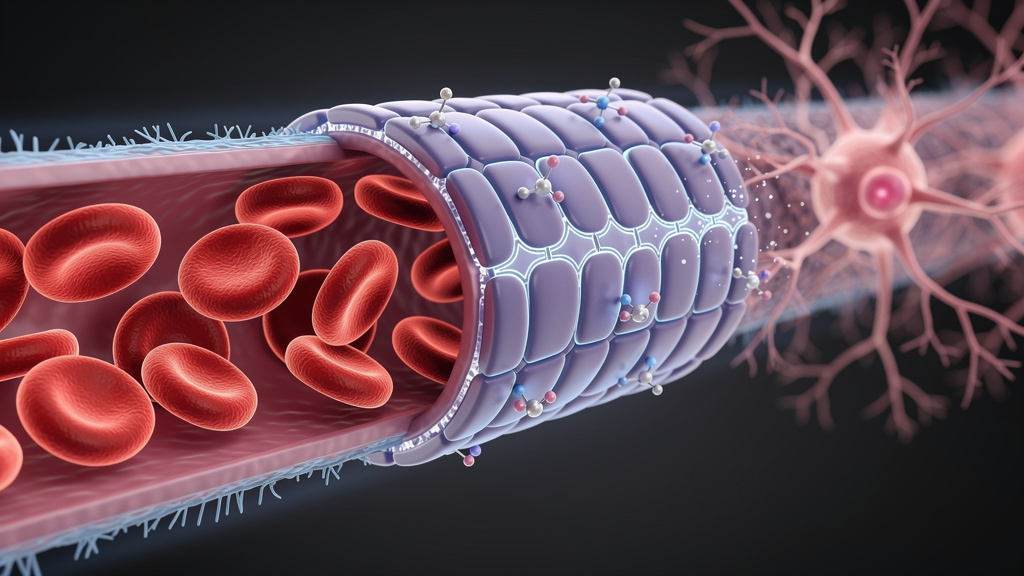
The brain is protected by the blood–brain barrier (BBB), which blocks most circulating molecules. Even if you do raise blood levels of glutathione, very little of it crosses into the central nervous system.
The BBB is excellent at keeping many harmful compounds out, but it also restricts the entry of helpful substances.
If your goals center on cognition, mood, neurological recovery, or long-term brain protection, how you deliver glutathione matters. This is where intranasal delivery stands out.
Glutathione Nasal Spray: How It Works And Why It’s Different
A glutathione nasal spray delivers glutathione as a fine mist directly to the nasal mucosa. From there, two key things happen:
-
Systemic absorption
The nasal cavity is highly vascular. Glutathione is absorbed through the thin mucous membranes into the bloodstream, bypassing the digestive system and first-pass liver metabolism. This helps preserve more of the active compound. -
Direct-to-brain pathways
The nose connects to the brain through the olfactory and trigeminal nerves. Intranasal delivery can send a portion of glutathione along these neural pathways, effectively bypassing the blood–brain barrier and raising glutathione levels within brain tissue.
Research on intranasal glutathione—especially in Parkinson’s disease—has shown:
-
It is generally safe and well-tolerated
-
Imaging studies confirm higher glutathione levels in the brain after nasal administration
-
Some trials show mild clinical benefits, though results can be mixed due to strong placebo effects and variability between subjects
For users, the key takeaway is that intranasal glutathione directly targets the central nervous system in a way oral forms cannot match.
Practical Advantages Of Glutathione Nasal Spray
For people focused on high performance—biohackers, athletes, and busy professionals—intranasal delivery offers several potential advantages:
-
Bypasses digestion: Helpful if you have GI issues, poor absorption, or already take many oral supplements
-
Supports brain health: Direct CNS access is appealing if your focus is cognition, mood, or neurological resilience
-
Rapid onset: Users often report feeling effects (such as clearer thinking or lighter breathing) more quickly than with oral forms
-
Lower daily pill burden: Helpful if you’re already swallowing multiple capsules each day
To explore a targeted option, you can review Synchronicity Health’s glutathione nasal spray or read more about their Glutathione Nasal Spray formula.
You can also compare it with related formulas in the nasal spray collection if you’re building a broader nasal-delivery stack with other compounds such as B12 or NAD⁺.
Oral Glutathione: Standard Vs Advanced Formulations
While early data on standard oral glutathione was disappointing, newer formulations have improved its impact on systemic levels.
How Oral Glutathione Works
When you ingest oral glutathione:
-
It passes through the stomach and small intestine.
-
Digestive enzymes break much of it down.
-
The remainder is absorbed through the intestinal wall into circulation.
Absorption varies widely from person to person, depending on:
-
Digestive health
-
Enzyme activity
-
Co-existing nutrients and medications
-
Baseline oxidative stress and inflammation
This variability is one reason two people can take the same dose and have very different responses.
Advanced Oral Forms
To address poor absorption, several advanced forms have been developed:
-
Liposomal glutathione
Encapsulates glutathione in phospholipid “bubbles” (liposomes) that protect it from stomach acid and digestive enzymes. These liposomes can merge with cell membranes, improving delivery into the bloodstream and cells. Clinical data shows liposomal glutathione can raise blood GSH levels and support immune function. -
S-acetyl-L-glutathione (acetyl glutathione)
Adds an acetyl group to the glutathione molecule. This protects it in the GI tract and makes it more lipid-soluble, improving its ability to cross cell membranes. Once inside cells, the acetyl group is removed, releasing active glutathione. -
Specialized branded forms (e.g., Opitac™)
Some patented forms are fermented and designed for better intestinal uptake. Studies show they can raise plasma protein-bound glutathione for at least 1–2 hours after dosing, although clinical symptom changes may be modest in people with very high baseline oxidative stress.
When Oral Glutathione Makes Sense
Advanced oral glutathione may be appropriate if:
-
Your goal is whole-body support (liver, immune system, recovery, general antioxidant status)
-
You prefer capsules or liquids to nasal sprays
-
You’re already investing in a comprehensive supplement stack and want systemic coverage
-
You’re not targeting the brain as your primary focus
Oral forms remain the most widely available and are often the easiest to build into a daily routine alongside other supplements.
Glutathione Nasal Spray Vs Oral Glutathione: Direct Comparison
When comparing glutathione nasal spray vs oral glutathione, it helps to look at the key dimensions that matter for performance and health.
|
Feature |
Glutathione Nasal Spray |
Oral Glutathione (Advanced Forms) |
|---|---|---|
|
Primary Goal |
Direct support for brain and CNS, plus systemic effects |
Systemic support (liver, immune system, tissues throughout the body) |
|
Absorption Pathway |
Nasal mucosa and neural pathways; bypasses GI tract and first-pass liver metabolism |
Absorbed through GI tract; partially protected by liposomal/acetyl tech |
|
Blood–Brain Barrier |
Designed to partially bypass BBB via olfactory/trigeminal nerves |
Minimal direct BBB penetration |
|
Onset Of Effects |
Often faster, especially for brain-related effects |
Slower, dependent on digestion and circulation |
|
Convenience |
Simple, non-invasive, but requires nasal administration 1–3 times daily |
Easy daily capsules or liquid |
|
Cost |
Typically higher per dose than basic oral forms |
Wide price range; advanced forms cost more than standard capsules |
|
Best For |
Cognitive performance, neurological support, users with GI issues |
Whole-body antioxidant support, liver health, long-term systemic maintenance |
If your primary interest is long-term systemic health and you want something that fits neatly into a pill organizer, advanced oral forms can work well. If your priorities lean toward cognitive performance, neurological resilience, or you have gut issues, glutathione nasal spray has distinct advantages.
Which Form Fits Your Goals?
Your decision on glutathione nasal spray vs oral glutathione should be driven by your specific context and goals rather than a one-size-fits-all rule.
For Cognitive Performance And Focus
-
Better fit: Glutathione nasal spray
-
Why: Direct CNS access supports brain antioxidant defenses more effectively than oral routes. This can be appealing if you’re stacking with nootropics, doing intensive mental work, or trying to support long-term brain health.
You might also combine nasal glutathione with practices like sleep optimization, light exposure in the morning, and regular movement to support overall brain function.
For Longevity, Detox, And General Wellness
-
Better fit: Advanced oral glutathione (liposomal or S-acetyl)
-
Why: Oral forms are well-suited to maintaining systemic glutathione levels over time, which matters for aging, detoxification, and broad antioxidant support.
People focused on healthy aging often pair oral glutathione with lifestyle foundations:
-
Nutrient-dense meals
-
Consistent sleep routines
-
Regular physical activity
For Athletes And Recovery
-
Option 1: Advanced oral glutathione for systemic muscle and mitochondrial support
-
Option 2: Glutathione nasal spray if you also care about reaction time, focus, and neurological resilience (e.g., contact sports, overtraining risk)
Many athletes choose a hybrid approach: oral glutathione for baseline systemic support plus intranasal use around high-stress training blocks or competition.
For Gut Issues Or Supplement Fatigue
-
Better fit: Glutathione nasal spray
-
Why: Bypasses the GI tract entirely and reduces the oral pill load, which is helpful if you already take many supplements or have sensitive digestion.
For some people with digestive problems, shifting a portion of their routine to nasal delivery can make adherence easier and more comfortable.
Safety, Side Effects, And Quality Considerations
Glutathione is produced naturally in the body, and both oral and intranasal forms are generally regarded as safe. Still, form and route matter.
“Start low and go slow with any new supplement” is a common guideline among functional and integrative clinicians.
Oral Glutathione (Standard And Advanced)
Studies, including those in children with Autism Spectrum Disorder, describe oral glutathione as generally well-tolerated. Reported side effects can include:
-
Mild stomach upset
-
Constipation
-
Rare changes in behavior or irritability in sensitive individuals
These effects are uncommon but underline the importance of starting with a moderate dose and paying attention to how you feel, especially in the first few weeks.
Intranasal Glutathione
Early clinical research suggests intranasal glutathione is:
-
Safe and well-tolerated
-
Not associated with significant adverse events in the studies conducted so far
Mild nasal irritation or discomfort is possible in some users, especially at higher doses or frequencies. As with any supplement, medical oversight is recommended if you have chronic sinus issues, are on medication, or have underlying neurological conditions.
People with asthma, severe allergies, or a history of respiratory sensitivity should be particularly cautious and discuss intranasal products with a clinician first.
IV Glutathione (As A Reference Point)
Intravenous glutathione is sometimes used in clinical settings as a benchmark for maximum systemic delivery:
-
Pros: Near 100% bioavailability, rapid rise in blood glutathione
-
Cons: Requires a clinic visit, higher cost, and carries standard IV risks (infection, clotting, bruising); long-term safety at high doses is not fully defined
For most health-conscious users, IV is best reserved for supervised medical protocols rather than routine wellness.
Quality Matters
Regardless of the form you choose:
-
Look for clear ingredient lists and third-party testing
-
Avoid products with unnecessary fillers or undisclosed “proprietary blends”
-
Use brands that publish details on their delivery technology (liposomal, acetyl, nasal formulation specifics)
-
Follow labeled directions or practitioner guidance rather than assuming “more is better”
Spending time to choose a high-quality glutathione supplement can make as much difference as the delivery method itself.
Getting Better Results: Co‑Factors, Genetics, And Whole-Body Context

The effectiveness of glutathione nasal spray vs oral glutathione doesn’t depend on the delivery route alone. Your internal environment matters just as much.
As many clinicians remind their patients, “No supplement can replace the basics of quality sleep, movement, and nutrient-dense food.”
Nutrient Co‑Factors
Your body needs several nutrients to make and recycle glutathione efficiently:
-
N-acetylcysteine (NAC): Direct cysteine donor; supports endogenous glutathione production
-
Vitamin B12 & B6: Support methylation and amino acid metabolism, which feed cysteine and glutathione pathways
-
Selenium: Central to glutathione peroxidase, the enzyme that uses glutathione to neutralize ROS
-
Folate and riboflavin (B2): Support homocysteine metabolism and redox balance
If these nutrients are low, even high doses of glutathione may not deliver the results you expect.
Genetics And Oxidative Burden
Variants in glutathione-related enzymes (such as GSTM1, GSTT1, GSTA1, and GSTP1) can reduce your ability to clear toxins and manage oxidative stress. People with these variants, or with very high baseline oxidative stress, may need:
-
Higher support for co-factors
-
Attention to gut health and inflammation
-
More time to see a shift in clinical outcomes, even when lab markers improve
This is one reason some people feel benefits quickly from glutathione support, while others need a slower, more layered approach.
Gut Health And Inflammation
A disrupted gut microbiome and increased intestinal permeability (“leaky gut”) can drive systemic inflammation and free radical production. This raises demand on your glutathione system.
Supporting gut health through diet, sleep, and stress management can:
-
Lower the baseline oxidative load
-
Allow both oral and nasal glutathione to focus more on repair and protection, rather than constant firefighting
Simple habits that can support gut balance include:
-
Emphasizing fiber-rich plants and whole foods
-
Limiting ultra-processed items high in sugar and refined oils
-
Including fermented foods if tolerated, such as sauerkraut or yogurt
If you’re designing a broader stack to support these systems, browsing a complete supplementation regimen can help you think through how glutathione fits alongside other essentials like NAC, B vitamins, and foundational nutrients.
How To Choose Between Glutathione Nasal Spray And Oral Glutathione
To decide between glutathione nasal spray vs oral glutathione, ask yourself:
-
What is my primary goal?
-
Brain and nervous system support → lean toward nasal spray
-
Systemic antioxidant and detox support → advanced oral forms work well
-
-
What is my current health status?
-
GI issues or poor absorption → nasal spray may be more efficient
-
Stable digestion and a structured supplement routine → oral works fine
-
-
What level of convenience do I want?
-
Comfortable with a nasal spray 1–3 times daily → intranasal makes sense
-
Prefer “swallow and go” → oral fits better
-
-
What is my budget?
-
Oral glutathione has a wide range of price points
-
High-quality nasal sprays tend to be at the premium end per dose
-
For many high-performance users, the most strategic approach is layered:
-
Use advanced oral glutathione for daily systemic support
-
Add Glutathione Nasal Spray or a related nasal spray during periods of intense mental or physical stress, travel, heavy toxin exposure, or when brain resilience is a priority
Always discuss new regimens with a qualified healthcare professional, especially if you take medications or have chronic conditions.
Final Thoughts
Glutathione is central to how your body manages oxidative stress, detoxification, and cellular protection. The choice between glutathione nasal spray vs oral glutathione is less about which is “better” in the abstract and more about which route aligns with your goals, biology, and routine.
-
Choose nasal spray if you care most about brain health, neurological support, fast onset, or you want to bypass the digestive tract.
-
Choose advanced oral glutathione if your priority is broad, whole-body support and you want an easy, capsule-based routine.
Whichever route you pick, focus on quality formulations, support the co-factors that drive your glutathione system, and work with a practitioner who understands your full supplement stack. Used thoughtfully, glutathione can be a powerful part of a well-designed health, performance, and longevity plan.


Leave a comment
All comments are moderated before being published.
This site is protected by hCaptcha and the hCaptcha Privacy Policy and Terms of Service apply.