
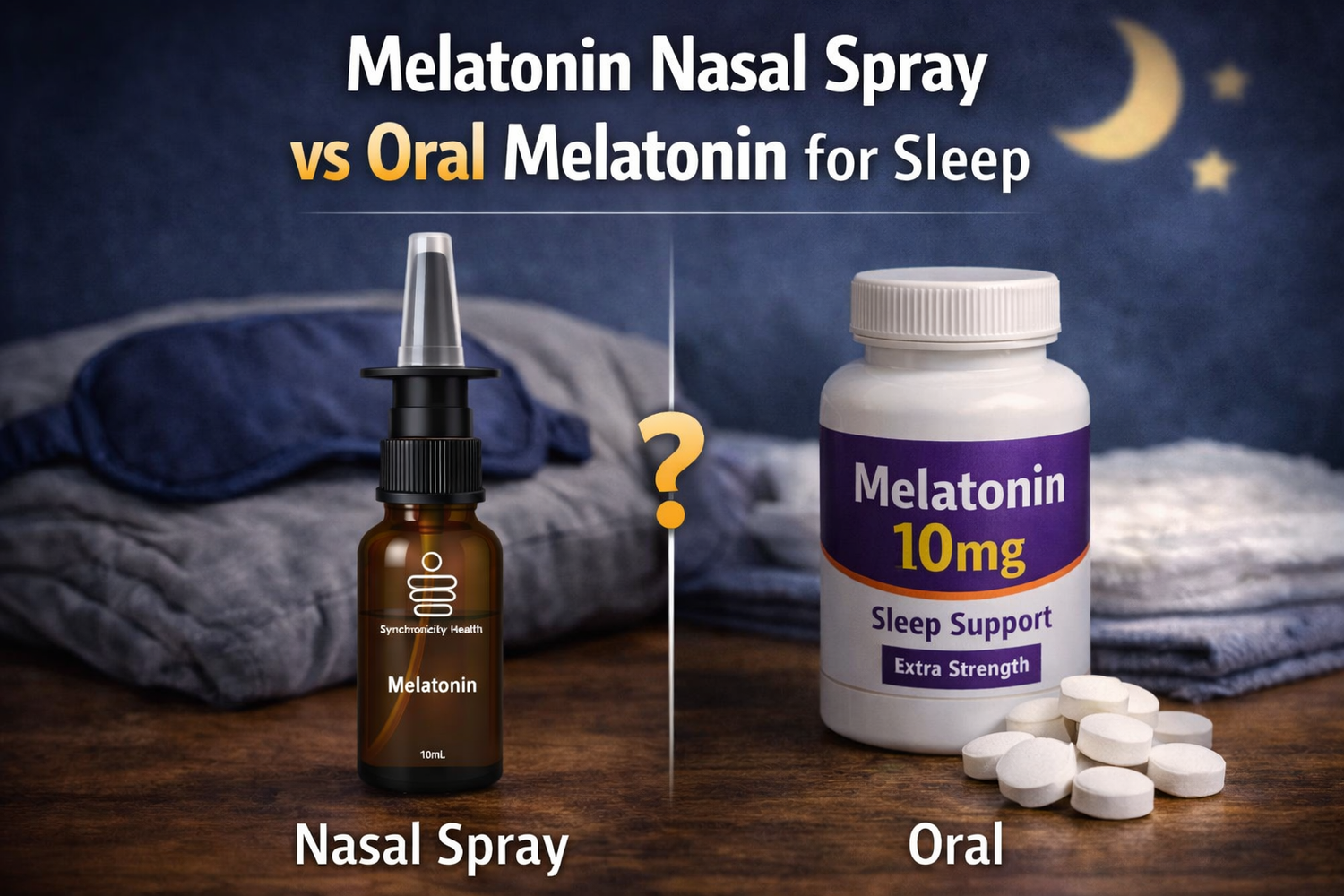
Melatonin Nasal Spray Vs Oral Melatonin: Which Sleep Aid Makes Sense For You?
Melatonin nasal spray has started to attract attention among biohackers, high performers, and recovery-focused athletes who use sleep trackers, blue-light filters, and supplements. At the same time, oral melatonin remains one of the most common sleep aids in the US.
Both forms deliver the same hormone, melatonin, but they behave very differently in your body. Absorption speed, bioavailability, dosing precision, and side-effect profile all change depending on whether you spray melatonin into your nose or swallow a pill or gummy.
There’s another wrinkle: online, melatonin nasal spray is sometimes confused with melanotan tanning sprays, which are a completely different and far riskier product category. We’ll separate those clearly so you know exactly what you’re looking at.
This guide walks through:
-
How melatonin works and why timing and delivery route matter
-
What sets melatonin nasal spray apart from oral melatonin
-
Safety, side effects, and when to talk with a clinician
-
The critical difference between melatonin and melanotan nasal sprays
-
How to decide which form best fits your goals and lifestyle
What Is Melatonin And How Does It Regulate Sleep?

Melatonin is a hormone produced by the pineal gland in response to darkness. It helps coordinate your circadian rhythm—the roughly 24‑hour cycle that governs when you feel alert or sleepy.
Key points:
-
Darkness signals melatonin release. Levels rise in the evening, peak during the night, and drop toward morning.
-
Light suppresses production. Bright light—especially blue light from screens—can blunt melatonin release and delay sleep onset.
-
It’s a circadian signal, not a sedative. Melatonin tells your brain “it’s nighttime,” which can make falling asleep easier and help align your body clock, especially with jet lag or shift work.
“Melatonin works best as a way of nudging the body clock, not forcing sleep.” — Common guidance from sleep specialists
Beyond sleep, melatonin has antioxidant and anti-inflammatory properties being studied for broader health effects—for instance, melatonin produced in the lungs may help protect respiratory health—but most supplement use focuses on sleep onset, jet lag, and circadian rhythm support.
Common reasons people consider melatonin:
-
Trouble falling asleep at desired times
-
Shift work or rotating schedules
-
Travel across time zones
-
Delayed sleep phase (naturally falling asleep late and waking late)
How you deliver melatonin—nasal spray vs oral—changes how quickly that circadian signal reaches your brain and how long it stays elevated.
Why Delivery Method Matters For Melatonin

From a pharmacology standpoint, delivery route affects:
-
Onset of action: How quickly you feel an effect
-
Bioavailability: How much of a dose reaches circulation
-
Duration: How long levels stay elevated
-
Side effects: Which tissues see the highest exposure
Oral melatonin is absorbed through the gut and processed through the liver before it reaches systemic circulation (first-pass metabolism). Blood levels rise more gradually and can vary widely between people.
A melatonin nasal spray, in contrast, delivers the hormone through the nasal mucosa, which is highly vascular and close to the brain—research suggests melatonin could act as a protective barrier in respiratory tissues when delivered this way. This may:
-
Increase the fraction of melatonin that enters circulation
-
Reduce time to peak blood concentration
-
Allow effective dosing with smaller amounts
For biohackers tracking sleep latency and deep sleep percentages, or busy professionals wanting a predictable “off switch” without morning fog, these kinetic differences can matter more than the label dose.
What Is Melatonin Nasal Spray?
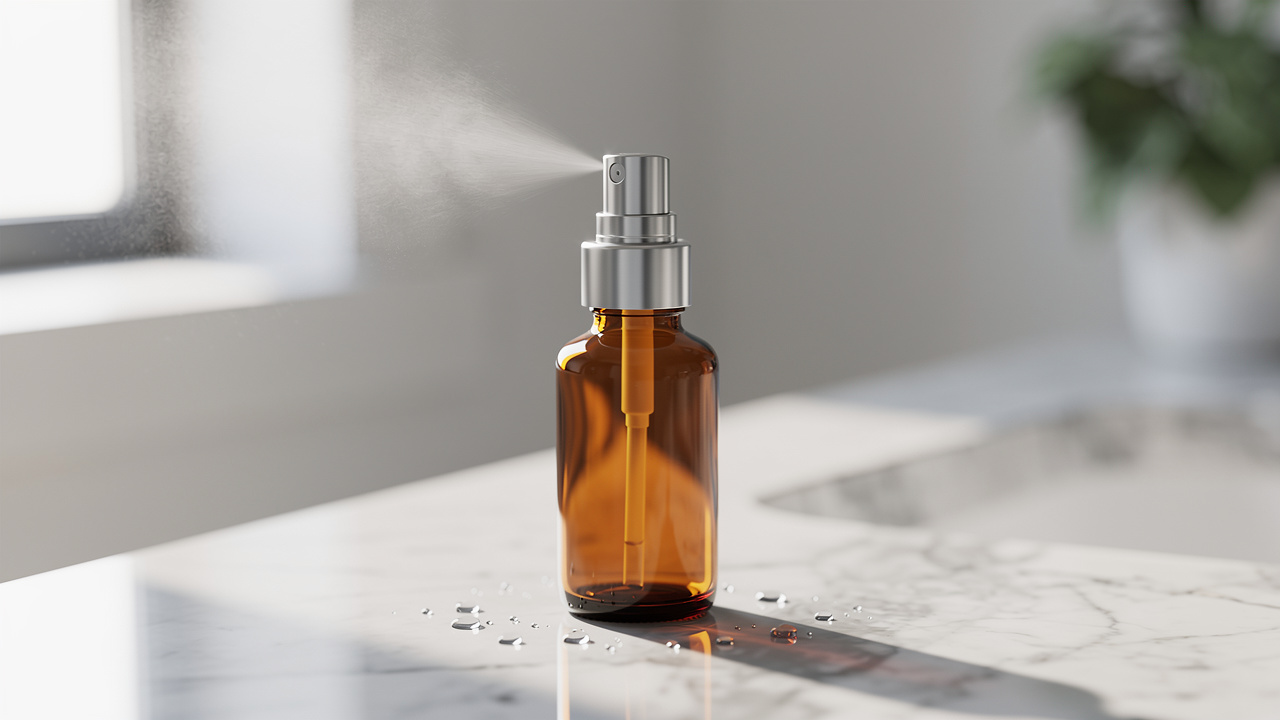
A melatonin nasal spray is a liquid formulation designed to be sprayed into the nostrils, where the hormone is absorbed across the nasal lining into nearby blood vessels—and potentially via pathways that reach the central nervous system more directly.
You’ll see intranasal melatonin described as:
-
Fast-acting: Many users notice drowsiness within minutes rather than 30–90 minutes.
-
Low-dose capable: Because it can bypass first-pass metabolism, some people respond to smaller doses than they would with pills or gummies.
-
Precise: Metered pumps can deliver the same micro-dose every time, which is attractive if you’re fine‑tuning your protocol.
If you want a deeper look at the concept, Synchronicity Health explores this route in more detail in their article on melatonin nasal spray supplements.
For those who want to experiment methodically, a product like Synchronicity Health’s melatonin nasal spray offers:
-
A defined concentration so you can track dose-response
-
Rapid onset that pairs well with pre-sleep routines
-
A non-oral option if you dislike pills or have digestive issues
Research on intranasal melatonin is still emerging, so it’s wise to view it as a promising, fast-delivery approach rather than a magic fix.
Oral Melatonin: How It Works

Oral melatonin remains the standard form in most homes and supplement stacks. It’s available as:
-
Immediate-release tablets and capsules
-
Extended-release tablets designed to release slowly overnight
-
Liquids and droppers
-
Gummies and chewables
When you swallow melatonin:
-
It dissolves in the stomach and small intestine.
-
It’s absorbed into the portal circulation and processed by the liver.
-
Blood levels rise more slowly, typically peaking 30–90 minutes after ingestion.
Potential Benefits Of Oral Melatonin
-
Gentler onset: The slower rise can feel more natural for some people.
-
Longer coverage with extended-release forms: Can help maintain levels across the night, which may aid people who fall asleep easily but wake frequently.
-
Extensive track record: Decades of research and broad real‑world use.
-
Wide range of strengths: From micro-doses (0.3–1 mg) up through higher doses, though very high doses may not add benefit and can bring more side effects.
If you’re considering higher doses, it’s worth reading more about safe ranges and potential downsides in pieces like Synchronicity Health’s overview on melatonin dosing.
Melatonin Nasal Spray Vs Oral Melatonin: Key Differences
Both forms deliver melatonin, but how they behave can feel very different.
Quick Comparison
|
Feature |
Melatonin Nasal Spray |
Oral Melatonin (Pills, Gummies, Liquids) |
|---|---|---|
|
Onset of effect |
Often within minutes |
Typically 30–90 minutes |
|
Bioavailability (theoretical) |
May be higher; bypasses most first-pass metabolism |
Lower and more variable between individuals |
|
Typical use case |
Fast sleep onset, jet lag, shift work, targeted timing |
General sleep support, sustained coverage, familiarity |
|
Dosing flexibility |
Fine control with metered sprays, easy micro-dosing |
Wide range of strengths and formats on the market |
|
Impact on digestion |
Avoids the gut entirely |
May cause nausea or reflux in some users |
|
Research base |
Smaller but growing body of data |
Larger research base and long history of use |
|
Portability and discretion |
Very portable; quick, silent use |
Also portable, but some forms less discreet |
How To Match Form To Goal
-
You need fast onset (e.g., late-night work sessions, jet lag, racing mind):
A melatonin nasal spray can make sense, especially if you want to fall asleep faster rather than guessing when to take a pill. -
You want smoother, “background” support across the night:
An extended-release oral melatonin product may better match your physiology. -
You’re micro-dosing and tracking sleep data closely:
Nasal spray allows fine‑tuned, repeatable micro-doses with clear timing. -
You prefer familiar, widely studied options:
Oral melatonin is still the default starting point for many people and clinicians.
Safety And Side Effects: What To Know First
Melatonin is generally considered safe for short-term use in adults, but that doesn’t mean it’s side-effect free or suitable for everyone.
Common Systemic Side Effects (Any Form)
People using melatonin—oral or nasal—may notice:
-
Morning grogginess or feeling “hung over”
-
Vivid dreams or nightmares
-
Headache
-
Dizziness
-
Mood changes (irritability, low mood)
-
Shifted hormone or glucose patterns in some individuals
If side effects appear, low dose melatonin or changing timing often helps. Very high doses are rarely necessary and may worsen sleep quality in sensitive users.
Side Effects More Relevant To Melatonin Nasal Spray
Because the nose is the delivery route, intranasal forms can bring local effects such as:
-
Nasal irritation, burning, or dryness
-
Sneezing or mild congestion
-
Throat irritation from drip-down
-
Local headache or sinus pressure
Product quality also matters. Use only melatonin nasal sprays from reputable brands with clear labeling and third-party testing; avoid any unlabeled “sleep sprays” from dubious online sources.
Side Effects More Relevant To Oral Melatonin
Oral forms are more likely to cause:
-
Nausea or mild stomach upset
-
Reflux or heartburn, especially with late, heavy meals
-
Variable absorption if you have digestive disorders or are on certain medications
Who Should Talk To A Clinician Before Using Melatonin
Melatonin—nasal or oral—deserves medical input if you:
-
Are pregnant, trying to conceive, or breastfeeding
-
Have autoimmune disease, epilepsy, or major mood disorders
-
Take blood thinners, immune-suppressing drugs, blood pressure medication, or diabetes medications
-
Have a history of hormone-sensitive cancers
-
Are considering melatonin for a child or teenager
Persistent insomnia, loud snoring, repeated awakenings, or non‑restorative sleep can signal conditions like sleep apnea, restless legs, or depression that need proper evaluation, not just more melatonin.
This article is for educational purposes and is not a substitute for personalized medical advice.
How To Use Melatonin Nasal Spray Effectively
If you and your clinician decide that melatonin nasal spray fits your situation, using it correctly can improve consistency and reduce side effects.
Here’s a stepwise approach, based on best practices and typical product instructions:
-
Read the label completely.
Check the amount of melatonin per spray, recommended maximum daily dose, and any warnings. -
Prime the pump.
-
Gently shake the bottle.
-
Pump into the air until a fine, even mist appears.
-
Priming usually only needs to be done the first time or after several days of non‑use.
-
-
Position correctly.
-
Sit or stand upright with your head slightly tilted forward.
-
Gently blow your nose if needed.
-
Insert the nozzle just inside one nostril, aiming slightly outward (toward the ear), not straight up.
-
-
Spray and inhale gently.
-
Close the other nostril with a finger.
-
Press the pump while breathing in lightly through your nose.
-
Repeat on the other side if your dosing schedule calls for it.
-
-
Start low.
Many users do well starting with the lowest recommended dose and adjusting slowly over several nights rather than jumping to the maximum. -
Time it consistently.
-
For most people, using a melatonin nasal spray 15–30 minutes before restful sleep works well.
-
For circadian shifting (jet lag or shift work), timing may be earlier; discuss this with a knowledgeable clinician.
-
-
Keep the nozzle clean.
Wipe the tip with a clean tissue after each use, recap the bottle, and store it away from heat and direct light. Avoid sharing nasal sprays with other people.
To explore a clinically oriented formulation designed for this type of protocol, you can look at Synchronicity Health’s melatonin nasal spray.
Melatonin Vs Melanotan Nasal Sprays: A Critical Distinction
Because the names sound almost identical, people sometimes confuse melatonin with melanotan—especially when searching for “nasal sprays” online. The difference is fundamental:
-
Melatonin: A naturally occurring hormone that regulates sleep-wake cycles and is available as a dietary supplement in the US.
-
Melanotan (I and II): Synthetic peptides designed to stimulate melanin production, marketed for tanning, not sleep.
Why Melanotan Nasal Sprays Are Risky
Health authorities in multiple countries have warned against melanotan products:
-
They are unapproved drugs (not evaluated by the FDA in the US or bodies like the MHRA in the UK and TGA in Australia).
-
They are often sold illegally online, with no quality control.
-
Their content and dose can be inaccurate or contaminated.
Reported and theoretical risks include:
-
Headache, nausea, vomiting, facial flushing, and loss of appetite
-
Rapid changes in moles and freckles
-
Possible increased risk of melanoma (a serious skin cancer)
-
Kidney dysfunction and, in rare cases, brain swelling
-
Infection risks when injected, especially if needles are shared
Regulators have also emphasized that a tan from melanotan does not protect against UV damage. It does not replace sunscreen, protective clothing, or sun avoidance when UV is high.
Safe Tanning Alternatives
If your goal is cosmetic tanning—not sleep—skip melanotan entirely. Safer, regulated options include:
-
DHA-based self-tanning lotions, mousses, and sprays
-
Professional spray tans using cosmetic-grade ingredients
These products darken the outer layer of the skin without changing melanin production internally. They still do not provide UV protection, so sunscreen and sun-smart habits remain essential.
Bottom line: Melatonin nasal spray is a sleep tool. Melanotan nasal spray is an unapproved tanning drug with significant safety concerns. Do not treat them as interchangeable.
Which Form Fits Different Use Cases?

Different lifestyles and performance goals call for different strategies. A few examples:
High-Performing Professionals With Irregular Evenings
If you frequently work late, attend evening events, or shift your schedule but still need to be sharp in the morning:
-
May favor: Melatonin nasal spray with theanine
-
Why: Faster onset and flexible timing so you can adjust bedtime more precisely on demanding days, without committing to a pill an hour in advance.
Hard-Training Athletes And Fitness Enthusiasts
Recovery depends on sleep quality, not just duration.
-
May favor: Either form, depending on the issue
-
Trouble falling asleep after late workouts: nasal spray
-
Waking up repeatedly: extended-release oral melatonin
-
-
Consider: Tracking HRV, deep sleep, and reaction time to see how each form affects recovery.
Frequent Flyers And Shift Workers
For jet lag and rotating schedules, timing is everything.
-
May favor: Melatonin nasal spray for shifts in sleep onset, with oral melatonin in some cases for overnight support.
-
Key: Work with a clinician on timing relative to your target time zone; mis-timed melatonin can worsen circadian misalignment.
Health-Conscious Consumers Already On Supplement Stacks
If you’re already thoughtful about ingredients, lab testing, and interactions:
-
May favor: Starting with low-dose oral melatonin, then trialing a melatonin nasal spray for specific situations where rapid onset matters.
-
Tip: Change one variable at a time and track both subjective and objective sleep metrics.
When Melatonin Isn’t Enough
If you find yourself needing higher and higher doses—nasal or oral—just to fall asleep, that’s a signal to step back and reassess. Melatonin works best alongside:
-
Consistent bed and wake times
-
Morning light exposure and dim evening lighting
-
Stimulant timing that doesn’t push bedtime later (caffeine, certain pre-workouts)
-
Wind-down routines that lower arousal (breathing exercises, stretching, reading)
“Sleep is not a luxury; it is a basic biological need.” — Often repeated in sleep medicine circles
Persistent insomnia, loud snoring, gasping at night, severe daytime sleepiness, or mood changes warrant evaluation by a sleep specialist or primary care clinician. In many cases, treating the underlying issue has a far bigger impact than adjusting melatonin delivery.
The Bottom Line
Melatonin nasal spray and oral melatonin both aim to support your internal clock, but they do it in different ways:
-
Melatonin nasal spray offers rapid delivery, fine-grained dosing, and a non‑oral route that can suit high performers, travelers, and data-driven biohackers who care about timing down to the minute.
-
Oral melatonin provides a familiar, well-studied option with both immediate- and extended-release formats for broad sleep support.
Whichever route you choose, focus on:
-
Using the lowest effective dose
-
Timing it consistently relative to your target bedtime
-
Pairing it with strong sleep hygiene and circadian habits
-
Avoiding unsafe look‑alike products like melanotan tanning sprays
If your goal is best sleep supplements, consider melatonin as just one tool in a broader system that includes light, behavior, and recovery practices. When used thoughtfully—and with clear understanding of the differences between nasal and oral forms—melatonin can help align your biology with the kind of sleep your performance and long-term health depend on.


Leave a comment
All comments are moderated before being published.
This site is protected by hCaptcha and the hCaptcha Privacy Policy and Terms of Service apply.