
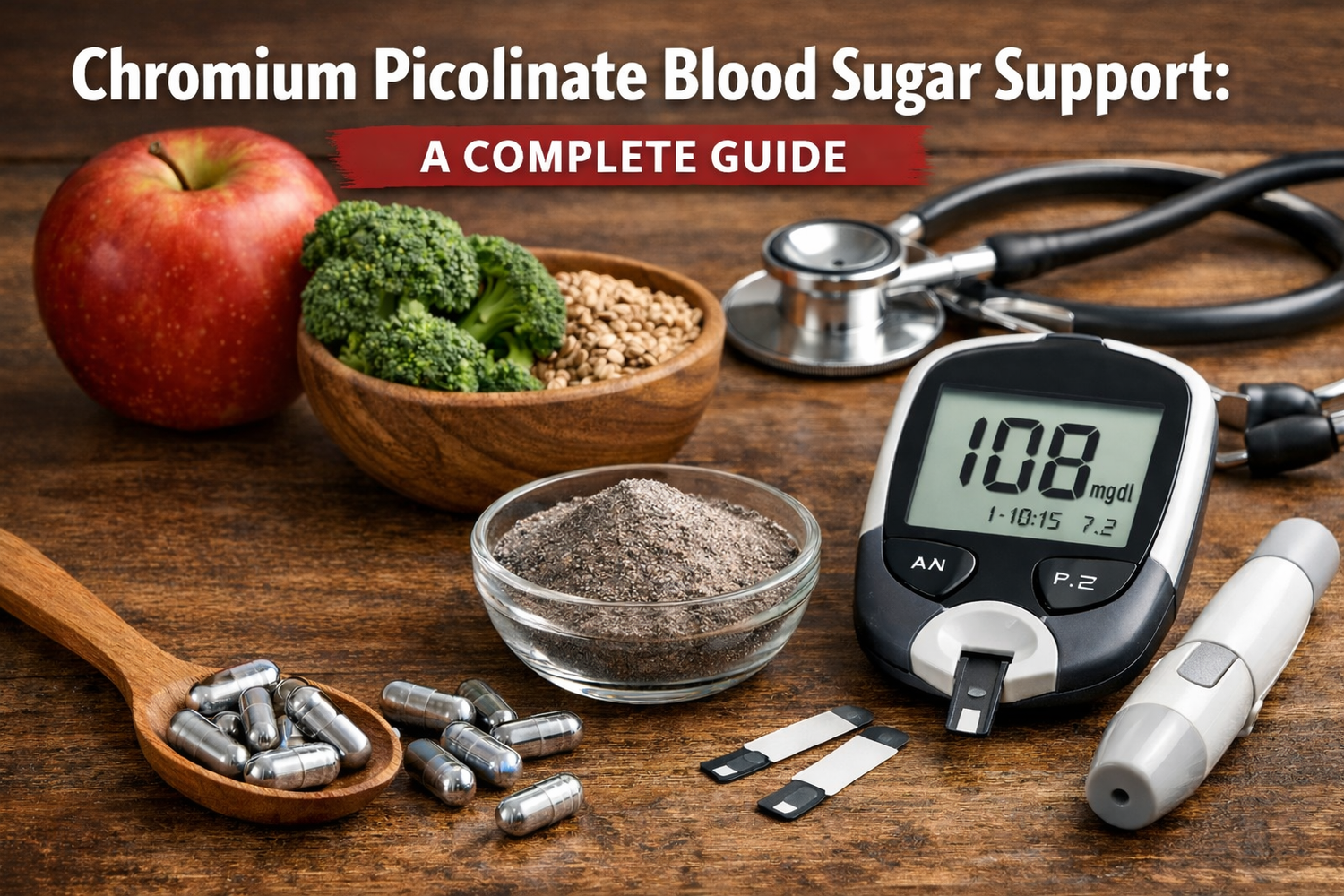
Chromium Picolinate And Blood Sugar: What You Need To Know
If you read biohacking forums or hang around longevity circles, you’ve probably heard that chromium picolinate blood sugar support is “must-have” for better glucose control, appetite, and body composition. The reality is more nuanced.
Chromium picolinate is a specific form of the trace mineral chromium that’s marketed for insulin sensitivity, cravings, and metabolic health. Some trials show benefits, others show no effect at all. For high-performance professionals, athletes, and people tracking CGMs or A1c, it’s worth understanding where the data is strong, where it’s weak, and how to use it safely inside a broader protocol.
Key Idea: Think of chromium picolinate as a small adjustment on top of nutrition, training, sleep, and stress—not as a stand‑alone fix.
This guide breaks down how chromium picolinate affects blood sugar, what the research actually shows, how it compares to dietary chromium, and how it can fit into a targeted stack that may also include tools like berberine with Ceylon cinnamon, oea oleoylethanolamide appetite control, and reishi mushroom.
What Is Chromium Picolinate?
Chromium is a trace metal that exists in several forms:
-
Trivalent chromium (Cr³⁺): The form found naturally in food and used in supplements. This is the form involved in human metabolism.
-
Hexavalent chromium (Cr⁶⁺): A toxic industrial byproduct and known carcinogen when inhaled—not something you want in a supplement. If ingested, stomach acid usually converts it to the safer trivalent form.
For years, trivalent chromium was considered an essential mineral. That view has been questioned because:
-
Clear-cut chromium deficiency in healthy people hasn’t been documented.
-
The European Food Safety Authority concluded that a dietary requirement couldn’t be firmly established.
Even so, the U.S. National Academy of Medicine set Adequate Intake (AI) values for total chromium:
-
Men 19–50: 35 μg/day
-
Women 19–50: 25 μg/day
-
Men >50: 30 μg/day
-
Women >50: 20 μg/day
You can get chromium from:
-
Meats and poultry
-
Whole-grain products (high-bran cereals, whole-grain breads, bagels, English muffins)
-
Broccoli, green beans, apples, bananas
-
Nuts and egg yolk
-
Grape juice and orange juice
Chromium content in food is quite variable and generally low (1–2 μg per serving). Diets high in simple sugars can also increase chromium loss in urine.
So What Is Chromium Picolinate?
Chromium picolinate is a supplemental form where one chromium atom is bound to three molecules of picolinic acid. This form:
-
Is designed to improve intestinal absorption compared with basic chromium salts.
-
Is usually dosed between 200 and 1,000 μg/day in clinical trials—far above the AI, and more in the “pharmacologic” range than simple nutritional top-up.
When people talk about chromium picolinate blood sugar support, they’re almost always referring to these higher, supplemental doses rather than food-level intake.
How Chromium Picolinate Affects Insulin And Blood Sugar
Chromium’s best-known role is modulating how your body responds to insulin. Several mechanisms have been proposed to explain chromium picolinate blood sugar effects.
Think of chromium as a modest signal booster for insulin in some tissues, not a replacement for the hormone itself.
1. Chromodulin And Insulin Signaling
A small protein called chromodulin (low-molecular-weight chromium-binding substance, LMWCr) appears to interact with the insulin receptor:
-
When blood glucose rises, the pancreas releases insulin.
-
Insulin binds to receptors on muscle and fat cells, triggering a signaling cascade that moves glucose transporters (like GLUT4) to the cell surface.
-
Chromodulin, loaded with trivalent chromium, is thought to bind to the activated insulin receptor and amplify this signal.
-
Stronger signaling can mean better glucose uptake into cells and lower glucose left circulating in the blood.
Most of this evidence comes from cell and animal studies, so the exact impact in humans is still being clarified.
2. Keeping Insulin Signaling “On” Longer
Some data suggest chromium may:
-
Inhibit enzymes that turn off insulin signaling, such as protein tyrosine phosphatase-1B (PTP‑1B).
-
Slow insulin breakdown and clearance in the liver.
Both effects could make a given insulin response more effective, which is the core idea behind chromium picolinate blood sugar support.
3. Lowering Inflammation And Oxidative Stress
Chronic low-grade inflammation and oxidative stress blunt insulin sensitivity. Meta-analyses of randomized trials have found that chromium supplementation can:
-
Reduce inflammatory markers like hs‑CRP and TNF‑α.
That doesn’t turn chromium into an anti-diabetic drug, but it suggests another pathway by which it might slightly improve insulin action in some people.
Key point: These mechanisms tend to appear at supplement-level doses (200–1,000 μg/day), not just from food. That’s why the supplement form, not dietary chromium, is the focus for performance and blood sugar control.
What Research Shows About Chromium Picolinate For Blood Sugar
The clinical evidence on chromium picolinate blood sugar effects is mixed. Results differ depending on who you study, what dose you use, and how you measure insulin resistance.
A simplified overview:
|
Population |
Typical Dose / Duration |
Main Finding |
|---|---|---|
|
Type 2 diabetes |
200–1,000 μg/day for 2–4 months |
Modest improvements in some, but not all, trials |
|
Prediabetes / metabolic syndrome |
500–1,000 μg/day for 3–6 months |
Little to no benefit |
|
Healthy or overweight without T2D |
Up to 1,000 μg/day for weeks–months |
No meaningful effect on glucose or insulin |
These patterns reflect differences in starting blood sugar, background medications, and study design.
Type 2 Diabetes
Some of the strongest positive data come from people with established type 2 diabetes:
-
A 16‑week trial using 200 μg/day saw lower fasting blood sugar and insulin, with improved insulin responsiveness.
-
A well-known trial in China gave 1,000 μg/day of chromium picolinate for four months:
-
Fasting glucose dropped by about 15–19% compared with placebo.
-
Hemoglobin A1c (HbA1c), a long-term marker of blood sugar, also improved.
-
-
Meta-analyses in type 2 diabetes have found:
-
Reductions in fasting plasma glucose and fasting insulin in some studies.
-
But not all trials show clinically meaningful changes.
-
The pattern:
-
People with higher starting blood sugar and poorer insulin sensitivity are more likely to see a modest benefit.
-
Effects are smaller and less reliable than those from metabolic health (medication, diet, exercise).
Prediabetes And At‑Risk Populations
For people with impaired fasting glucose, impaired glucose tolerance, or metabolic syndrome—but not full-blown diabetes—the story is different.
A rigorous randomized, double-blind, placebo-controlled trial looked at adults with impaired glucose tolerance, impaired fasting glucose, or metabolic syndrome who took 500 or 1,000 μg/day of chromium picolinate for six months. Results:
-
No significant changes in:
-
2‑hour oral glucose tolerance test (OGTT) values
-
Fasting insulin
-
HOMA‑IR (a standard estimate of insulin resistance)
Other studies in similar high-risk groups have found the same: no meaningful benefit.
For prevention, chromium picolinate blood sugar effects appear limited.
Lifestyle change remains first‑line care for abnormal blood sugar, with nutrition, physical activity, and weight management prioritized before supplements. —American Diabetes Association (paraphrased)
Healthy Individuals
In healthy adults without diabetes:
-
Large observational analyses (hundreds of participants) found that chromium supplementation did not change glucose or insulin levels.
-
Trials in obese but non-diabetic adults using 1,000 μg/day also found no improvement in insulin sensitivity.
The FDA allows only a very cautious, qualified claim, essentially stating that:
A small study suggests chromium picolinate may reduce the risk of insulin resistance and possibly type 2 diabetes, but the evidence is highly uncertain.
For most healthy or mildly insulin-resistant people, chromium picolinate is not a magic bullet for blood sugar control.
Effects On Weight, Hunger, And Cravings
Because insulin plays into both fat storage and hunger, chromium picolinate is often promoted as a weight-loss supplement. The evidence divides into two parts: appetite and weight change.
Hunger And Cravings
Several small studies suggest chromium picolinate can influence appetite:
-
In overweight women, 1,000 μg/day for 8 weeks:
-
Reduced reported hunger and food cravings.
-
Lowered overall food intake.
-
-
In people with depression, 600 μg/day for 8 weeks:
-
Decreased appetite and cravings versus placebo.
-
-
In a small group with binge-eating disorder:
-
600–1,000 μg/day was associated with fewer binge episodes and lower depressive symptoms.
-
These findings support the idea that chromium can affect brain circuits involved in reward and appetite—one reason it’s frequently combined with oea oleoylethanolamide appetite control in advanced stacks aimed at cravings and caloric control.
Weight Loss And Body Composition
When you look at actual body weight and fat loss, the effect has been modest at best:
-
A meta-analysis of 9 studies (622 overweight/obese participants) found:
-
Chromium picolinate (up to 1,000 μg/day) produced an average weight loss of ~2.4 lb (1.1 kg) over 12–16 weeks.
-
-
Another analysis of 11 studies found:
-
Average loss of ~1.1 lb (0.5 kg) over 8–26 weeks.
-
These changes are small and often not clinically meaningful.
So much so that:
-
The U.S. Federal Trade Commission ruled in 1996 that claims about chromium picolinate causing significant weight or fat loss were unsupported.
-
The FDA does not allow chromium products to claim they “increase lean body mass” or “promote weight loss.”
Reality Check: If a supplement is advertised as melting fat without changes in food or physical activity, it is almost always too good to be true.
Takeaway: Chromium picolinate may modestly reduce hunger and cravings—especially when combined with tools like oea oleoylethanolamide appetite control or metabolic agents such as berberine with Ceylon cinnamon—but you should not expect dramatic fat loss from chromium alone.
Chromium Picolinate And Related Conditions
Because insulin resistance sits at the center of many metabolic issues, chromium picolinate has also been tested in conditions beyond diabetes.
Metabolic Syndrome
Metabolic syndrome involves:
-
Central obesity
-
High blood pressure
-
High triglycerides / low HDL
-
Elevated fasting glucose or insulin resistance
Observational work has found that lower chromium levels are associated with higher odds of metabolic syndrome. But correlation isn’t causation.
In a controlled trial:
-
300 μg/day of chromium for 24 weeks did not improve glucose, insulin, or lipid markers in people with metabolic syndrome.
Polycystic Ovary Syndrome (PCOS)
PCOS often includes insulin resistance, higher androgens, and weight gain. Studies here are mixed:
-
A meta-analysis of seven trials found that chromium picolinate (200 or 1,000 μg/day):
-
Reduced BMI
-
Lowered free testosterone
-
Decreased fasting insulin
-
-
However, more recent systematic reviews concluded:
-
Chromium did not consistently produce meaningful improvements in glucose or insulin measures.
-
Benefits, where present, were modest.
-
Chromium may play a minor supportive role in PCOS management, but it’s not a stand‑alone treatment.
Lipids And Cardiovascular Markers
Trials on chromium and cardiovascular risk factors have produced inconsistent findings:
-
Some studies show decreases in total cholesterol, LDL, and triglycerides.
-
Others show no effect on lipids or blood pressure.
-
One meta-analysis reported that chromium lowered inflammatory markers like hs‑CRP and TNF‑α, which are tied to cardiovascular risk.
For performance-oriented individuals focused on longevity, that inflammatory angle is interesting—but it still doesn’t make chromium a primary therapy for heart health.
Dietary Chromium Vs Chromium Picolinate Supplements

From a performance and longevity perspective, there are two separate questions:
-
Do you get “enough” chromium from food?
For almost everyone eating a varied diet, yes. True deficiency is extremely rare in free-living adults. -
Can pharmacologic doses of chromium picolinate meaningfully support blood sugar control?
Sometimes, especially in people with poorly controlled type 2 diabetes, but not reliably in others.
Food Sources And Baseline Intake
You can support baseline chromium intake by emphasizing:
-
Whole grains over refined grains
-
Vegetables like broccoli and green beans
-
Lean meats, eggs, and nuts
-
Minimizing high-sugar processed foods that increase chromium loss
For most readers focused on chromium picolinate blood sugar benefits, food sources are the foundation—but not the main reason they’re considering supplementation.
Why People Supplement
People reach for chromium picolinate supplements because:
-
Clinical trials use 200–1,000 μg/day, far above what food provides.
-
They want an additional lever on top of diet, exercise, and sleep to flatten glucose excursions and possibly reduce cravings.
At these levels, chromium picolinate is best thought of as a targeted metabolic tool, not just a micronutrient.
It’s also frequently stacked with other compounds:
-
Metabolic support:
Many combine chromium with berberine with Ceylon cinnamon to address glucose control from different angles—insulin signaling, AMPK activation, and gut-level effects. -
Stress and recovery:
Adaptogenic blends featuring reishi mushroom can support sleep quality and stress resilience, both of which affect insulin sensitivity. -
Energy and methylation:
Nasal B12 formulas such as vitamin B12 are often layered into stacks for people doing low-carb diets, intermittent fasting, or NAD+ IV protocols who want to maintain clean, stimulant-free energy. -
Appetite and caloric control:
Satiety agents like oea oleoylethanolamide appetite control can complement chromium’s modest impact on cravings.
How To Use Chromium Picolinate Safely
If you decide to experiment with chromium picolinate blood sugar support, safety and dosage matter.
Evidence-Informed Dosing
Typical ranges seen in studies:
-
General metabolic support / mild insulin resistance:
200–400 μg/day, usually with meals. -
Type 2 diabetes (in research settings):
600–1,000 μg/day, sometimes divided across two or three doses.
Practical guidelines:
-
Start low (e.g., 200 μg/day) and track:
-
Fasting glucose
-
CGM curves (if you use one)
-
Subjective energy and hunger
-
-
Consider keeping a simple log so you can compare 2–4 weeks before and after adding chromium.
-
Only consider higher doses under medical supervision, especially if:
-
You use insulin or oral diabetes drugs
-
You have kidney or liver issues
-
Remember: these doses are well above the AI for chromium and are closer to drug-like exposure than simple diet correction.
Side Effects And Safety Profile
Trivalent chromium has low oral toxicity, but chromium picolinate is not risk-free.
Common, usually mild side effects:
-
Nausea or stomach upset
-
Diarrhea
-
Headache or dizziness
-
Skin rash in sensitive individuals
Serious but rare case reports (often at high doses, e.g., 600–2,400 μg/day) describe:
-
Kidney injury, including acute renal failure
-
Possible liver stress
There have also been cell-culture concerns about potential DNA damage from chromium picolinate metabolism. Human data are more reassuring: in women taking 400 μg/day, no increase in DNA oxidative damage was detected.
“The dose makes the poison.” —Paracelsus
With chromium, that means staying within research-backed ranges and avoiding unnecessary megadoses.
Drug Interactions And Special Cautions
Chromium can interact with certain medications and conditions:
-
Diabetes medications / insulin:
Combined effects can lower blood sugar more than expected, raising hypoglycemia risk. -
Antacids with calcium carbonate or magnesium hydroxide:
Can reduce chromium absorption. -
NSAIDs (e.g., aspirin, indomethacin):
May increase chromium absorption. -
Beta-blockers and some thyroid medications:
Potential interactions; discuss with your clinician.
You should be especially cautious if:
-
You have kidney or liver disease
-
You’re pregnant or breastfeeding (safety data are limited)
-
You’re on multiple prescription drugs that affect glucose
In all these scenarios, a clinician who understands your medication stack should sign off before you add chromium.
Building A Blood Sugar Support Stack

For biohackers and performance-minded professionals, chromium picolinate works best as part of a comprehensive glucose strategy, not as a single supplement.
Key pillars:
-
Smart nutrition
-
Consistent resistance and aerobic training
-
Sleep and circadian alignment
-
Stress management
-
Carefully chosen supplements
Within that context, chromium can be combined with:
-
Metabolic regulators:
Pair a modest dose of chromium picolinate with berberine with Ceylon cinnamon for complementary effects on insulin signaling, gut glucose handling, and lipid metabolism. -
Appetite and cravings control:
If late-night snacking or rebound hunger is your main issue, consider stacking chromium with oea oleoylethanolamide appetite control. OEA targets satiety pathways in the gut and brain, while chromium may dampen reward-driven cravings. -
Stress and emotional eating:
stress management raises cortisol and pushes glucose higher. Tools like kanna nasal spray, which combines kanna with theanine, are used by some to support calm focus during intense work blocks. A calmer nervous system can indirectly support steadier blood sugar and reduce stress-driven overeating. In high-pressure periods, some users reach for kanna nasal spray alongside chromium to keep both mood and glucose responses under control. -
Adaptogenic and nootropic mushrooms:
Blends featuring reishi mushroom are often used for sleep and stress resilience, while other formulas that include lion’s mane and cordyceps can support cognition and training capacity—important if you’re stacking chromium with fasting, low-carb phases, or NAD+ IV sessions. -
Clean energy support:
Nasal B12 products like vitamin B12 can help maintain energy and methylation, especially in people running caloric deficits or doing longer fasts as part of a metabolic reset.
A supplement stack is only as strong as the basics: food quality, muscle mass, movement, sleep, and stress control.
The goal is not to throw everything at the problem, but to build a focused, testable stack that matches your primary bottleneck: glycemic control, hunger, stress, recovery, or cognition.
Is Chromium Picolinate Right For You?
Whether chromium picolinate blood sugar support belongs in your protocol depends on your baseline status and goals.
You might discuss it with your clinician if:
-
You have type 2 diabetes and, despite diet, exercise, and standard therapy, your fasting glucose or A1c remain above target. In this context, 600–1,000 μg/day (short term, under supervision) may give a modest extra improvement.
-
You’re an advanced biohacker or athlete using a CGM and want to experiment with small tweaks in post-meal glucose and cravings as part of a structured n=1.
You should focus elsewhere first if:
-
You have prediabetes or metabolic syndrome but no established diabetes. Here, diet, weight loss, muscle gain, sleep, and agents like berberine with Ceylon cinnamon usually move the needle more than chromium alone.
-
You’re otherwise healthy and simply want better performance or longevity. For most such individuals, the impact of chromium picolinate on blood sugar is minimal.
You should be cautious or avoid chromium picolinate if:
-
You have kidney or liver disease
-
You’re pregnant or breastfeeding
-
You’re on multiple glucose-lowering medications
In all cases, look for supplements from brands that:
-
Provide third-party testing for purity and label accuracy
-
Disclose exact chromium picolinate dosage
-
Explain how their formula is intended to fit into broader metabolic support (for example, alongside tools like oea oleoylethanolamide appetite control and other well-characterized compounds)
Bottom line: Chromium picolinate can modestly support blood sugar control in some people—especially those with type 2 diabetes—and may help with cravings. It is not a replacement for nutrition, muscle, movement, sleep, or proven medications. Treated as a precise tool within a broader strategy that may also include compounds like berberine with Ceylon cinnamon, reishi mushroom, and kanna nasal spray, it can be worth testing—carefully, with data, and with medical guidance.



Leave a comment
All comments are moderated before being published.
This site is protected by hCaptcha and the hCaptcha Privacy Policy and Terms of Service apply.