
OEA Supplement
Satiety Support
Oleoylethanolamide (OEA) is a fatty acid amide produced by the body that signals to our brain that we are full. Our oleoylethanolamide supplement is the first third party tested OEA supplement on the market, strategically formulated with supporting nutrients.
Offer Ends In:
Functions
How OEA (Oleoylethanolamide) Functions in the Body
What Is OEA?
Oleoylethanolamide (OEA) is a naturally occurring lipid signaling molecule produced in the small intestine in response to dietary fat intake. It plays a key role in how the body regulates satiety, appetite signaling, and metabolic balance.
OEA is part of a broader family of lipid messengers that help the body interpret nutritional status and energy availability. Unlike stimulants or appetite suppressants, OEA does not override hunger signals, it helps the body recognize when enough is enough.
Our OEA Supplement is designed to support healthy satiety signaling and metabolic communication, helping you feel more regulated around food, energy, and intake.
Core Functions of OEA
1. Supports Satiety and Appetite Regulation
OEA is best known for its role in satiety signaling, the process that helps the body recognize fullness after eating.
OEA activates PPAR-α (peroxisome proliferator-activated receptor alpha), a receptor involved in lipid metabolism and appetite signaling. When this pathway is supported, the body is better able to:
- Recognize fullness cues
- Reduce unnecessary snacking
- Maintain a more balanced appetite rhythm
This support is regulatory, not suppressive. OEA does not eliminate hunger, it helps restore appropriate appetite signaling.
2. Supports Healthy Eating Behavior and Food Awareness
OEA signaling influences how the brain interprets nutritional intake, particularly in relation to fat consumption and meal satisfaction.
By supporting OEA pathways, the body may be better equipped to:
- Feel satisfied after meals
- Reduce constant food-related thoughts
- Support mindful eating patterns
This makes OEA especially relevant for individuals who feel out of sync with hunger and fullness cues, rather than simply “overeating.”
3. Supports Metabolic Signaling and Energy Balance
Through its interaction with PPAR-α, OEA plays a role in fat metabolism and energy utilization. This pathway helps the body coordinate fuel usage with availability—supporting metabolic efficiency over time.
OEA supports:
- Communication between the gut and brain
- Metabolic signaling related to fat utilization
- A more stable energy balance
Importantly, OEA does not stimulate the nervous system or increase heart rate. Its role is metabolic communication, not stimulation.
4. Supports Motivation and Drive Around Healthy Choices
OEA signaling has been shown to interact with brain regions involved in motivation and reward, particularly as they relate to feeding behavior.
Supporting OEA pathways may help:
Reduce compulsive or impulsive eating behaviors
Reinforce satisfaction from appropriate intake
Support consistency in nutrition-related routines
This is not about restriction, it’s about helping the body and brain agree on what “enough” feels like.
5. Supports Gut–Brain Communication
OEA is produced in the gut and communicates directly with the brain via neural and hormonal pathways. This makes it a key player in gut–brain signaling, especially around appetite and energy regulation.
Healthy OEA signaling supports:
- Clear communication between digestive signals and brain interpretation
- More reliable satiety feedback
- Better alignment between physical intake and perceived need
When this communication is strained, due to stress, irregular eating, or metabolic disruption, satiety cues can become blunted or ignored.
Why OEA Support Matters in Modern Life
Modern eating patterns, ultra-processed foods, chronic stress, and irregular schedules can all interfere with the body’s natural satiety signaling.
Over time, this can lead to:
- Eating past fullness
- Constant grazing or snacking
- Difficulty sensing true hunger vs. habit
Supporting OEA pathways helps reinforce the body’s built-in regulatory systems, rather than relying on willpower or extreme restriction.
How OEA Fits Into Your Sync Stack
OEA often plays a regulatory and metabolic role in the Sync Stack, particularly for those focused on energy balance, body awareness, and long-term metabolic health.
It pairs especially well with:
- Anandamide for emotional balance and reward signaling
- Berberine for metabolic support
- NAD+ for cellular energy and metabolic efficiency
Many people use OEA as a daily foundation, helping bring appetite, energy, and intake back into rhythm.
What to Expect With Consistent Use
Because OEA works through signaling pathways rather than stimulation, its effects are often:
- Subtle but noticeable over time
- Stabilizing rather than dramatic
- Most effective with consistent daily use
People commonly report:
- Feeling satisfied sooner during meals
- Less urge to snack between meals
- A calmer, more regulated relationship with food
As with all Synchronicity Health products, this supplement is designed for long-term support, not short-term control.
In Summary
The OEA Supplement supports the body’s ability to:
- Recognize satiety and fullness
- Regulate appetite signaling
- Support metabolic communication
Maintain energy balance without stimulation
It doesn’t suppress hunger or force outcomes.
It supports the signals your body already uses to stay in balance.
That’s metabolic regulation, done in sync.
How To Use
Suggested Use: Two (2) capsules daily, taken 15-30 minutes before your largest meal, or as recommended by your healthcare practitioner.
Ingredients
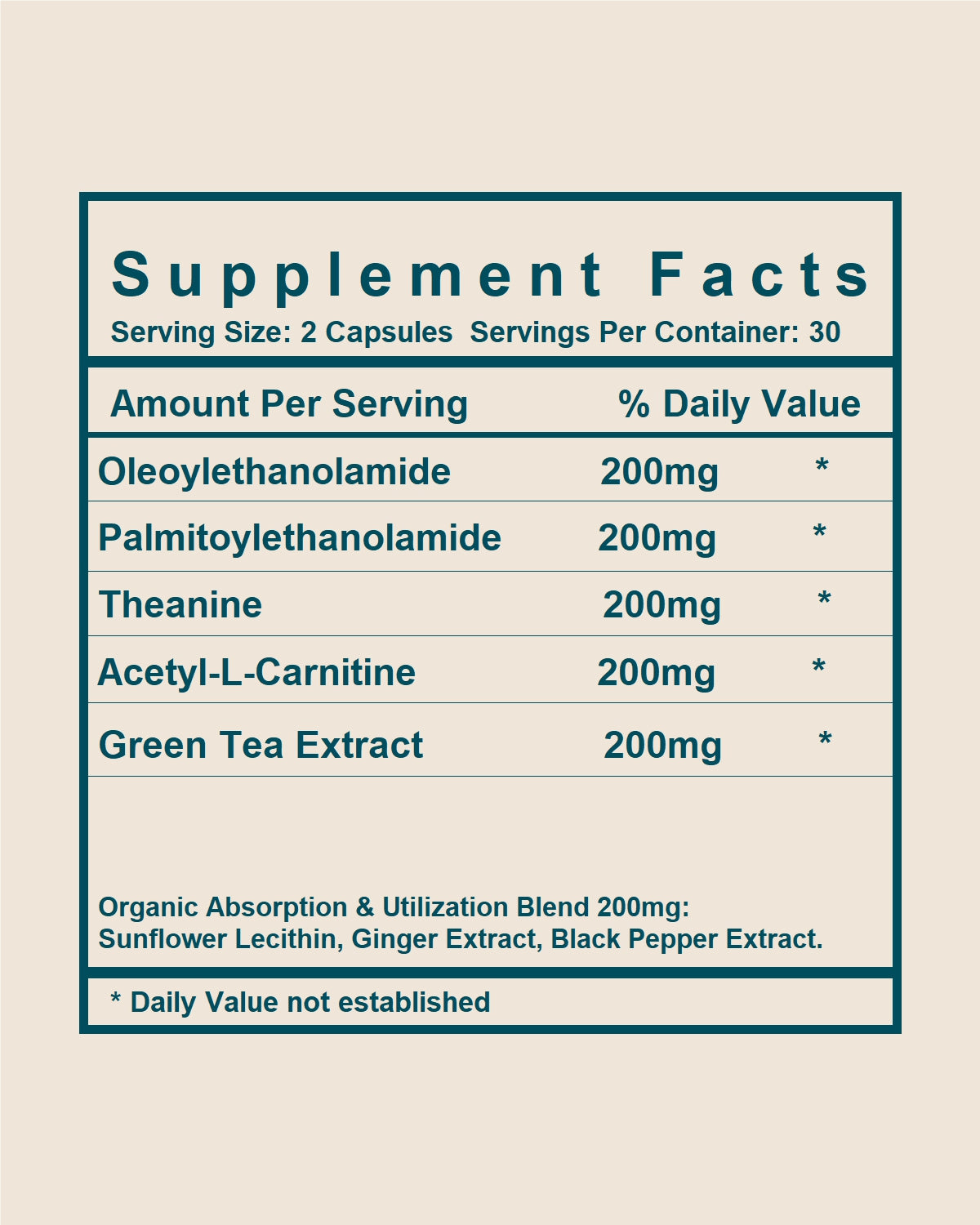
Per 2 Capsule Serving:
Oleoylethanolamide 200mg
Palmitoylethanolamide 200mg
Theanine 200mg
Acetyl-L-Carnitine 200mg
Green Tea Extract 200mg
Organic Absorption & Utilization Blend 200mg:
Sunflower Lecithin, Ginger Extract, Black Pepper Extract.
Clinical Evidence
Clinical Evidence Supporting OEA (Oleoylethanolamide) Supplementation
Overview: OEA as a Metabolic and Satiety Signaling Molecule
Oleoylethanolamide (OEA) is a naturally occurring fatty acid ethanolamide produced in the small intestine in response to dietary fat intake. It functions as a lipid signaling molecule, helping the body regulate appetite, satiety, and energy balance.
Unlike stimulants or appetite suppressants, OEA does not act on the central nervous system to blunt hunger. Instead, it works through peripheral metabolic signaling pathways that communicate nutritional status from the gut to the brain.
Scientific interest in OEA has grown steadily over the past two decades due to its role in satiety signaling, metabolic regulation, and gut–brain communication.
Established Scientific Evidence on OEA Biology
OEA and PPAR-α Activation
One of the most well-established mechanisms of OEA is its activation of peroxisome proliferator-activated receptor alpha (PPAR-α), a nuclear receptor involved in lipid metabolism, energy utilization, and appetite regulation.
Research has demonstrated that OEA:
- Acts as a high-affinity endogenous ligand for PPAR-α
- Influences genes involved in fat metabolism
- Plays a role in regulating feeding behavior and satiety signaling
PPAR-α activation is a key reason OEA is considered regulatory rather than suppressive in its effects on appetite.
Role in Satiety and Feeding Behavior
Preclinical and translational studies consistently show that OEA is involved in meal-related satiety signaling. When dietary fat is consumed, OEA levels rise in the intestine and send feedback signals to the brain indicating nutritional sufficiency.
Key findings from the scientific literature indicate that OEA:
- Contributes to reduced meal frequency
- Supports longer intervals between meals
- Reinforces the feeling of fullness after eating
Importantly, OEA does not eliminate hunger. Instead, it helps the body appropriately recognize fullness, which is central to healthy eating behavior.
OEA and Gut–Brain Communication
OEA plays a unique role in gut–brain signaling, acting as a messenger between intestinal nutrient sensing and central appetite regulation.
Research shows that OEA:
- Signals through vagal afferent pathways
- Communicates nutritional status without crossing the blood–brain barrier in large amounts
- Influences brain regions involved in feeding behavior and motivation
This peripheral signaling mechanism differentiates OEA from compounds that artificially alter neurotransmitter levels or stimulate appetite control centers directly.
Human and Translational Evidence Relevant to OEA
While much of the foundational research on OEA originates from preclinical and mechanistic studies, human observational and translational research supports its relevance in metabolic regulation.
Human data and metabolic research suggest that:
- Endogenous OEA levels fluctuate with dietary patterns and fat intake
- OEA signaling is associated with appetite regulation and metabolic efficiency
- Disruptions in lipid signaling pathways may contribute to impaired satiety perception
These findings support the biological plausibility of nutritional strategies aimed at supporting OEA pathways, especially in individuals experiencing dysregulated appetite cues.
OEA, Energy Balance, and Metabolic Signaling
Beyond appetite regulation, OEA is involved in broader energy balance and metabolic communication.
Through PPAR-α–mediated pathways, OEA supports:
- Fatty acid utilization
- Metabolic signaling related to energy availability
- Coordination between intake and energy expenditure
Importantly, OEA does not act as a stimulant. It does not increase heart rate, blood pressure, or nervous system arousal. Its role is metabolic signaling, not forced energy expenditure.
Safety and Tolerability Considerations
Because OEA is an endogenously produced molecule, strategies aimed at supporting its signaling differ fundamentally from pharmacological appetite suppressants.
From a clinical perspective:
- OEA does not produce stimulant-like effects
- It does not interfere with normal hunger cues
- It works through existing physiological pathways
Studies evaluating OEA supplementation in controlled settings report favorable tolerability profiles when used as directed.
What the Clinical Evidence Clearly Supports
✔ OEA is a naturally occurring lipid signaling molecule involved in satiety and metabolic regulation
✔ It activates PPAR-α, a key regulator of lipid metabolism and appetite signaling
✔ OEA supports gut–brain communication related to nutritional status
✔ Its effects are regulatory, not suppressive or stimulatory
✔ Supporting OEA pathways is biologically plausible and mechanistically grounded
What Research Is Still Evolving
❗ Large-scale randomized controlled trials evaluating long-term OEA supplementation outcomes in diverse populations
❗ Optimal dosing strategies for sustained satiety support
❗ Individual variability in response based on diet, metabolism, and lifestyle
These represent active and ongoing areas of research, not gaps in foundational understanding.
Clinical Perspective
From a clinical and systems-biology standpoint, appetite dysregulation is often a signaling issue, not a willpower issue. OEA sits at the intersection of nutrient sensing, metabolic communication, and behavioral feedback.
Supporting OEA pathways aligns with modern approaches to metabolic health that emphasize:
Restoring internal signaling
Reinforcing physiological cues
Working with the body rather than overriding it
This makes OEA particularly well suited for individuals seeking long-term regulation rather than short-term control.
Conclusion
The scientific evidence supporting OEA’s role in appetite regulation, satiety signaling, and metabolic communication is robust and well established at the mechanistic level, with growing translational and human relevance.
Nutritional strategies designed to support OEA signaling offer a non-stimulant, non-suppressive approach to appetite and energy balance, grounded in the body’s own regulatory intelligence.
As with all Synchronicity Health formulations, this approach prioritizes alignment over force, helping restore rhythm rather than override it.
Third Party Tested
All of our ingredients are third-party party tested for purity, potency, microbiological content, residual solvents and heavy metals.
FDA Disclaimer
These statements have not been evaluated by the Food and Drug Administration. This product is not intended to diagnose, treat, cure, or prevent any disease.

OEA Supplement FAQs
The most frequently asked questions about our OEA (oleoylethanolamide) supplement.
What is OEA (oleoylethanolamide) and what does it do?
OEA (oleoylethanolamide) is a naturally occurring lipid signaling molecule produced in the small intestine in response to dietary fat intake. It plays a key role in satiety signaling, appetite regulation, and metabolic communication, helping the body recognize fullness and regulate energy balance. OEA works by supporting the body’s existing regulatory pathways rather than suppressing hunger or stimulating the nervous system.
How is OEA different from appetite suppressants or stimulants?
Unlike appetite suppressants or stimulant-based products, OEA does not blunt hunger signals or increase heart rate. Instead, it supports natural satiety signaling through peripheral metabolic pathways, particularly by activating PPAR-α receptors involved in lipid metabolism. The goal is regulation, not restriction, helping the body better recognize when it’s satisfied.
Does OEA help with feeling full after meals?
Yes. OEA is closely associated with the body’s fullness and satiety signals. Supporting OEA pathways may help reinforce the natural feeling of satisfaction after eating, which can reduce the urge to snack or eat past fullness. This effect is subtle and regulatory, not immediate or suppressive.
Will OEA make me feel jittery or affect my energy levels?
No. OEA is non-stimulant and does not act on the central nervous system in the way caffeine or other stimulants do. It supports metabolic and appetite signaling without causing jitters, crashes, or nervous system overstimulation. Most people describe its effects as calming and regulating rather than energizing or suppressive.
How long does it take to notice effects from OEA supplementation?
Because OEA works through signaling and regulatory pathways, its effects tend to be gradual and cumulative. With consistent daily use, many people notice improved awareness of fullness, reduced snacking between meals, and a more regulated relationship with food over time. Individual responses vary based on diet, lifestyle, and consistency.
Can I take OEA with other Synchronicity Health products?
Yes. OEA integrates well into the Sync Stack and is often used alongside products that support metabolism, energy, and emotional balance. It pairs especially well with:
- Anandamide for reward and emotional regulation
- Berberine for metabolic support
- NAD+ for cellular energy and metabolic efficiency
OEA often serves as a daily foundational support for appetite and energy balance.
You may also like
This product is rated 4.9 of 5.0 stars.
It has received 8 reviews.
Produit super
Good supplement
I have good results with PEA + OEA + AEA on mood, energy and increase focus
Great addition
Great Product, accurate description and fast shipping
High quality!! Definitely helps me feel more satisfied.

