

The Ultimate Guide To Using Glutathione Nasal Spray Safely
Glutathione nasal spray is gaining attention among biohackers, high performers, and wellness‑focused individuals who want targeted antioxidant support without IV drips or large supplement stacks. As interest grows, so do important questions: Does it work? Is it safe? Who should use it—and who should not?
This guide walks through what the science says about glutathione nasal spray, how intranasal delivery works, where the evidence is strongest, and step‑by‑step guidance for safe use. It also covers how it compares with other intranasal options such as NAC nasal spray, theanine nasal spray GABA, and NAD nasal spray.
This article is educational and not medical advice. Always discuss glutathione nasal spray or any supplement with a qualified clinician who understands your health history.
Glutathione 101: Why This Antioxidant Matters

Glutathione is often called the body’s master antioxidant. It is a small molecule made from three amino acids (cysteine, glutamate, and glycine) and is produced inside almost every cell.
A few core roles:
-
Redox balance: Glutathione exists in two forms—reduced (GSH) and oxidized (GSSG). A higher GSH:GSSG ratio signals healthy cells; a lower ratio points to elevated oxidative stress.
-
Detox support: In the liver and other tissues, glutathione binds to many toxins, drugs, and heavy metals, helping convert them into forms the body can excrete.
-
Immune support: It influences how immune cells grow, activate, and respond to threats.
-
Mitochondrial function: Glutathione helps protect mitochondria from oxidative damage, which can affect energy levels and fatigue.
-
Cell signaling and repair: It participates in pathways related to inflammation, cell survival, and programmed cell death.
Low glutathione or disrupted glutathione balance has been linked in research to:
-
Neurodegenerative conditions (such as Parkinson’s disease)
-
Chronic inflammatory respiratory issues (allergies, sinusitis)
-
Multiple chemical sensitivity (MCS)
-
Metabolic and cardiovascular problems
Because of these wide‑ranging roles, interest in targeted delivery methods such as glutathione nasal spray has grown among clinicians and health enthusiasts who want more direct support for oxidative stress and detoxification.
Why Use Glutathione Nasal Spray Instead Of Pills?
Traditional glutathione supplements face real limitations:
|
Delivery Method |
Pros |
Cons |
|---|---|---|
|
Oral glutathione |
Easy, inexpensive |
Poor absorption; degraded in the gut and liver |
|
IV glutathione |
Direct entry into blood; high levels |
Invasive, time‑consuming, requires clinic visits |
|
Glutathione nasal spray |
Non‑invasive, rapid absorption via nasal mucosa, potential nose‑to‑brain delivery |
Long‑term dosing, ideal schedule, and condition‑specific benefits still under study |
How Intranasal Delivery Works
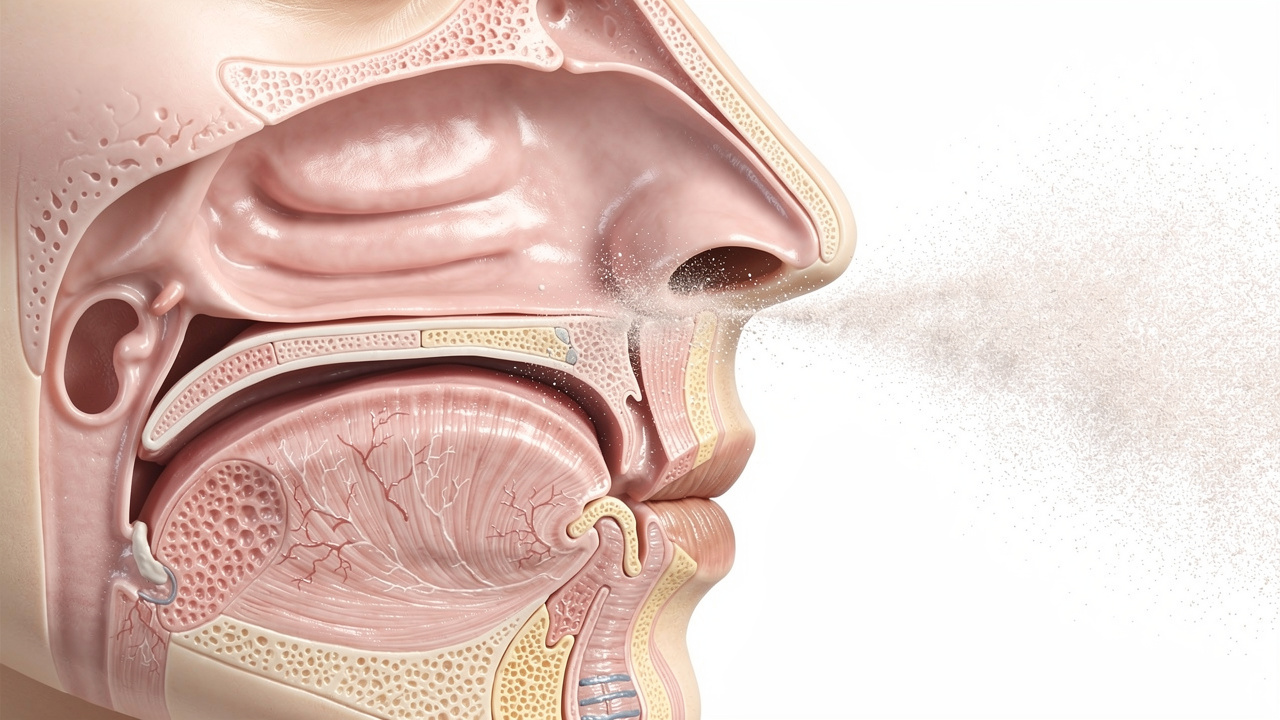
When you use a nasal spray supplements, absorption can occur through:
-
Nasal mucosa into the bloodstream
The nasal cavity is improves bioavailability. Glutathione can cross these membranes and enter circulation quickly, bypassing the digestive tract and first‑pass liver metabolism. -
Nose‑to‑brain pathways
Research suggests two possible routes:-
Along the olfactory and trigeminal nerves (intraneuronal transport)
-
Direct diffusion across the nasal mucosa into cerebrospinal fluid (an extraneuronal path)
-
Glutathione is small (about 307 Da) and water‑soluble, which likely supports absorption without chemical enhancers.
This is why intranasal delivery is being explored not only for systemic support but also for brain‑related conditions, where the blood–brain barrier often limits therapy options.
What The Research Actually Shows
Marketing sometimes races ahead of data. Here’s a grounded look at what has been studied so far for intranasal glutathione.
“Absence of evidence is not evidence of absence—but it does mean we have to be careful about what we promise.”
Parkinson’s Disease
Small randomized, placebo‑controlled trials have tested intranasal reduced glutathione in people with Parkinson’s disease:
-
Doses studied: 300 mg/day and 600 mg/day, divided into three daily applications
-
Duration: About 3 months
Findings:
-
Glutathione nasal spray appeared safe and well‑tolerated in these doses.
-
Symptom scores (using the Unified Parkinson’s Disease Rating Scale) improved modestly in some groups.
-
However, placebo groups improved just as much as the high‑dose group in one trial, making it difficult to claim a clear symptomatic advantage.
Imaging studies using magnetic resonance spectroscopy have shown that intranasal glutathione can temporarily increase brain glutathione levels 20–45 minutes after administration. How long this elevation lasts, and what dosing schedule is best for long‑term benefit, remain open questions.
Key takeaway: For Parkinson’s, intranasal glutathione is considered safe in short‑term trials but has not proven superior to placebo for symptom relief. Future research may focus more on slowing disease progression than short‑term symptom changes.
Allergies, Sinusitis, And Ear‑Nose‑Throat Symptoms
Oxidative stress in nasal tissues has been documented in conditions such as:
-
Chronic sinusitis
-
Allergies
-
Chronic otitis media (middle ear issues)
In one study in children with chronic ear and respiratory health, a glutathione nasal aerosol:
-
Raised glutathione levels in nasal mucosa
-
Was associated with improvements in nasal obstruction, runny nose, and ear fullness
Survey data from patients using intranasal glutathione prescribed by clinicians also report:
-
Fewer sinus infections
-
Improved nasal comfort in many users
Multiple Chemical Sensitivity (MCS)
In multiple chemical sensitivity (MCS), people experience symptoms after low‑level chemical exposures. Studies have noted lower glutathione levels and reduced activity of glutathione‑related enzymes—similar to oxidative stress patterns observed in conditions requiring nutraceutical approaches for autism and other complex neurological conditions.
Clinicians frequently use glutathione nasal spray in this group with the aim of supporting detoxification and redox balance. In a survey of users prescribed intranasal glutathione, MCS was one of the most common reasons for use.
Cognitive Decline And Alzheimer’s Disease
For Alzheimer’s disease and mild cognitive impairment:
-
Research has found lower brain glutathione levels in affected regions such as the hippocampus and frontal cortex.
-
Greater amyloid plaque burden has been associated with lower cortical glutathione in some imaging studies.
-
APOE4 carriers with Alzheimer’s show more oxidative stress and lower reduced glutathione in brain tissue compared with non‑carriers.
However:
-
Intranasal glutathione has not yet been clinically tested as a treatment in Alzheimer’s patients.
-
Its role here is still theoretical, based on the broader biology of oxidative stress.
Patient‑Reported Outcomes
Survey data from people prescribed intranasal glutathione for a variety of conditions show:
-
Over three‑quarters reported an overall positive experience
-
Roughly 60% felt they experienced health benefits
Commonly reported improvements included:
-
Better sense of well‑being
-
Fewer sinus infections
-
More energy
-
Fewer headaches
-
Better sense of smell
These are self‑reported results, not controlled trials, so they must be interpreted with caution—but they do reflect how users perceive glutathione nasal spray in real‑world settings.
Who Might Consider Glutathione Nasal Spray?
With appropriate medical guidance, some groups may be reasonable candidates to discuss glutathione nasal spray with their clinicians:
-
People under high oxidative stress
Those exposed to air pollution, industrial chemicals, tobacco smoke, intense psychological stress, or poor sleep may be interested in additional antioxidant support. -
Individuals with chronic respiratory or ENT issues
Chronic sinusitis, recurrent sinus infections, or allergy‑related congestion may lead some clinicians to consider topical antioxidant approaches, including glutathione nasal spray. -
Those with diagnosed MCS or high environmental exposures
Because glutathione plays a central role in detox solution, practitioners sometimes include intranasal glutathione in protocols for multiple chemical sensitivity or heavy chemical exposure. -
Athletes and highly active individuals
Hard training increases oxidative stress and can slow recovery. Under professional guidance, some athletes explore glutathione nasal spray alongside other recovery tools. -
People focused on healthy aging and brain health
Because oxidative stress is implicated in neurodegeneration and radiant skin, some people explore glutathione for long‑term wellness under supervision.
On the other hand, some groups should be especially cautious or avoid use unless a clinician recommends it:
-
Pregnant or breastfeeding individuals
-
People on chemotherapy, anticoagulants, or blood pressure medications
-
Those with complex autoimmune or cardiac conditions
-
Anyone with a history of allergy to glutathione or components in nasal sprays
Safety Profile, Side Effects, And Interactions
Overall, research and survey data suggest that glutathione nasal spray is generally well‑tolerated when prepared correctly and used as directed. That said, every intervention carries some risk.
Common Side Effects
Most reported effects are mild and local to the nose and sinuses:
-
Nasal or sinus irritation
-
Mild burning or dryness
-
Runny nose or sneezing
-
Headache
-
Occasional minor nosebleeds
People with multiple chemical sensitivity appear more prone to nasal irritation than other groups in survey data.
Rare Or Serious Effects
In one Parkinson’s disease trial:
-
A participant taking 600 mg/day intranasal glutathione developed cardiomyopathy with rapid heart rate.
-
Symptoms resolved after stopping glutathione.
-
Researchers suggested this may have been related to “reductive stress”—too much antioxidant activity affecting heart cells—especially at high doses or when combined with other strong antioxidants.
“Start low and go slow—especially with anything that can affect your heart or brain.”
While this appears rare, it supports a conservative approach: more is not always better, particularly when stacking glutathione with other antioxidant therapies.
Drug And Supplement Interactions
Glutathione affects detoxification pathways and redox status, which means it could theoretically interact with:
-
Chemotherapy agents (potentially interfering with intended oxidative damage to tumor cells)
-
Certain blood pressure medications
-
Anticoagulants and antiplatelet drugs
-
Other strong antioxidant regimens
Stacking glutathione nasal spray with other intranasal products—such as NAC for respiratory, NAD nasal spray, or theanine nasal spray GABA—should only be done with medical oversight. These compounds act on overlapping pathways (antioxidant defenses, cognitive benefits, and mitochondrial function), and their combined effects have not been fully mapped.
Step‑By‑Step: How To Use Glutathione Nasal Spray Safely
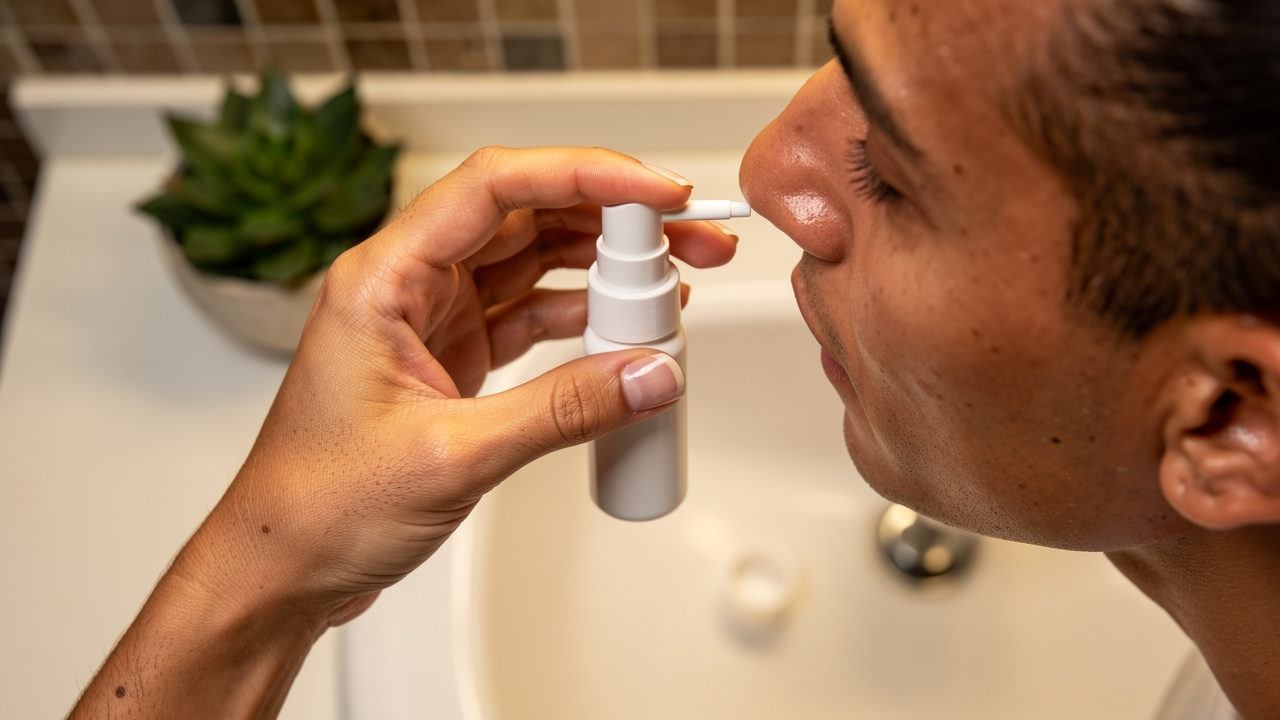
Once you and your clinician decide to proceed, correct technique helps support both safety and effectiveness.
1. Choose A Trusted Product
Select a reputable, clearly labeled product, such as a professionally formulated glutathione nasal spray, that:
-
Lists glutathione content per spray or per mL
-
Discloses inactive ingredients (preservatives, stabilizers, saline base)
-
Provides storage and expiration information
-
Ideally references quality testing or pharmacy‑grade compounding
2. Review Instructions And Dosing
-
Read the product insert in full.
-
Compare label dosing to your clinician’s recommendation.
-
Do not exceed suggested frequency or amount without medical approval.
3. Prepare Your Hands, Nose, And Bottle
-
Wash hands thoroughly with soap and water.
-
Gently blow your nose if it feels congested.
-
Shake the bottle gently if recommended by the manufacturer.
4. Position Your Head
-
Sit or stand upright.
-
Tilt your head slightly forward (not backward) to help the spray coat the nasal passages rather than running down your throat.
5. Administer The Spray
-
Insert the nozzle just inside one nostril, aiming slightly outward toward the outer corner of the eye (not toward the center of the nose).
-
Breathe in gently through your nose as you press the pump to deliver the dose.
-
Repeat in the other nostril if directed.
6. Avoid Blowing Your Nose Immediately
-
Wait several minutes before blowing your nose or heavy sniffing.
-
This gives the glutathione time to contact the nasal mucosa and be absorbed.
7. Clean And Store The Bottle
-
Wipe the nozzle with a clean tissue or alcohol pad after each use.
-
Replace the cap promptly.
-
Store as directed, which for many formulas means refrigeration (see storage section below).
8. Monitor Your Response
-
Track any changes in nasal comfort, headaches, energy, or sleep over the first few weeks.
-
If you experience persistent irritation, nosebleeds, dizziness, chest discomfort, or any concerning symptoms, stop use and contact your clinician.
Dosing, Timing, And Stacking With Other Nasal Sprays
There is no single universally accepted dose for glutathione nasal spray, and commercial products vary widely. Clinical trials in Parkinson’s disease used:
-
300 mg/day (100 mg three times daily)
-
600 mg/day (200 mg three times daily)
These studies were not designed to define an ideal dose for every user, and they involved compounded preparations, not retail formulas.
For general wellness support, many clinicians:
-
Start with lower doses and adjust slowly
-
Consider once‑ or twice‑daily use rather than three times a day
-
Reassess periodically instead of recommending continuous use indefinitely
Timing tips to discuss with your provider:
-
Morning or early afternoon is often preferred if glutathione feels energizing.
-
If your focus is sleep or relaxation and you also use alpha brain waves, your clinician may adjust timing to prevent overlap that could affect alertness.
Stacking with NAC, NAD+, or theanine nasal sprays
-
NAC nasal spray may support respiratory health and glutathione production.
-
NAD nasal spray is often used for boost energy support.
-
Theanine nasal spray GABA is typically used for calm and sleep.
Because these target interconnected systems, combining them with glutathione nasal spray should be coordinated carefully to avoid excessive stimulation, sedation, or redox imbalance.
How To Choose A High‑Quality Glutathione Nasal Spray
Not all products are prepared or tested the same way. When evaluating a glutathione nasal spray:
1. Examine The Ingredient List
Look for:
-
Clearly stated glutathione content (per spray or per mL)
-
A short, transparent list of inactive ingredients
-
Absence of unnecessary fragrances or irritants if you have sensitive sinuses
Some people also use other nasal vs oral such as NAC nasal spray, NAD nasal spray, or theanine nasal spray GABA. If you use more than one spray, review excipients for overlapping preservatives or ingredients that might irritate your nose when combined.
2. Check Brand Or Pharmacy Reputation
Prefer companies or compounding pharmacies that:
-
Provide details on sourcing and testing
-
Offer batch or lot numbers and expiration dates
-
Are referenced or recommended by qualified clinicians
A product page with clear FAQs and science‑based explanations—for example, the glutathione nasal spray offered by Synchronicity Health—can help you understand how the formula is intended to be used.
3. Pay Attention To Formulation And Stability
Reduced glutathione is sensitive to oxidation, so:
-
Stabilizers and pH control in the formula can help maintain its active (reduced) form.
-
Published stability data (for example, retaining most of its reduced glutathione content after 30–60 days) is a positive sign.
4. Consider The Delivery Device
A fine mist that evenly coats the nasal lining is ideal. In clinical settings, atomizing devices are sometimes used to disperse the solution broadly across the mucosa.
Storing And Handling Glutathione Nasal Spray
Glutathione is delicate, and poor storage can reduce potency.
Most products, including many formulations of glutathione nasal spray, NAC nasal spray, theanine nasal spray GABA, and NAD nasal spray, require careful handling.
Storage Guidelines
-
Temperature
-
Many glutathione sprays should be kept refrigerated (around 35–46°F / 2–8°C).
-
Avoid leaving the bottle in a hot car, near heaters, or in direct sun.
-
-
Light Protection
-
Glutathione can degrade with light exposure.
-
Store the bottle in its original opaque packaging or a dark cabinet.
-
-
Avoid Freezing
-
Do not let the spray freeze; this can affect both the solution and the spray mechanism.
-
-
Expiration Dates
-
Always check and respect expiration dates.
-
Discard bottles that are expired, discolored, or have an unusual odor.
-
Handling Practices
-
Wash hands before each use.
-
Do not share your spray with others, as this can spread microbes.
-
Replace the cap immediately after use and keep the nozzle clean.
-
Follow any additional instructions provided in the product FAQ or on the label.
Maximizing Benefits While Staying Safe
To get the most from glutathione nasal spray while minimizing risk:
Build A Consistent Routine
-
Use the spray at about the same times each day as recommended.
-
Pair it with another daily habit (like brushing your teeth or taking other supplements) so you are less likely to forget.
Follow Usage Guidelines Strictly
-
Do not exceed the recommended number of sprays per day without medical approval.
-
Review product FAQs and your clinician’s notes, especially if you are also using NAC nasal spray, NAD nasal spray, or theanine nasal spray GABA.
Combine With Supportive Lifestyle Choices
Glutathione works within a support immune health. You can healthy aging habits by:
-
Eating a nutrient‑dense diet with plenty of colorful plants and adequate protein
-
Prioritizing consistent sleep and circadian rhythm habits
-
Exercising regularly (matched to your current health status)
-
Managing stress through breathing practices, mindfulness, or other tools
Track Your Response
Keep simple notes on:
-
Energy levels
-
Cognitive clarity
-
Sinus and breathing comfort
-
Sleep quality
-
Any side effects
Share this information with your clinician so you can decide together whether to continue, adjust, or pause glutathione nasal spray.
When To Talk To A Doctor Before Or During Use
You should consult a healthcare professional before starting glutathione nasal spray if you:
-
Have chronic conditions such as asthma, COPD, cardiovascular disease, liver disease, autoimmune disorders, or neurodegenerative disease
-
Take prescription medications, especially chemotherapy agents, blood thinners, or blood pressure drugs
-
Are pregnant, breastfeeding, or planning pregnancy
-
Have a history of allergies to glutathione, sulfur‑containing compounds, or nasal spray ingredients
During use, seek medical advice promptly if you experience:
-
Persistent or severe nasal pain, frequent nosebleeds, or sinus infections
-
New or worsening shortness of breath, chest pain, rapid heart rate, or palpitations
-
Marked dizziness, confusion, or severe headache
-
Any other concerning symptom that appears after starting glutathione nasal spray
Frequently Asked Questions About Glutathione Nasal Spray
What is glutathione nasal spray, and how does it work?
Glutathione nasal spray delivers reduced glutathione through the nasal passages, where it can be superior absorption the bloodstream and possibly along nerve pathways into the brain. This bypasses the digestive system, which often breaks down oral supplementation before much reaches circulation.
Is glutathione nasal spray safe for daily use?
Short‑term studies and patient surveys suggest it is generally well‑tolerated when used as directed. That said, daily use—especially long term—should be guided by a clinician, particularly if you also take NAC nasal spray, NAD nasal spray, or theanine nasal spray GABA.
What conditions can glutathione nasal spray support?
Evidence and clinical practice suggest possible roles in:
-
Oxidative stress support
-
Respiratory and sinus health
-
Certain neurodegenerative conditions (under investigation)
-
Multiple chemical sensitivity
-
General wellness and energy
It should not be viewed as a cure, but rather as one tool within a broader health strategy.
Are there side effects?
Some users report nasal irritation, runny nose, mild headaches, or occasional nosebleeds. These are usually temporary. Serious effects are rare but possible, especially with high doses or when combined with other potent antioxidants.
Can I combine it with other nasal sprays like NAC or NAD?
Only under science behind NAC. NAC nasal spray, NAD nasal spray, and theanine nasal spray GABA each affect overlapping biochemical pathways. Combining them with glutathione nasal spray without guidance may increase the chance of side effects.
Does glutathione nasal spray contain synthetic ingredients?
Many products use pharmaceutical‑grade glutathione and simple saline bases, but formulations vary. Read labels carefully to understand both active and inactive ingredients.
How should I store glutathione nasal spray?
Most products should be kept in a cool, dark place—often refrigerated—and protected from heat and sunlight. Always follow the manufacturer’s storage instructions.
Conclusion: Using Glutathione Nasal Spray Intelligently
Glutathione nasal spray offers a modern, non‑invasive way to deliver one of the body’s key antioxidants. Early research and patient reports point to potential benefits for sinus health, oxidative stress, and longevity supplements, with a safety profile that appears favorable when used responsibly.
At the same time, biohacking techniques. It is not a universal solution, and questions remain about ideal dosing, duration, and long‑term effects—especially when combined with other intranasal options like NAC nasal spray, NAD for energy, or theanine nasal spray GABA.
If you are considering glutathione nasal spray:
-
Involve a clinician who understands your goals and medical history.
-
Choose a transparent, well‑formulated product.
-
Use correct technique, store it properly, and monitor your response.
Approached thoughtfully, glutathione nasal spray can be one more targeted tool in a science‑based wellness strategy.


Leave a comment
All comments are moderated before being published.
This site is protected by hCaptcha and the hCaptcha Privacy Policy and Terms of Service apply.