

Cordyceps For Exercise Performance: A Natural Edge For Your Workouts
If you’re interested in squeezing more out of every training session without living on caffeine or IV drips, cordyceps for exercise performance is worth a close look. This medicinal mushroom has moved from obscure Traditional Chinese Medicine texts into modern performance labs, where researchers are testing its impact on oxygen use, energy production, and recovery.
For biohackers, busy professionals, and serious athletes, cordyceps for exercise performance offers a way to support energy systems at the cellular level rather than simply masking fatigue. When paired with other functional mushrooms such as lion’s mane and reishi, it can become part of a science-backed performance stack. Blends based around reishi, such as Synchronicity Health’s Forage Adaptogenic Mushroom Blend, make it easy to include these mushrooms in a daily routine.
As many strength and endurance coaches like to remind their athletes, "Supplements can add a small boost, but training, nutrition, and sleep still do the heavy lifting."
What Is Cordyceps And Why Do Athletes Care?

Cordyceps is a genus of fungi long used in Traditional Chinese and Tibetan medicine to support stamina, lung function, and resilience. It gained wider attention in the 1990s when record-breaking performances by Chinese runners were partially attributed to cordyceps-containing tonics.
Today, cordyceps for exercise performance is studied primarily for three things:
-
Support for cellular energy (ATP) production
-
Improved oxygen use and blood flow
-
Better handling of physical and mental stress
Cordyceps Sinensis vs. Cordyceps Militaris
When you look at cordyceps for exercise performance, two species dominate supplements and research:
-
Cordyceps sinensis (Cs-4 in supplements)
-
Traditionally wild-harvested on caterpillar larvae in the Himalayas
-
Now produced as cultured mycelium (Cs-4) because wild sources are rare and expensive
-
Used in many early human trials on older adults and endurance outcomes
-
-
Cordyceps militaris
-
Grown commercially on plant-based substrates like organic grains
-
Typically richer in cordycepin and adenosine, two of the compounds tied to performance
-
Features heavily in more recent studies on VO₂max, time to exhaustion, and peak power
-
Both species show promise, but modern data on cordyceps for exercise performance leans heavily toward C. militaris and Cs-4 as the main research-backed forms.
How Cordyceps Supports Exercise Performance: Key Mechanisms
Cordyceps is often described as a “training companion” for your cells. Instead of acting like a stimulant, it appears to nudge several energy and stress-response pathways at once.
Most of what we know about these mechanisms comes from animal and cell studies, supported by a growing number of human trials. Responses can vary from person to person, especially between recreational and highly trained athletes.
1. More Cellular Energy: ATP And AMPK
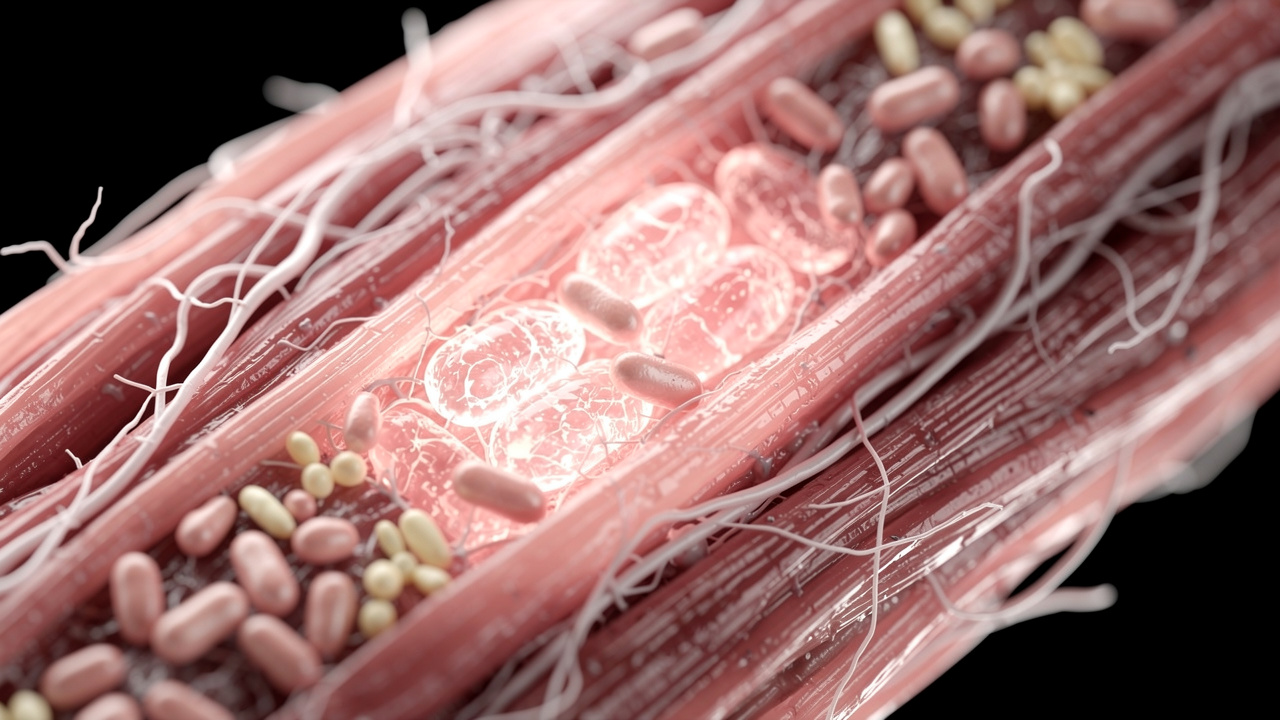
During intense exercise, your muscles burn through ATP, the energy currency of the cell. Cordyceps for exercise performance has been linked to:
-
Higher ATP availability
Cordyceps contains adenosine and cordycepin, which influence how cells generate ATP. Animal studies suggest cordyceps upregulates pathways that help restore ATP faster, especially under exertion. You can read more about ATP itself here: adenosine triphosphate (ATP). -
Activation of AMPK, the energy sensor
Research on Cordyceps militaris extracts shows activation of AMP‑activated protein kinase (AMPK), a master regulator that detects low energy and flips on processes that make more ATP while dialing down energy-wasting pathways. For athletes, better AMPK signaling can mean more efficient fuel use under stress.
2. Better Oxygen Use And Blood Flow
Cordyceps for exercise performance also appears to influence how your body delivers and uses oxygen:
-
Improved oxygen uptake (VO₂max)
Several human trials report increases in VO₂max—your maximum rate of oxygen consumption—after weeks of cordyceps supplementation. A higher VO₂max is linked with better aerobic performance and endurance. -
Support for vasodilation and circulation
Cordyceps may encourage blood vessels to relax, which can improve blood flow to working muscles and organs. Better circulation means more oxygen and nutrients reach the tissues that are doing the work. -
Higher ventilatory and anaerobic thresholds
Studies in both younger and older adults show that cordyceps can shift ventilatory threshold (VT) and anaerobic threshold upward. That means you can perform at a higher intensity before breathing and lactate build-up become limiting factors.
Sports scientists often explain VO₂max as "the ceiling of your aerobic engine—raise the ceiling, and you can work harder for longer."
3. Glucose Metabolism, Lactate, And Fatigue
Cordyceps for exercise performance doesn’t just affect oxygen; it also influences how muscles access and use fuel. Research indicates that cordyceps:
-
Promotes expression of GLUT4, the transporter that moves glucose into muscle cells
-
Supports better glucose uptake during and after exercise
-
May help clear lactate more efficiently by improving blood flow and hepatic (liver) processing
The result for many athletes is a noticeable change in time to exhaustion—they can sustain a given workload longer before hitting the wall.
4. Antioxidant, Anti-Inflammatory, And Adaptogenic Effects
Heavy training ramps up oxidative stress and inflammation. Cordyceps contains polysaccharides and antioxidant compounds that:
-
Reduce exercise-induced oxidative damage
-
Help modulate inflammatory signaling
-
Support the adrenals and stress-hormone balance
Together, these actions make cordyceps for exercise performance especially appealing to those who train hard, sleep too little, or juggle intense work and family schedules.
What The Research Actually Shows
Cordyceps for exercise performance isn’t just theory; there are several human and animal trials that give a clearer picture of what to expect.
Aerobic Capacity: VO₂max, Ventilatory Threshold, And Time To Exhaustion

Key findings from controlled studies include:
-
VO₂max improvements
-
Research shows that Cordyceps militaris improves tolerance to high intensity exercise, with an adaptogenic mushroom blend containing Cordyceps militaris at 4 g/day for 3 weeks leading to roughly a 10% rise in VO₂max in recreationally active adults.
-
Studies on the Effect of Cs-4® (Cordyceps sinensis) found that older adults taking 3 g/day of Cs‑4 (Cordyceps sinensis mycelium) for 6 weeks showed significant VO₂max gains as well.
-
-
Ventilatory and anaerobic thresholds
-
In the same types of protocols, ventilatory threshold increased by over 40% in some younger groups and by about 10–13% in older populations. This reflects an ability to handle higher workloads aerobically before shifting to heavy anaerobic metabolism.
-
-
Time to exhaustion (TTE)
-
After 1 week of a C. militaris blend, participants could ride a cycle ergometer about 28 seconds longer at high intensity.
-
After 3 weeks, the improvement in TTE grew to nearly 70 seconds, showing that the benefits build with consistent use.
-
The pattern is consistent: cordyceps for exercise performance works best when taken daily over several weeks, not as a one-off pre-workout.
High-Intensity Efforts And Power Output
Cordyceps is primarily an endurance ally, but there is growing interest in its effect on high-intensity and strength performance:
-
Relative peak power (RPP)
-
A 3‑week course of a Cordyceps militaris blend increased RPP during a 3‑minute maximal cycling test. One week was not enough to move the needle.
-
-
Muscle strength
-
In animal studies, 12 weeks of C. militaris extract improved grip strength compared with controls, showing a modest but significant effect on force production.
-
Other measures like average power and percent power drop show mixed results across studies. That means cordyceps for exercise performance should be viewed as a subtle support for high-intensity output rather than a replacement for creatine or serious strength programming.
Fatigue, Recovery, And Biomarkers

Research indicates that Cordyceps sinensis accelerates stem cell recruitment to skeletal muscle tissue, which helps explain how cordyceps influences recovery between training sessions:
-
Less perceived fatigue
Many users report feeling “less drained” after hard efforts, consistent with improved ATP production and better oxygen use. -
Biochemical markers
In animal models, cordyceps lowered blood urea nitrogen (BUN), a fatigue-related marker linked to protein breakdown and metabolic stress, even when markers of muscle damage (like AST, ALT, and LDH) stayed unchanged. -
Antioxidant and anti-inflammatory support
Cordyceps polysaccharides and other compounds help neutralize free radicals and ease inflammation, which may shorten the window of soreness and stiffness between intense sessions.
For athletes and busy professionals, cordyceps for exercise performance often shows up as fewer “off days,” steadier energy, and better consistency across the week.
As one sports nutritionist put it to a group of recreational runners, "Think of cordyceps as a gentle nudge to your energy systems, not a magic shortcut."
Stacking Cordyceps With Other Mushrooms And Nutrients

Cordyceps rarely travels alone in modern formulas. Stacking it wisely can make cordyceps for exercise performance even more compelling.
Cordyceps + Lion’s Mane + Reishi
A common trio for performance and brain health includes:
-
Cordyceps – supports ATP production, oxygen use, and endurance
-
Lion’s mane – supports nerve health, focus, and cognitive resilience
-
Reishi – supports immune balance, stress response, and sleep quality
Blends built around reishi—such as Synchronicity Health’s Forage Adaptogenic Mushroom Blend—can sit at the center of a stack that also uses cordyceps and lion’s mane to cover endurance, mental sharpness, and recovery. For someone stacking cordyceps for exercise performance, this combination can provide both physical and mental support.
You’ll also see cordyceps in:
-
Mushroom cocoa powders with lion’s mane and reishi
-
Mushroom coffees or elixirs designed for a calmer, more sustained pre‑workout lift
-
Evening routines where reishi-focused blends like Forage Adaptogenic Mushroom Blend are paired with cordyceps to support overnight repair
Cordyceps + Vitamin B12 And Other Nutrients
Cordyceps for exercise performance also pairs well with nutrients that support red blood cells and mitochondrial function, including:
-
Vitamin B12 – essential for red blood cell formation and energy metabolism
-
Iron (when needed) – supports hemoglobin and oxygen transport
-
Magnesium – involved in ATP production and muscle relaxation
Combining cordyceps with B12 can support both cellular energy generation and oxygen delivery, especially in people who feel chronically low on energy or train in the early morning before work.
How To Use Cordyceps For Exercise Performance
Choosing A Form That Fits Your Routine
Cordyceps supplements come in several forms, and the “best” one is usually the one you’ll actually use consistently:
-
Capsules or tablets
-
Easy to dose and travel with
-
Often combine cordyceps with lion’s mane and reishi in performance blends
-
-
Powders
-
Mix into smoothies, coffee, tea, or a mushroom cocoa drink
-
Ideal for people who already have a morning shake or pre‑workout ritual
-
-
Liquid extracts and tinctures
-
Fast to take and easy to adjust by the dropper
-
Helpful if you dislike swallowing capsules or want something you can add to water on the go
-
No matter the format, look for:
-
Clear identification of species (C. militaris, Cs‑4, or both)
-
Standardized extracts when possible
-
Transparent sourcing and third‑party testing
Evidence-Based Dosage And Duration
Cordyceps for exercise performance is very dose- and time-dependent. Research suggests:
-
Lower doses (1–2 g/day)
-
May help when taken for many weeks (e.g., 12 weeks in older adults)
-
Less likely to produce noticeable changes in trained athletes in the short term
-
-
Higher doses (3–4.5 g/day)
-
Most consistent benefits on VO₂max, ventilatory threshold, and time to exhaustion are seen in this range
-
Many positive trials run at 3–4 g/day for at least 3 weeks
-
For most healthy adults interested in cordyceps for exercise performance:
-
Aim for 3–4 g/day (from high-quality extract or mycelial products), divided once or twice daily
-
Take it every day, not just on training days
-
Expect meaningful changes after 3–6 weeks, with benefits often growing over time
Cordyceps works more like training itself than like a caffeine shot—the gains build gradually.
Safety, Side Effects, And Who Should Be Cautious
Cordyceps for exercise performance is generally well tolerated in human studies, even at doses up to 4–6 g/day. That said, it is still a biologically active supplement. Reported side effects include:
-
Mild digestive upset (nausea, loose stool, or stomach discomfort)
-
Dry mouth or throat
-
Rare allergic reactions (rash, itching, or breathing changes)
You should talk with a healthcare professional before using cordyceps if you:
-
Are pregnant, breastfeeding, or planning pregnancy
-
Take blood thinners, immunosuppressive medications, or diabetes drugs
-
Have a history of mushroom allergies or autoimmune disease
Choose reputable brands, follow label directions, and start at the lower end of the dose range for the first week to test your tolerance.
A simple rule many sports dietitians share is, "Treat new supplements with the same respect you’d give to new training blocks—start gradually and pay attention to how you respond."
How Athletes And High-Performers Use Cordyceps
Real-world use of cordyceps for exercise performance tends to follow a few patterns:
-
Endurance runners and cyclists
Many take 3–4 g/day of cordyceps for several weeks leading into races. They often report smoother breathing at race pace and less of a “hard crash” late in long sessions. -
Strength and power athletes
Lifters and CrossFit athletes sometimes stack cordyceps with creatine and a reishi-focused blend such as Forage Adaptogenic Mushroom Blend to support both power output and recovery. Some describe better work capacity across sets rather than big jumps in one-rep max strength. -
Busy professionals who still train hard
People balancing careers, families, and training often report that cordyceps for exercise performance helps them feel less wiped out after early-morning or late-evening workouts, especially when combined with lion’s mane for focus and reishi for sleep.
Many athletes prefer:
-
A morning dose with coffee, mushroom cocoa, or a smoothie
-
A second dose early afternoon on heavy training days
The key theme across stories is consistency rather than timing to the minute.
Practical Tips For Getting The Most From Cordyceps
If you’re ready to test cordyceps for exercise performance, a few practical steps can help you get clearer results:
-
Define Your Goal
Decide whether you care most about endurance, power, or recovery. This helps you notice relevant changes—such as easier tempo runs or shorter recovery between intervals. -
Start With A 6–8 Week Experiment
Run cordyceps at a steady daily dose (ideally 3–4 g/day) for at least 6 weeks while keeping your training plan relatively stable. Track heart rate, pace, perceived effort (RPE), and sleep. -
Pair It With Smart Basics
Cordyceps works best on top of:-
Adequate sleep
-
Reasonable nutrition and protein intake
-
A structured program with planned rest days
-
-
Consider Stacking
If it fits your health profile, you can experiment with stacks that pair cordyceps for exercise performance with lion’s mane, Forage Adaptogenic Mushroom Blend, and vitamin B12 for broader support. -
Monitor How You Feel Off-Cycle
After your trial, take 2–4 weeks off and see how your training and energy compare. Many people only realize how much cordyceps was doing when they stop it.
Always loop in your healthcare provider, especially if you have medical conditions or take prescription medications.
The Bottom Line: Is Cordyceps Worth It For Exercise Performance?
For people serious about endurance, recovery, and sustainable energy—especially those who want more than a quick stimulant hit—cordyceps for exercise performance is a well-supported option. Human and animal studies point to:
-
Better oxygen use and aerobic capacity
-
Longer time to exhaustion at a given workload
-
Support for ATP production and metabolic efficiency
-
Antioxidant and stress-modulating effects that can help with recovery
Cordyceps is not a substitute for training, nutrition, or sleep. But as part of a thoughtful performance strategy—alongside smart programming and, when desired, other functional mushrooms like lion’s mane and reishi—it can help you train harder, recover better, and feel more capable session after session.
If you’re a biohacker, an athlete, or a busy professional trying to keep performance high as the years go by, a well-formulated cordyceps regimen may be one of the more science-backed ways to support your body’s own systems for long-term exercise performance.


Leave a comment
All comments are moderated before being published.
This site is protected by hCaptcha and the hCaptcha Privacy Policy and Terms of Service apply.