

Introduction
A tiny mineral ion changing the way people think about mood, cognition, and longevity sounds like science fiction. Yet that is exactly how many in the health optimization space now view the lithium supplement. What used to be known only as a prescription mood stabilizer is turning into a micro-dose tool for brain health and emotional balance.
Lithium is a naturally occurring trace element in rocks, soil, water, and food. In small amounts it is present in almost every diet, although intake varies a lot depending on local water and soil levels. At the same time, prescription lithium medications use much higher doses and are tightly monitored for bipolar disorder. Low-dose lithium supplements, usually in the form of lithium orotate, sit in a very different category.
Biohackers, busy professionals, and longevity fans are now experimenting with low-dose lithium for cognitive support, neuroprotection, and more stable mood. That interest raises an important question: How much lithium is both safe and effective, and where is the line between helpful trace mineral and risky drug-like exposure?
This guide walks through what lithium is, how prescription drugs differ from dietary lithium supplements, what current research says about lithium dosage, and how to use it as safely as possible. By the end, you will be able to read a lithium label, understand dose ranges, spot red flags, and decide whether this mineral fits into your personal health strategy.
Key Takeaways
-
Prescription vs. supplemental dosing: Prescription lithium and supplemental lithium use very different dose ranges. Prescription products usually provide hundreds of milligrams per day, while a typical lithium supplement gives only a few milligrams of elemental lithium. Mixing these two categories in your mind can lead to serious dosing mistakes.
-
Lithium orotate is the standard supplemental form: Lithium orotate is the most common form in over-the-counter products. Many capsules contain about five milligrams of elemental lithium, and some users go up to ten or twenty milligrams per day. That is still far below prescription doses, yet careful use is still important.
-
Evidence is promising but early: Research hints at potential cognitive and neuroprotective benefits from low-dose lithium intake. Studies link higher lithium levels in water with lower suicide and dementia rates. Even so, current evidence is still early and does not prove clear cause and effect for every claimed benefit.
-
Certain health conditions raise the stakes: Medical supervision becomes especially important if someone has kidney, thyroid, or heart issues. Those organs help clear lithium or are sensitive to its effects. A lithium supplement can add extra strain if there are silent problems already present.
-
Hydration and sodium intake matter: Steady hydration and a fairly stable sodium intake help keep lithium levels steady. Sudden fluid loss, heavy sweating, or aggressive low-salt diets can raise lithium concentration in the blood and raise safety risks.
-
Common drugs can change lithium levels: NSAIDs, diuretics, and several blood pressure medications can change lithium handling in the body. These shifts can push levels higher than expected, even with low supplement doses, which makes open discussion with a doctor important.
-
No official “one-size” dose: There is no official FDA recommended or guaranteed safe daily dose for lithium supplements. The right amount depends on health status, medications, diet, kidney function, and personal response, so a one-size-fits-all answer does not exist.
What Is Lithium and Why Are People Taking It as a Supplement
Lithium is an alkali metal and a trace element. Its name comes from the Greek word lithos, meaning stone, because it was first discovered in mineral rock. Small amounts show up naturally in rocks, soil, groundwater, and the plants that grow in that soil, such as grains and vegetables.
Because lithium is present in water and crops, everyone takes in a little bit from food and drinking water. However, the amount can differ several-fold between regions depending on natural deposits and water sources. Some areas have almost no lithium in drinking water, while others have naturally higher levels that people consume every single day without realizing it.
Researchers now view lithium as a possible “essential” trace mineral, along the lines of zinc or selenium, although this has not been formally confirmed. It appears to play roles in brain signaling and may support blood cell formation and other cellular functions. Epidemiological studies have noticed that regions with slightly higher natural lithium in water sometimes have lower suicide, violence, and dementia rates, which has pushed interest in low-dose intake.
This has caught the attention of health enthusiasts, neurohackers, and people focused on resilience as they age. Many are turning to a lithium supplement in hopes of gentle mood support, better stress handling, or long-term protection of brain tissue. This is very different from prescription lithium treatment for bipolar disorder, which uses much higher doses that act almost like a drug.
Working theories about low-dose lithium include:
-
Support for neurotransmitter balance
-
Increased brain-derived neurotrophic factor (BDNF)
-
More neurogenesis (growth of new neurons)
-
Less damage from oxidative stress or excitotoxicity
- Mood boosting effects
While these ideas are promising, most are still based on early research and need more human trials. That is why dose, safety, and medical context matter so much.
Prescription Lithium vs. Lithium Supplements Understanding the Critical Differences

When talking about lithium, one of the biggest safety issues is simple confusion. The word lithium can describe a high-dose prescription drug and a low-dose lithium supplement, yet the purposes, doses, and risks are very different. Knowing which category applies to you is the first step in using this mineral wisely.
Prescription Lithium (Lithium Carbonate and Lithium Citrate)
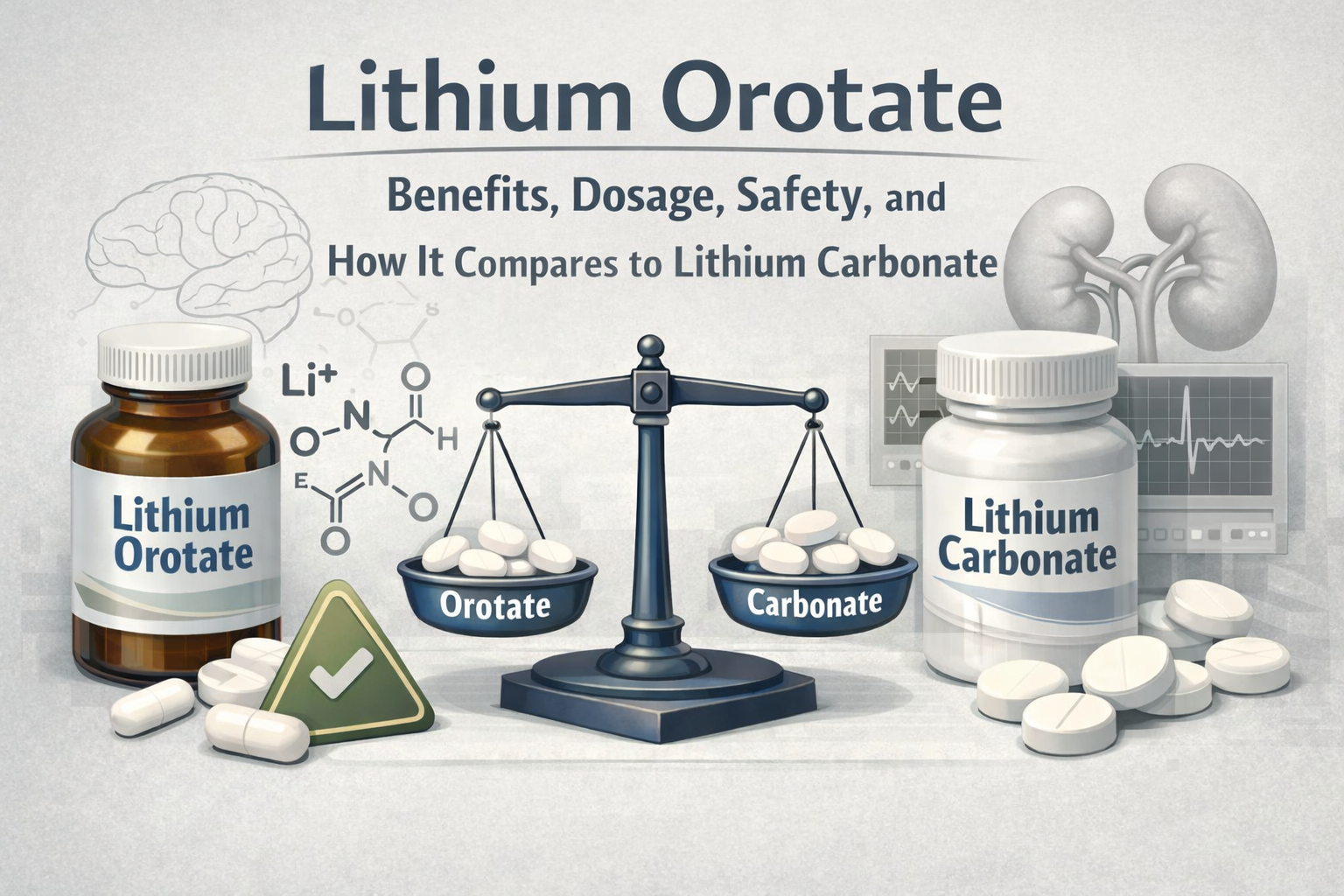
Prescription lithium is a regulated drug used mainly for bipolar disorder. The most common forms are lithium carbonate tablets and capsules, and lithium citrate solution, sold under brand names like Eskalith and Lithobid. These products usually provide between 600 and 1800 milligrams per day, divided into multiple doses.
At those levels, lithium acts strongly on the central nervous system. It affects several neurotransmitter systems and signaling pathways to stabilize mood and reduce manic episodes. Because the helpful dose and the toxic dose are not very far apart, doctors measure blood lithium levels and aim for a range around 0.6 to 1.2 mEq per liter.
This kind of therapy always requires medical supervision. Doctors regularly check:
-
Kidney function
-
Thyroid function
-
Blood lithium levels
and they adjust the dose as needed. The side effect profile is well known and can include weight gain, tremor, thyroid changes, and in some cases kidney problems. Prescription lithium is powerful and effective when used correctly, but it is not something to combine casually with a lithium supplement.
Lithium Supplements (Primarily Lithium Orotate)
On the supplement side, the most common form is lithium orotate, which is lithium bound to orotic acid. Many capsules provide around 120 to 130 milligrams of lithium orotate, which equals about five milligrams of elemental lithium. Typical supplement intakes range from one to twenty milligrams of elemental lithium per day, far below prescription doses.
Fans of lithium orotate often claim that the orotic acid carrier helps lithium cross the blood-brain barrier more easily, allowing lower doses to have meaningful brain effects. Animal studies give mixed signals about this idea, and human data remain limited. Still, many integrative and biohacking communities lean toward this form because of convenience and anecdotal reports.
As dietary supplements, these products are not FDA-approved to treat any disease, and they do not go through the same rigorous trials as prescription drugs. Labels often mention cognitive support, mood stability, or healthy aging, yet the science behind those claims is still thin. Even at low doses, a lithium supplement can carry risk, especially in people with kidney, thyroid, or heart issues, which makes product quality and dose control very important.
Why This Distinction Matters for Your Safety
Because the dose, intent, and monitoring are so different, borrowing advice from one category and using it in the other can be dangerous. Side effects, lab testing needs, and scientific evidence vary a lot between high-dose prescriptions and low-dose supplements. When talking with your doctor, always be clear about whether you mean prescription lithium or a lithium orotate product from a supplement company.
How Much Lithium Should You Take Evidence-Based Dosing Guidelines

For many people interested in a lithium supplement, the first question is simple: How much is enough to help, and how much becomes risky? Right now there is no official recommended daily allowance or clear upper safe limit for supplemental lithium, so guidance comes from observational studies, small trials, and clinical experience.
That lack of hard rules makes dosing tricky. The goal is to find a low dose that may support brain and mood health while staying far from the levels used in prescription therapy. Most people who experiment with lithium orotate never get blood lithium testing, which makes a cautious approach and good education even more important.
“The dose makes the poison.”
— Paracelsus (1493–1541)
That old toxicology principle applies very clearly to lithium.
Typical Supplemental Dosing Ranges
In practice, most people who use a lithium supplement start very low. A common starting dose is around 5 mg of elemental lithium per day, often taken as one capsule of lithium orotate with food. Some protocols use microdoses of 1–2 mg for several weeks to see if gentle benefits appear without side effects.
From there, a typical maintenance range is 10–20 mg of elemental lithium per day. Some integrative doctors may go as high as 20–40 mg for specific goals, though that is closer to a gray zone where lab monitoring makes sense. Moving into those upper ranges without medical input is not wise, especially if you have any kidney or thyroid concerns.
When reading labels, be sure you understand:
-
Total compound weight (for example, 120 mg of lithium orotate)
-
Elemental lithium content (for example, 5 mg of lithium)
You care about the elemental lithium number, not just the salt weight.
Timing can also matter. Many users take a lithium supplement once in the morning, while others split the dose into morning and evening to keep levels more stable. A common rule of thumb is “start low and go slow.” Begin with the smallest plausible dose, stay there for a few weeks, and only increase if you feel no benefit and have no side effects.
What the Research Says About Effective Doses
Research on low-dose lithium and lithium supplements is still developing, but a few themes show up:
-
Population studies have found that regions where water naturally provides around 0.2–2 mg of lithium per day often have lower rates of suicide and sometimes lower dementia rates.
-
One trial in people with Alzheimer’s disease tested microdose lithium (hundreds of micrograms per day) and found that cognitive decline slowed over time.
-
Other early work has used around 15 mg of lithium aspartate for mood support, with some positive signals.
Very few controlled trials have looked directly at lithium orotate capsules in healthy adults. Most supplement users therefore work in the 5–20 mg per day range based on a mix of clinical experience, observational data, and theory. Higher doses may give stronger effects but bring more risk as well.
Since supplement users rarely get routine blood lithium testing, it makes sense to stay in the lower bands unless under medical care.
Factors That Influence Your Ideal Dose
Several personal factors shape the best dose of a lithium supplement, including:
-
Kidney function: The kidneys clear lithium; impaired function raises blood levels.
-
Body size: Larger people may tolerate slightly higher amounts.
-
Sodium intake: Very low or very high salt intake can change lithium levels.
-
Hydration status: Dehydration slows lithium clearance.
-
Medications: NSAIDs, diuretics, ACE inhibitors, ARBs, and some psychiatric drugs affect lithium handling.
-
Your goals: Gentle neuroprotection may need less than noticeable mood support.
-
Individual sensitivity: Some people feel effects at very low doses; others notice little even at higher ones.
Forms of Lithium Supplements Which One Should You Choose
Walk through any supplement marketplace and you will see several different lithium salts on labels. For someone new to lithium supplements, the choice can seem confusing. The main question is whether the form really changes how lithium works, or whether dose and product quality matter more.
Lithium Orotate (Most Common)
Lithium orotate is by far the most common form in modern lithium supplements. In this salt, lithium is bound to orotic acid, a compound involved in nucleotide and DNA synthesis. Supporters argue that orotic acid may help shuttle lithium into cells and across the blood-brain barrier at lower doses.
Animal studies have sometimes shown higher brain lithium levels with orotate compared to carbonate, though these experiments do not always match human use. Human research comparing these forms head to head is very limited, so most claims about better delivery remain theoretical. Still, many practitioners report that their patients feel effects at relatively low elemental doses when using lithium orotate.
Most products using this form provide around 120–130 mg of lithium orotate per capsule, which works out to roughly 5 mg of elemental lithium. Because elemental content can vary slightly between brands, checking the fine print matters. Choosing products from companies that publish third-party testing, as Synchronicity Health does for its advanced formulations, adds another layer of safety when selecting any lithium supplement.
Other Lithium Forms
A few other lithium salts appear in the supplement world:
-
Lithium aspartate: Lithium bound to aspartic acid, an amino acid involved in energy cycles. Some early mood studies used this form, and its behavior is likely similar to orotate at the same elemental dose, although direct comparisons are scarce.
-
Lithium chloride and low-dose lithium citrate: These sometimes show up in niche products. Lithium chloride behaves much like prescription forms in terms of absorption, while low-dose citrate mirrors the prescription liquid but at a tiny fraction of the dose.
For most people, the key point is that the body responds to elemental lithium itself. Differences between salts may matter less than:
-
Total elemental amount
-
Product purity
-
Manufacturing standards
Quality Considerations When Selecting a Supplement
No matter which form of lithium supplement you choose, quality control is vital. Look for:
-
Third-party testing seals (USP, NSF, or independent lab reports)
-
Labels that clearly list elemental lithium, not just the total salt weight
-
Transparent information on sourcing and manufacturing standards
-
Limited and clearly described excipients or fillers
Synchronicity Health, for example, applies strict potency verification and third-party testing across its nasal sprays and stackable formulas. That same philosophy is a good standard to apply when judging any lithium supplement you are considering.
Potential Benefits What Can Low-Dose Lithium Do for Your Brain and Body
Interest in low-dose lithium supplements is driven by potential benefits for the brain, mood, and long-term health. At the same time, the quality of evidence ranges from strong in prescription settings to early and suggestive in supplemental use. It is helpful to frame these benefits as possibilities backed by varying levels of data, rather than guarantees.
“Absence of evidence is not evidence of absence.”
This caution applies well to low-dose lithium research: promising signals do not equal proof, but they are worth watching.
Cognitive Function and Neuroprotection
One of the most talked about benefits of a lithium supplement is support for brain aging. In cell and animal studies, lithium seems to protect neurons from oxidative stress and excitotoxic damage. It influences signaling pathways that control cell survival and may reduce the buildup of tau protein and beta-amyloid, both tied to Alzheimer’s disease.
Lithium also appears to increase levels of brain-derived neurotrophic factor (BDNF), which supports neuroplasticity and the growth of new neurons. Epidemiological research has observed that regions with more lithium in drinking water often have lower rates of dementia, with recent studies showing lithium deficiency and the onset of Alzheimer's disease may be linked. Small human studies using microdose lithium in people with early Alzheimer’s have seen slower cognitive decline.
All of this makes low-dose lithium interesting as a long-term neuroprotective tool. Still, clear trials in healthy adults using standard lithium orotate doses are rare, so expectations should stay measured. Any effect is likely to be gradual and subtle rather than dramatic.
Mood Support and Emotional Stability
Lithium’s long history as a mood stabilizer at prescription doses naturally leads people to ask whether a lithium supplement can nudge mood in a gentler way. While the doses in supplements are far lower, some mechanisms overlap. Lithium modulates several neurotransmitters, may support healthier circadian rhythm signaling, and affects second messenger systems related to stress responses.
Population studies have linked low but steady lithium intake in water with lower suicide rates and sometimes lower rates of depression. Small clinical reports suggest that low-dose lithium can smooth irritability and improve stress tolerance in some people. Many users describe feeling a bit more even emotionally after a few weeks.
At the same time, these supplements are not a replacement for proper treatment of major depression, bipolar disorder, or other psychiatric conditions. Anyone with diagnosed mood disorders should work closely with a mental health professional rather than self-treating with a lithium supplement.
Other Potential Applications
Beyond mood and cognition, researchers and biohackers have proposed several other uses for lithium supplements:
-
In animal models, low-dose lithium has extended lifespan in some species, suggesting a possible link to longevity pathways (human data are still limited).
-
Lithium interacts with molecular clocks that regulate circadian rhythm, which may partly explain why some users report more regular sleep timing.
-
Lithium can increase white blood cell counts in medical settings and may influence inflammatory signaling.
Some clinicians have explored lithium for migraine prevention or as a small part of alcohol use disorder management, usually at prescription levels or under close supervision.
For all of these areas, evidence quality varies widely, and many claims sit in the “interesting but not yet proven” category. A lithium supplement should be viewed as one experimental tool, best used with realistic expectations and in combination with well-established lifestyle habits.
Safety First Side Effects, Risks, and When to Avoid Lithium Supplements
Even though a lithium supplement uses much lower doses than prescription drugs, safety is not automatic. Lithium has a narrow comfort range in the body, and relatively small changes in kidney function, sodium balance, or drug use can shift levels. Knowing possible side effects and warning signs helps you act quickly if something feels off.
Common and Mild Side Effects
At typical supplement doses, many people notice no side effects at all. When mild issues do appear, they often involve:
-
Increased thirst
-
More frequent urination
-
Mild hand tremor
-
Slight gastrointestinal upset (nausea or loose stools)
A lithium supplement can sometimes cause mild fatigue or a “slowed” feeling, especially as the body adjusts in the first week or two. Small weight changes are more common at prescription levels but are still possible. Starting with a low dose and taking it with food often reduces these issues, and many symptoms fade as the body adapts or the dose is lowered.
Serious Risks and Red Flags
More serious problems are rare at typical lithium supplement doses, but they can happen, especially if dehydration, kidney problems, or interacting drugs are present. Lithium toxicity is a medical emergency.
Watch for warning signs such as:
-
Severe nausea, vomiting, or diarrhea
-
Marked tremor, muscle weakness, or twitching
-
Sudden clumsiness or difficulty walking
-
Confusion, agitation, or trouble speaking clearly
-
Blurred vision or ringing in the ears
-
Irregular or very slow heartbeat
Lithium can slow the heart or cause irregular beats in sensitive people, especially those with preexisting heart disease. Long-term use at any dose may affect thyroid function and, in some cases, kidney function.
If you feel any severe or fast-worsening symptoms while using a lithium supplement, stop taking it and seek medical care right away. Mention lithium use clearly to emergency staff.
Who Should Not Take Lithium Supplements
Some people should avoid lithium supplements entirely:
-
Those with severe kidney disease or very low kidney function
-
People with Brugada syndrome or significant cardiac rhythm disorders
-
Anyone who is severely dehydrated, has very low sodium levels, or is on aggressive fluid restriction
-
Pregnant women, because lithium crosses the placenta and can affect fetal development
-
Breastfeeding mothers, since lithium passes into breast milk
Many others sit in a gray zone where only careful, supervised use makes sense, including:
-
People with mild-to-moderate kidney impairment
-
Those with thyroid disorders
-
People with high blood pressure or other heart disease
-
Older adults
-
Anyone on multiple daily medications
-
Children and teens
In all these situations, starting lithium without direct guidance from a knowledgeable clinician is not a good idea.
Critical Drug and Supplement Interactions You Must Know About
Lithium has many interactions with common drugs, even at the lower doses used in lithium supplements. Some medications raise lithium levels, driving up toxicity risk, while others lower levels and may blunt any benefit. Because many of these drugs are widely used for pain, blood pressure, or mental health, taking stock of your full medication list is essential.
Medications That Increase Lithium Levels (Higher Toxicity Risk)
Several major drug classes tend to raise lithium levels by affecting kidney clearance or sodium balance:
-
NSAIDs (nonsteroidal anti-inflammatory drugs): Ibuprofen, naproxen, and similar products can reduce how well the kidneys clear lithium. This effect can appear even with short-term or occasional use.
-
Diuretics:
-
Thiazide types (for example, hydrochlorothiazide)
-
Loop diuretics (for example, furosemide)
These cause sodium loss in the urine. Since the kidneys handle lithium and sodium in similar ways, losing sodium prompts the body to hold on to more lithium.
-
-
ACE inhibitors and ARBs:
-
ACE inhibitors (lisinopril, enalapril, etc.)
-
Angiotensin receptor blockers (losartan, valsartan, etc.)
Both groups can raise lithium levels.
-
Selective serotonin reuptake inhibitors (SSRIs) sometimes combine with lithium in psychiatric practice, yet this is always under close monitoring. At any dose, combining SSRIs with a lithium supplement increases the risk of serotonin syndrome, a serious condition marked by agitation, fast heart rate, fever, and muscle stiffness. Anyone on these drugs should talk with their prescriber before adding lithium.
Medications That May Decrease Lithium Levels
Some substances push lithium levels in the opposite direction:
-
Caffeine and related compounds (like theophylline) can increase kidney clearance of lithium.
-
Acetazolamide, a diuretic used for altitude sickness or glaucoma, also increases lithium excretion.
-
Very high sodium intake, including heavy use of salt tablets or sodium-rich medications, can speed lithium loss.
These effects are less dangerous than those that raise levels, but they can still change how a lithium supplement works.
Other Important Interactions and Considerations
Beyond these major players, several additional drug groups deserve attention:
-
Calcium channel blockers (diltiazem, verapamil) may increase the side effects of lithium on the nervous system.
-
Antipsychotic drugs taken with lithium have, in rare cases, led to brain-related toxicity with serious symptoms.
-
Certain muscle relaxants used during surgery may last longer when lithium is present, which is why surgeons often ask patients to stop lithium ahead of time.
-
Some anticonvulsant drugs can interact with lithium and raise the risk of side effects.
-
Herbal products like St. John’s wort and other supplements that raise serotonin should be used carefully or avoided alongside a lithium supplement, to lower the chance of serotonin syndrome.
-
High-dose iodine or certain thyroid medications may compound lithium’s effects on the thyroid gland.
This list is not complete. The safest approach is to keep an updated record of all medications and supplements and share it with every healthcare provider you see. Pharmacists are an excellent resource for catching hidden interactions when you start a lithium supplement or any new drug.
Hydration, Diet, and Lifestyle Factors That Affect Lithium Safety and Effectiveness

Lithium handling in the body is tightly linked to water and sodium balance. The kidneys filter both sodium and lithium, and when that balance shifts, lithium levels change as well. For someone taking a lithium supplement, daily habits around hydration, diet, and exercise have a real impact on safety.
The Sodium-Lithium Connection
The kidneys treat lithium and sodium almost like cousins. When sodium levels in the body drop, the kidneys try to conserve sodium by reabsorbing more of it back into the bloodstream. Lithium often comes along for that ride, raising lithium levels higher than expected. When sodium intake suddenly jumps, the kidneys let more sodium go, and lithium tends to follow.
That is why big swings in salt intake can be a problem for anyone using a lithium supplement. Going from a normal diet to a strict low-sodium diet for blood pressure or weight loss can cause lithium levels to climb, even if the dose stays the same. Sudden salty binges can push levels down and change how you feel.
A safer plan is to keep daily sodium intake fairly steady. For most adults, the general public health guideline of around 2300 mg per day is a reasonable starting point, unless a doctor advises otherwise. Try to avoid fad diets that sharply cut salt without first talking to a healthcare professional.
Hydration Requirements
Water intake is just as important as sodium for safe use of a lithium supplement. Dehydration reduces kidney blood flow and slows lithium clearance, which can drive up levels.
As a rough guide:
-
Many healthy adults do well with 8–10 glasses (about 64–80 oz) of water or other hydrating fluids per day.
-
Needs rise with hot weather, sauna use, or intense exercise.
-
Illness with vomiting, diarrhea, or fever can rapidly change both fluid and sodium balance.
During these higher-risk situations, it helps to:
-
Drink extra water and consider an electrolyte drink
-
Watch for signs of dehydration (dark urine, dizziness, dry mouth)
-
Discuss temporary dose changes with a clinician if you are on the higher end of lithium supplement dosing or have kidney issues
Lifestyle Factors and Special Situations
Daily habits beyond diet and water also shape how your body responds to a lithium supplement:
-
Exercise: Great for health, but intense sessions raise fluid and electrolyte loss. Sip water before, during, and after hard workouts and include a modest amount of salt in food.
-
Alcohol: Tends to dehydrate the body and can interfere with sleep and mood. Keeping alcohol use low or avoiding it while experimenting with lithium is wise.
-
Caffeine: Usually safe in moderate amounts, but try to keep intake fairly steady from day to day so its effect on lithium clearance stays predictable.
Before planned surgery or procedures using anesthesia, patients on prescription lithium are often told to stop it one to two weeks ahead. If you use a lithium supplement, share that information with your surgeon and anesthesiologist so they can advise you on pause timing. During any illness that causes vomiting, diarrhea, or high fever, contacting a healthcare provider about whether to hold lithium for a short time is also smart.
Monitoring and Medical Supervision When Do You Need Professional Oversight

Unlike prescription lithium, which always involves lab tests and doctor visits, lithium supplements are sold over the counter without any formal monitoring. That does not mean medical input is unnecessary. For some users, especially those with other health issues, professional oversight can make the difference between safe use and serious trouble.
Who Should Definitely Consult a Healthcare Provider Before Starting
Certain groups should not start a lithium supplement on their own:
-
Anyone with known kidney disease, reduced kidney function, or a history of significant kidney problems
-
People with thyroid disorders
-
Those with heart disease or abnormal heart rhythms, especially Brugada syndrome
-
Anyone already taking NSAIDs, diuretics, ACE inhibitors, ARBs, antidepressants, antipsychotics, or seizure medications
-
Adults over 65, or those with several chronic conditions or many daily medications
-
Anyone considering doses above 20 mg of elemental lithium per day
For these groups, involving a knowledgeable clinician before starting is essential.
Recommended Monitoring for Supplement Users
For healthy adults using modest doses of a lithium supplement, formal monitoring is less intensive than for prescription therapy but still helpful.
A reasonable plan:
-
Before starting:
-
Kidney panel (serum creatinine, BUN, eGFR)
-
Thyroid tests (TSH, ideally free T4)
-
-
Ongoing (every 6–12 months):
-
Repeat kidney and thyroid labs for long-term users
-
-
Consider blood lithium levels if:
-
Doses exceed 20 mg elemental lithium per day
-
You have kidney or thyroid disease
-
You take interacting medications
-
You develop concerning symptoms
-
Self-monitoring matters too. Pay attention to new or worsening thirst, frequent urination, tremor, fatigue, mood changes, or digestive symptoms, and track your lithium supplement dose and timing.
What to Tell Your Doctor
When you see a doctor, dentist, or pharmacist, always mention that you use a lithium supplement. Be ready to share:
-
Exact product name and brand
-
Elemental lithium per capsule
-
How many capsules per day
-
How long you have been taking it
-
Any symptoms or changes you have noticed
Before starting a new medication, ask specifically whether there are known issues with lithium so your care team can adjust plans if needed.
How to Use Lithium Supplements Practical Protocols and Best Practices
For those who decide that a lithium supplement fits their goals and health status, a clear, cautious protocol helps reduce risk. The main idea is to move slowly, watch your body’s response, and combine lithium with solid lifestyle habits like quality sleep, good nutrition, and regular movement.
The "Start Low, Go Slow" Protocol
A conservative way to begin a lithium supplement is to use a stepwise schedule over several weeks:
-
Weeks 1–2: Initial trial
-
Start with about 5 mg of elemental lithium once per day with food (often breakfast or lunch).
-
Notice thirst, urination, energy, sleep, and fine motor control in your hands.
-
-
Weeks 3–4: Gentle increase (if needed)
-
If there are no side effects and no clear benefit, consider 10 mg per day, often split as 5 mg in the morning and 5 mg in the evening.
-
-
Weeks 5–8: Upper end of self-directed use
-
If still well tolerated but little effect, some users and clinicians move to 15–20 mg per day.
-
This is often viewed as the upper end of self-directed lithium supplement use for healthy adults.
-
Once you find a dose that seems helpful and gentle, keep it steady for several months rather than chasing rapid changes. Avoid going beyond 20 mg per day without medical supervision.
Cycling vs. Continuous Use
A common question is whether to take a lithium supplement every day or cycle on and off. There is no standard rule for cycling at supplemental doses.
Some health enthusiasts:
-
Use continuous daily low doses with regular lab checks.
-
Prefer blocks of several months followed by breaks of a few weeks to give the thyroid and kidneys a rest.
Since research is limited, a reasonable plan is to use continuous low doses while checking in with a healthcare provider to review lab results and decide together whether breaks make sense.
Stacking with Other Supplements
Lithium rarely sits alone in the stack of a health optimization fan. It is often combined with other nutrients that support brain and cellular health, for example:
-
Omega-3 fatty acids (EPA and DHA) for neuronal membranes
-
B vitamins, especially B12 and folate, for methylation and mood regulation
-
Magnesium for relaxation and nervous system balance
-
NAD⁺ precursors, a central focus of Synchronicity Health’s nasal spray systems, to support cellular energy production and mitochondrial function
When building any stack:
-
Introduce lithium on its own first.
-
Wait until you understand how it affects your sleep, mood, and focus.
-
Then carefully add other compounds one at a time.
A practical rule many clinicians use with supplements: “Change only one thing at a time.”
This makes it much easier to see what is helping and what is causing side effects.
Conclusion
Low-dose lithium supplements sit at an interesting crossroads between mineral nutrition, mental health, and longevity science. Observational work and early trials hint that steady trace exposure might support mood stability, cognitive function, and brain resilience with age. At the same time, clear, large-scale trials in everyday supplement users are still missing, so much of the excitement is based on partial data.
For most healthy adults, the practical dosing window seems to fall between 5 and 20 mg of elemental lithium per day, most often as lithium orotate. Within that band, many people report subtle benefits and relatively few problems, especially when they pay attention to hydration, sodium intake, and drug interactions. Yet the idea of a single safe and effective dose does not match reality. Kidney function, thyroid status, medication use, diet, age, and personal biology all shape how a lithium supplement behaves.
Safe use rests on a few key habits:
-
Start with low doses and increase slowly, if at all.
-
Keep water intake and salt intake steady rather than swinging wildly.
-
Watch for early side effects and red flag symptoms.
-
Know which medications can raise lithium levels.
-
Use periodic lab tests for kidney and thyroid health, especially for long-term use.
Lithium should be viewed as one tool among many for supporting brain and emotional health, not as a magic cure. Combining a thoughtful lithium supplement strategy with sleep, stress management, movement, and nutrient-dense food will almost always beat a pill-only approach. Synchronicity Health highlights that same principle across its product line, favoring physician-backed, third-party-tested, synergistic formulas and advanced delivery methods that fit into broader Sync Stacks rather than quick fixes. Bringing that same careful, science-first mindset to lithium can help you make wiser, more confident choices.
FAQs
Is Lithium Orotate Safer Than Prescription Lithium
Lithium orotate and other lithium supplements contain much lower elemental doses than prescription lithium carbonate or citrate. A common supplemental dose is 5–20 mg of elemental lithium per day, compared with hundreds of milligrams in prescription therapy. Lower doses reduce certain risks, yet they do not erase them. Interactions with medications, dehydration, and kidney or thyroid issues can still lead to problems. Supplements also lack the strict FDA monitoring applied to prescription drugs, so thoughtful use and medical input remain important.
Can I Take Lithium Supplements If I Am Already on Antidepressants
Mixing antidepressants and a lithium supplement calls for careful medical guidance. Many antidepressants, especially SSRIs and other serotonergic drugs, can interact with lithium and raise the risk of serotonin syndrome. In psychiatry, doctors sometimes add prescription lithium to antidepressants for treatment-resistant depression, yet this always happens with close monitoring and blood tests. Adding lithium on your own while taking mood or anxiety medications is not safe. Always speak with your prescribing clinician before considering this step.
How Long Does It Take to Notice Benefits From Lithium Supplementation
The timeline for feeling effects from a lithium supplement varies a lot. Some people notice subtle changes in mood stability, irritability, or stress tolerance within 1–2 weeks. For deeper neuroprotective effects, any benefit is likely to build slowly over months of regular use. In prescription settings for bipolar disorder, improvements often start around one to two weeks but continue to develop with ongoing treatment. Expect gentle shifts rather than dramatic changes, and give your body several weeks at a stable dose before judging results.
Do I Need to Get My Blood Tested While Taking Lithium Supplements
Most healthy adults using 5–20 mg per day of a lithium supplement do not need routine blood lithium level testing. However, baseline and periodic checks of kidney and thyroid function are a smart precaution, especially for long-term users. Testing every 6–12 months can catch small problems before they grow. Blood lithium measurements become more important if you use higher doses, have kidney or thyroid disease, take interacting medications, or develop concerning symptoms. When unsure, ask a healthcare provider what level of monitoring fits your situation.
What Should I Do If I Miss a Dose of My Lithium Supplement
If you miss a dose of your lithium supplement, take it when you remember, unless it is almost time for the next one. If it is close to your next scheduled dose, skip the missed capsule and return to your normal plan. Do not double up to catch up, since that can briefly raise lithium levels higher than intended. Staying as consistent as you reasonably can from day to day works better than chasing every missed dose.

Leave a comment
All comments are moderated before being published.
This site is protected by hCaptcha and the hCaptcha Privacy Policy and Terms of Service apply.