

Introduction
For many people, lithium used to mean only one thing: high-dose prescription medication for bipolar disorder and severe mood swings. Over the past few years, interest has shifted toward lithium in tiny amounts, closer to a micronutrient than a drug. In that space, lithium orotate has become a popular topic among health optimizers, biohackers, and anyone curious about brain support.
Lithium orotate is an over-the-counter lithium supplement where lithium binds to orotic acid, a compound the body already uses while building DNA and RNA. Fans claim this form reaches the brain more efficiently than standard salts and that very low doses can support mood, calm, and cognition. Critics argue that the evidence is thin, that marketing is ahead of the data, and that safety at scale is still not fully understood.
For someone who cares about performance, longevity, and mental clarity, this debate matters. If lithium orotate truly delivers benefits at microdoses, it might be a useful tool in a supplement stack. If not, then money and effort go to waste, and in rare cases there could be risk. This article walks through what lithium orotate is, how it differs from lithium carbonate, what users report, what the science actually shows, typical dosing ranges, safety details, and where a science-first brand like Synchronicity Health fits into the picture. By the end, you will have a clear, honest view that helps you decide whether this compound deserves a place in your personal protocol.
As Paracelsus, often called the father of toxicology, put it, "the dose makes the poison"—a reminder that even trace elements such as lithium need respect.
Key Takeaways
-
Lithium orotate is a low-dose lithium supplement where lithium binds to orotic acid instead of carbonate. The idea is that this form may move into the brain more easily, so smaller amounts of elemental lithium might still have an effect, but this has not been firmly confirmed in human studies.
-
Surveys of real users show common reasons for taking lithium supplements that include anxiety relief, mood stability, and better cognition. Many people do report moderate improvements, especially with consistent use over several months, yet there is still a lack of large, high-quality human trials that confirm these effects.
-
Typical lithium orotate intake ranges from about 5 to 20 milligrams of elemental lithium per day, which is far below prescription lithium carbonate doses. Prescription lithium can deliver 169 to 338 milligrams of elemental lithium per day, so the gap between wellness use and medical use is very wide.
-
Modern animal research suggests lithium orotate may stress the kidneys less than earlier studies implied and may even look safer than lithium carbonate at matched doses. That said, cases of overdose and user surveys both show that side effects can still occur, and long-term human safety data remain limited.
-
Lithium carbonate stays the standard for bipolar disorder under physician care, while lithium orotate is used in a wellness context for lower-grade mood and cognitive support. They are not interchangeable, and anyone on prescription lithium should never swap to an over-the-counter product without working closely with a medical professional.
What Is Lithium Orotate? Understanding the Compound and Its Chemistry

Lithium orotate is a salt formed when lithium, an alkali metal, binds with orotic acid. Chemists describe it with the formula C₅H₃LiN₂O₄, and it is often sold in a monohydrate form. In water and in the fluids of your body, this salt separates into free lithium ions and orotate ions. The lithium ion is the part that affects cells and brain signaling, while the orotate portion acts as the carrier.
Orotic acid itself is not a foreign chemical. It appears in the normal pathway that builds pyrimidines, which are key pieces of DNA and RNA. Years ago some people called it vitamin B13, but that label faded once scientists showed that the body can make orotic acid on its own. In the context of lithium orotate, supporters argue that the orotate ion may carry minerals into cells, and possibly across the blood–brain barrier, more easily than other common partners such as carbonate or citrate.
A key point for any lithium salt is how much elemental lithium it actually delivers. Lithium orotate contains only a small fraction of lithium by weight. Roughly 100 milligrams of lithium orotate give about 3.8 milligrams of elemental lithium. In comparison, 100 milligrams of lithium carbonate give around 18.8 milligrams of elemental lithium, which is about five times more. This difference helps explain why prescription doses for bipolar disorder sit in the gram range per day, while supplement doses are usually in the single digits of elemental lithium.
From a regulatory point of view in the United States, lithium orotate falls under the category of dietary supplements, not prescription drugs:
-
It can be sold over the counter and ordered online without a prescription.
-
The US Food and Drug Administration has not approved it for treating any medical condition.
-
Product labels must avoid claims about curing or treating disease.
For a careful consumer, that makes scientific literacy and brand choice very important.
The Science and Controversy: Does Lithium Orotate Actually Work Better?

The modern story of lithium orotate starts with German physician Hans Nieper in the 1970s. He proposed that lithium bound to orotic acid could reach brain tissue more effectively than other salts, allowing much lower doses to produce useful effects. Nieper suggested that the complete lithium orotate molecule could cross cell membranes before splitting, in a kind of Trojan-horse delivery, which would raise brain lithium levels without raising blood levels to the same degree.
Other researchers soon tried to test that idea in animals, with mixed results:
-
A 1976 rat study by D. F. Smith compared lithium orotate, lithium carbonate, and lithium chloride at equivalent lithium doses and did not find a meaningful difference in brain lithium levels across the three salts.
-
A 1978 study by Kling and colleagues reported a different pattern: in their rats, brain lithium levels about 24 hours after dosing were roughly three times higher in the lithium orotate group than in the lithium carbonate group, even though blood levels had fallen.
The debate took a sharp turn in 1979. Smith teamed up with lithium expert Mogens Schou and repeated the comparison at a higher lithium dose. They saw signs of reduced kidney function in the lithium orotate group and suggested that the higher brain lithium only reflected impaired clearance rather than better transport. Because they used a dose in a toxic range for rats, defenders of lithium orotate argue that the study does not reflect real-life supplement use. Still, that paper raised enough concern that most formal research on lithium orotate paused for decades.
Interest has returned over the past ten to fifteen years, helped by population studies that link trace lithium in drinking water with lower suicide rates. A 2022 mouse study by Pacholko re-examined lithium orotate versus lithium carbonate. In that model, lithium orotate showed a friendlier kidney profile than carbonate and a smaller rise in thyroid-stimulating hormone in female mice. Those results contradict the earlier safety worries and suggest that, at sensible doses, lithium orotate may not be harder on the kidneys.
As many psychopharmacology teachers like to remind their students, "animal data can point the way, but only human trials tell you what really happens in patients."
Despite this progress, a major gap remains. There are still no modern human pharmacokinetic studies that track how much lithium reaches the brain after oral lithium orotate. An alternative explanation is that low-dose lithium itself has subtle neuroprotective and mood effects, and that the carrier salt does not change that much. In other words, the benefits people report could come from low-dose lithium in general rather than from a special property of orotate. Only well-designed human trials can settle that question.
Potential Benefits: What Users Report And What Science Suggests

Because formal trials are rare, the clearest picture of how people use lithium orotate and related supplements comes from user surveys. A 2025 cross-sectional survey of 211 people taking low-dose lithium products provides useful insight. In that group, the top reasons for starting a lithium supplement were:
-
Anxiety support
-
Cognitive performance
Anxiety was both the leading reason to begin and the leading benefit users believed they received, at around 40 percent.
When people described what improved, the most common area was cognition, followed by anxiety and mood. That suggests users often notice clearer thinking, better focus, or mental sharpness before they notice calmer feelings. However, when asked to name the single greatest benefit, mood rose to the top. About one third of respondents picked mood as the main win, and most rated the effect as moderate rather than dramatic, which fits with a micro-dose approach.
The survey also highlighted timing. On average, people reported that it took three to four months of steady use before they noticed their biggest benefit. That pattern matches what is known about lithium from other research, where changes in brain structure, inflammation, and cellular resilience tend to build over time. Lithium can influence neurotrophic factors such as BDNF, mitochondrial function, and several signaling pathways that affect how neurons adapt, so it makes sense that effects might be slow and gradual rather than instant.
Beyond mood and anxiety, some users take lithium orotate for motivation, less irritability, a general sense of mental energy, or possible healthy-aging support. Older studies, such as a 1986 trial in people with alcoholism who took 150 milligrams of lithium orotate per day, hinted at better outcomes with only minor side effects, although methods in that era were weaker than current standards. Taken together, these reports point toward real potential but also clear limits. The data are self-reported, often confounded by placebo effects, and not yet backed by controlled clinical trials. That means you can treat user stories as helpful signals, not as proof.
As one clinical researcher put it, "stories can suggest hypotheses, but only controlled trials test them."
Dosage Guidelines: How Much Lithium Orotate Should You Take?
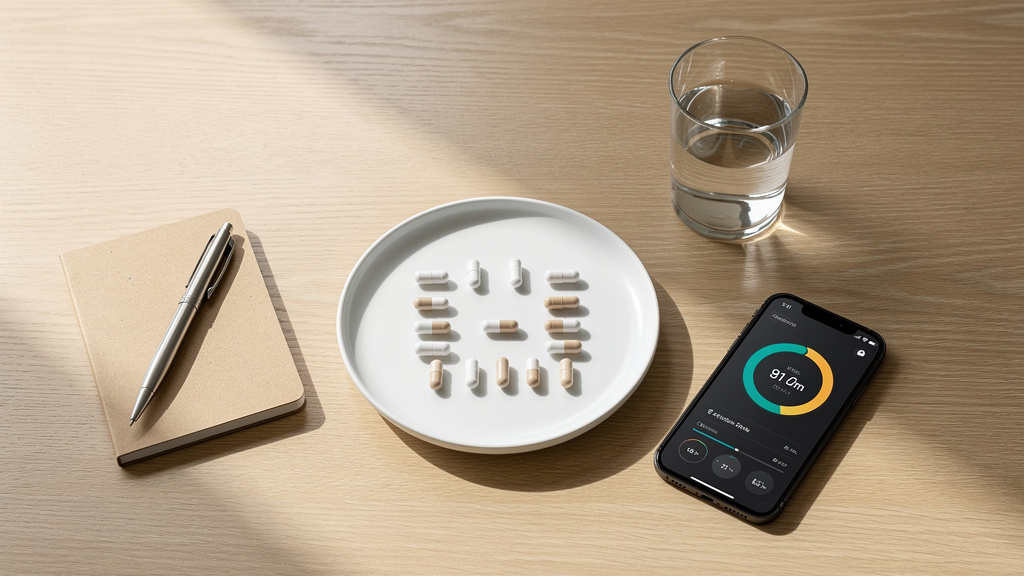
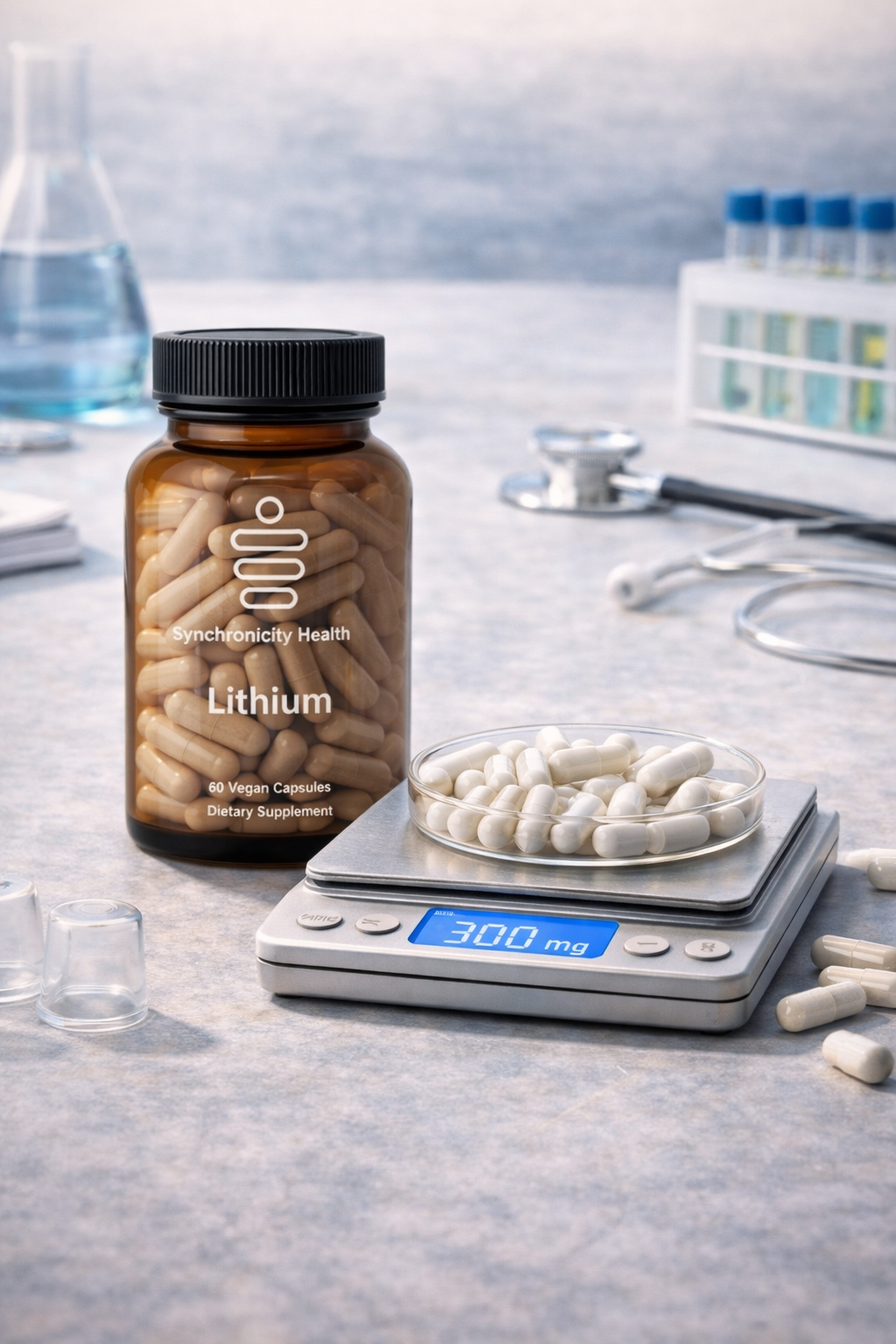
Lithium orotate doses in supplement practice are far below the levels used for prescription lithium carbonate. Survey data show that the most common intakes are 5, 10, or 20 milligrams of elemental lithium per day. That number refers to the lithium ion itself, not to the weight of lithium orotate powder listed on the bottle. As a rough rule, a 120 milligram capsule of lithium orotate provides about 4.6 milligrams of elemental lithium.
This stands in sharp contrast to psychiatric dosing. Typical daily doses of lithium carbonate for bipolar disorder range from 900 to 1,800 milligrams of the salt. That corresponds to about 169 to 338 milligrams of elemental lithium, aiming for blood levels in a narrow therapeutic window. The difference between those medical doses and wellness doses is roughly twenty to forty times, which is important to keep in mind when you read about side effects from prescription lithium.
Most supplement users take lithium orotate once per day, although some split the dose or use it only on certain days. The survey found a wide spread in patterns, from less than a week of use to more than a year. People who stayed on it longer tended to report better outcomes, which fits with the slow, cumulative nature of lithium’s effects. There is no official recommended daily allowance for lithium, and no medical society has published formal guidelines for lithium orotate dosing.
Given these uncertainties, a cautious approach works best. Basic guidelines many clinicians suggest include:
-
Start low. Begin at the bottom of the 5–20 milligram elemental range.
-
Change slowly. Give each dose level at least a few weeks before adjusting.
-
Watch your response. Track sleep, mood, energy, and any new symptoms.
-
Talk with a professional. This is especially important if you have kidney or thyroid issues or take other medications.
Brands that work closely with physicians, such as Synchronicity Health, generally favor conservative dosing and thoughtful stacking of compounds rather than high single doses. That type of mindset can help you use a lithium supplement, if you choose to, with more intention and less guesswork.
Safety Profile And Side Effects: What You Need To Know

At the low elemental doses found in most lithium orotate products, current evidence suggests that the compound is reasonably safe for many healthy adults. Early clinical work, such as the 1986 alcoholism study that used 150 milligrams of lithium orotate per day, reported only mild side effects in a small number of participants. These included temporary muscle weakness, low appetite, or a sense of tiredness, which tended to fade over time or with dose adjustment.
More recently, a 2021 toxicology study looked at lithium orotate in detail and did not find signs of genetic damage in standard lab tests. That addresses one of the basic safety questions about any supplement that people might take for years. However, the same study and others stressed that more short-term and long-term human data are needed, especially when a substance is available over the counter without built-in medical supervision.
A published case report shows what happens when lithium orotate is taken in a large overdose. An eighteen-year-old woman swallowed 2.16 grams of a lithium orotate supplement bought online and arrived at the hospital with mild signs of lithium toxicity. Her blood lithium level stayed below the classic toxicity threshold used for lithium carbonate, and she recovered with supportive care. This case suggests that lithium orotate may have a somewhat wider safety margin than prescription lithium, but it also proves that misuse can still cause harm.
User surveys fill in more detail about day-to-day side effects at normal doses. In the 2025 survey of lithium supplement users, only a small minority reported no side effects at all. The most common complaints were:
-
Mood changes
-
Extra anxiety
-
Headaches
-
Weight shifts
-
Shakiness or tremor
-
Dizziness or light-headedness
Some of these reports may reflect underlying mental health issues that brought people to lithium in the first place, and the nocebo effect may also play a role. Even so, the data show that low-dose lithium is not free of risk.
Stopping lithium supplements can also feel bumpy for some people. In the same survey, a number of users noticed a rise in anxiety or a dip in mood after they stopped, while others actually felt better, with less tension or irritability. That wide range of responses suggests that individual biology, total dose, and other factors in a stack all matter. On top of that, there are theoretical safety concerns about orotic acid at very high doses in animals, where it can look mutagenic, although the amounts used in those studies are far above the tiny amounts in lithium orotate capsules. The 2021 study that tested the full lithium orotate compound did not find genotoxicity, which is reassuring.
Given these mixed signals, a smart path is to monitor yourself closely if you use lithium orotate, and involve a clinician if you have any health conditions or take other medications. Watch for changes in thirst, urination, tremor, or mood swings, and stop the supplement and seek help if anything feels clearly off.
As clinicians often remind patients, "there are no magic bullets, only tools with trade-offs." Lithium in any form deserves that level of respect.
Lithium Orotate Vs. Lithium Carbonate: Understanding The Key Differences
Lithium orotate and lithium carbonate share the same active ion, yet they occupy very different roles. Lithium carbonate is an FDA-approved prescription drug with decades of controlled data behind it, while lithium orotate is sold as a dietary supplement focused on wellness and cognitive support. Understanding how they differ helps you avoid unsafe substitutions.
The most obvious difference is dose. Lithium carbonate tablets are prescribed in hundreds of milligrams, often adding up to 900 to 1,800 milligrams per day. That delivers roughly 169 to 338 milligrams of elemental lithium, and doctors adjust the dose to keep blood levels within a narrow target zone. Lithium orotate supplements sit much lower, with most products giving 5 to 20 milligrams of elemental lithium per day, and no defined blood target.
|
Feature |
Lithium Orotate |
Lithium Carbonate |
|---|---|---|
|
Regulatory status (US) |
Dietary supplement |
Prescription medication |
|
Typical use |
General mood and cognitive support |
Bipolar disorder, acute mania, mood stabilization |
|
Typical elemental dose |
~5–20 mg/day |
~169–338 mg/day |
|
Monitoring |
Usually none, done case by case |
Regular blood tests for drug levels, kidney, and thyroid |
|
Access |
Over the counter |
Requires prescription and medical follow-up |
Their monitoring requirements also diverge. Because lithium carbonate has a narrow therapeutic window and clear long-term risks for kidney and thyroid health, doctors order regular blood tests for anyone who takes it. Lithium orotate users do not have formal monitoring schedules, which makes self-awareness and medical guidance even more important if you decide to try it. The side-effect profile of lithium carbonate is well mapped and includes tremors, weight gain, gastrointestinal issues, kidney strain, and potential hypothyroidism. Lithium orotate appears milder at common supplement doses, though the data are not nearly as deep.
Some supporters argue that lithium orotate crosses the blood–brain barrier more effectively thanks to the orotic acid carrier, while lithium carbonate simply dissolves into lithium ions in the gut. As discussed earlier, animal studies are mixed on that point, and human data are missing. What is clear is that prescription lithium remains the standard of care for conditions like bipolar disorder and acute mania. Lithium orotate fits, if at all, as a low-dose tool for people who want extra support for mood and cognition. It should never replace prescribed lithium carbonate without a careful plan created with a psychiatrist or other qualified clinician.
For anyone choosing supplements, brand trust matters. Companies such as Synchronicity Health highlight physician involvement in formulation and rigorous third-party testing. That kind of model provides a helpful benchmark when you evaluate any lithium supplement or when you combine lithium with other compounds in a broader stack.
Conclusion
Lithium orotate sits at an interesting crossroads between nutrition and psychiatry. It offers tiny amounts of the same ion used in powerful mood stabilizers, wrapped in a carrier that may or may not change how much reaches the brain. Enthusiasts point to user stories of calmer moods, steadier energy, and clearer thinking, while skeptics highlight the lack of modern human trials and the long pause in research after early safety concerns.
Recent preclinical work suggests that earlier fears about kidney damage from lithium orotate at sensible doses may have been overstated, and that this form might even stress the kidneys less than lithium carbonate in animal models. At the same time, surveys remind us that low-dose lithium can still bring side effects, and that people respond in varied ways when they start or stop a lithium supplement. That means respect for the compound is key, even at micro doses.
If you consider lithium orotate, sensible steps include staying within the common 5 to 20 milligram range of elemental lithium, starting at the bottom end, and giving it several months before deciding whether it helps. You should avoid viewing it as a substitute for prescription lithium, especially if you live with bipolar disorder or another serious psychiatric condition that already involves medical care. In that case, any change in lithium form belongs in a shared plan with your doctor.
Used thoughtfully, lithium orotate may find a place in a well-built, science-based wellness strategy aimed at brain health and long-term resilience. Look for products from brands that share that science-first mindset, like Synchronicity Health, which emphasizes physician backing and independent testing.
A good rule of thumb with any brain-active supplement is simple: "start low, go slow, and stay curious but cautious."
Above all, combine curiosity with caution, so that your interest in optimization stays grounded, safe, and aligned with your long-term health.
FAQs
Is Lithium Orotate the Same as Prescription Lithium?
Lithium orotate is not the same as prescription lithium. Prescription lithium usually comes as lithium carbonate or lithium citrate, is FDA approved for bipolar disorder, and delivers high doses of elemental lithium under close medical supervision. Lithium orotate is an over-the-counter supplement that provides much lower elemental doses, aimed at general mood and cognitive support rather than treatment of diagnosed psychiatric illness.
How Long Does It Take for Lithium Orotate to Work?
Survey data suggest that most people who benefit from lithium orotate notice the main effects after three to four months of steady intake. The changes tend to build slowly, which fits with lithium’s influence on brain plasticity and cellular resilience rather than quick stimulation. Some individuals feel differences sooner, and others may not notice any benefit even after several months. Consistent daily use and careful self-observation matter more than rapid shifts.
Can I Take Lithium Orotate If I Have Kidney Problems?
If you have any kidney issue, you should not start lithium orotate on your own. Lithium leaves the body mainly through the kidneys, so reduced kidney function can cause lithium to build up to unsafe levels even at modest doses. Animal studies hint that lithium orotate may be gentler on kidneys than lithium carbonate at similar doses, but solid human data are lacking. You need direct guidance from a healthcare provider who can review your labs, medications, and overall risk.
What Are the Most Common Side Effects of Lithium Orotate?
In user surveys, the most common side effects of lithium supplements include mood shifts, extra anxiety, headaches, weight changes, shakiness, and dizziness. A smaller number of people also report fatigue or mild nausea. These findings come from self-reports rather than controlled trials, so they may reflect both the supplement and the conditions that led people to try it. If you notice new or worsening symptoms after starting lithium orotate, it is wise to stop the supplement and talk with a health professional.
Is Lithium Orotate Legal and Safe to Buy?
Lithium orotate is legal in the United States and sold as a dietary supplement through online shops and physical stores. It is not FDA approved to treat any disease, and it does not go through the same type of testing that prescription drugs face. Current evidence suggests that low doses are reasonably safe for most healthy adults, but long-term human data are still limited. When you buy any lithium supplement, choose a company that uses third-party testing and clear labeling, similar to the standards followed by Synchronicity Health for its physician-backed products.


Leave a comment
All comments are moderated before being published.
This site is protected by hCaptcha and the hCaptcha Privacy Policy and Terms of Service apply.