
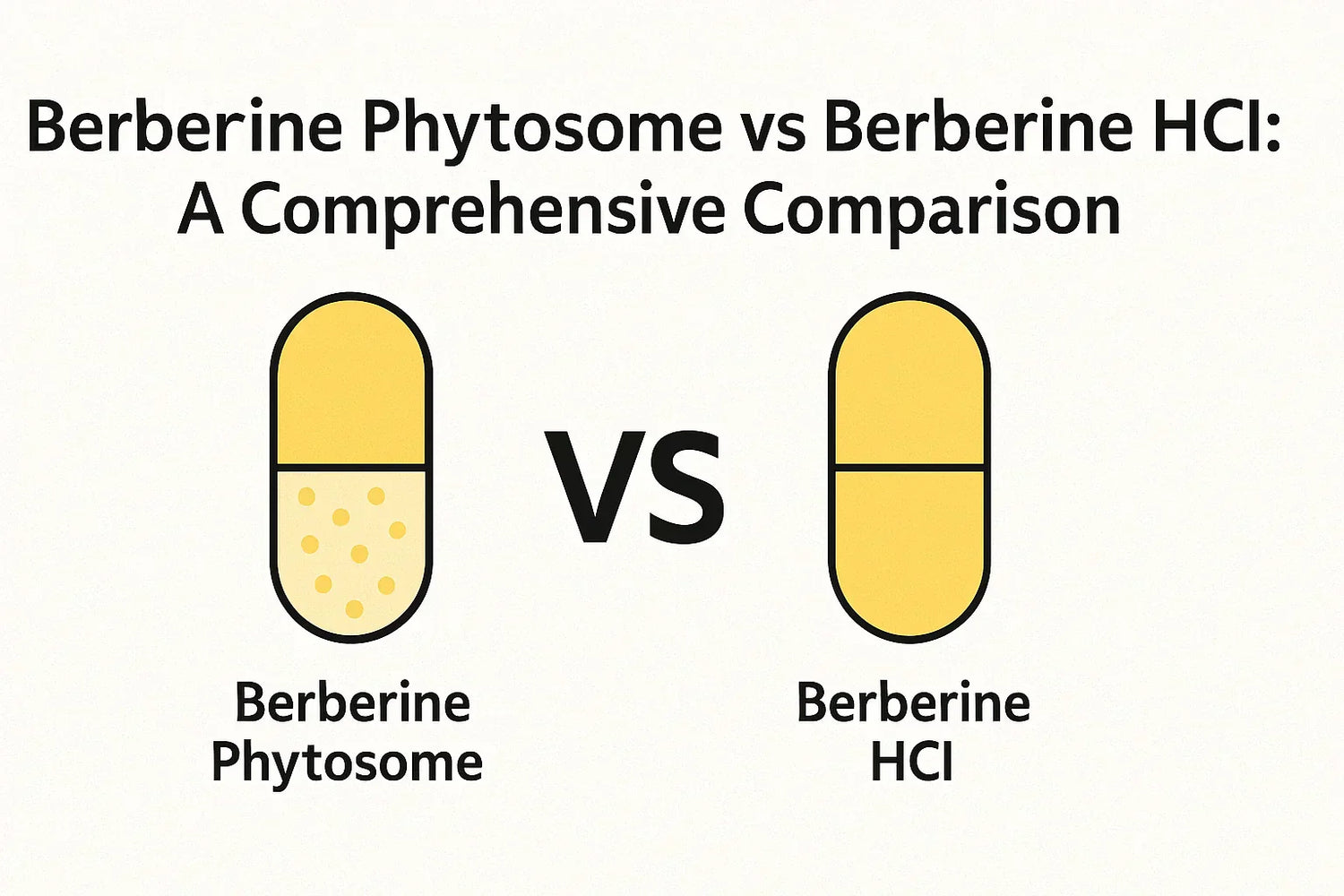
When you compare berberine phytosome vs HCl, you’re really asking one key question: how do I get the strongest metabolic benefits with the fewest side effects and the least hassle?
If you care about blood sugar, body composition, cardiovascular health, or long-term cellular resilience, berberine sits near the top of the supplement list. But poor absorption and confusing label claims make it hard to know whether you should reach for standard berberine HCl, the newer phytosome form, or a stacked formula that combines berberine with ingredients like Ceylon cinnamon.
This guide breaks down the science behind berberine phytosome vs HCl, then shows where advanced blends—like the ones we focus on at Synchronicity Health—fit into a performance- and longevity-focused regimen.
Medical Disclaimer: This article is for educational purposes only and is not medical advice. Always speak with your healthcare provider before starting or changing any supplement, especially if you take prescription medications or have a medical condition. — Synchronicity Health Editorial Team
What Is Berberine And Why It Matters For Metabolic Health
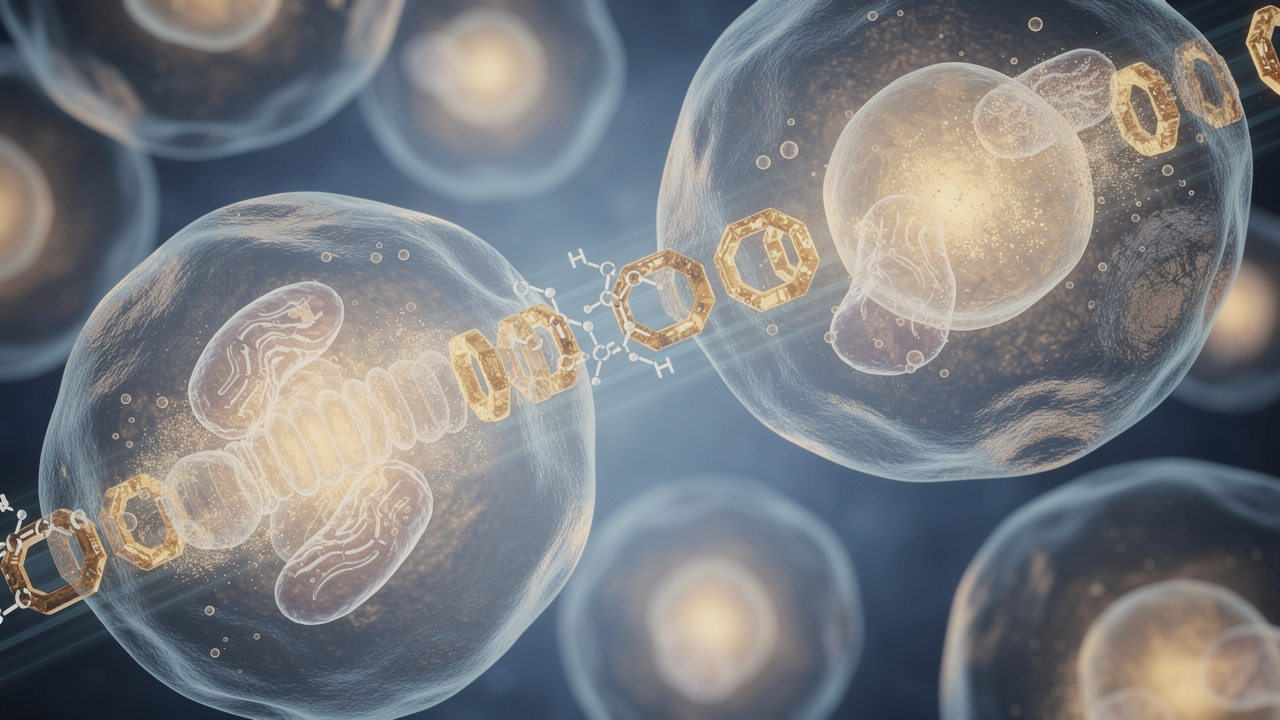
Berberine is a bright yellow alkaloid found in plants such as barberry, Oregon grape, and goldenseal. It has a long history in traditional systems of medicine for digestive and metabolic support, and modern research has given us a clearer picture of how it works. Most supplements use purified berberine extracted from these herbs, so the label should specify the milligrams of berberine itself, not just the amount of plant powder.
The most important mechanism for biohackers and longevity enthusiasts is berberine’s activation of AMPK (AMP-activated protein kinase)—often described as the body’s metabolic “master switch.” When AMPK turns on, cells:
-
Pull more glucose out of the bloodstream
-
Burn more fat for fuel
-
Improve insulin sensitivity
-
Support mitochondrial function and energy production
Those effects help explain why berberine has been shown to:
-
Support healthy blood sugar and A1C
-
Improve cholesterol and triglyceride levels
-
Assist with weight and waist circumference
-
Benefit women with PCOS
-
Support a more balanced gut microbiome
For people stacking diet, training, and NAD+ support for healthy aging, berberine can be a powerful metabolic anchor. The challenge—and the reason berberine phytosome vs HCl matters—is how much of it your body actually absorbs.
The Absorption Problem: Why Berberine Formulation Matters
Plain berberine is notoriously hard to absorb. Only a small fraction—often cited as roughly 0.5–5% of an oral dose—makes it into circulation because:
-
Berberine doesn’t dissolve well in water
-
It struggles to cross the intestinal wall
-
The liver rapidly clears a large portion during first-pass metabolism
To get clinically meaningful effects from standard berberine HCl, studies often use 900–1500 mg per day, split into two or three doses. That much berberine can be rough on the gut for some people, leading to nausea, cramping, loose stools, or constipation.
This absorption bottleneck led supplement makers to focus on specific delivery systems—most notably berberine HCl (the classic, research-standard form) and berberine phytosome (a higher-absorption complex with phospholipids). Understanding how each behaves in the body is the first step in deciding how you want to use berberine.
Berberine HCl: The Classic, Research-Backed Form
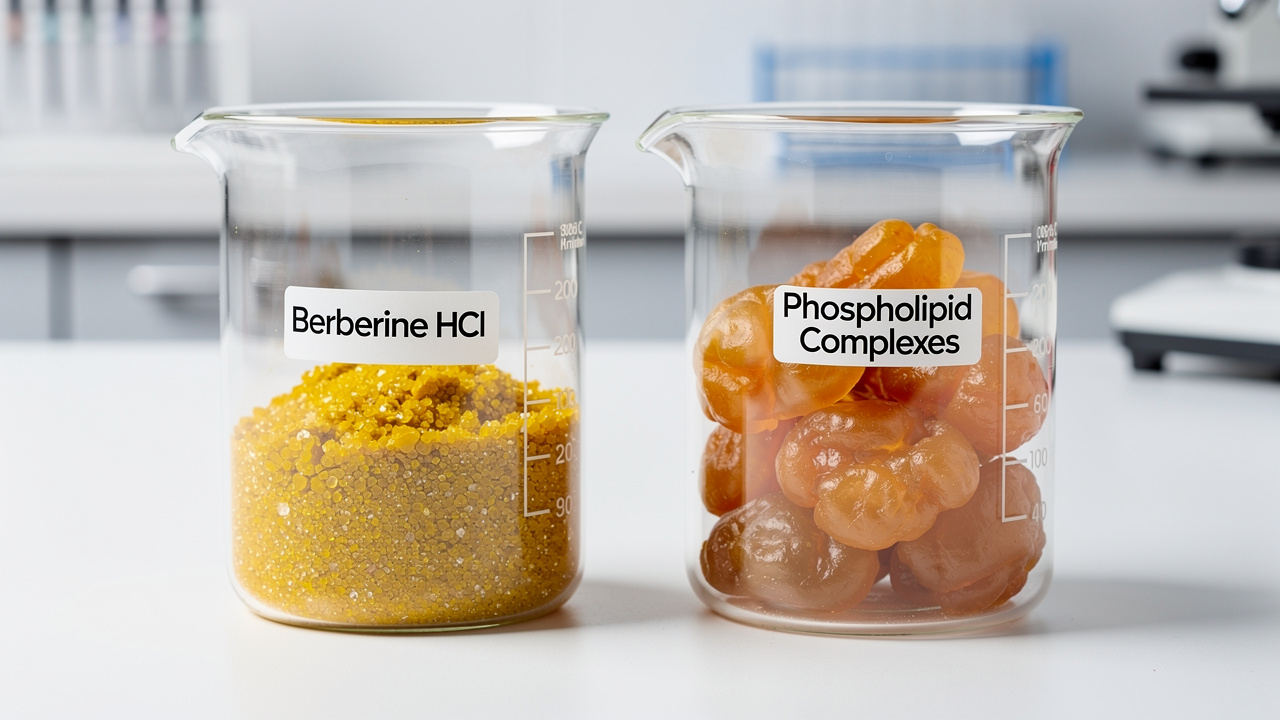
Berberine HCl (hydrochloride) is the form used in the vast majority of clinical studies. It is berberine bound to hydrochloric acid to create a stable, water-soluble salt.
How Berberine HCl Works In The Body
Once absorbed, berberine HCl:
-
Activates AMPK in liver and muscle
-
Increases the number and activity of glucose transporters (GLUT4) on cell surfaces
-
Reduces liver production of new glucose
-
Supports healthy LDL, HDL, and triglyceride levels
-
Modulates gut bacteria and intestinal barrier function
Those broad effects translate into benefits for blood sugar control, lipids, body composition, and overall metabolic resilience.
Typical Dosing And Use Cases
In human studies, berberine HCl is commonly dosed at:
-
900–1500 mg per day, split into 300–500 mg doses taken 2–3 times daily with meals
People typically reach for berberine HCl if they:
-
Want the form with the deepest clinical track record
-
Prefer a more budget-friendly option
-
Tolerate higher doses of supplements without digestive issues
Pros Of Berberine HCl
-
Long history of research across multiple health areas
-
Widely available and generally more affordable per milligram
-
Flexible dosing: easy to titrate up or down
Cons Of Berberine HCl
-
Lower absorption compared to phytosome forms
-
Often requires several capsules per day to hit studied doses
-
Higher risk of digestive side effects at full doses
-
Less appealing for people with absorption challenges or sensitive GI tracts
If you’re reading studies on berberine and comparing them to product labels, the odds are high that you’re looking at data from berberine HCl, not phytosome forms.
Berberine Phytosome: High-Absorption Delivery For Stronger Impact
Berberine phytosome is a newer form designed specifically to overcome the absorption limitations of standard berberine HCl.
What A Phytosome Actually Is
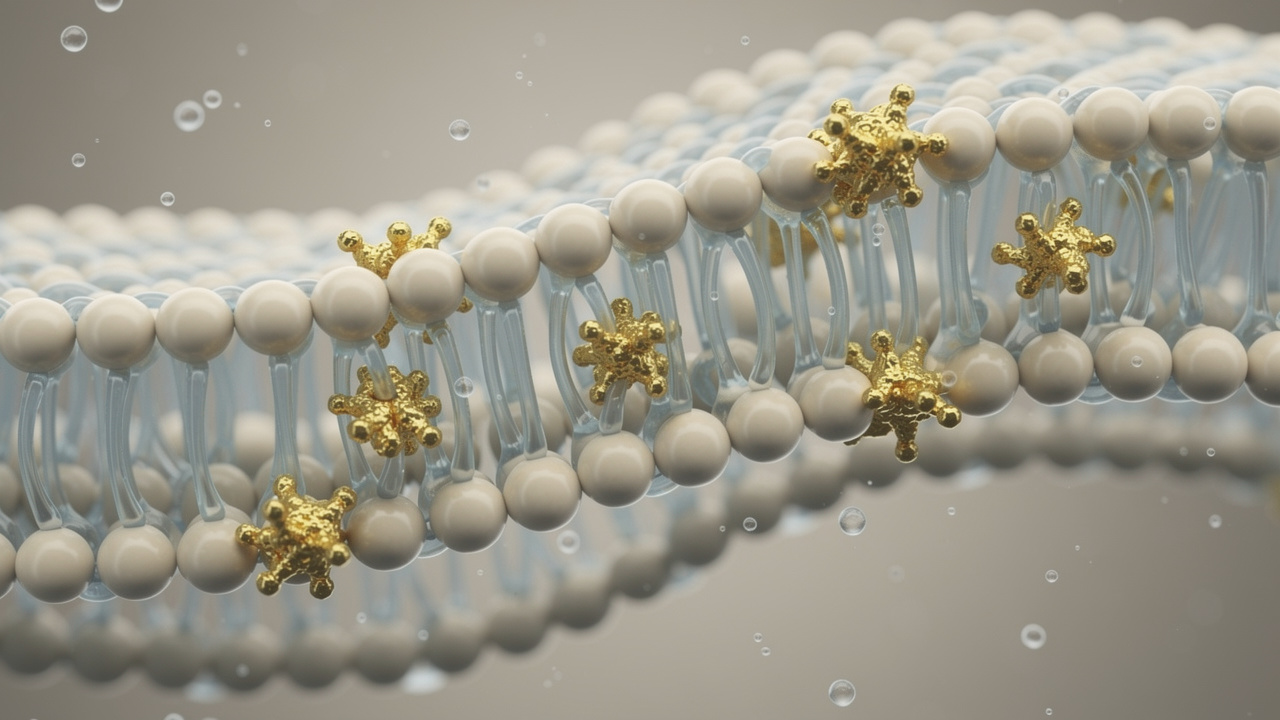
A phytosome is a complex of a plant compound with phospholipids—the same class of fats that make up human cell membranes. In a berberine phytosome:
-
Each berberine molecule binds to phospholipids (often phosphatidylcholine)
-
The resulting complex becomes more compatible with the lipid-rich intestinal lining
-
This structure passes through the gut wall more easily and resists early breakdown
Unlike a simple mixture, the berberine and phospholipids form a stable complex that behaves differently in the body. Some labels list the amount of the full phytosome complex rather than pure berberine, so the true berberine dose can be lower than the total milligrams printed on the bottle.
Bioavailability: Why Berberine Phytosome Hits Harder Per Milligram
Human data on specific patented berberine phytosome ingredients show that they can reach:
-
Roughly 3–5× higher blood levels compared to the same milligram dose of berberine HCl
That means you can often use lower doses of berberine phytosome and still see effects comparable to (or stronger than) much higher doses of HCl.
Common dosing ranges in clinical research:
-
Berberine phytosome: ~500–1100 mg per day, often split into one or two doses
Because less total berberine is needed, many people find the phytosome form easier on the stomach.
Pros Of Berberine Phytosome
-
Significantly higher absorption compared to standard berberine HCl
-
Fewer milligrams needed for a meaningful effect
-
Often better tolerated by people with sensitive digestion
-
Lower capsule burden for busy schedules
Cons Of Berberine Phytosome
-
Typically more expensive per bottle than HCl
-
Smaller total body of research compared to classic berberine HCl (though steadily growing)
-
Some products do not disclose the exact phytosome technology or quality controls
If you’re deciding between berberine phytosome vs HCl and you prioritize absorption and convenience over raw cost, phytosome usually wins.
Berberine Phytosome Vs HCl: Key Differences At A Glance
When you’re comparing berberine phytosome vs HCl, these are the distinctions that matter most for performance, longevity, and real-world use.
|
Feature |
Berberine HCl |
Berberine Phytosome |
|---|---|---|
|
Core Concept |
Classic berberine salt |
Berberine bound to phospholipids |
|
Bioavailability |
Modest; limited by solubility and gut uptake |
Roughly 3–5× higher blood levels per mg |
|
Typical Daily Dose |
900–1500 mg in 2–3 divided doses |
~500–1100 mg in 1–2 doses |
|
Capsule Count |
Often 2–3+ capsules per day |
Often 1–2 capsules per day |
|
Research Depth |
Extensive human data across many conditions |
Growing number of human trials, smaller total volume |
|
GI Side Effects |
More common at full doses |
Often milder due to lower total dose |
|
Cost |
Lower per bottle, higher per effective milligram |
Higher per bottle, competitive per effective dose |
|
Best Fit |
Budget-conscious, high-dose-tolerant users |
People wanting higher absorption and simplicity |
In practical terms:
-
If you want maximum bioactivity per capsule, phytosome usually takes the lead.
-
If you’re mainly price-sensitive and comfortable with larger doses, HCl can still be a strong choice—especially inside a well-designed blended formula.
Stacked Formulas: Where Ceylon Cinnamon And Other Cofactors Fit
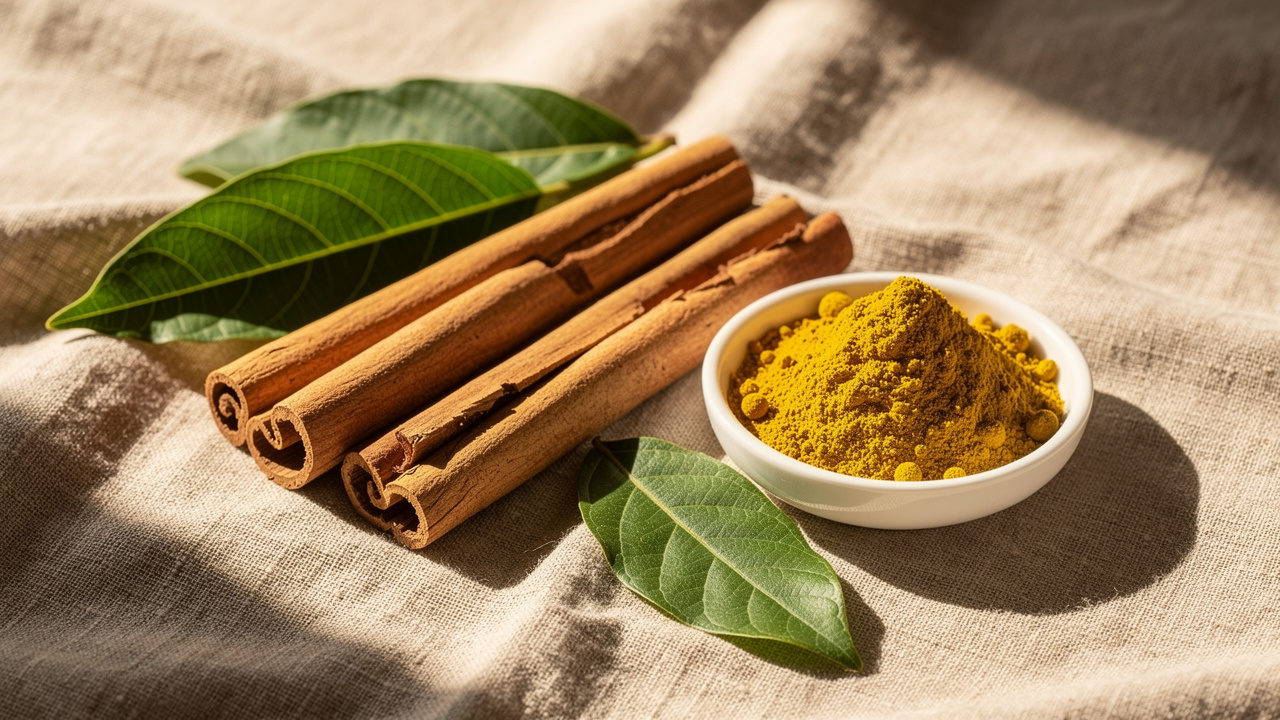
Focusing only on berberine phytosome vs HCl can miss a bigger opportunity: combining berberine with other ingredients that work on complementary pathways.
One of the most compelling pairings is berberine plus Ceylon cinnamon (Cinnamomum verum).
Why Ceylon Cinnamon Pairs Well With Berberine
While berberine primarily acts through AMPK and liver/glucose handling, Ceylon cinnamon appears to:
-
Improve insulin receptor signaling
-
Support translocation of glucose transporters to the cell surface
-
Help manage post-meal blood sugar spikes
-
Avoid the higher coumarin content found in cassia cinnamon, which may stress the liver at high intakes
Stacking berberine with Ceylon cinnamon allows you to:
-
Use moderate berberine doses (whether HCl or phytosome)
-
Still get strong blood sugar and lipid support
-
Often experience better digestive tolerance and long-term adherence
At Synchronicity Health, we favor multi-pathway formulas that reflect how your biology actually behaves—complex, adaptive, and interconnected. Our own berberine with Ceylon cinnamon blends are built around that principle.
How To Choose The Best Form For Your Goals
When you’re deciding between berberine phytosome vs HCl, the right choice depends on your physiology, priorities, and stacking strategy.
For Blood Sugar, A1C, And Metabolic Syndrome
-
Good tolerance, budget-sensitive:
Standard berberine HCl at clinically used doses (split across meals) can work very well, especially when combined with diet changes and movement. -
History of GI sensitivity or supplement fatigue:
Berberine phytosome or a blend that uses moderate berberine plus Ceylon cinnamon often gives similar or better results with fewer side effects and fewer capsules.
Always involve your clinician if you’re on glucose-lowering medications, as combining them with berberine may require dose adjustments.
For Longevity, NAD+ Support, And Biohacking
If you’re already using fasting, resistance training, and possibly NAD+ precursors or IV protocols, berberine can be a strong AMPK-based anchor.
In this context:
-
Berberine phytosome offers strong AMPK activation with less total material and more predictable absorption—an advantage when you’re carefully curating your stack.
-
Berberine HCl can still be useful, especially in a blended metabolic formula, but you may need more capsules to reach your target effect.
For Busy Professionals And Cognitive Performance
Stable blood sugar and reduced metabolic friction often show up as:
-
More consistent mental energy between meals
-
Fewer “post-lunch crashes”
-
Better focus across long work blocks
Here, simplicity and consistency matter more than squeezing out the last few percent of effect. For many, that favors:
-
Berberine phytosome, or
-
A high-quality berberine + Ceylon cinnamon combo at moderate doses
Either way, aim for a form you can take every day without effort.
For Athletes, Strength Training, And Body Composition
If your goal is better body composition and metabolic health around hard training:
-
Both berberine HCl and berberine phytosome can help support healthy insulin sensitivity, lipid profiles, and fat oxidation.
-
Berberine phytosome can be appealing because it hits hard with lower dose and less GI strain—useful if you already push your gut with higher food intake or peri-workout nutrition.
-
A blend combining berberine with Ceylon cinnamon can be helpful around higher-carb meals or refeeds.
For Gut And Microbiome Support
Berberine also has antimicrobial and microbiome-modulating properties that may help some GI issues under medical supervision.
-
Berberine HCl has the longest track record here.
-
People with sensitive digestion may prefer phytosome or start with lower HCl doses and slowly increase.
-
In this use case, the debate of berberine phytosome vs HCl matters less than starting low, going slow, and working with a practitioner.
Dosing, Timing, And Stacking Tips
Regardless of which side you land on in the berberine phytosome vs HCl decision, some principles stay the same.
General Dosing Ranges (Adults)
Typical supplemental ranges used in research and clinical practice:
-
Berberine HCl:
~900–1500 mg per day, divided into 2–3 doses with meals -
Berberine phytosome:
~500–1100 mg per day, often divided into 1–2 doses
Blended formulas may use lower standalone berberine doses but add Ceylon cinnamon and other cofactors to cover more pathways.
Always follow the directions on your specific product and your clinician’s guidance.
Timing For Best Effect
To support blood sugar and GI comfort:
-
Take berberine with food, especially meals containing carbohydrates.
-
Split the total daily dose, for example:
-
For HCl: 500 mg with breakfast, 500 mg with dinner
-
For phytosome: 550 mg with breakfast and/or dinner
-
Berberine has a relatively short half-life, so spreading doses across the day often produces smoother results than a single large dose.
Smart Stacks With Lifestyle
For a high-performance or longevity-focused protocol, berberine often sits alongside:
-
A nutrient-dense, lower-glycemic diet (Mediterranean, low-carb, or cyclical approaches)
-
Consistent resistance training and cardio
-
High-quality sleep and stress management
-
For some, NAD+ precursors, periodic IV NAD+, or other mitochondrial support—under professional supervision
In that context, the question isn’t just berberine phytosome vs HCl, but: Which form and dose let me keep this in my routine for months and years without friction?
Many integrative clinicians remind their patients that supplements work best when they support strong foundations of nutrition, movement, sleep, and stress management—not when they are used as a substitute for them.
Safety, Interactions, And When To Be Cautious
Both berberine HCl and berberine phytosome have good safety profiles in research when used as directed, but side effects and interactions still matter.
Common Side Effects
More likely at higher doses and typically dose-dependent:
-
Nausea
-
Stomach cramps
-
Diarrhea or loose stools
-
Constipation
-
Bloating or gas
Phytosome forms and combination products using moderate berberine doses often cause fewer GI problems for many people.
To reduce risk:
-
Start on the low end of the dosing range
-
Take with meals
-
Increase gradually if needed
Drug Interactions And Contraindications
Berberine can interact with several medications by affecting liver enzymes and transporters. Extra caution is warranted if you use:
-
Glucose-lowering drugs (metformin, insulin, sulfonylureas)
-
Blood pressure medications
-
Blood thinners or antiplatelet drugs
-
Immunosuppressants (such as cyclosporine)
-
Certain statins and other drugs processed by CYP enzymes or P-glycoprotein
You should avoid berberine unless your prescribing clinician specifically approves it if you are:
-
Pregnant or breastfeeding
-
Giving it to an infant or young child
-
A transplant recipient on immunosuppressive therapy
When in doubt, bring your full medication and supplement list to a qualified healthcare professional before adding berberine in any form.
Why Synchronicity Health Focuses On Advanced Blends
At Synchronicity Health, we work with people who care deeply about performance, longevity, and objective metrics. For that audience, a narrow debate of berberine phytosome vs HCl misses an important point:
-
Real metabolic health is driven by multiple pathways—insulin signaling, liver metabolism, gut microbiome, mitochondrial function, and more.
-
No single compound, in any form, covers all of that.
That’s why our emphasis is on high-quality, multi-ingredient formulas built around:
-
Clinically relevant berberine doses (HCl and/or advanced forms)
-
Verified Ceylon cinnamon, not cassia, to avoid excess coumarin
-
Third-party testing for identity, purity, and potency
-
Transparent labels and evidence-informed ratios
If you want a ready-made stack that goes beyond simply picking between berberine phytosome vs HCl, consider targeted blends such as our berberine with Ceylon cinnamon blends. They are designed to support healthy blood sugar, lipids, and metabolic function in a way that fits real-world routines.
Frequently Asked Questions About Berberine Phytosome Vs HCl
Which Form Of Berberine Is Most Effective Overall?
For many people, berberine phytosome delivers more effect per milligram because of its much higher absorption. That means you can often take a lower dose and still see strong changes in blood sugar and lipids. However, berberine HCl has the largest body of research and remains highly effective at the right dose, especially when paired with supportive ingredients like Ceylon cinnamon.
What Is The Main Difference Between Berberine Phytosome And HCl?
The key difference in the berberine phytosome vs HCl comparison is bioavailability:
-
Berberine HCl is a water-soluble salt with modest absorption.
-
Berberine phytosome binds berberine to phospholipids, producing about 3–5× higher blood levels in human studies at the same milligram dose.
That translates into lower required doses and, often, better GI tolerance for the phytosome form.
Is Berberine Phytosome Worth The Extra Cost?
Berberine phytosome can be a smart pick if you:
-
Struggle with higher-dose supplements
-
Have a sensitive digestive system
-
Want to minimize capsule count and keep your stack simple
In those cases, paying more up front for berberine phytosome can make sense, because you get higher absorption and often fewer side effects. If cost is your main concern and you tolerate larger doses well, berberine HCl—especially in a thoughtfully designed blend—remains a strong choice.
Can I Switch Between Berberine HCl And Berberine Phytosome?
Yes, many people move from HCl to phytosome (or vice versa) without problems. Keep in mind:
-
You usually need less total berberine when switching from HCl to phytosome.
-
It’s smart to start with a lower dose of the new form and adjust based on tolerance and lab markers.
-
Always coordinate changes with your clinician if you’re on blood sugar or blood pressure medications.
Why Don’t Some Doctors Recommend Berberine?
Some practitioners focus mainly on FDA-approved drugs and may not be familiar with the current berberine data. Others are cautious about supplements in patients taking multiple medications or living with complex conditions. On the other hand, many functional and integrative clinicians use berberine regularly, especially for metabolic and cardiovascular support. A good next step is to bring research summaries and your exact product label to your provider and discuss whether berberine fits your situation.
How Long Does It Take To Notice Results?
Most human studies with berberine HCl or berberine phytosome run 8–12 weeks. Some people notice changes in energy, digestion, or post-meal blood sugar within 1–2 weeks, but objective shifts in labs (A1C, cholesterol, triglycerides) usually take at least two months of consistent use. Whichever side you favor in the berberine phytosome vs HCl decision, consistency is more important than chasing quick wins.
The Bottom Line: Choosing Between Berberine Phytosome Vs HCl
-
Berberine HCl is the classic, research-heavy form—effective, accessible, and budget-friendly, but often required at higher doses that can bother some people’s digestion.
-
Berberine phytosome is a higher-absorption delivery system that hits harder per milligram, often with fewer capsules and better tolerance, at a higher upfront cost.
-
For many, the best results come from smartly designed blends that pair berberine (in one or both forms) with Ceylon cinnamon and other supportive ingredients.
If you want help choosing how berberine fits into your own metabolic or longevity strategy, the team at Synchronicity Health is here to support you with evidence-based, performance-minded options.


Leave a comment
All comments are moderated before being published.
This site is protected by hCaptcha and the hCaptcha Privacy Policy and Terms of Service apply.