
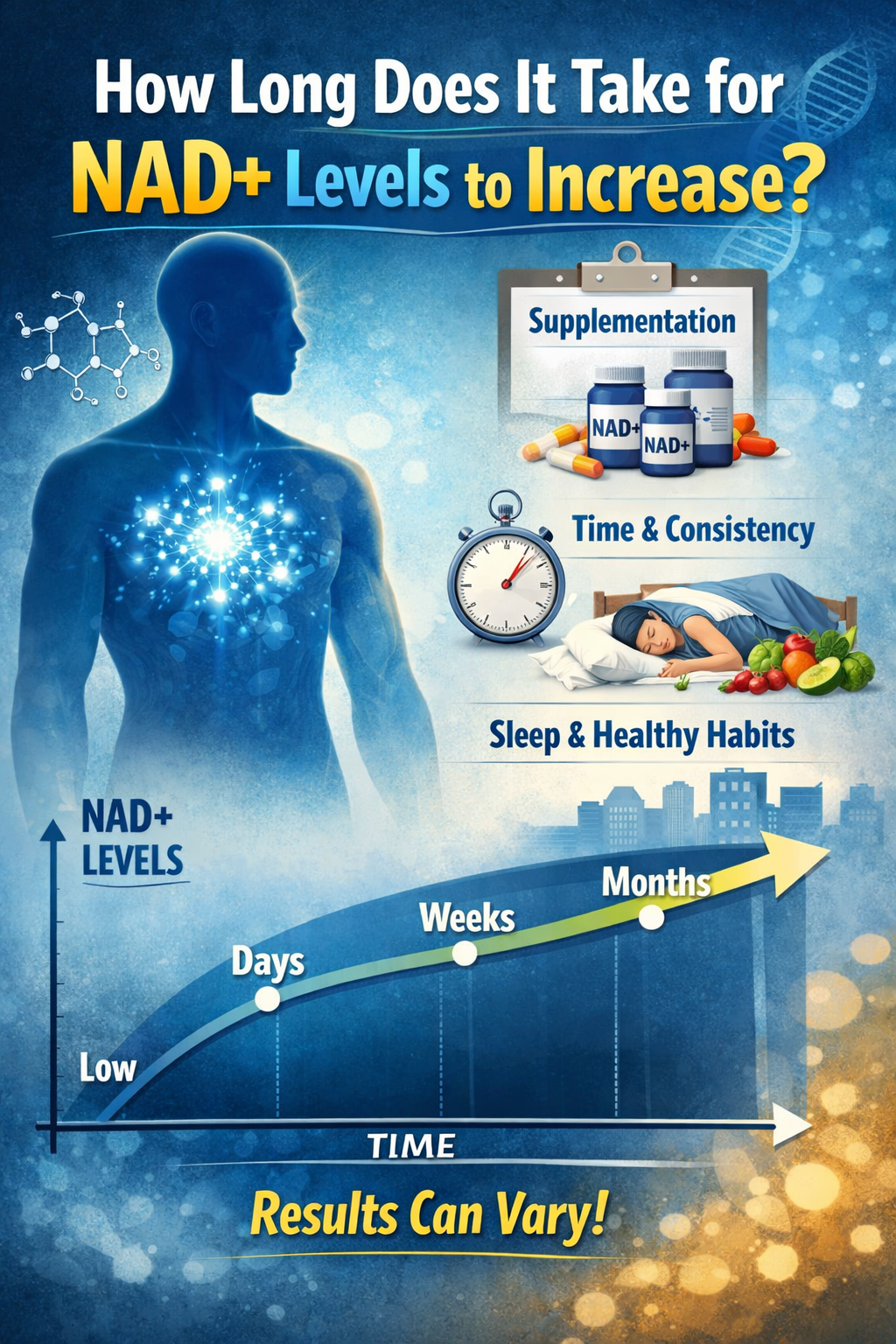
Introduction
Imagine every cell in your body as a tiny battery. NAD+ is the charger that keeps that battery full, so the moment levels fall, energy and repair slow down. It is no surprise that so many people want to increase NAD+ levels to feel sharper, stronger, and more resilient.
Human studies show that NAD+ can drop by 10–80% between youth and later life. That fall links with lower ATP production, more DNA damage, chronic low-grade inflammation, and many age-related problems. When NAD+ runs low, everything from mitochondrial function to brain performance and sleep can suffer, which is why NAD+ support now sits at the center of many longevity and anti-aging plans.
"NAD is one of the most important molecules in the body. Without it, we would die in 30 seconds." — Dr. David Sinclair
The hard part is timing. Oral precursors, NAD+ nasal spray, and IV infusions all raise NAD+, but they do it on very different timelines. Marketing claims range from “instant reset” to “wait a few months,” which makes it hard to know what to expect. In this guide, we walk through what clinical research says about how fast different methods can increase NAD+ levels, why some work faster than others, and how Synchronicity Health uses advanced nasal delivery and systems-based Sync Stacks to help you reach and maintain higher NAD+ levels in a realistic, science-based way.
Key Takeaways
-
Delivery Method Shapes The Timeline. Nasal spray and IV enter circulation directly, so levels rise fastest. Oral capsules still help, but the gut and liver slow the process.
-
Dose And Absorption Matter. Higher, research-backed doses move blood NAD+ sooner than tiny label doses. Better absorption often gives the same results with fewer total milligrams.
-
Age And Baseline Status Change The Curve. People with low starting levels or more metabolic stress often feel earlier shifts. Fitter or younger users still gain benefits, but the curve can be smoother.
-
Systems-Based Formulas Work More Efficiently. When a product raises precursors and also supports NAMPT while slowing CD38 and NNMT, more of each dose turns into active NAD+. Synchronicity Health builds this type of network support into its Sync Stacks.
-
Short-Term Gains Arrive Fast, Long-Term Gains Need Maintenance. Early changes can show up within days to weeks, especially with NAD+ nasal spray. Long-term benefits require steady input plus lifestyle support like movement, sleep, and smart food choices. Think of NAD+ care as maintenance, not a one-time fix.
What Is NAD+ And Why Do Your Cellular Levels Matter?
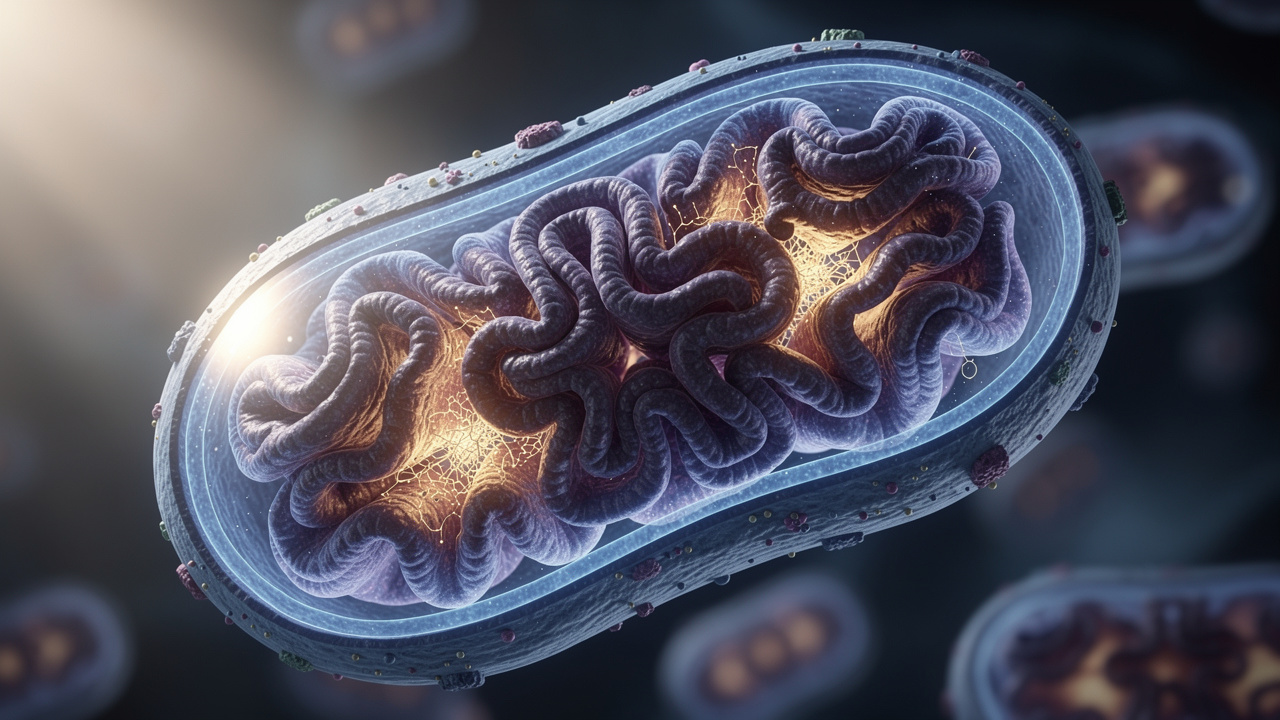
Nicotinamide adenine dinucleotide, or NAD+, is a coenzyme that sits in every cell and takes part in thousands of reactions. In simple terms, it moves electrons so your cells can turn food into ATP, the energy currency your body spends every second. Without enough NAD+, energy production slows, and cells cannot keep up with normal work.
During glycolysis and the TCA cycle, NAD+ accepts electrons and becomes NADH. NADH then donates those electrons to the mitochondrial electron transport chain, which drives ATP production. If NAD+ is scarce, this flow jams, ATP output falls, and you feel that as fatigue, slower recovery, or brain fog.
NAD+ is not just an energy helper. It also serves as fuel for important enzymes that protect long-term health. Sirtuins use NAD+ to support mitochondrial biogenesis, stress resistance, and metabolic control. PARP enzymes draw on NAD+ to repair DNA breaks. CD38 breaks down NAD+ while it manages calcium signaling and immune activity. All of these systems depend on a healthy NAD+ pool.
"Sirtuins are NAD-dependent enzymes that link metabolism to longevity." — Dr. Leonard Guarente
With age, NAD+ levels decline by as much as 10–80% in tissues like muscle, brain, and blood. That drop links with hallmarks of aging such as mitochondrial dysfunction, poor nutrient sensing, cellular senescence, and chronic inflammation. Higher NAD+ tends to support better metabolic health, clearer thinking, and a stronger stress response.
For this reason, many experts now view strategies that increase NAD+ levels as a foundation for longevity and anti-aging work. Instead of chasing isolated effects, you support a central metabolic node that touches energy, repair, and resilience all at once.
The Science Behind NAD+ Decline – Why Your Levels Drop With Age

If NAD+ is so central, why do levels fall so sharply over time? Research points to a three-part pattern:
-
Higher NAD+ Consumption
-
Reduced NAD+ Synthesis And Recycling
-
Greater Loss Of NAD+ Precursors
Together, these shifts drain the pool your cells depend on.
Increased NAD+ Consumption Through Aging
As the years pass, cells collect more DNA damage from normal metabolism and environmental stress. PARP enzymes rush to repair that damage and use large amounts of NAD+ in the process. When DNA breaks pile up, PARPs stay active and drain the NAD+ pool day after day.
At the same time, chronic low-grade inflammation, often called “inflammaging,” drives higher expression of CD38, the main NAD+ hydrolase in mammals. CD38 sits on many immune cells and breaks down NAD+ to make signaling molecules. More CD38 means faster NAD+ loss, which then weakens sirtuin activity and repair processes. This forms a loop where damage and inflammation feed even more NAD+ consumption.
Impaired NAD+ Synthesis And Recycling
Most NAD+ in adults comes from the salvage pathway, which recycles nicotinamide back into NAD+. The rate-limiting enzyme in this route is NAMPT. It turns nicotinamide (NAM) into NMN, which then becomes NAD+.
Studies in animals and humans show that NAMPT expression and activity fall with age in several tissues. When NAMPT slows down, the entire salvage pathway backs up. Even if you provide precursors, the cell cannot recycle and rebuild NAD+ at the same pace. This drop in NAMPT is a key reason many people need more than a simple low-dose precursor to increase NAD+ levels in a meaningful way.
Increased Excretion Of NAD+ Precursors
When NAMPT lags, nicotinamide can build up inside cells. To clear the excess, the body calls on another enzyme, NNMT. NNMT methylates NAM to form methylnicotinamide (MeNAM), which the body then sends out through urine.
That methylation step keeps NAM from turning back into NAD+. In effect, it throws away usable building blocks. Evidence suggests that NNMT activity rises with age, which means more precursors exit the body instead of feeding the salvage pathway. Over time, higher NNMT plus lower NAMPT and higher CD38 create a perfect storm for falling NAD+ levels.
How Fast Do Different NAD+ Supplementation Methods Work?
Different methods to support NAD+ do not act on the same schedule. The form you choose decides how much survives the gut, how fast it reaches the bloodstream, and which tissues see it first. Before looking at each approach in detail, it helps to compare them side by side.
|
Method |
Approximate Bioavailability |
Time To Noticeable Blood NAD+ Change |
Main Strength |
Main Limit |
|---|---|---|---|---|
|
Oral NR or NMN capsules |
~15–30% |
2–4 weeks |
Widely available, easy to use |
Large first-pass loss in gut and liver |
|
NAD+ nasal spray |
~70–90% |
Hours to a few days |
Fast onset, direct access to brain |
Needs quality nasal formulation |
|
IV NAD+ infusion |
~100% |
During or right after infusion |
Immediate systemic exposure |
High cost and clinic visits, short-lived |
Oral Capsule Supplementation Timeline (Traditional Method)
Oral NR and NMN remain the most common way people try to increase NAD+ levels. After swallowing a capsule, the compound passes through stomach acid, digestive enzymes, and the liver before it reaches circulation. Along the way, a large share breaks down or converts into other metabolites, which is why bioavailability often sits in the 15–30% range.
Clinical studies still show clear effects at higher doses. Trials with nicotinamide riboside around 1,000 mg per day often report 40–60% rises in blood NAD+ after about six weeks. NMN studies with 600–900 mg per day have even seen up to six-fold increases in whole-blood NAD+ over 60 days. Lower doses, such as 250–300 mg, usually produce smaller and slower shifts.
In practice, this means oral capsules often need 2–4 weeks before a measurable rise in blood NAD+ and closer to 4–8 weeks for changes in tissues like muscle. You also lose 50–70% of the labeled dose in the digestive process, so higher milligram counts are necessary to produce a strong effect.
Advanced Nasal Spray Delivery – Superior Bioavailability And Faster Results

Nasal delivery offers a way around the digestive bottleneck. When you use an NAD+ nasal spray, the active compound crosses the thin nasal mucosa and enters local blood vessels almost right away. It bypasses stomach acid and first-pass liver metabolism, which gives far higher bioavailability, often in the 70–90% range.
Because the nasal cavity connects with the olfactory and trigeminal nerves, this route also provides a more direct path toward the brain. That matters for people who want sharper focus, better mood, or protection for central nervous system tissue. Instead of waiting weeks for a fraction of an oral dose to pass through the gut, you send a precise amount where it is needed in minutes.
With high-quality formulations, initial increases in NAD+ metabolites can appear within hours to a few days, and many users feel changes in energy or mental clarity in the first week. Synchronicity Health’s physician-backed NAD+ nasal spray technology is built for this type of fast, predictable response, with third-party tested potency to confirm that each spray delivers exactly what the label states. High bioavailability also means you can match or beat the effect of large oral doses with far less total compound, which saves cost and reduces pill fatigue. Nasal spray works especially well for busy professionals, athletes, and biohackers who want rapid, repeatable results.
Intravenous NAD+ Administration
IV NAD+ delivers the compound straight into a vein, so by definition absorption is 100%. Blood levels rise during the infusion and stay high for a short period afterward. People often report noticeable changes in energy or mood during the session itself.
However, IV treatment requires a clinic visit, a trained provider, and a budget that can range from a few hundred to around a thousand dollars per infusion. Effects fade unless you schedule regular appointments, which makes this method hard to maintain. IV NAD+ can make sense for very targeted use, but for daily maintenance or long-term longevity plans, nasal and oral options are more practical.
Clinical Evidence – What Human Studies Reveal About NAD+ Restoration Timelines
Many claims about NAD+ come from animal data, but a growing set of human trials now shows what actually happens in people. These studies help answer two key questions: how fast we can increase NAD+ levels in blood or tissue, and how long it takes before that change turns into better performance or health markers.
Nicotinamide Riboside (NR) Clinical Trial Results
Nicotinamide riboside is one of the best studied NAD+ precursors. In a trial by Martens and colleagues, adults aged 55–79 took 1,000 mg of NR per day for six weeks. NAD+ in peripheral blood mononuclear cells rose by about 60%, with a hint of lower blood pressure in those who started with higher values.
Another study by Elhassan and co-workers gave older men 1,000 mg of NR for three weeks. Muscle NAD+ did not change, but other NAD+-related metabolites did increase, and inflammatory markers such as IL-6, IL-5, and IL-2 went down. A large dose-ranging trial by Conze showed that 300 mg of NR per day lifted whole-blood NAD+ by about 48%, while 1,000 mg per day raised it by roughly 139% over eight weeks.
These results point to a common pattern. Blood and immune-cell NAD+ usually begin to rise within two to three weeks, with peak effects around six to eight weeks. Some tissues, such as skeletal muscle, respond more slowly or not at all within short trial windows. In a study of people with Parkinson’s disease, 30 days of 1,000 mg NR increased brain NAD+ and brought modest motor gains, which suggests that disease states with low baseline NAD+ might respond more strongly. Across many trials, doses up to 2,000 mg per day for about 20 weeks have looked safe, although improvements in insulin sensitivity, exercise capacity, and metabolism remain mixed.
Nicotinamide Mononucleotide (NMN) Clinical Trial Results
NMN sits one step closer to NAD+ in the salvage pathway and has also seen steady research. In a 60-day trial by Yi and colleagues, healthy middle-aged adults took 300, 600, or 900 mg of NMN per day. The 600 and 900 mg groups showed clear increases in blood NAD+ and walked about one-and-a-half times farther in a six-minute walk test.
Liao and co-workers studied amateur runners who took 300 to 1,200 mg of NMN daily for six weeks. The medium and high doses improved aerobic capacity and submaximal performance in a dose-dependent way. Yoshino’s landmark study in overweight postmenopausal women with prediabetes found that 250 mg of NMN per day for ten weeks significantly improved muscle insulin sensitivity, even though weight and blood pressure stayed the same.
Igarashi’s group reported a six-fold rise in whole-blood NAD+ after 12 weeks of 250 mg per day in older men, along with better gait speed and grip strength. Another trial used a high-dose microcrystalline NMN (2,000 mg per day) for four weeks and saw about a 150% NAD+ increase plus lower total cholesterol, LDL cholesterol, and diastolic blood pressure. Across these studies, blood NAD+ tends to rise within two to four weeks, while performance or metabolic benefits appear between week six and week twelve. One important note for U.S. readers is that in 2022 the FDA reclassified NMN from a supplement to an investigational drug, which limits how it can be sold domestically.
Systems-Based Approaches – Faster And More Sustained Results
Single-precursor strategies give the body more raw material but do not fix the age-related drop in NAMPT or the rise in CD38 and NNMT. A newer line of research, mirrored in Synchronicity Health’s systems-focused design, takes a broader view. One published trial on a multi-ingredient product called Nuchido TIME+ combined nicotinamide with compounds that support NAMPT, block CD38, and slow NNMT.
Over 28 days, participants saw an average 26.5% rise in whole-blood NAD+. At the same time, levels of SIRT1 and NAMPT proteins in immune cells went up, inflammatory cytokines such as IL-2 went down, and measures of biological age and protein glycation improved. The key point is the timeline: meaningful shifts in just four weeks instead of six to eight. Synchronicity Health follows this same systems logic in its Sync Stacks, which aim to support the full NAD+ network instead of only adding a single precursor.
Factors That Influence How Quickly Your NAD+ Levels Increase
Even with the same product and dose, people do not respond on the exact same schedule. Genetics, age, baseline NAD+, gut health, and lifestyle all change how fast your body can absorb precursors and turn them into usable NAD+. Understanding these factors helps you set realistic expectations and pick the smartest starting plan.
Baseline NAD+ Status And Age
Where you start matters a lot. Older adults and people with metabolic or inflammatory conditions often sit at a lower baseline, so their cells may soak up new precursors more eagerly. This can lead to faster early changes in blood NAD+ and noticeable shifts in how they feel.
Healthier or younger users often have less severe NAD+ depletion. They can still increase NAD+ levels and feel better, but the curve tends to be smoother and less dramatic. Clinical data back this up, with larger gains and clearer benefits in groups such as Parkinson’s patients or prediabetic women compared to very healthy volunteers. Because NAMPT activity falls with age, older adults may need higher doses or a systems-based stack rather than a minimal single ingredient.
Dosage And Consistency
Dose size and regular use make or break most NAD+ plans. Trials show a clear dose-response curve, where 250 mg per day produces modest rises in blood NAD+ and 600–1,000 mg per day delivers much stronger, faster changes. Very low doses, such as 50–100 mg, often sit below the range that moved the needle in research.
Consistency also counts. Your body burns through NAD+ constantly for energy production, DNA repair, and cell signaling. To build up the pool, you need daily intake for at least two to four weeks before you judge results. Higher doses can shorten this timeline a bit, but they also cost more. Systems approaches that improve recycling can sometimes let you use moderate doses with better efficiency.
Delivery Method And Bioavailability
Absorption is just as important as the milligrams on the label. Oral capsules of NR or NMN must pass through digestion and the liver, which can leave you with only a fraction of the starting dose in circulation. That is why most oral trials use hundreds of milligrams per day.
NAD+ nasal spray changes that math. By moving through the nasal mucosa directly into the bloodstream, nasal delivery can reach bioavailability in the 70–90% range and show measurable changes within hours to days. Synchronicity Health’s advanced delivery systems are built exactly for this role, with third-party testing to confirm that the amount on the label matches the amount in each spray. When absorption is high and predictable, you take less time and fewer milligrams to reach your target.
Individual Metabolic Factors
Your internal biology also shapes the response. Key factors include:
-
Gut microbiome balance, which can change how much oral NR or NMN stays intact before absorption.
-
Genetic differences in enzymes like NAMPT, CD38, and NRK, which shift both synthesis and breakdown rates.
-
Liver function and first-pass metabolism, which affect how much precursor reaches circulation after an oral dose.
-
Medications and other supplements, which can compete for the same enzymes or transporters.
-
Overall metabolic health, since people with better insulin sensitivity and mitochondrial function may use new NAD+ more efficiently, while those with more damage may show faster but less steady responses.
All of these pieces add up to a very personal timeline.
How To Optimize Your NAD+ Restoration Timeline – Evidence-Based Strategies
Once you understand how different methods work, the next step is to build a plan that fits your goals, budget, and biology. The fastest path usually combines a high-bioavailability delivery method, a systems-based formula, and lifestyle habits that naturally support NAD+ metabolism.
Choose Superior Delivery Technology
When the goal is speed, bioavailability often matters more than sheer dose size. A moderate dose through a high-absorption route can beat a much larger oral amount that gets lost in digestion. For many people, that means starting with NAD+ nasal spray rather than only capsules.
Synchronicity Health’s NAD+ spray uses physician-guided formulation and advanced nasal delivery so more of each dose reaches the bloodstream and brain. Independent labs test every batch to confirm potency and purity, which gives confidence that you receive the intended amount every time. Many users notice more stable daytime energy or clearer focus within the first week because this route bypasses the slow ramp of oral products.
For those who like capsules, look for high-absorption NMN or NR formulas that support uptake instead of simple powder in a pill. Synchronicity Health also offers Sync Stacks that pair nasal delivery for rapid support with complementary oral compounds for round-the-clock cellular care. In practice, quality and delivery often matter more than chasing the cheapest milligram count on the shelf.
Implement Systems-Based Supplementation
Instead of relying on one precursor alone, a systems approach supports the entire NAD+ network. That means raising precursors, supporting NAMPT, reducing CD38 and PARP overactivity, and keeping nicotinamide available for recycling. When these pieces line up, you get more NAD+ from every dose and often see faster results.
A well-designed stack might combine NR, NMN, or nicotinamide with compounds that support NAMPT such as alpha-lipoic acid, resveratrol, or quercetin. It can also include natural CD38 modulators like apigenin from parsley and quercetin, and NNMT modulators such as EGCG from green tea to limit waste of precursors. Adding gentle sirtuin activators like pterostilbene or resveratrol helps turn higher NAD+ into better mitochondrial function and stress resistance. Synchronicity Health builds these ideas into its Sync Stacks, which are meant to support the network rather than a single step. In clinical research, this style of approach has shown clear gains within three to four weeks, faster than many single-ingredient plans.
Integrate Lifestyle Optimization Strategies
Supplements work best on a solid lifestyle base. Exercise is one of the strongest natural ways to support NAMPT and the salvage pathway, especially when you mix aerobic and resistance work. That extra demand for ATP drives your cells to recycle NAD+ more effectively, which pairs well with any effort to increase NAD+ levels.
Time-restricted eating and intermittent fasting raise the NAD+/NADH ratio and activate sirtuins, which can push cells toward repair and stress resistance. Quality sleep and regular light-dark cycles keep the circadian control of NAMPT and NAD+ on track. Heat exposure from sauna sessions two to three times a week adds another hormetic signal that supports mitochondrial health. Finally, steps that lower chronic inflammation, such as stress management and an anti-inflammatory diet, can keep CD38 from rising too high. When you layer these habits on top of a smart supplement plan, you give your body more ways to move toward higher, steadier NAD+.
Realistic Expectations – Timeline From Supplementation To Measurable Benefits

It is easy to expect dramatic changes from the first dose, but biology moves on its own schedule. NAD+ first changes as a lab value, then as cellular function, and only after that as clear shifts in how you feel or perform. This rough timeline can help you track progress without losing patience.
Week 1–2 Initial Biochemical Changes
With high-bioavailability routes such as NAD+ nasal spray, blood NAD+ metabolites can start to rise within hours to a few days. High-dose oral NR or high-absorption NMN, in addition to a Glutathione Nasal Spray usually take one to two weeks before a lab test would catch a clear shift. During this early window, NAD+-dependent enzymes like sirtuins and PARPs simply have more substrate to work with.
Some people report lighter, steadier energy, better sleep, or a bit more mental clarity in the first week, especially with nasal or IV methods. Others feel almost nothing at this stage even though lab values are changing. Individual variation is high, so this period is not the time to judge whether a protocol “works.”
Week 3–6 Clear NAD+ Increase And Emerging Benefits
Most clinical trials see peak or near-peak rises in blood NAD+ between weeks three and six. This is when consistent oral dosing has had time to build a new steady state and when nasal strategies have had longer to affect tissues beyond blood.
Subjectively, many users notice stronger daylight energy, better focus for long work blocks, and less soreness or faster recovery after exercise. Some NR and NMN studies show better walking distance or aerobic capacity by week six, and several report lower inflammatory markers. This middle phase is also when people tend to feel tempted to stop, but staying consistent here matters most for long-term gains.
Week 8–12+ Sustained Higher NAD+ And Deeper Physiological Benefits
Between two and three months, the faster biochemical changes begin to translate into deeper structural shifts. Muscle, liver, and brain NAD+ may continue to climb even after blood values level off. In trials, this is the window where improvements in insulin sensitivity, glucose handling, and lipid profiles often become clearer.
Markers of biological aging, such as IgG glycosylation patterns and protein glycation, can also start to move in a favorable direction. Over this span, higher NAD+ supports mitochondrial biogenesis through SIRT1 and PGC-1α, and may help DNA repair keep up with daily damage. Once you reach this stage, the focus turns from “build up” to “hold steady,” with ongoing supplementation and lifestyle support to keep the gains.
Monitoring Your Progress – How To Know If Your NAD+ Levels Are Increasing
You do not need a lab test to notice better energy or focus, but objective data can help confirm that your plan is on track. A mix of subjective tracking and targeted testing gives the clearest picture.
Subjective Markers Of Improved NAD+ Status
At the day-to-day level, your body often tells you when NAD+ support starts to help. Pay attention to energy, focus, sleep, and recovery, and look for patterns that last more than a single good or bad day.
-
Many people notice more stable energy across the day, with fewer afternoon crashes and less need for extra caffeine. Tasks that once felt draining can become easier to complete without extra effort.
-
Cognitive shifts might show up as clearer thinking, better working memory, and an easier time staying on task. You may find that mentally heavy work feels more manageable and that you can move between tasks with less friction.
-
Physical performance can also change. Workouts might feel smoother at the same effort, or you might recover faster between sets and between training days. Over several weeks, walking distance or cardio capacity often improves.
-
Sleep quality is another common signal. Some users fall asleep faster, wake less at night, or feel more rested in the morning. That better sleep then feeds back into stronger NAD+ metabolism over time.
-
Longer-term, you may notice subtle changes in skin texture, such as better elasticity or fewer fine lines, along with steadier appetite and fewer sugar crashes. Keeping a simple journal over the first eight to twelve weeks helps turn these impressions into clear trends.
Objective Biomarker Testing
For people who like hard data, lab tests can show whether a supplement plan really does increase NAD+ levels. Several specialty labs and longevity clinics now offer whole-blood NAD+ testing that measures baseline values and changes over time.
For oral NR or high-absorption NMN, a common schedule is to test before you start and again at four to six weeks. With NAD+ nasal spray, a follow-up as early as two to three weeks can show changes. These tests usually cost between about one hundred fifty and four hundred dollars, so they make the most sense for people who are serious about fine-tuning a protocol.
If direct NAD+ testing is not available, you can still track downstream markers. Standard panels can show shifts in fasting glucose, insulin, lipids, and high-sensitivity CRP. More advanced biological age tests that use epigenetic or glycan profiles can reveal whether your aging markers move in a younger direction over several months. Simple functional tests such as grip strength, a six-minute walk, or cognitive tasks on a phone app add another layer of feedback.
Common Mistakes That Delay NAD+ Level Restoration
Many people try NAD+ precursors for a few weeks, feel underwhelmed, and decide that the approach does not work. Often the real issue is not the biology but the product choice or how it is used. Avoiding these common mistakes can save time and money.
Choosing Low-Quality Or Underdosed Supplements
A large share of NAD+ products on the market carry tiny doses that never came close to those used in trials. Capsules with 50–100 mg of NR or NMN sound appealing, but they fall well below the 250–1,000 mg range that moved blood NAD+ in research. Even worse, NAD+ precursors can break down if they are not manufactured and stored correctly, and research indicates that excess nicotinamide increases plasma serotonin and histamine levels when quality control fails.
Without third-party testing, there is no easy way to know if the amount on the label matches what sits in the capsule. Synchronicity Health responds to this issue with strict independent testing on every batch so that potency and purity are verified, not guessed. Its physician-guided formulas use doses based on clinical data rather than marketing shortcuts. When you factor in the number of capsules needed to reach an effective daily dose, a cheaper bottle can end up costing more in the long run.
Inconsistent Dosing And Premature Discontinuation
NAD+ pools do not stay high on their own. Your cells use NAD+ constantly for ATP production, DNA repair, and signaling, so sporadic intake does little more than top off a small share of the pool. Skipping days or taking supplements only “when you feel like it” stops you from reaching a new steady state.
Another frequent mistake is to judge the plan after only one or two weeks, especially when you rely on oral capsules. Most trials that saw clear effects ran for at least four to six weeks, with deeper benefits at eight to twelve. Building NAD+ support into simple daily routines, such as pairing it with breakfast or a regular morning coffee, makes it more likely you will stick with it long enough to see results.
Ignoring Delivery Method And Bioavailability
It is easy to compare products by the milligram number alone, but that misses a big part of the story. Oral capsules can lose up to 70% of their active content during digestion and first-pass liver metabolism, which means the body only sees a fraction of what you swallow. A 1,000 mg oral dose might translate into 150–300 mg in circulation.
Advanced delivery changes this. Synchronicity Health’s NAD+ nasal spray reaches far higher bioavailability, often in the 70–90% range, so a much smaller mg amount can produce the same or greater effect at the cellular level. That leads to better results per dollar and less strain on the digestive system. Ignoring bioavailability risks overpaying for labels instead of real physiological impact.
The Synchronicity Health Approach To Optimal NAD+ Restoration
Synchronicity Health focuses on NAD+ and cellular energy as a core pillar of health optimization. Rather than selling single ingredients in basic capsules, the brand combines advanced delivery technology, systems-based design, and strict quality control to help users increase NAD+ levels in a fast, predictable, and science-guided way.
Advanced Nasal Spray Delivery Technology For Fastest Results
At the center of this approach is Synchronicity Health’s NAD+ nasal spray. By using the nasal mucosa as an entry point, the spray delivers a high share of each dose straight into the bloodstream and along pathways that reach the brain. This route bypasses stomach acid, digestive enzymes, and first-pass liver breakdown, which so often dilute oral capsules.
The result is rapid onset. Many users feel clearer focus or steadier energy within days instead of waiting weeks. Because absorption is efficient, you can reach meaningful blood NAD+ increases with lower total milligrams than typical oral regimens. Every batch undergoes third-party testing for potency, purity, and contaminants, and the metered spray design gives precise dosing with each use. For high performers who do not have time to experiment with slow, uncertain products, this fast and reliable method can be especially attractive.
Synergistic Sync Stack Philosophy
Synchronicity Health does not stop at a single nasal spray. Its Sync Stack philosophy treats NAD+ as part of a larger metabolic network, not an isolated target. Stacks combine complementary compounds that support mitochondrial function, cognitive performance, recovery, and sleep along with NAD+ precursors and modulators.
In practice, that can mean pairing NAD+ nasal spray with high-absorption NMN or other oral precursors, along with ingredients that support NAMPT, calm CD38 activity, and lightly activate sirtuins. Stacks can adjust based on goals such as focus at work, athletic performance, or long-term longevity. This systems mindset mirrors what research shows about multi-ingredient formulas that address synthesis, breakdown, and functional use of NAD+ at the same time.
Uncompromising Quality Standards And Transparency
Quality and transparency sit at the core of Synchronicity Health’s identity. Every product passes through independent labs that test for potency, purity, and the absence of common contaminants. The company guarantees that actual NAD+ precursor content meets or exceeds what the label states.
Formulas draw on peer-reviewed research and input from physicians who focus on longevity and performance medicine. Ingredient lists are clear, with exact amounts for each component rather than vague proprietary blends. For users who care about science-backed wellness and want supplements they can trust, this level of openness and testing provides peace of mind.
Beyond Supplementation – Lifestyle Strategies To Accelerate And Sustain NAD+ Levels
Supplements can move NAD+ in the right direction, but lifestyle choices decide how far and how long that shift goes. Exercise, food patterns, sleep, and stress each have direct links to NAD+ metabolism. When you align them with your supplement plan, you amplify the benefits and help keep NAD+ higher over time.
Exercise – The Most Potent Natural NAD+ Booster

Regular physical activity stands out as one of the strongest natural NAD+ boosters. Both aerobic modes such as brisk walking, cycling, or swimming and resistance training with weights or bodyweight routines increase NAMPT expression in muscle. That change strengthens the salvage pathway and improves your cells’ ability to recycle nicotinamide into fresh NAD+.
"Exercise is the most powerful longevity drug we have." — Dr. Peter Attia
Research shows that exercise can counter some of the age-related fall in salvage capacity, which means older adults have a powerful tool in their own hands. A practical weekly target might include:
-
At least 150 minutes of moderate aerobic activity (for example, 30 minutes on five days per week).
-
Two or three resistance training sessions covering major muscle groups.
-
Occasional high-intensity intervals, when appropriate for your fitness level, to further stimulate mitochondrial biogenesis through SIRT1 and PGC-1α.
When you combine this with a plan to increase NAD+ levels through nasal spray or high-absorption NMN, your muscles have both the demand and the raw material needed for higher function.
Caloric Restriction And Time-Restricted Eating
Food timing and quantity also shape NAD+ dynamics. Caloric restriction and intermittent fasting increase the NAD+/NADH ratio and activate sirtuins, especially SIRT1, which shifts cells toward repair and better stress handling. These eating patterns can also lower oxidative stress and inflammation, which supports a healthier NAD+ environment.
Time-restricted eating, where all daily food comes in an eight to ten hour window, works well for many people. A common pattern is 16:8, which means fasting for 16 hours and eating within an eight-hour span, such as from noon to 8 p.m. Even modest calorie reductions of about 10–15% can activate helpful pathways without extreme dieting. When paired with NAD+ support from Synchronicity Health’s products, these approaches can make each dose more effective by aligning cellular signals for repair and resilience.
FAQs
Questions about timing, stacking, and safety come up often when people explore ways to increase NAD+ levels. These answers cover some of the most common ones and can help you fine-tune your own plan.
How Long Does NAD+ Nasal Spray Take To Work?
With a well-formulated NAD+ nasal spray, many users notice subtle shifts in energy, focus, or mental clarity within the first few days. Because the spray bypasses digestion and first-pass liver metabolism, blood NAD+ metabolites can rise within hours. That said, deeper benefits that involve mitochondrial changes and DNA repair still take weeks. Plan on at least three to four weeks of steady use before you judge the full effect, even if you feel some improvements sooner.
Can You Combine NAD+ Nasal Spray With Oral NR Or High-Absorption NMN?
Yes, many people use a combined approach. NAD+ nasal spray can provide rapid and efficient support, while oral NR or high-absorption NMN offers an additional stream of precursors through the salvage pathway. This type of stacking reflects the systems-based strategies seen in research and can be especially helpful for users with higher demands, such as athletes or intense professionals. If you combine products, it is wise to start with standard doses of each and work with a knowledgeable practitioner to adjust over time.
Is It Safe To Increase NAD+ Levels For The Long Term?
Human trials with NR and NMN at doses up to about 2,000 mg per day for several months have shown good safety profiles, with few serious side effects. Nasal delivery uses smaller total doses for similar or greater effects because of higher bioavailability, which can further improve the safety margin. Even so, long-term data over many years are still limited, so it makes sense to use the lowest effective dose that gives clear benefits. People with complex medical conditions or who take multiple medications should speak with their clinician before starting any intensive NAD+ program.
Conclusion
NAD+ sits at the heart of cellular energy, repair, and resilience, and its steady decline with age helps explain why energy, recovery, and cognitive sharpness slip over time. The encouraging news is that research now shows several reliable ways to increase NAD+ levels and support healthier aging. The less convenient news is that timing and effectiveness depend heavily on delivery method, dose, and individual biology.
Oral NR and NMN can raise blood NAD+ within a few weeks, with performance and metabolic gains often arriving between weeks six and twelve. NAD+ nasal spray and systems-based stacks, such as those developed by Synchronicity Health, offer faster and often more efficient routes by combining high bioavailability with support for key enzymes like NAMPT and modulators of CD38 and NNMT. When you add lifestyle strategies such as regular exercise, time-restricted eating, good sleep, and stress control, you give your cells every reason to build and keep higher NAD+.
If you choose to work on NAD+, step in with clear expectations. Give your plan at least one to three months, track both how you feel and, if possible, objective markers, and adjust with the help of data rather than guesswork. With the right mix of technology, smart stacking, and daily habits, raising and maintaining healthier NAD+ levels can move from vague idea to practical, measurable part of your long-term health strategy.


Leave a comment
All comments are moderated before being published.
This site is protected by hCaptcha and the hCaptcha Privacy Policy and Terms of Service apply.