
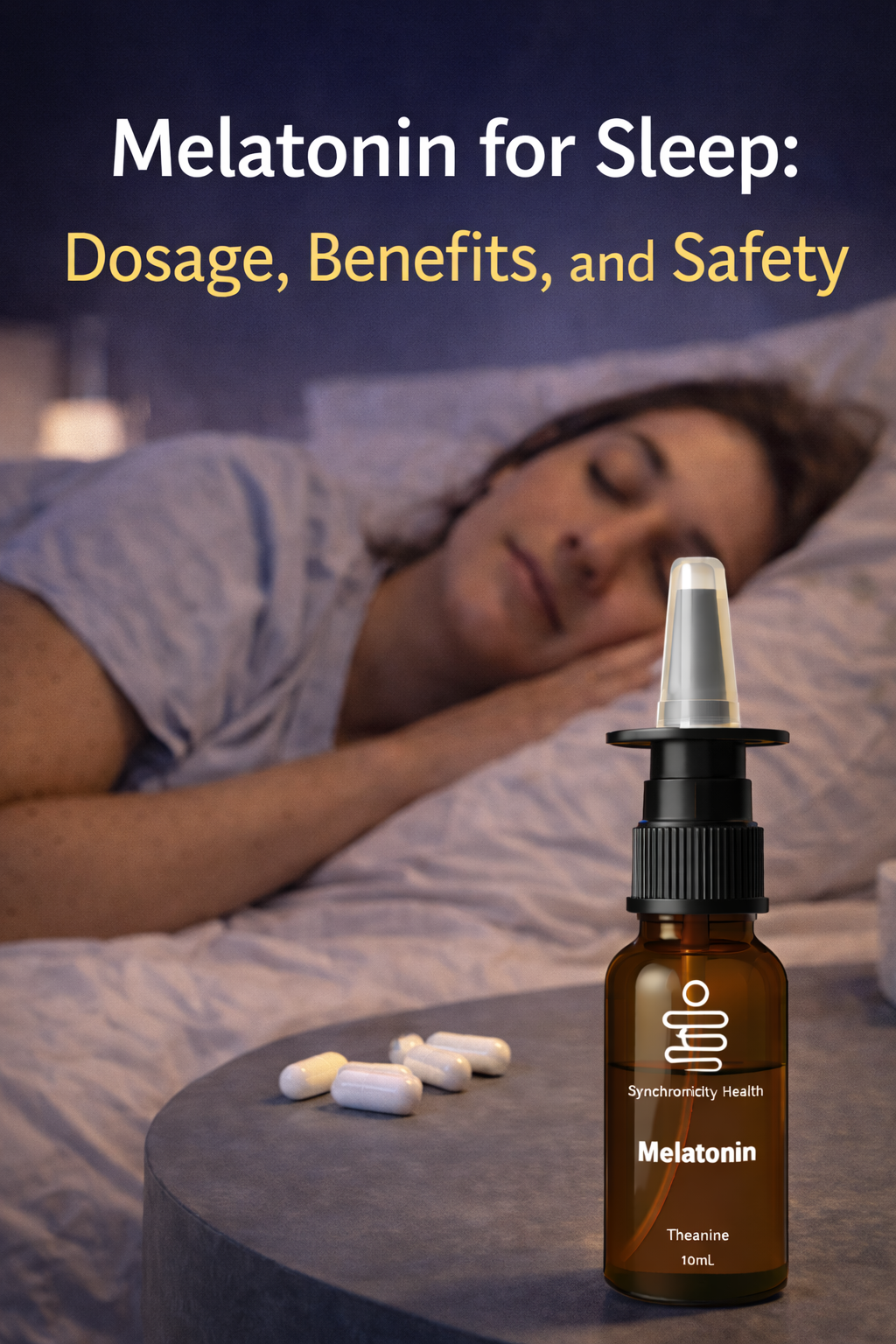
Melatonin For Sleep: Complete Guide To Dosage, Benefits, And Safety
Why High Performers Turn To Melatonin For Sleep
Whether you’re a biohacker, endurance athlete, or time‑pressed executive, consistent deep sleep is the base for energy, focus, and long‑term health. It’s no surprise that many people reach for melatonin for sleep when late‑night work, jet lag, or blue light keep their brains running long after lights out.
Used thoughtfully, melatonin for sleep can shorten the time it takes to fall asleep, help you adjust to new time zones, and support recovery without stimulants or habit‑forming drugs. Used carelessly, melatonin for sleep can leave you groggy, mask deeper sleep problems, or clash with medications.
This guide from Synchronicity Health walks you through the science, real‑world dosage ranges, timing strategies, product selection, and safety details so you can decide if, when, and how to use melatonin in a performance‑focused, evidence‑based way.
This article is educational and does not replace medical advice. Always speak with a healthcare professional before starting or changing any supplement.
How Melatonin Works: Your Brain’s Nighttime Signal
Melatonin is a hormone made in the pineal gland that tells your body it’s nighttime. As daylight fades, your brain increases melatonin output, which nudges your internal clock toward sleep and coordinates many nighttime processes, from body temperature shifts to hormone release. Understanding how this system works makes it easier to predict what melatonin for sleep can and cannot do.
Natural Melatonin Production And Circadian Rhythm
Under normal conditions:
-
Melatonin starts to rise about 2 hours before your usual bedtime.
-
Levels peak in the middle of the night.
-
Production falls sharply toward morning, cueing wakefulness.
Unlike sedative sleeping pills, melatonin does not knock you out. Instead, it creates a state of “quiet wakefulness” that makes it easier for natural sleep to start. How well melatonin for sleep works for you depends heavily on whether your internal clock—your circadian rhythm—is already in sync with your schedule.
“Melatonin is a darkness signal, not a knockout drug.” — common teaching in sleep medicine
Factors That Suppress Your Own Melatonin
Several common habits blunt or delay your natural melatonin release:
-
Bright light at night, especially blue and green wavelengths from phones, tablets, and laptops
-
Irregular sleep schedules, social jet lag, and shift work
-
Long‑haul travel across multiple time zones
-
Aging, which gradually lowers nighttime melatonin levels
-
Certain medications, including some antidepressants, beta blockers, and stimulants
-
Chronic stress and late‑night mental work
If these factors are active, you may feel “tired but wired” at night even before you ever try melatonin for sleep.
Support Natural Melatonin Before Supplementing
Before adding a supplement, give your own system every chance to work:
-
Get bright natural light exposure within 1–2 hours of waking.
-
Spend time outdoors or near a window during the day.
-
Keep lights dim and warm‑colored for 2–3 hours before bed.
-
Avoid phones, tablets, and laptops for at least 60–90 minutes before sleep, or use strong blue‑light filters.
-
Keep your sleep and wake times as consistent as your life allows.
These steps often improve sleep on their own and also make any melatonin for sleep plan more effective and predictable.
When Does Melatonin For Sleep Make Sense?
Melatonin occurs naturally in your body, but that doesn’t mean everyone benefits from taking melatonin for sleep. Research supports supplementation in some situations more strongly than others.
Situations With Solid Evidence
-
Jet Lag And Time‑Zone Changes
For eastbound or multi–time zone travel, melatonin for sleep taken in the local evening helps your internal clock line up with the new schedule faster. Multiple systematic reviews have found that melatonin reduces daytime sleepiness and improves alertness after long flights. -
Delayed Sleep–Wake Phase Disorder (DSWPD)
Night owls who naturally fall asleep and wake several hours later than social norms can respond well to carefully timed melatonin for sleep. Taking a small dose a few hours before the desired bedtime can gradually shift the entire sleep window earlier. -
Circadian Rhythm Disorders In People Who Are Blind
Without light cues, some blind individuals develop “non‑24‑hour” sleep‑wake cycles. Daily melatonin for sleep at the same clock time can stabilize their circadian rhythm and improve sleep regularity. -
Insomnia, Especially In Older Adults
Meta‑analyses show that melatonin modestly reduces the time it takes to fall asleep and slightly extends total sleep time. The effect is more noticeable in people over 55, whose natural nighttime melatonin levels are often lower.
Situations With Emerging Or Mixed Evidence
-
Shift Work
For night‑shift workers, data are mixed. Some people report better daytime sleep with melatonin for sleep, while others notice little change. Light control (dark bedroom, blackout curtains, lightbox use on shift) often matters more than the supplement alone. -
Children With Neurodevelopmental Conditions
In children with ADHD, autism, or certain genetic syndromes, low‑dose melatonin for sleep can improve sleep onset and duration when good bedtime routines alone are not enough. This should always be done under pediatric supervision. -
Alzheimer’s Disease And Evening Agitation
Small studies suggest melatonin may reduce “sundowning” (late‑day confusion and restlessness) in some people with Alzheimer’s disease, though it does not restore lost cognition.
If your sleep issues stem from untreated sleep apnea, chronic pain, or late‑day stimulant use, melatonin for sleep will not fix the root problem. It should be viewed as a tool, not a substitute for diagnosis.
Evidence-Based Dosage And Timing For Melatonin For Sleep

Dosing melatonin for sleep is one place where “less is more” often applies. Higher amounts rarely improve results and can raise the chance of side effects like morning grogginess or vivid dreams.
Core Principles
-
Start low, then adjust slowly.
-
Match dose timing to your goal (falling asleep faster vs. shifting your body clock).
-
Give each change at least several nights before judging the effect.
-
If there is no benefit after a couple of weeks, melatonin for sleep may not be the right tool for your situation.
Typical Adult Doses
For healthy adults, common starting points are:
-
General Trouble Falling Asleep
-
Start with 0.5–1 mg about 1–2 hours before your target bedtime.
-
If needed, increase by 0.5–1 mg every 3–4 nights, up to 3 mg.
-
Many adults never need more than 1–3 mg of melatonin for sleep.
-
-
Jet Lag And Time‑Zone Shifts
-
0.5–5 mg about 1–2 hours before local bedtime.
-
Begin the night of arrival; some frequent travelers start 1–2 days before the trip.
-
Combine melatonin for sleep with light exposure timed to the destination (morning light when shifting east, evening light when shifting west).
-
-
Shifting A Delayed Sleep Schedule (DSWPD)
-
0.3–1 mg taken 3–4 hours before your desired bedtime, not your current one.
-
Move your sleep window earlier by 15–30 minutes every few days.
-
Adults should rarely need more than 10 mg, and many feel worse at high doses. If you are routinely using more than 5 mg of melatonin for sleep, involve a clinician.
Children And Teens
Use in children requires pediatric guidance.
-
Starting point: 0.25–0.5 mg, 30–90 minutes before bed.
-
Titration: Increase by 0.5 mg once per week only if needed.
-
Upper ranges (general guidance, not a prescription):
-
Under 88 lb (40 kg): 1–3 mg
-
Over 88 lb: up to 5 mg
-
Because gummies are easy to overconsume, parents should keep all melatonin for sleep products locked away and handle dosing themselves.
Timing Cheat Sheet
|
Goal |
When To Take Melatonin |
Typical Range |
|---|---|---|
|
Fall asleep faster |
1–2 hours before target bedtime |
0.5–3 mg adults |
|
Shift schedule earlier (DSWPD) |
3–4 hours before desired bedtime |
0.3–1 mg |
|
Jet lag (arrival at destination) |
1–2 hours before local bedtime |
0.5–5 mg |
|
Sleep on a red‑eye flight |
30–45 minutes before planned in‑flight sleep |
0.5–3 mg |
How Long To Use Melatonin
For most people, melatonin for sleep is best used for short stretches:
-
1–4 weeks for insomnia while you address lifestyle factors
-
Several days before and after long‑haul travel
-
A few weeks when shifting a misaligned schedule
If you feel you need continual melatonin for sleep for months on end, it’s time to work with a sleep specialist to look for deeper issues such as apnea, restless legs, or mood disorders.
Choosing A High-Quality Melatonin Supplement

If you decide to use melatonin for sleep regularly, product quality matters just as much as dose. In the United States, melatonin is sold as a dietary supplement, so it does not go through the same pre‑marketing approval process as prescription drugs.
Forms And Release Types
Melatonin is available as:
-
Tablets And Capsules – precise dosing, easy to split.
-
Slow‑Release / Extended‑Release Tablets – release melatonin gradually through the night; useful if you fall asleep easily but wake too early.
-
Fast‑Release Tablets Or Liquids – reach the bloodstream quickly; better when sleep onset is the main problem.
-
Gummies – palatable but often less accurate in dosing and easier to overuse, especially in kids.
-
Sprays And Sublingual Drops – absorbed through mouth tissues for relatively rapid onset.
For most people using melatonin nasal spray, a simple 0.5–3 mg fast‑release tablet is an effective starting point. Slow‑release versions may suit older adults or those with frequent nighttime awakenings.
Quality, Testing, And Label Accuracy
Because regulation is light, independent testing has found:
-
Actual melatonin content in some products ranging from 74% to 347% of the labeled amount
-
Occasional contamination with other compounds, including CBD
-
Inconsistent dosing, especially in gummies
To protect yourself:
-
Choose brands that share third‑party lab reports for potency and contaminants.
-
Look for clear labeling of melatonin content per serving, not per bottle.
-
Favor products in child‑resistant packaging, especially if you have kids in the home.
-
If you follow a vegan, dairy‑free, or gluten‑free diet, confirm the excipients match your needs; many brands now provide vegan, allergen‑aware options.
Clean ingredients and reliable dosing make it easier to dial in an effective melatonin for sleep strategy without unwanted surprises.
Safety, Side Effects, And Interactions
When dosed carefully, melatonin for sleep is considered low risk for most adults in the short term, though research suggests long-term melatonin use requires greater caution, particularly regarding cardiovascular health. Still, it affects the brain and hormones, so side effects and interactions deserve serious attention.
Common And Less Common Side Effects
Common, usually mild:
-
Morning sleepiness or “hangover”
-
Headache
-
Dizziness
-
Nausea
-
Vivid dreams or nightmares
Less common or usually associated with higher doses:
-
Short‑lived low mood or irritability
-
Mild anxiety or restlessness
-
Abdominal cramps
-
Nighttime awakenings or fragmented sleep
-
Bedwetting in children
-
Confusion or disorientation in sensitive individuals
If these symptoms are new or intensify after starting melatonin for sleep, lower the dose or stop and discuss with a clinician.
Because melatonin can impair alertness, avoid driving or operating machinery for at least five hours after taking it.
Who Should Avoid Melatonin Or Use It Only With Supervision
Skip melatonin for sleep, or use it only under specialist care, if you:
-
Are pregnant or breastfeeding
-
Have a seizure disorder
-
Live with an autoimmune condition
-
Have untreated depression or bipolar disorder
-
Take multiple prescription medications and have complex medical problems
People with diabetes or high blood pressure should speak with their healthcare provider first, as melatonin can affect blood sugar and may interact with some blood pressure drugs.
Major Drug Interactions
Melatonin can interact with:
-
Anticoagulants And Anti‑Platelet Drugs – may increase bleeding risk.
-
Anticonvulsants – can reduce drug effectiveness or alter seizure threshold.
-
Blood Pressure Medications – may interfere with control of blood pressure.
-
Central Nervous System Depressants (sleeping pills, benzodiazepines, some antihistamines, alcohol) – can cause excessive sedation when combined with melatonin for sleep.
-
Diabetes Medications – may require dose adjustments.
-
Hormonal Contraceptives – can raise melatonin levels and side effects.
-
Fluvoxamine And Some SSRIs – can sharply increase melatonin levels.
-
Drugs Cleared By CYP1A2 Or CYP2C19 (for example, diazepam) – melatonin may slow their breakdown.
-
Immunosuppressants – melatonin’s immune activity may counteract these drugs.
Always review your full medication and supplement list with a knowledgeable clinician or pharmacist before you add melatonin for sleep.
Overdose Concerns In Children
Poison control centers have seen a sharp rise in calls about accidental melatonin ingestion in children, especially from gummies that look like candy. While most cases are mild, some require hospitalization.
To keep melatonin for sleep safe in households with kids:
-
Treat it like any other medication.
-
Store it out of sight and out of reach, preferably locked.
-
Never call a gummy “candy.”
-
Teach older children that they should never take sleep products on their own.
Melatonin For Sleep In Special Populations
Certain groups have distinct responses and risks when using melatonin for sleep.
Children And Adolescents
-
Use only after good sleep routines (consistent bed/wake times, screen limits, calming pre‑bed rituals) have been tried for several months.
-
Only a pediatrician or pediatric sleep specialist should direct dosing and duration.
-
Monitor growth, puberty timing, daytime behavior, and mood while a child is on melatonin for sleep.
-
Avoid combining with other sedating medications unless a specialist is closely involved.
Older Adults
Natural melatonin production declines with age, which partly explains why insomnia and early‑morning waking are more common in older adults.
-
Very low doses (0.3–2 mg), often in a slow‑release form, can improve sleep continuity.
-
Start at the low end; older brains are more sensitive to sedatives.
-
Watch for increased falls, confusion, or changes in balance.
People With Depression, Autoimmune Disease, Or Seizure Disorders
Melatonin has complex effects on the immune system, mood, and seizure threshold:
-
In depression or bipolar disorder, melatonin may worsen or, less commonly, improve symptoms; close psychiatric oversight is essential.
-
In autoimmune disease, melatonin can stimulate immune activity, which may be helpful or harmful depending on the condition and treatment.
-
In epilepsy or other seizure disorders, melatonin may interact with anticonvulsants and change seizure frequency.
For these groups, melatonin for sleep should never be a do‑it‑yourself experiment.
Beyond Sleep: Antioxidant, Immune, And Brain Benefits
Many people first discover melatonin for sleep, then learn it has broader biological effects that may matter for aging and performance.
Antioxidant And Mitochondrial Support
Melatonin is a powerful free‑radical scavenger and also boosts your own antioxidant enzymes, such as glutathione peroxidase and superoxide dismutase. These actions:
-
Protect mitochondrial membranes from oxidative damage
-
Support DNA repair processes
-
May reduce oxidative stress linked to neurodegeneration
Some researchers are studying melatonin alongside NAD⁺‑supporting protocols, since both target cellular energy and repair pathways that decline with age.
Immune Modulation
Melatonin helps coordinate daily immune rhythms. It can:
-
Influence cytokine production
-
Support T‑cell and natural killer cell activity
-
Potentially dampen chronic low‑grade inflammation
These effects are promising but complex; they are not a reason by themselves to take high‑dose melatonin for sleep, especially if you have autoimmune disease or take immunosuppressants.
Cognitive Health And Aging
Early human and animal studies suggest melatonin may:
-
Reduce accumulation of toxic proteins such as amyloid‑beta
-
Lower neuroinflammation
-
Support memory and learning in aging brains
While this research is encouraging, it is not yet strong enough to recommend long‑term high‑dose use solely for brain health. For now, the most practical way to tap into these benefits is to time melatonin for sleep in a way that reinforces a regular, high‑quality sleep pattern—one of the best‑studied tools for protecting the brain over decades.
Smart Stacks: Melatonin Plus Relaxing Nutrients
Some high performers combine melatonin for sleep with other calming compounds in evening routines. One example is pairing a low dose of melatonin with the amino acid Theanine, which can promote relaxation and increase alpha brain waves without sedation.
Always add one variable at a time so you can tell what is helping, and review any stack with a qualified practitioner familiar with your health history.
Build The Foundation: Sleep Hygiene Before Melatonin For Sleep

No supplement can replace disciplined sleep habits. In fact, strong sleep hygiene often determines whether melatonin for sleep feels like a precise tool or a blunt instrument.
Key practices:
-
Consistent schedule: Wake and sleep at the same times every day, including weekends when possible.
-
Sleep‑friendly environment: Cool, dark, and quiet room; consider blackout curtains and white‑noise devices.
-
Screen curfew: Stop phone, tablet, and laptop use 60–90 minutes before bed.
-
Caffeine and alcohol limits: Avoid caffeine after early afternoon; restrict alcohol, especially within 3–4 hours of bedtime.
-
Wind‑down ritual: Reading, stretching, breathwork, or a warm bath signal the nervous system that the day is ending.
-
Evening nutrition: Heavy, late meals can fragment sleep; aim to finish eating 3 hours before bed, with balanced protein and carbs earlier in the evening for athletes.
“There is simply no aspect of your health that is not improved by sleep.” — Matthew Walker, PhD, Why We Sleep
If you dial in these basics and still struggle, a well‑designed melatonin for sleep plan becomes far more effective and easier to assess.
Sample Protocols Using Melatonin For Sleep
These examples illustrate how you might structure melatonin for sleep in real‑world scenarios. They are not personal medical advice.
1. Busy Professional With Racing Thoughts At Bedtime
-
Lock in a fixed wake time, 7 days a week.
-
Create a 60‑minute no‑screen buffer before bed with reading or light stretching.
-
Take 0.5–1 mg of melatonin for sleep 60–90 minutes before target bedtime.
-
Evaluate after one week; if still taking longer than 30 minutes to fall asleep, discuss a cautious increase with your clinician.
2. Eastbound Flight Crossing 6 Time Zones
-
Three nights before departure, shift bedtime and wake time 30–45 minutes earlier each day.
-
On the first night in the new time zone, take 0.5–3 mg of melatonin for sleep 1–2 hours before planned local bedtime.
-
Get bright outdoor light in the morning at your destination; avoid bright light late at night.
3. Older Adult Waking At 3–4 A.M.
-
Rule out sleep apnea and restless legs with a clinician.
-
Keep the bedroom dark, cool, and quiet.
-
Start with 0.3–1 mg of melatonin for sleep in a slow‑release form 1–2 hours before bedtime.
-
Reassess after 2–3 weeks; if there is clear benefit and no side effects, continue with periodic check‑ins.
Putting It All Together
Melatonin for sleep can be a precise, science‑backed tool when you understand how it works, respect its limits, and use it in harmony with your circadian biology. For most healthy adults, small, well‑timed doses for short periods—combined with strong sleep hygiene, smart light exposure, and careful attention to medications—offer a solid blend of benefits and safety.
If you’re considering melatonin for sleep as part of a broader performance, recovery, or longevity plan, treat it with the same seriousness you give to your training or NAD⁺ protocols: gather data, adjust slowly, and partner with a clinician who understands both sleep science and your personal goals.


Leave a comment
All comments are moderated before being published.
This site is protected by hCaptcha and the hCaptcha Privacy Policy and Terms of Service apply.