
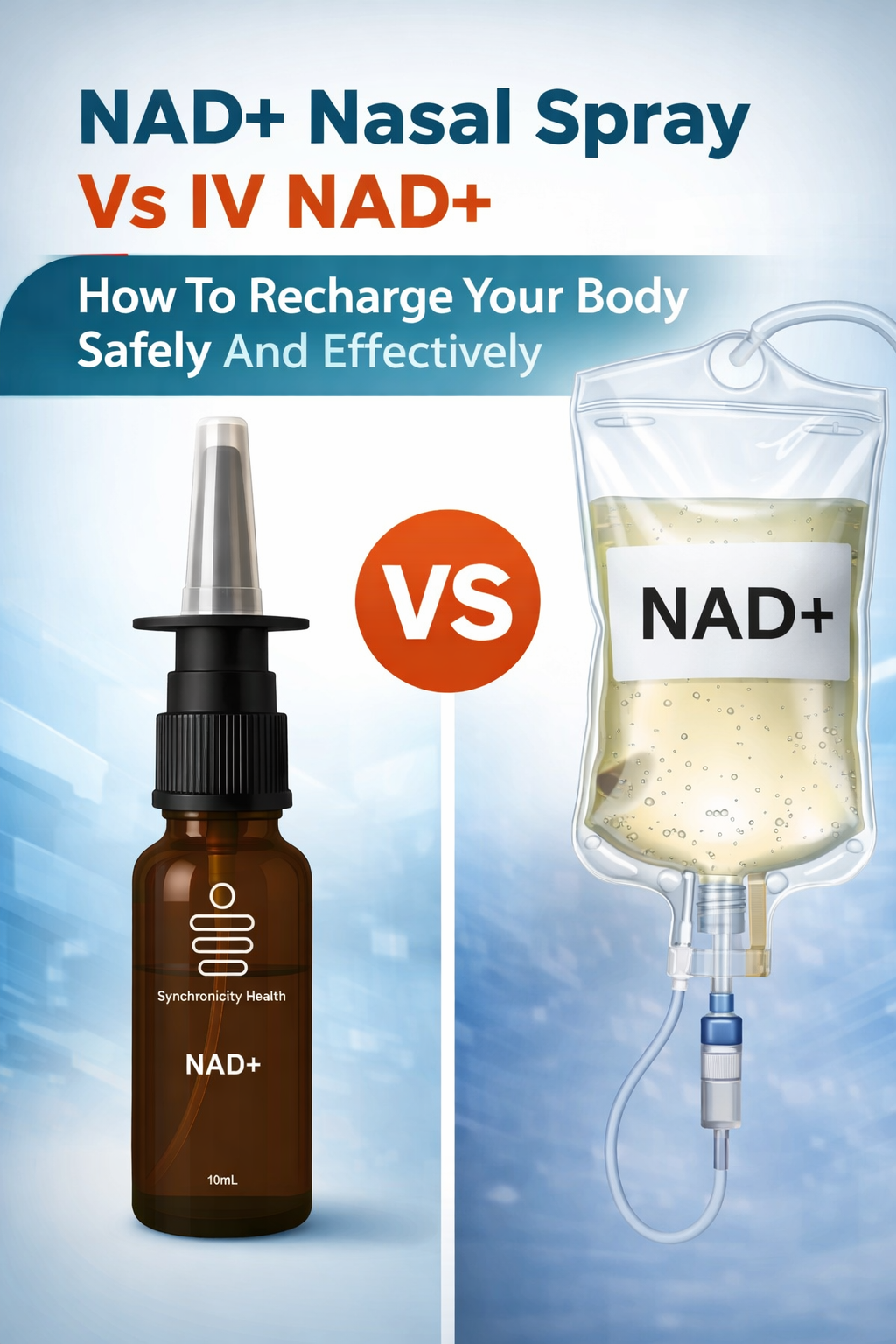
NAD+ nasal spray and IV NAD+ infusions have become go-to options for people who want better energy, sharper focus, and more support for healthy aging. If you’re a health optimization enthusiast, a busy professional, an athlete, or someone focused on anti-aging, you’ve probably seen both options promoted—often with very strong claims.
This guide from Synchronicity Health breaks down the real science behind each method so you can decide whether NAD+ nasal spray, IV NAD+, or a combination makes the most sense for your goals.
This article is for educational purposes only and does not replace personalized medical advice. Always speak with a qualified clinician before starting NAD+ therapy.
What Is NAD+ And Why Does It Matter?

Nicotinamide adenine dinucleotide (NAD+) is a coenzyme found in every cell of your body. It switches between several forms—NAD+/NADH and NADP+/NADPH—to keep your metabolism running.
At a high level, NAD+:
-
Supports cellular energy production (ATP) through glycolysis, the Krebs cycle, and the electron transport chain
-
Helps repair DNA and maintain genomic stability
-
Regulates enzymes involved in inflammation, circadian rhythm, and stress responses
-
Plays a role in neuron function and brain health
You can think of NAD+ as a central currency for energy and repair. When levels are higher, cells tend to perform better. When levels drop, you may notice more fatigue, slower recovery, and signs of accelerated aging.
A common phrase in longevity research is that “if ATP is the battery, NAD+ is the wiring that lets your cells use that power where it matters most.”
How NAD+ Declines With Age
Research shows that NAD+ levels:
-
Are highest early in life
-
Decline steadily with age
-
May drop to roughly half of youthful levels by midlife
Several mechanisms contribute to this decline:
-
Increased NAD+ consumption by enzymes like CD38 and PARPs
-
Chronic oxidative stress and inflammation, which strain repair systems
-
Reduced capacity to recycle and synthesize NAD+ from precursors such as niacin, NMN, and NR
Low NAD+ is linked to mitochondrial dysfunction, impaired DNA repair, and higher risk for age-related problems involving metabolism, the brain, and the cardiovascular system. That’s why many people look to NMN and NAD+ therapies—to “top up” these declining cellular reserves.
Some everyday signs often associated with lower NAD+ include:
-
Persistent low energy despite adequate sleep
-
Slower workout recovery
-
More noticeable “brain fog” or forgetfulness
These signs are nonspecific, though, so they should always be evaluated with a clinician rather than self-diagnosed.
What Is NAD+ Nasal Spray?
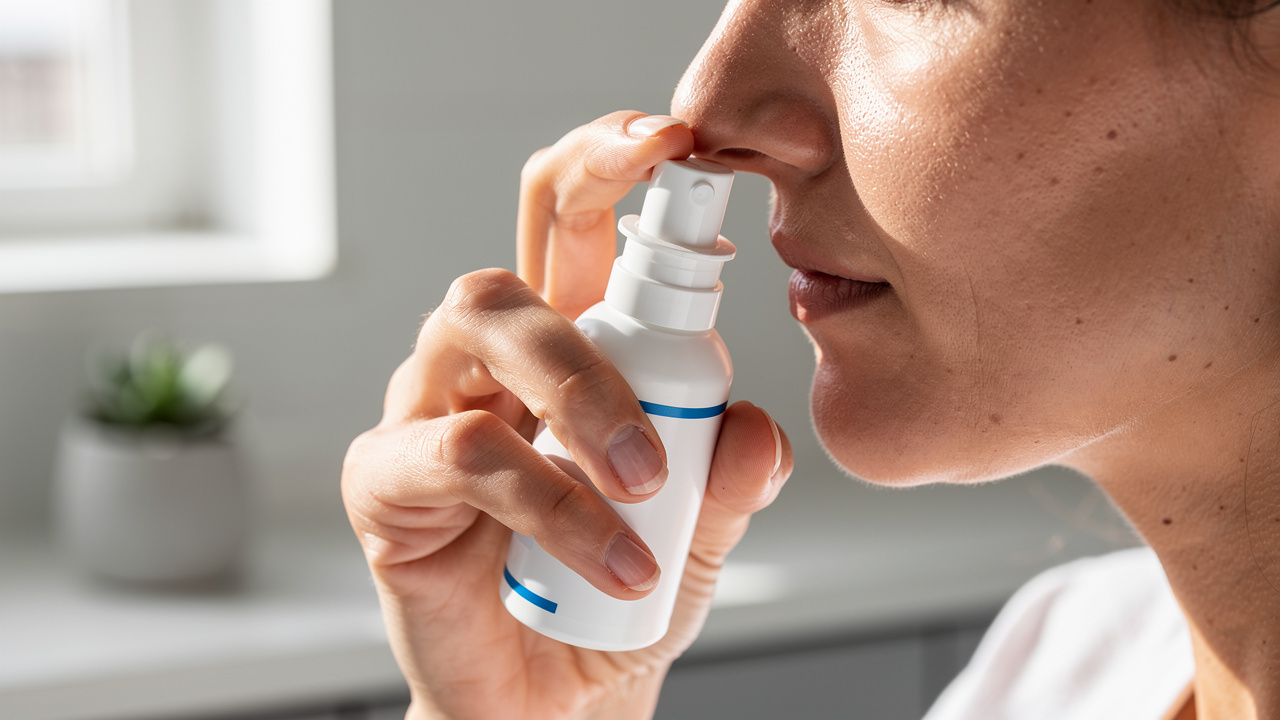
NAD+ nasal spray delivers NAD+ through the highly vascularized tissue inside your nose. Instead of going through your digestive system and liver first, it is absorbed across the nasal mucosa into the bloodstream—and possibly along nose-to-brain pathways.
Many people prefer this route because it:
-
Avoids needles and clinic visits
-
Can be used at home in seconds
-
May reach the brain more directly than oral forms
For example, NAD nasal sprays from Synchronicity Health are compounded to deliver metered doses of NAD+ with each pump, making it easier to build a consistent daily routine.
You’ll often see NAD+ nasal spray offered alongside other nasal spray formulations aimed at mood, sleep, or cognitive support.
Typical Concentration And Dosing
While exact protocols vary by prescriber, a common NAD+ nasal spray formulation includes:
-
Concentration: 300 mg/mL in a 15 mL bottle
-
Per-spray dose: Around 30 mg of NAD+ per actuation
-
Total sprays per bottle: Approximately 150
Most protocols:
-
Are used once or twice daily
-
Are continued long term to maintain steady NAD+ availability
-
Require a prescription and come from a compounding pharmacy
Many users report that they begin to feel a difference in energy, focus, or overall resilience after 2–3 weeks of consistent use, though responses vary.
What Is IV NAD+ Therapy?

Intravenous (IV NAD+) therapy involves slowly infusing a concentrated NAD+ solution directly into a vein over several hours in a clinic setting. Because it bypasses the digestive tract and nasal mucosa, IV NAD+ can deliver a large amount of NAD+ into the circulation all at once.
Typical characteristics of IV NAD+:
-
Administration: Via an IV line in a medical or wellness clinic
-
Session length: Often 2–6 hours, depending on dose and drip rate
-
Dosing: Can be several hundred to 1,000+ mg per session
-
Monitoring: A nurse or clinician generally supervises the infusion
A small human study has shown that IV NAD+ can raise blood NAD+ levels by several hundred percent within hours, with levels remaining elevated for at least a couple of days. Historically, IV NAD+ has also been used in programs for addiction support, although large, rigorous clinical trials are still limited.
Many clinicians describe IV NAD+ as “a concentrated push to the system,” best reserved for situations where close monitoring and a time-limited protocol make sense.
NAD+ Nasal Spray Vs IV NAD+: Key Differences At A Glance
Both NAD+ nasal spray and IV NAD+ aim to raise cellular NAD+ levels, but they differ in convenience, intensity, cost, and use cases.
Side-By-Side Comparison
|
Feature |
NAD+ Nasal Spray |
IV NAD+ Infusion |
|---|---|---|
|
Route |
Intranasal (nose) |
Intravenous (vein) |
|
Setting |
At home, self-administered |
Clinic or wellness center |
|
Onset |
Gradual; builds over days to weeks |
Rapid rise in blood NAD+ during infusion |
|
Frequency |
Daily or near-daily for maintenance |
Periodic sessions (e.g., cycles or monthly) |
|
Brain Access |
Nose-to-brain and systemic circulation |
Systemic circulation; indirect brain effects |
|
Invasiveness |
Noninvasive |
Invasive (needle and IV line) |
|
Time Commitment Per Dose |
Seconds |
Hours per session |
|
Monitoring Needed |
Usually none after initial guidance |
Supervised by trained staff |
|
Common Use Cases |
Long-term support for energy, focus, aging |
Intensive “reset,” addiction programs, deep fatigue |
|
Cost Pattern |
Lower per dose, ongoing expense |
Higher per visit, intermittent |
For many people, NAD+ nasal spray is better suited to daily performance and longevity support, while IV NAD+ is treated more like a periodic intensive intervention.
Benefits Of NAD+ Nasal Spray

NAD+ nasal spray has gained attention because it combines the metabolic and cellular effects of NAD+ with a very convenient delivery route. Based on mechanistic research and early human experience, potential benefits include:
1. Cognitive Performance And Focus
Intranasal delivery gives NAD+ rapid access to the bloodstream and, potentially, the central nervous system. That makes it especially appealing to people who care about:
-
Reduced “brain fog” and mental fatigue
-
Improved concentration during long workdays
-
Better working memory and task switching
By supporting mitochondrial function and NAD+-dependent enzymes like sirtuins and PARPs in neurons, NAD+ nasal spray may help maintain cognitive performance as you age.
2. Energy, Metabolism, And Physical Performance
Because NAD+ sits at the center of ATP production, raising levels can support:
-
More consistent daytime energy
-
Better tolerance for heavy training or demanding schedules
-
Faster bounce-back after intense exercise
Athletes and fitness enthusiasts often stack NAD+ nasal spray with:
-
Structured training programs
-
Prioritized sleep and recovery blocks
-
Nutrient-dense diets rich in protein and micronutrients
This combined approach supports overall performance and recovery rather than relying on any single intervention.
3. Healthy Aging And Longevity
NAD+ is directly involved in:
-
DNA repair
-
Mitochondrial maintenance and mitophagy (clearing damaged mitochondria)
-
Regulation of inflammation and cellular stress responses
Raising NAD+ toward more youthful ranges may help support:
-
Healthy metabolic function
-
Cardiovascular health
-
Brain and nerve function over the long term
- Immune system function
If you want more detail on potential applications and mechanisms, you can explore additional background on NAD nasal sprays.
4. Sleep And Circadian Rhythm Support
NAD+ interacts with clock genes that regulate circadian rhythm. While human research is still developing, some users report:
-
More stable sleep-wake patterns
-
Less “afternoon crash”
-
Easier adjustment to time zone changes or night shifts
These observations line up with preclinical work showing that sirtuins and NAD+ help keep circadian cycles on track and may support more predictable daily rhythms.
Benefits Of IV NAD+ Therapy
IV NAD+ is more intensive—but that can be an advantage in specific situations.
Potential benefits include:
-
Rapid NAD+ elevation: Blood NAD+ levels can rise sharply during and after an infusion, which may appeal to people who want an aggressive push to their system.
-
Structured clinical oversight: Sessions are delivered and monitored by medical staff, which can feel reassuring for those with complex health histories.
-
Use in addiction programs: Since the 1960s, IV NAD+ has been used in some addiction recovery settings. Case reports suggest that it may help reduce withdrawal-related discomfort and support brain recovery, although more controlled trials are needed.
Many people who choose IV NAD+ still add NAD+ nasal spray later as a maintenance strategy once the initial IV series is complete.
A practical rule of thumb many clinicians use: “IV for short, focused programs; nasal spray for steady, long-term support.”
Safety And Side Effects: Nasal Spray Vs IV NAD+
Overall, NAD+ appears to be well-tolerated in human studies, but route and dosing matter.
NAD+ Nasal Spray Safety
Reported or plausible side effects of NAD+ nasal spray include:
-
Nasal dryness or irritation
-
Mild burning sensation immediately after spraying
-
Occasional nosebleeds in sensitive users
-
Headaches or a “pressure” sensation in the head
These effects are usually mild and improve by:
-
Adjusting dose or frequency
-
Using saline spray to support nasal moisture
-
Reviewing technique with your prescriber
Important safety points:
-
Quality matters: Choose products sourced through reputable compounding pharmacies with clear ingredient information.
-
Allergy: Avoid if you have a known allergy to NAD+ or any ingredients in the formulation.
-
Pregnancy and breastfeeding: Safety has not been established; most clinicians advise against use during pregnancy or while nursing.
-
Children: There is no robust safety data in children, so NAD+ nasal spray is generally not recommended for pediatric use.
IV NAD+ Safety
IV NAD+ shares systemic side effects with other high-dose routes and also adds infusion-related considerations.
Reported side effects include:
-
Headache, especially if the drip is too fast
-
Nausea or queasiness
-
Shortness of breath or chest tightness with rapid infusion
-
Vein irritation, bruising, or local infection risk
-
Dizziness or lightheadedness during or shortly after infusion
A small 2019 human study also found statistically significant but not clinically concerning changes in certain liver function markers after IV NAD+, highlighting the importance of AI-based clinical decision support systems in monitoring patient responses to novel therapies. These findings should be interpreted cautiously due to the limited sample size.
To reduce risk:
-
IV NAD+ should only be administered by trained professionals
-
Drip rate should be adjusted based on comfort and symptoms
-
Pre-infusion screening should review heart, kidney, and liver health
As with nasal spray, IV NAD+ is not recommended for pregnant or breastfeeding women or for children, due to lack of safety data.
How To Use NAD+ Nasal Spray Effectively
If you and your clinician decide that NAD+ nasal spray fits your needs, a few best practices can help you get the most from it.
Dosing And Routine
While exact dosing is individualized, a typical pattern looks like:
-
1–2 sprays per day, often split between morning and early afternoon
-
Consistent daily use for at least 2–3 weeks before judging effects
-
Ongoing daily or near-daily use to maintain benefits
You may also see protocols that cycle NAD+ nasal spray with breaks, depending on your goals and how you feel.
A simple usage routine for products such as the NAD nasal spray from Synchronicity Health might include:
-
Gently blow your nose before use.
-
Shake the bottle if directed on the label.
-
Aim the nozzle slightly outward (toward the outer corner of the eye) rather than straight up.
-
Press the pump while breathing in gently through your nose.
-
Repeat on the other side if instructed.
For an in-depth comparison of nasal and oral formats, you can review this discussion of NAD nasal spray vs. oral NAD+ supplements.
Storage And Handling
To preserve potency:
-
Keep the bottle refrigerated between 36°F and 46°F (2°C – 8°C)
-
Do not freeze
-
Protect from direct light
-
Discard after the labeled beyond-use date
-
Always keep out of reach of children
Because many NAD+ nasal sprays are compounded, they are typically not covered by insurance and require a prescription.
Real-World Experiences: Nasal Spray And IV NAD+
Individual responses can differ, but real-world stories help illustrate how people use each method.
-
NAD+ nasal spray for daily performance:
Sarah, a busy consultant, started using a NAD nasal spray formula after struggling with afternoon crashes and mental fatigue. Over several weeks, she noticed steadier energy through long meetings and less “brain fog” when switching between tasks. She liked that the nasal spray took seconds to use and fit easily into her morning and midday routines. -
IV NAD+ for a deeper reset:
John, who had a long history of burnout and persistent fatigue, decided with his clinician to complete a short series of IV NAD+ infusions. He reported feeling a marked shift in stamina and mental sharpness over the following weeks. After finishing the IV series, he transitioned to NAD+ nasal spray to help maintain the benefits without spending hours in a clinic.
These experiences are not guarantees, but they illustrate a common pattern: some people start with IV NAD+ when they want an intensive push, then rely on NAD+ nasal spray for flexible, long-term support.
NAD+ Nasal Spray Vs IV NAD+: Which Is Right For You?
Both NAD+ nasal spray and IV NAD+ can support higher NAD+ availability, but the better fit depends on your goals, lifestyle, and health status.
NAD+ Nasal Spray May Be Better If You:
-
Want a simple, needle-free way to support energy, focus, and healthy aging
-
Prefer daily, incremental gains rather than an intensive intervention
-
Travel often or have a demanding schedule that makes clinic time difficult
-
Are focused on brain performance, productivity, and long-term longevity strategies
IV NAD+ May Be Better If You:
-
Have access to a trusted clinic with experience in NAD+ infusions
-
Are interested in a short-term, high-intensity approach under supervision
-
Are working with a medical team on complex fatigue or recovery concerns
-
Prefer structured programs with close monitoring
Combining Both Approaches
Many health-focused individuals and clinicians choose a hybrid strategy:
-
Use IV NAD+ for a short series of infusions to rapidly raise NAD+ levels.
-
Maintain those gains with NAD+ nasal spray as a convenient, at-home option.
This combination aims to balance intensity with practicality while keeping safety in focus.
Final Thoughts
NAD+ plays a central role in how your cells produce energy, repair damage, and age over time. Both NAD+ nasal spray and IV NAD+ give you ways to support those processes beyond diet and lifestyle alone.
At Synchronicity Health, our perspective is simple:
-
Respect the science—both its promise and its limits
-
Match the delivery method to the person, not the trend
-
Prioritize safety, quality, and transparency
If you’re considering NAD+ nasal spray, IV NAD+, or both, the next step is a detailed conversation with a qualified healthcare provider who understands your health history, medications, and goals. Together, you can build an NAD+ strategy that supports better energy, clearer thinking, and healthier aging—on terms that fit your life.


Leave a comment
All comments are moderated before being published.
This site is protected by hCaptcha and the hCaptcha Privacy Policy and Terms of Service apply.