

Why Melatonin Nasal Spray With Theanine Matters For High Performers
Melatonin nasal spray with theanine is designed for people who want reliable, fast-onset sleep support without sedatives, sugar-heavy gummies, or groggy mornings. If you’re a biohacker, longevity enthusiast, busy professional, or athlete investing in recovery strategies like NAD+ IV therapy, your progress is only as good as your sleep.
Deep, consistent sleep is not just about feeling rested. It supports:
-
Glymphatic clearance of waste products from the brain
-
Repair of muscle and connective tissue
-
Hormone balance and metabolic health
-
Cardiovascular and immune function
“Sleep is the single most effective thing we can do to reset our brain and body health each day.” — Matthew Walker, PhD, sleep scientist and author of Why We Sleep
This guide explains how melatonin nasal spray with theanine works, why the nasal route matters, how to use it intelligently, and how it compares to other sleep aids—so you can decide whether it fits your performance and longevity stack.
This article is for educational purposes only and is not a substitute for personal medical advice.
What Is Melatonin Nasal Spray With Theanine?
Melatonin nasal spray with theanine combines two well-studied sleep-support compounds in a fast-absorbing intranasal format:
-
Melatonin – the hormone your brain produces at night to signal that it’s time to sleep.
-
L-theanine – an amino acid from green tea that calms the nervous system without sedation.
Products such as Synchronicity Health’s melatonin nasal spray are formulated to send these ingredients through the nasal mucosa directly into the bloodstream, bypassing the digestive tract and liver. That means smaller doses can often have a more predictable effect compared to standard sleep capsules.
Many formulas also pair theanine with GABA (gamma-aminobutyric acid), creating a theanine nasal spray GABA combination that further supports relaxation and mental quiet.
How Melatonin Works: Resetting Your Biological Clock

Melatonin is synthesized in the pineal gland and tightly controlled by your brain’s master clock, the suprachiasmatic nucleus (SCN). Light from screens and indoor lighting reaches the SCN through the eyes and suppresses melatonin; darkness releases that brake. This timing system is your circadian rhythm.
Once produced—or supplemented—melatonin:
-
Signals night-time
It binds to MT1 receptors and gradually quiets wakefulness signals, helping you feel drowsy. -
Helps adjust timing
Through MT2 receptors, melatonin can shift the timing of your circadian rhythm. That’s why it’s used for jet lag, shift work, and irregular sleep schedules. -
Supports night-time repair
Melatonin acts as a strong antioxidant and modulates inflammation, helping protect neurons and other tissues during sleep.
When natural production is disrupted by late-night screen exposure or irregular schedules, a targeted dose of melatonin—especially in a fast-acting format like melatonin nasal spray—can help realign your internal clock.
How L-Theanine Calms A Racing Mind

For many high performers, the problem isn’t just feeling tired—it’s turning off a racing mind at night. L-theanine addresses that mental component of sleeplessness.
Key Mechanisms
L-theanine:
-
Boosts calming neurotransmitters
It increases GABA, serotonin, and dopamine levels in key brain regions. These chemicals are involved in relaxation, mood balance, and the ability to “let go” at night. -
Shifts brainwave patterns
Studies show that theanine increases alpha brain waves—associated with calm, wakeful relaxation (similar to meditation)—and decreases high-stress beta activity. -
Buffers excitatory signaling
As a glutamate analog, theanine can modulate excitatory glutamate receptors, preventing overstimulation of neurons.
At typical sleep-supporting doses (100–200 mg), L-theanine helps:
-
Quiet intrusive or repetitive thoughts
-
Decrease pre-sleep anxiety
-
Improve subjective sleep quality without next-day sedative effects
When delivered intranasally, theanine can reach the brain more quickly, which pairs well with the rapid actions of melatonin in a melatonin nasal spray with theanine.
Why Choose A Nasal Spray Instead Of Capsules Or Gummies?
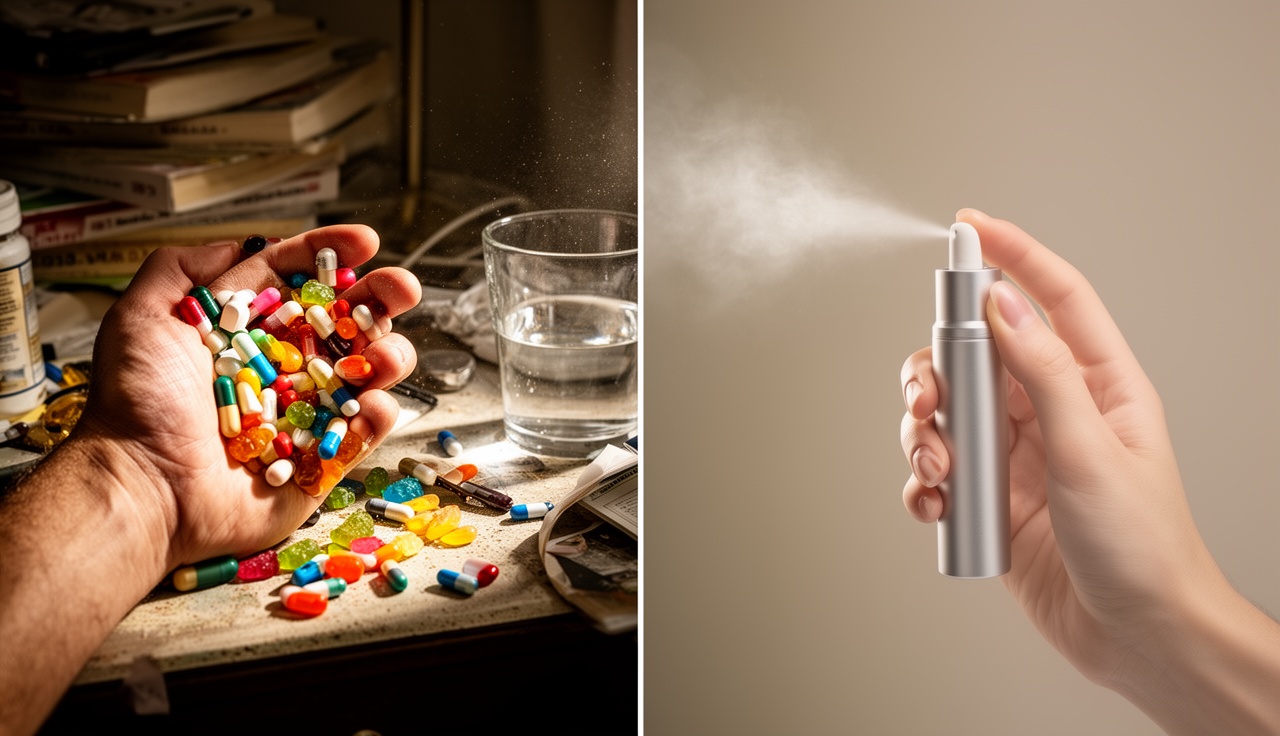
Delivery method matters as much as the ingredients. With traditional pills, capsules, or gummies, active compounds must pass through stomach acid, digestive enzymes, and first-pass metabolism in the liver before they reach circulation. That can blunt and delay their effect.
Intranasal delivery changes that equation.
Advantages Of Nasal Delivery
-
Rapid onset
The nasal mucosa has a dense capillary network. Melatonin and theanine sprayed into the nostrils can reach the bloodstream in minutes—far faster than typical sleep capsules. -
Higher effective availability
Because they bypass the digestive tract and first-pass liver metabolism, a greater percentage of the dose reaches systemic circulation. You can often use a lower dose for the same effect. -
Potentially more direct brain access
The upper nasal cavity sits close to the brain and may allow certain molecules to travel along olfactory and trigeminal pathways, further supporting brain-targeted effects. -
No swallowing issues
Useful for people who dislike pills, have reflux, or want to avoid sugar and dyes in gummies.
Here’s a simple comparison:
|
Feature |
Oral Sleep Capsules |
Melatonin Nasal Spray With Theanine |
|---|---|---|
|
Onset of effect |
30–90 minutes |
~5–15 minutes |
|
First-pass metabolism |
Yes (stomach + liver) |
No (bypassed) |
|
Dose efficiency |
Often higher doses needed |
Lower doses often sufficient |
|
Convenience while traveling |
Needs water, can be bulky |
Pocket-sized; can use discreetly |
|
Sugar/additives |
Common in gummies |
Often minimal with clean formulations |
For people who need consistent, predictable sleep onset—night-shift workers, athletes on tight schedules, executives with early calls—a melatonin nasal spray offers a practical, precision-based option.
Combined Benefits For Sleep, Recovery, And Longevity

Melatonin nasal spray with theanine targets both sides of the sleep equation: biological timing and mental calm. That combined effect extends well beyond simply “falling asleep faster.”
Sleep-Specific Benefits
-
Shorter time to fall asleep (reduced sleep latency)
-
Fewer middle-of-the-night awakenings
-
Deeper, more restorative non-REM sleep
-
Less “wired and tired” feeling at bedtime
Formulas that also include GABA—often labeled as theanine nasal spray GABA—build on these effects by further increasing inhibitory signaling in the brain.
Daytime Cognitive And Mood Benefits
By improving sleep architecture and calming nighttime over-activation, users often report:
-
Better focus and working memory
-
Less brain fog and irritability
-
More stable mood and stress resilience
-
Clearer decision-making and executive function
This is especially relevant for people managing demanding workloads, frequent travel, or stacked training schedules.
Recovery, Performance, And Longevity
A comparison between efficacy of different sleep interventions and compounding pharmacy experience highlight several downstream benefits of better, deeper sleep:
-
Enhanced physical recovery
Growth hormone release peaks during deep sleep, supporting muscle repair, connective tissue recovery, and adaptation to training. -
Brain detox and long-term protection
During non-REM sleep, the glymphatic system clears metabolic waste, including beta-amyloid and other neurotoxic byproducts. Over time, this supports long-term brain health. -
Cardiometabolic health
Adequate sleep helps regulate blood pressure, insulin sensitivity, and lipid balance—all central to cardiovascular risk and healthy aging. -
Immune function
Melatonin and theanine both interact with immune signaling pathways, contributing to more balanced inflammatory responses.
For anyone pursuing anti-aging strategies, NAD+ IV therapy, or aggressive training, a consistent sleep window supported by melatonin nasal spray with theanine may be one of the highest-ROI habits you can put in place.
How To Use Melatonin Nasal Spray With Theanine
Correct dosing and timing are essential. Because intranasal delivery is efficient, it’s smart to start low and adjust gradually.
Step-By-Step Administration
Using a product such as Synchronicity Health’s melatonin nasal spray:
-
Gently blow your nose if needed.
-
While seated or standing upright, insert the nozzle into one nostril.
-
Close the opposite nostril with a finger.
-
Spray while inhaling lightly through the nose.
-
Repeat in the other nostril if your product directions call for it.
Avoid lying flat immediately after spraying; give it a minute to distribute along the nasal mucosa.
Typical Dosing Ranges (Adults)
These ranges are general educational ranges commonly discussed in sleep literature and compounding references. Always follow your product label and your clinician’s advice.
-
Melatonin
-
Common oral doses: 0.5–5 mg at bedtime
-
With nasal delivery and higher availability, many users do well toward the lower end of that range.
-
-
L-theanine
-
Often 100–200 mg in sleep formulas
-
The exact amount per spray depends on the specific product.
-
-
GABA (if included)
-
Amounts vary widely; read your label carefully.
-
Most users take one dose 5–30 minutes before bed. Because onset is fast, there is no need to dose an hour or more in advance as you would with many sleep capsules. For jet lag or rotating shifts, timing may be adjusted under medical guidance to help reset sleep patterns.
Best Practices For High-Quality Sleep

For maximum benefit, pair your spray with solid sleep hygiene:
-
Dim overhead lights 1–2 hours before bed.
-
Avoid phones, tablets, and laptops—or use blue-light blocking settings/glasses.
-
Keep your bedtime and wake time consistent, even on weekends.
-
Keep the bedroom cool, dark, and quiet.
-
Avoid caffeine within 8 hours of bed and heavy meals within 2–3 hours.
Think of melatonin nasal spray with theanine as the final step in a wind-down routine that tells your brain, “It’s time to shut things down.”
Safety, Side Effects, And Who Should Be Careful
For healthy adults, melatonin and L-theanine have strong safety profiles, especially at typical sleep-supporting doses. Still, no supplement is completely risk-free.
Commonly Reported Side Effects
-
Transient drowsiness if used too early in the evening
-
Mild headache or light-headedness
-
Vivid dreams
-
Occasional nasal irritation from the spray base
Less common effects can include digestive upset, mood changes, or short-term irritability—often linked to doses that are too high.
Medication Interactions And Medical Conditions
Talk with a healthcare professional before using a melatonin nasal spray if you:
-
Take blood thinners, immunosuppressants, antidepressants, anti-seizure drugs, or diabetes medications
-
Have autoimmune disease, seizure disorders, major depression, or significant cardiovascular disease
-
Are pregnant, trying to conceive, or breastfeeding
For children and adolescents, dosing should always be supervised by a qualified clinician with pediatric experience.
Practical Safety Tips
-
Start with the lowest dose suggested on the label.
-
Use only near bedtime to avoid daytime drowsiness.
-
Do not combine with alcohol or other sedative medications unless cleared by your prescriber.
-
If you already use sleep capsules or other sleep formulas, ask your clinician how to coordinate dosing rather than stacking blindly.
-
Review your use periodically with a healthcare professional, especially if you are relying on a spray every night for extended periods.
How Melatonin Nasal Spray With Theanine Compares To Other Sleep Aids
Understanding how melatonin nasal spray with theanine differs from other options can clarify where it fits in your toolkit.
Versus Prescription Sleep Medications
Common prescription hypnotics (like zolpidem or benzodiazepines):
-
Can cause dependence and tolerance
-
May disrupt natural sleep architecture, including REM and deep sleep
-
Often produce next-day grogginess and impaired cognition
In contrast, melatonin and theanine:
-
Work with your natural sleep-wake biology
-
Are not known to be habit-forming at standard doses
-
Aim to support, rather than override, normal sleep stages
For many, they become a first-line or adjunct option before stepping up to heavier medications.
Versus Over-The-Counter Antihistamines
Antihistamines (like diphenhydramine) are popular “PM” sleep aids, but they:
-
Were not designed primarily for sleep
-
Commonly cause dry mouth, hangover-like grogginess, and cognitive dulling
-
May reduce sleep quality over time
Melatonin nasal spray with theanine is designed specifically to support sleep timing and mental calm, with a cleaner side-effect profile for most users.
Versus Standard Sleep Capsules And Gummies
Traditional melatonin or theanine capsules:
-
Have slower onset due to digestion
-
Can be blunted by first-pass metabolism
-
Often include fillers, binders, or sugar (in the case of gummies)
A melatonin nasal spray delivers a metered dose rapidly, with fewer extra ingredients—important for health-conscious consumers focused on purity and predictability.
Frequently Asked Questions
What Is A Melatonin Nasal Spray?
A melatonin nasal spray is a liquid melatonin formula delivered as a mist into the nostrils. It sends melatonin through the nasal mucosa into the bloodstream to help regulate sleep timing more rapidly than most oral products.
How Does A Theanine Nasal Spray Work?
Theanine nasal spray delivers L-theanine through the same intranasal pathway. L-theanine supports relaxation, increases alpha brain waves, and helps calm mental overactivity that can prevent sleep.
What Does “Melatonin Nasal Spray With Theanine” Add Over Plain Melatonin?
Melatonin targets the timing of sleep, while theanine helps quiet the mind. Together, they address both circadian alignment and mental calm, often leading to faster sleep onset and better-quality rest than melatonin alone.
Can I Combine Melatonin Nasal Spray With Sleep Capsules?
It’s possible, but you should not combine them casually. Start with one product, note your response, then talk to a healthcare professional before layering in sleep capsules or other aids to avoid oversedation or dosing confusion.
What About Theanine Nasal Spray GABA Formulas?
Some intranasal products combine theanine with GABA. GABA is the brain’s primary inhibitory neurotransmitter; pairing it with theanine may further support relaxation and shorter sleep latency for some users.
Are These Sprays Safe For Long-Term Use?
Short- to medium-term use appears safe for most healthy adults, but long-term use should still be supervised by a clinician—especially if you are also managing chronic conditions or taking other medications.
What Side Effects Should I Watch For?
Watch for persistent morning grogginess, mood changes, headaches, nasal irritation, or any allergic-type reactions. If they occur, stop use and contact your healthcare provider.
How Should I Store My Spray?
Keep your nasal spray in a cool, dry place, away from direct sunlight and out of reach of children. Do not use past the expiration date.
Case Snapshots: How High Performers Use Melatonin Nasal Spray With Theanine
Night-Shift Professional Rebuilding Sleep
A 40-year-old nurse alternating between day and night shifts struggled with falling asleep after late shifts and was cycling through various sleep capsules. Under medical guidance, she switched to a melatonin nasal spray with theanine, using one dose right after her post-shift wind-down routine. Within three weeks, she reported falling asleep within 20–30 minutes after late shifts, far fewer nighttime awakenings, and better alertness on day shifts.
Engineer Balancing Stress, Training, And Deep Work
A 35-year-old engineer training for endurance events while managing a demanding job found his mind racing in bed, despite physical fatigue. He began pairing a theanine nasal spray GABA formula with his existing evening habits (screen curfew, reading, and stretching). Within a month, he noted easier transitions to sleep, fewer 3 a.m. wakeups, and improved mental clarity during morning deep-work blocks.
These kinds of real-world outcomes align with clinical findings from a randomized, double-blind, placebo-controlled trial showing that combinations of L-theanine, GABA, and melatonin can shorten time to fall asleep and improve deep, restorative non-REM sleep.
Choosing A High-Quality Melatonin Nasal Spray With Theanine
Not all sprays are created equal. Health-conscious consumers and biohackers should scrutinize quality as carefully as they would any lab-tested supplement.
Look for:
-
Third-party testing
Independent lab testing for potency and contaminants (heavy metals, microbes, residual solvents). Brands should be willing to share Certificates of Analysis. -
Clean formulation
A simple, non-irritating nasal base with no unnecessary fragrances, parabens, or harsh preservatives. Minimal inactive ingredients beyond what’s needed for stability and comfort. -
Precise dosing
A high-quality metered pump that delivers a consistent dose with each spray, allowing you to fine-tune your personal minimum effective dose. -
cGMP manufacturing
Production in facilities following Current Good Manufacturing Practice standards for consistency, purity, and safety. -
Transparent labeling
Clear listing of melatonin, theanine, and any GABA content per spray, along with detailed usage instructions.
“You can’t outsource sleep; you can only create conditions that make good sleep more likely.” — common saying among sleep physicians
For those already investing in advanced therapies like NAD+ IV, a well-formulated melatonin nasal spray with theanine can serve as a daily, low-friction tool to protect that investment by supporting the single most regenerative state your body has: deep, dependable sleep.


Leave a comment
All comments are moderated before being published.
This site is protected by hCaptcha and the hCaptcha Privacy Policy and Terms of Service apply.