

Introduction
Imagine paying for a premium supplement, timing every dose, and staying consistent for months, only to absorb a small fraction of what is printed on the label. The bottle might say 500 milligrams, but your body could be using only a sliver of that.
That gap is all about bioavailability—the share of an ingredient that actually reaches circulation in an active form. Oral supplements have to survive stomach acid, digestive enzymes, the intestinal wall, and then a powerful filter in the liver before anything reaches the bloodstream. For many compounds, that path cuts usable levels down to a tiny part of the original dose.
Intranasal delivery follows a different route. A fine mist lands on the highly vascular tissue inside the nose. From there, ingredients move quickly into the bloodstream and, in some cases, along nerve pathways into the brain. The result is often higher bioavailability, faster onset, and less waste.
This article explains:
-
How nasal absorption works.
-
How intranasal and oral routes compare for NAD+, glutathione, and Kanna.
-
When nasal sprays meaningfully outperform capsules.
Throughout, you will see how Synchronicity Health uses physician-backed, third‑party‑tested intranasal formulations—such as NAD+ Nasal Spray, Glutathione Nasal Spray, and Kanna Nasal Spray—to help health‑focused people get more from every milligram.
“The effective dose is not what you swallow, it’s what reaches the target tissue.”
— Common pharmacology principle
By the end, you will know when capsules are fine—and when it is smarter to spray.
Key Takeaways
-
A large share of oral supplements never reaches the bloodstream in active form. For many compounds, oral bioavailability is around 5–40%, while suitable intranasal formulations can reach 50–90% bioavailability.
-
Nasal sprays bypass stomach acid and first-pass liver metabolism, so more of each dose reaches circulation and, for some compounds, the brain.
-
The nasal cavity’s dense capillary network allows absorption and noticeable effects within 5–15 minutes, compared with 30–120 minutes for most oral forms.
-
For brain‑focused ingredients, intranasal delivery can use olfactory and trigeminal nerve pathways to reach the central nervous system while avoiding the blood–brain barrier.
-
Synchronicity Health’s physician‑designed nasal sprays control pH, particle size, osmolality, and mucoadhesion to support consistent absorption and comfort.
-
Compounds such as NAD+, glutathione, and Kanna show especially strong advantages when delivered intranasally, with better pharmacokinetics and more reliable effects.
-
A growing body of research supports nasal delivery as a high‑performance option for cognitive support, energy, mood, and recovery.
What Is Bioavailability and Why Does It Matter for Supplement Efficacy?
Bioavailability describes how much of a dose reaches systemic circulation in a form the body can use. If a label lists 300 milligrams of an active, bioavailability answers: How many of those milligrams end up in the blood, available to cells and tissues?
Researchers use two main terms:
-
Absolute bioavailability compares a route (oral, intranasal, etc.) to intravenous (IV) delivery, which is defined as 100%.
-
Relative bioavailability compares two non‑IV routes, such as intranasal NAD+ versus oral NMN.
In both cases, the idea is simple:
-
Administered dose = what you take.
-
Effective dose = what survives all barriers and reaches circulation.
For oral supplements, the pathway is long:
-
Capsule or powder is swallowed and exposed to stomach acid and enzymes.
-
Contents move into the small intestine, where absorption occurs.
-
Everything absorbed goes through the portal vein into the liver.
-
The liver alters or breaks down many compounds before they enter general circulation.
Because of this, many nutrients and plant compounds show oral bioavailability of only 5–40%. Factors that reduce oral absorption include:
-
Large molecular size or poor membrane permeability.
-
Sensitivity to low pH or digestive enzymes.
-
Competition with food or other supplements.
-
Differences in gut health and microbiome from person to person.
Low bioavailability means:
-
Waste – consumers pay for milligrams that never reach circulation.
-
Higher dosing needs – more frequent or larger doses to reach useful blood levels.
-
Less predictable effects – two people can take the same capsule and get very different responses.
Higher bioavailability often translates into better clinical outcomes with lower doses. That is why Synchronicity Health focuses on bioavailability‑optimized intranasal formulations rather than simply adding more milligrams to a label.
“Dose, route, and formulation are three legs of the same stool—ignore any one and the whole thing tips.”
— Teaching phrase used in clinical pharmacology
The Limitations of Oral Supplement Delivery
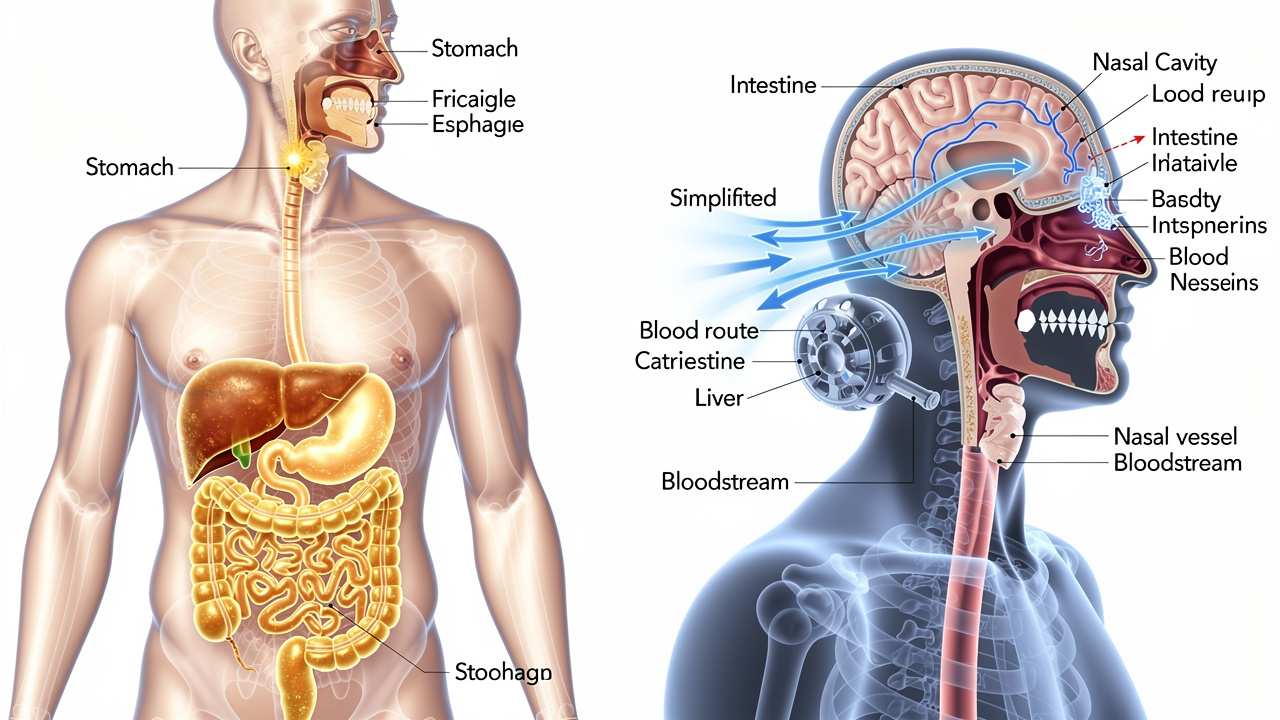
Oral delivery feels simple, but the gastrointestinal tract is built to defend the body, not to give supplements easy access.
Key barriers include:
-
Stomach acid (pH ~1.5–3.5)
-
Helps digest food and kill microbes.
-
Can degrade pH‑sensitive compounds, including many peptides and plant constituents.
-
-
Digestive enzymes
-
Proteases such as pepsin, trypsin, and chymotrypsin break proteins and peptides into smaller fragments.
-
Great for digestion, not great when you want a delicate molecule to stay intact.
-
-
-
Tight junctions limit what passes between cells.
-
Many molecules must pass through cells, which demands the right size and solubility.
-
P‑glycoprotein efflux pumps can move some compounds back into the gut.
-
-
Portal circulation and liver
-
Everything absorbed orally first goes to the liver.
-
Liver enzymes alter or deactivate many compounds before they reach tissues.
-
Individual factors—meal size, microbiome composition, gut inflammation, low stomach acid, medications—add even more variability. Sensitive ingredients such as NAD+ precursors, oral glutathione, and many peptide‑based supplements often show low, inconsistent blood levels when swallowed.
For people who care about precision and consistency, those barriers are a strong reason to consider alternatives like intranasal delivery.
First-Pass Metabolism: The Bioavailability Bottleneck
Among all obstacles for oral supplements, first‑pass metabolism in the liver is one of the most limiting.
After crossing the intestinal wall, compounds enter the portal vein and travel straight to the liver. There, enzyme families—especially CYP450 enzymes—modify them through oxidation, reduction, or conjugation. This protects against toxins but can also reduce levels of helpful compounds.
Consequences:
-
Some substances lose more than 90% of their active form on this first pass.
-
Oral bioavailability for those compounds can drop below 10%, even if intestinal absorption is decent.
-
Plant alkaloids, hormones, and NAD+ precursors like NMN are classic examples.
By comparison:
-
Intravenous (IV) delivery bypasses first‑pass metabolism on the initial circulation, giving 100% bioavailability.
-
Intranasal delivery also avoids first‑pass processing. Blood from the nasal mucosa drains toward the heart, not into the portal system, so a much larger share of each dose reaches systemic circulation intact.
The Gastric Degradation Problem for Sensitive Compounds
The stomach is designed to break things apart. For many high‑value compounds, that is a serious issue.
-
Strong acid can unfold complex proteins and peptides, exposing them to enzyme attack.
-
Enzymes such as pepsin and, later, gamma‑glutamyltransferase in the intestinal wall break them into fragments.
-
Time and temperature in the stomach (30 minutes to several hours at body temperature) give breakdown processes plenty of opportunity.
Glutathione is a well‑documented example:
-
It is a tripeptide that serves as a master intracellular antioxidant.
-
Standard oral glutathione is largely split into amino acids before absorption.
-
Human trials often show small or inconsistent rises in blood glutathione, suggesting very low bioavailability (often under 5–10%).
Strategies like enteric coatings can protect against stomach acid to some degree, but they do not solve:
-
Enzyme breakdown in the intestine.
-
First‑pass metabolism in the liver.
-
Person‑to‑person variability.
For sensitive molecules of this kind, a route that avoids the stomach—such as intranasal delivery—can make a measurable difference.
How Intranasal Delivery Works: The Science of Nasal Absorption
Intranasal delivery uses the nasal cavity as a direct, fast entry point into the body. The inside of the nose is far more than an air tunnel; it is a thin, highly vascular membrane with special access to both the bloodstream and the brain.
Three main regions matter:
-
Vestibular area: Near the nostrils, lined with skin and hair; not very absorptive.
-
Respiratory region: The largest area, covered in ciliated epithelium and packed with blood vessels. Most intranasal absorption happens here.
-
Olfactory region: A smaller area at the very top of the nasal cavity, containing olfactory neurons that connect directly to the brain.
Key features:
-
About 150–180 cm² of absorptive surface.
-
Very thin epithelial barrier (~5–20 micrometers).
-
Venous drainage into systemic circulation, bypassing the portal vein.
-
Potential nose‑to‑brain routes through olfactory and trigeminal pathways.
Well‑designed intranasal sprays can reach peak blood levels in 5–15 minutes, versus 30–120 minutes for many oral forms. Because nasal mucus is cleared every 15–30 minutes, mucoadhesive agents and optimized viscosity are used to keep droplets in place long enough for absorption.
Synchronicity Health formulates its nasal sprays with these details in mind, adjusting droplet size, spray pattern, pH, and mucoadhesion to support consistent systemic and, where appropriate, brain‑direct delivery.
The Respiratory Region: Gateway to Systemic Circulation
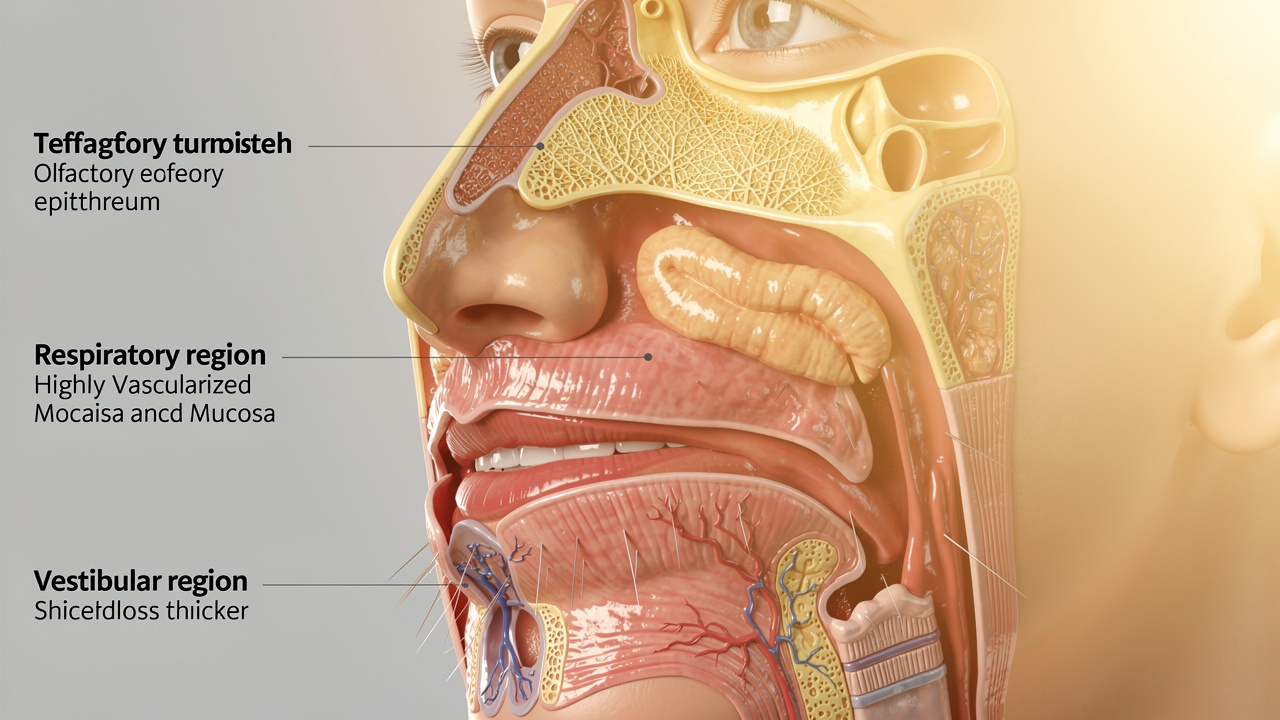
The respiratory region is the main workhorse for systemic intranasal delivery.
-
Lined with pseudostratified ciliated columnar epithelium.
-
Underneath lies a dense web of fenestrated capillaries.
-
The barrier from nasal cavity to bloodstream is very thin, so diffusion happens quickly.
Blood from this region drains into veins that join the systemic venous circulation, not the portal vein. That is a central reason intranasal delivery bypasses first‑pass liver metabolism.
Mucus and mucociliary clearance constantly refresh the surface. To work well, a spray must:
-
Deposit droplets onto the middle and upper parts of the nasal cavity.
-
Use droplet sizes that stick to the mucosa instead of running out or heading into the lungs.
-
Stay on the mucosa long enough for meaningful absorption.
Synchronicity Health’s nasal products are designed so most droplets land where this capillary bed is most dense, helping compounds such as NAD+ and glutathione reach circulation at relatively low doses.
The Olfactory Pathway: Direct Nose-to-Brain Delivery
The olfactory region gives intranasal delivery special value for brain support.
This region, high in the nasal cavity, contains olfactory sensory neurons whose axons pass through tiny holes in the skull (the cribriform plate) into the olfactory bulb. When droplets reach this area, compounds can travel toward the brain in two ways:
-
Intracellular transport: Compounds enter neurons and move along axons into the olfactory bulb, then spread through neural circuits.
-
Extracellular transport: Compounds move along spaces around nerves and vessels into cerebrospinal fluid and nearby brain tissue.
Both routes bypass the blood–brain barrier (BBB), which blocks many substances when they are taken orally or given intravenously.
This is especially relevant for:
-
NAD+, which supports mitochondrial function and cellular repair in brain tissue.
-
Kanna (Sceletium tortuosum), whose alkaloids influence serotonin pathways and PDE4 activity involved in mood and focus.
Synchronicity Health formulates products like NAD+ Nasal Spray and Kanna Nasal Spray with this nose‑to‑brain potential in mind, while staying firmly in the dietary supplement category and not claiming to treat disease.
Intranasal vs. Oral Bioavailability: The Comparative Advantage
When comparing delivery routes, the numbers tell the story. For suitable compounds, intranasal delivery often beats oral delivery on three fronts:
-
Higher bioavailability
-
Faster onset
-
Lower dose needed for similar exposure
Typical ranges:
-
Oral bioavailability for many nutraceuticals: ~5–40%
-
Intranasal bioavailability for suitable compounds: ~50–90%
Time to peak:
-
Oral Tmax: 30–120 minutes
-
Intranasal Tmax: 5–15 minutes
The table below summarizes typical differences:
|
Feature |
Oral Delivery |
Intranasal Delivery |
|---|---|---|
|
Typical bioavailability |
~5–40% |
~50–90% (compound‑dependent) |
|
Time to peak (Tmax) |
30–120 minutes |
5–15 minutes |
|
First-pass liver metabolism |
Yes |
No |
|
Impact of food |
High |
Low |
|
Person‑to‑person variability |
Moderate to high |
Often lower |
|
Dose needed for similar exposure |
Higher |
Lower |
If a compound has 20% oral bioavailability but 70% intranasal bioavailability, a 10 mg intranasal dose can match or exceed the systemic exposure of a 30 mg oral dose.
Pharmacokinetic metrics—AUC (area under the curve), Cmax (peak concentration), and Tmax—consistently show:
-
Higher AUC and Cmax per milligram intranasally.
-
Earlier Tmax.
-
Often tighter curves between individuals.
Synchronicity Health uses these principles in its NAD+ Nasal Spray, Glutathione Nasal Spray, and Kanna Nasal Spray, aiming for meaningful blood and brain levels with practical, trackable dosing.
Bioavailability Data for NAD+ and Precursors
NAD+ (nicotinamide adenine dinucleotide) is central to:
-
Cellular energy production (ATP).
-
DNA repair.
-
Sirtuin activity linked with healthy aging.
Delivery challenges:
-
Oral NAD+ itself is largely broken down in the gut; intact NAD+ barely reaches circulation.
-
NMN and NR perform better but still face:
-
Intestinal and liver metabolism.
-
Estimated oral bioavailability of roughly 5–10% (NMN) and 30–40% (NR) in many analyses.
-
By contrast, intranasal NAD+:
-
Avoids digestive breakdown and first‑pass liver metabolism.
-
Has been reported in research settings to reach ~60–85% bioavailability, depending on formulation and study design.
-
Produces steeper and faster rises in plasma NAD+ and related metabolites compared with oral precursors at similar or lower doses.
This route may support:
-
Tissue NAD+ levels, including in the central nervous system.
-
Faster changes in perceived energy, clarity, and recovery, compared with standard oral precursors.
Synchronicity Health’s NAD+ Nasal Spray is built around these ideas, with physician‑selected concentrations and excipients and third‑party testing to verify potency.
Bioavailability Data for Glutathione Supplementation
Glutathione (GSH) is the body’s primary intracellular antioxidant, central to:
-
Detoxification
-
Redox balance
-
Immune defense
Limitations of oral supplementation:
-
Gut and intestinal enzymes—especially gamma‑glutamyltransferase—split glutathione into amino acids.
-
Standard oral glutathione often raises plasma levels only slightly, with estimated bioavailability under 5–10%.
Intranasal glutathione:
-
Avoids gut breakdown and first‑pass metabolism.
-
Has shown ~50–70% bioavailability in nasal delivery studies, with clear increases in blood glutathione and related redox markers.
-
Can keep the intact tripeptide available to tissues, rather than depending on slow rebuilding from amino acids.
Research indicates that intranasal glutathione can reach organs including the liver, lungs, and—in some models—the brain, supporting roles in:
-
Detox support
-
Antioxidant protection
-
Immune balance
Synchronicity Health’s Glutathione Nasal Spray uses reduced GSH in a stabilized, pH‑controlled formulation, with third‑party verification that each spray delivers the labeled amount.
Bioavailability Advantages for Kanna and Botanical Extracts
Botanical extracts present their own absorption challenges. Kanna (Sceletium tortuosum) contains alkaloids such as mesembrine and mesembrenone, which:
-
Inhibit serotonin reuptake.
-
Affect PDE4 activity linked with mood and cognitive flexibility.
With oral Kanna:
-
Onset is often delayed (45–90 minutes).
-
First‑pass metabolism can reduce and alter active alkaloids.
-
Effects vary widely among individuals.
Intranasal Kanna changes that profile:
-
Standardized extract is absorbed through the nasal mucosa within 5–15 minutes.
-
Alkaloid bioavailability appears higher intranasally, based on pharmacokinetic modeling and user data.
-
Nose‑to‑brain pathways may direct more of the activity to brain circuits involved in mood, stress response, and focus.
Synchronicity Health’s Kanna Nasal Spray is standardized for alkaloid content and formulated for rapid, comfortable absorption without unnecessary additives. For many users, this means calm focus and stress resilience with less lag and variability than oral forms.
Key Advantages of Intranasal Delivery Beyond Bioavailability
Higher bioavailability is only part of the story. Intranasal delivery also offers advantages in:
-
Speed of onset
-
Convenience and adherence
-
Targeted effects with lower systemic exposure
Many intranasal compounds reach useful blood levels within minutes, matching the timing of real‑world demands for energy, focus, or mood support. Sprays are needle‑free, portable, and work without water, which helps people stay consistent.
Because intranasal delivery often requires smaller total doses, it can:
-
Reduce systemic side effects.
-
Limit exposure to fillers or excipients.
-
Fit more easily into long‑term daily routines.
Synchronicity Health designs its nasal sprays with these practical benefits in mind, so they slide easily into busy schedules.
Rapid Onset: When Speed Matters
For many situations, speed is more than a convenience; it is a real performance factor.
Intranasal delivery often moves Tmax from an hour or more down to 5–15 minutes, with higher Cmax per milligram for suitable compounds. This matters when:
-
Facing acute stress (e.g., presentations, flights, intense meetings).
-
Kanna Nasal Spray taken shortly before can support mood and composure.
-
-
Tackling demanding cognitive work.
-
NAD+ Nasal Spray can help support clear thinking for a focused work block.
-
-
Training or competing in sports.
-
Having NAD+ and glutathione levels rise quickly may help support mitochondrial function and redox balance during the session itself.
-
Medical use already recognizes this advantage: intranasal medications for migraine and breakthrough pain are valued because they act fast. Synchronicity Health applies the same pharmacokinetic logic to performance‑oriented formulas.
Enhanced Patient Compliance and Convenience
Supplements only help when people actually use them. Intranasal delivery can make adherence easier by:
-
Avoiding large pills and capsule fatigue.
-
Removing the need for water.
-
Reducing aftertastes from bitter plant extracts.
-
Sidestepping digestive discomfort that some experience with high oral doses.
A compact spray device:
-
Fits easily into a bag, pocket, or desk drawer.
-
Can be used quietly and quickly during travel, office work, or training.
People with swallowing difficulty, busy professionals, and frequent travelers often find sprays easier to stick with than an expanding stack of capsules.
Synchronicity Health supports real‑world use with clear instructions, travel‑friendly packaging, and pumps designed to deliver a consistent dose per spray.
Targeted Delivery with Reduced Systemic Exposure
Intranasal delivery can concentrate effects where they matter while minimizing body‑wide exposure.
-
Nose‑to‑brain transport can direct part of the dose to central nervous system structures without sending the full amount through the entire circulation at once.
-
For systemically active compounds, higher efficiency means lower doses to reach a desired effect.
Compared with intravenous routes, intranasal delivery offers:
-
Rapid access without needles.
-
Less strain on veins.
-
No need for clinical infusion visits.
Synchronicity Health combines this targeting with high purity and independent lab testing, so users know what is—and is not—entering their circulation.
The Technology Behind Advanced Intranasal Formulations
Effective intranasal products are carefully designed, not just actives dropped into saline. Key formulation parameters include:
-
pH – must be comfortable for nasal tissue and compatible with the active ingredient.
-
Osmolality – should be close to body fluids to avoid stinging or swelling.
-
Viscosity – affects how well the spray coats the mucosa and how long it stays.
-
Droplet size and spray pattern – determine where in the nasal cavity the spray lands.
-
Mucoadhesive agents and permeation enhancers – help improve residence time and absorption.
-
Preservative systems – keep multi‑dose bottles safe without irritating tissue.
The device matters as much as the liquid. Metered‑dose pumps and well‑engineered nozzles support consistent volume and predictable plume geometry.
Manufacturing should follow Good Manufacturing Practices (GMP) with safeguards for sterility, particulate matter, and label accuracy—closer to pharmaceutical workflows than to casual supplement production.
Synchronicity Health operates within these higher standards, choosing excipients and devices with clear scientific rationale rather than marketing appeal alone.
Particle Size and Deposition Optimization
Where a spray lands inside the nose depends strongly on droplet size:
-
10–100 micrometers: Ideal range for nasal deposition.
-
<10 micrometers: More likely to travel into the lungs (not desired for most supplements).
-
>100 micrometers: Tend to impact the front of the nose and drip out.
Formulation factors that influence droplet size and pattern:
-
Nozzle design and pump mechanics.
-
Viscosity of the liquid.
-
Spray angle and plume shape.
Goals for a well‑designed spray:
-
Most droplets reach the middle and upper respiratory region.
-
Minimal runoff.
-
Repeatable deposition with each use.
Synchronicity Health selects devices that generate droplets in the target range with controlled spray geometry, helping users get predictable exposure from each actuation.
pH and Osmolality: Formulation Fundamentals
Nasal mucosa is comfortable around pH 5.5–6.5. Formulations that diverge too far from this range can cause:
-
Stinging or burning.
-
Dryness or excessive fluid secretion.
-
Faster clearance and reduced absorption.
To address this, advanced sprays use buffer systems (such as phosphate or citrate) to keep pH within roughly 4.5–6.5, where:
-
The mucosa is comfortable.
-
Many actives remain stable.
-
Ionization states favor membrane crossing for suitable compounds.
Osmolality should stay near physiological levels (~280–320 mOsm/kg). Large deviations can pull water into or out of cells, leading to swelling, dryness, or irritation.
Synchronicity Health keeps pH and osmolality within tight target ranges for NAD+ Nasal Spray, Glutathione Nasal Spray, and Kanna Nasal Spray, testing each batch to confirm values before products ship.
Mucoadhesive and Permeation-Enhancing Technologies
Because mucus is refreshed every 15–30 minutes, a spray that simply “splashes and runs” will not absorb well. Modern formulations use:
-
Mucoadhesive polymers (e.g., chitosan, carbopol, hydroxypropyl methylcellulose)
-
Interact with mucus to form a light, sticky matrix.
-
Extend residence time to 45–90 minutes or more.
-
-
Permeation enhancers (e.g., certain cyclodextrins, fatty acids)
-
Briefly increase membrane permeability or open tight junctions.
-
Support better flux of active molecules across the epithelium.
-
Are used at concentrations designed to be reversible and safe.
-
These approaches can be combined:
-
Mucoadhesion keeps the spray on the right surface.
-
Permeation enhancers help actives cross into blood or along neural pathways.
Synchronicity Health incorporates these technologies judiciously, prioritizing safety records and mild user experience, and confirms purity of all excipients with independent testing.
Clinical Evidence and Research Supporting Intranasal Delivery
The concept of intranasal delivery is not speculative; it is supported by decades of preclinical and clinical research.
Patterns from the literature:
-
Animal studies show higher brain and blood concentrations after intranasal administration compared with oral or even IV for certain CNS‑active compounds.
-
Human pharmacokinetic studies often use crossover designs, where the same person receives oral and intranasal forms on different days. These studies usually find:
-
Higher AUC and Cmax per milligram intranasally.
-
Faster Tmax.
-
Less person‑to‑person variability.
-
“Route of administration can be as important as the molecule itself.”
— Common teaching in clinical pharmacology
Clinical outcome research for intranasal drugs—pain control, migraine, neurological and psychiatric applications—shows that these pharmacokinetic advantages can translate into better real‑world results at lower doses.
Regulators have taken note: multiple FDA‑approved intranasal medications now exist for conditions such as migraine and acute pain, validating the route’s safety and performance when carefully formulated.
Synchronicity Health applies the same core principles to wellness and performance compounds rather than prescription drugs.
Pharmacokinetic Studies Demonstrating Superior Absorption
Pharmacokinetic studies measure:
-
AUC (overall exposure over time).
-
Cmax (peak plasma concentration).
-
Tmax (time to reach peak).
For many small molecules and peptides:
-
Intranasal administration produces several‑fold higher AUC at the same nominal dose compared with oral intake.
-
Tmax often falls below 20 minutes, with many compounds peaking in 5–15 minutes.
-
Dose‑normalized Cmax is typically higher intranasally, indicating more efficient uptake.
Because intranasal delivery sidesteps variables such as:
-
Gastric emptying time.
-
Food interactions.
-
Microbiome differences.
…it often shows lower inter‑individual variability, which helps clinicians and self‑experimenters predict responses and fine‑tune doses.
Clinical Outcomes Research for Cognitive and Energy Applications
Outcome studies look beyond blood levels to how people think, feel, and perform.
Examples from the broader intranasal literature:
-
Intranasal insulin has improved memory and attention in certain study groups without significantly altering blood sugar.
-
Intranasal peptides have shown benefits for cognition, mood, and neurological function that align with their stronger brain delivery.
Early work with NAD+‑related intranasal interventions and mood‑supporting botanicals like Kanna suggests:
-
Faster subjective effects for energy, clarity, and stress management compared with oral counterparts.
-
Useful duration with practical dosing schedules (often once or twice daily for wellness applications).
Adverse events in well‑designed intranasal trials tend to be:
-
Mild and local (temporary irritation or dryness).
-
Short‑lived.
-
Rarely serious when pH, osmolality, and excipients are appropriate.
Synchronicity Health’s intranasal NAD+, glutathione, and Kanna sprays sit on the wellness side of this research field but draw heavily from the same pharmacokinetic and formulation science.
Specific Compounds That Benefit Most from Intranasal Delivery
Not every ingredient belongs in a nasal spray. Good candidates usually:
-
Are active at low milligram doses.
-
Show poor or variable oral bioavailability.
-
Act on systems that benefit from fast or brain‑direct access.
Three standouts:
-
NAD+ and related precursors
-
Glutathione
-
Kanna (Sceletium tortuosum)
All three are popular among health‑focused professionals and biohackers, yet all face meaningful barriers when swallowed. That is why Synchronicity Health built its core intranasal line around NAD+ Nasal Spray, Glutathione Nasal Spray, and Kanna Nasal Spray, often combined in Sync Stacks.
NAD+ and NAD+ Precursors: The Ultimate Application
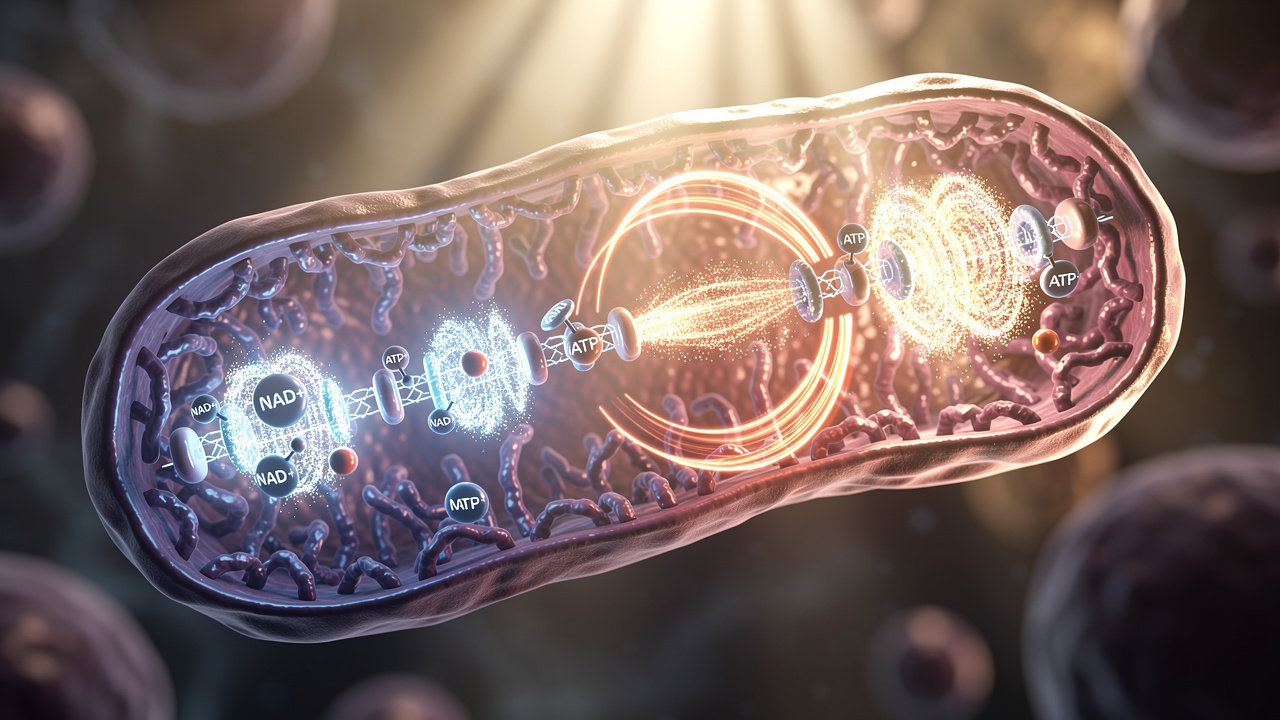
NAD+ is central to:
-
ATP production through redox reactions.
-
DNA repair enzyme activity.
-
Sirtuin function, associated with cellular stress resistance and healthy aging.
Challenges with oral strategies:
-
Direct oral NAD+ is largely degraded before it can be used as NAD+.
-
NMN and NR can raise NAD+ but:
-
Face first‑pass metabolism.
-
Show modest oral bioavailability.
-
Often require higher doses for noticeable effects.
-
Intranasal NAD+:
-
Delivers NAD+ directly across nasal mucosa into the bloodstream.
-
Can reach estimated bioavailability of ~60–85% in research contexts.
-
Produces faster and larger rises in circulating NAD+ markers per milligram than typical oral precursors.
This makes NAD+ Nasal Spray especially attractive for:
-
People seeking clean, stimulant‑free energy.
-
Those focused on healthy aging and mitochondrial support.
-
Athletes and high‑performers who want efficient recovery support.
-
Individuals already using NMN or NR but looking for a more efficient route.
Synchronicity Health’s NAD+ Nasal Spray is physician‑backed, pH‑balanced, and third‑party tested for potency and purity.
Glutathione: Overcoming the Oral Absorption Barrier

Glutathione acts as:
-
A primary cellular antioxidant.
-
A cofactor in phase II liver detoxification.
-
A key player in immune regulation.
Problems with oral glutathione:
-
Extensive cleavage in the gut and intestinal wall.
-
Limited and inconsistent rises in blood glutathione.
-
Dependence on the body’s ability to rebuild GSH from its building blocks.
Intranasal glutathione:
-
Delivers intact reduced GSH to systemic circulation.
-
Shows substantially higher bioavailability than standard oral forms.
-
May reach organs such as the liver, lungs, and parts of the brain more effectively.
Use cases include:
-
Supporting detox pathways during higher chemical or metabolic load.
-
Providing extra antioxidant capacity during intense training or travel.
-
Partnering with NAD+ in stacks aimed at cellular health and recovery.
Synchronicity Health’s Glutathione Nasal Spray uses a stabilized, pH‑controlled formulation designed to keep GSH in its active reduced state, backed by independent lab testing.
Kanna (Sceletium Tortuosum): Rapid Mood and Cognitive Support

Kanna has a long history of traditional use in South Africa for mood and social ease. Modern research shows that mesembrine‑type alkaloids:
-
Inhibit serotonin reuptake.
-
Modulate PDE4, a target linked with mood and cognitive processing.
With oral Kanna:
-
Onset can be slow and variable.
-
First‑pass metabolism may change alkaloid ratios.
-
Some users need higher or repeated doses to feel consistent effects.
Kanna Nasal Spray:
-
Delivers a standardized extract directly to nasal mucosa.
-
Often produces noticeable calm‑focus effects within 5–20 minutes.
-
May direct more of the activity toward the brain via nose‑to‑brain pathways.
Typical scenarios where intranasal Kanna is helpful:
-
Acute stress (public speaking, negotiations, performances).
-
Demanding cognitive tasks requiring flexible thinking and sustained attention.
-
Social or professional situations where a calm yet engaged state is ideal.
Synchronicity Health’s Kanna Nasal Spray is non‑sedating when used as directed, made with a clean excipient profile, and tested by third‑party labs for alkaloid content and purity.
Safety Considerations and Contraindications for Intranasal Delivery
Overall, intranasal delivery has a strong safety record when:
-
Formulations are well designed.
-
Doses are reasonable.
-
Devices are used correctly.
Compared with oral supplements, intranasal products:
-
Avoid many gastrointestinal side effects (nausea, bloating, reflux).
-
Often require lower total doses for similar effects.
That said, the nasal mucosa is delicate. Poorly designed sprays with:
-
Harsh preservatives,
-
Extreme pH,
-
Or improper osmolality
…can cause irritation, dryness, or, rarely, small nosebleeds.
People with complex medical histories, multiple medications, or nasal conditions should talk with a healthcare professional before starting intranasal supplements.
Synchronicity Health addresses safety through:
-
Pharmaceutical‑style manufacturing in GMP facilities.
-
Physician input on formulation.
-
Third‑party testing for purity and microbial safety.
Local Nasal Effects and Mitigation Strategies
Most side effects from intranasal supplements are local and transient, such as:
-
Mild stinging or warmth.
-
A brief sense of dryness.
-
A tickle that triggers a sneeze.
-
Slight aftertaste if some spray drains into the throat.
These usually fade within seconds to minutes.
To reduce local effects:
-
Tilt the head slightly forward.
-
Aim the nozzle outward, away from the nasal septum.
-
Spray while breathing gently, not with a sharp sniff.
-
Avoid forceful sniffing that pulls droplets into the throat.
Good formulation also helps:
-
pH and osmolality matched to nasal tissue.
-
Mucoadhesive components that support even coating.
-
Minimal, gentle preservatives.
If minor irritation occurs, supporting nasal health with:
-
Occasional saline rinses (at a different time of day).
-
Adequate hydration.
…can be helpful.
Users should stop and seek advice if they notice:
-
Recurrent nosebleeds.
-
Persistent pain or burning.
-
Signs of infection.
Synchronicity Health designs its sprays to avoid these problems for the vast majority of users.
Contraindications and Special Populations
Caution or avoidance may be appropriate for:
-
Active nasal infections or significant sinusitis
-
Swollen mucosa may alter absorption and increase irritation.
-
-
Recent nasal or sinus surgery
-
Always follow the surgeon’s timeline before adding any new intranasal products.
-
-
History of frequent nosebleeds or fragile nasal vessels.
-
People on anticoagulant therapy (due to higher concern around bleeding).
-
Pregnant or breastfeeding individuals, due to limited safety data.
-
Children, unless a clinician specifically recommends use and dosing.
Those already using nasal medications (e.g., steroids, decongestants) should:
-
Space different sprays apart in time.
-
Discuss combinations with a healthcare provider.
Synchronicity Health encourages anyone with complex medical conditions or special circumstances to consult a clinician before starting intranasal supplements.
How to Choose High-Quality Intranasal Supplements
As intranasal supplements become more visible, product quality varies widely. Choosing wisely involves looking past marketing claims to the manufacturing, testing, and formulation behind each spray.
Key things to evaluate:
-
Manufacturing standards
-
Prefer products made in GMP‑certified facilities.
-
-
Third‑party testing
-
Independent labs should verify:
-
Active ingredient content.
-
Absence of heavy metals, microbial contamination, and other impurities.
-
-
A Certificate of Analysis (COA) that matches the batch number is a strong sign of quality.
-
-
Ingredient list
-
Look for:
-
Pharmaceutical‑grade actives and excipients.
-
Clear roles for buffers, stabilizers, and mucoadhesive agents.
-
-
Be cautious with unnecessary colors, fragrances, or filler botanicals that do not support absorption or stability.
-
-
Device quality
-
A metered‑dose spray with a tested plume pattern helps deliver consistent dosing.
-
-
Value per effective dose
-
Consider the combination of dose, bioavailability, and testing, not just price per bottle.
-
Synchronicity Health positions itself at the high‑standard end of the field, with:
-
Physician‑designed formulations.
-
GMP manufacturing.
-
Full third‑party testing.
-
Transparent ingredient rationales.
The Importance of Third-Party Testing and Pharmaceutical-Grade Standards
Because supplements are not pre‑approved by regulators the way drugs are, independent verification is vital.
Good third‑party testing evaluates:
-
Potency – Does the product contain the stated amount of NAD+, glutathione, Kanna extract, etc.?
-
Purity – Are levels of heavy metals, pesticides, and residual solvents acceptably low?
-
Microbial safety – Are harmful bacteria, yeasts, and molds absent?
Accredited labs and recognizable standards (e.g., USP or NSF methods) strengthen this assurance. A detailed COA allows users to see actual test results rather than just marketing claims.
Using pharmaceutical‑grade ingredients adds another layer:
-
Stricter identity and purity requirements than basic supplement‑grade materials.
-
Better consistency between batches.
-
Lower risk of impurities.
Synchronicity Health relies on pharmaceutical‑grade actives and independent lab testing for each batch, with physician review of both ingredient choices and test data.
Evaluating Formulation Sophistication
Formulation quality often separates serious intranasal products from simple “actives in saline” sprays.
Signs of a thoughtful formulation:
-
A purposeful, readable excipient list where each component has a clear role (buffer, stabilizer, mucoadhesive, preservative).
-
Use of buffer systems to keep pH stable and comfortable.
-
Mention of mucoadhesive technology and, where appropriate, gentle permeation enhancers.
-
Clear claims about isotonic or near‑isotonic osmolality.
-
Information about stability testing and storage recommendations.
-
Simple, precise dosing instructions.
High‑quality products avoid:
-
Strong perfumes or colors.
-
Random plant blends without clear function.
-
Vague or exaggerated claims.
Synchronicity Health’s formulation approach is science‑led and physician‑guided, favoring:
-
Minimal but purposeful ingredient lists.
-
High‑grade buffers and mucoadhesives where needed.
-
Well‑characterized delivery devices.
-
A Sync Stack philosophy that considers how sprays combine, so their actions complement one another.
Integrating Intranasal Supplements into Your Optimization Protocol
Knowing the science is one thing; fitting sprays into real life is another. The good news: intranasal supplements are easy to integrate into existing routines.
Start by clarifying goals:
-
Daily energy and mental performance
-
Emphasize NAD+ Nasal Spray.
-
Add Kanna Nasal Spray for high‑pressure days.
-
-
Detox, immune balance, and healthy aging
-
Emphasize Glutathione Nasal Spray, with regular NAD+ use.
-
Use Kanna more selectively for stress and mood.
-
Intranasal supplements can work alongside:
-
Oral essentials such as omega‑3s, vitamin D, magnesium, and adaptogens.
-
Lifestyle strategies: sleep, movement, nutrition, breathing practices.
Nasal sprays are particularly useful for compounds that:
-
Do poorly when swallowed.
-
Benefit from rapid or brain‑direct delivery.
Short‑term tracking is valuable:
-
Note changes in energy, focus, mood, sleep, and recovery.
-
For those who like numbers, occasional laboratory markers (e.g., NAD+‑related markers, oxidative stress indicators) can help fine‑tune protocols.
Synchronicity Health offers protocol suggestions and Sync Stack ideas so people can match sprays to their goals rather than guessing.
Timing and Dosing Strategies for Maximum Effectiveness
Timing can significantly affect perceived benefit:
-
NAD+ Nasal Spray
-
Often best in the morning or before key work blocks.
-
Some users add a light early‑afternoon dose on demanding days.
-
Avoid late‑evening dosing if it seems to interfere with sleep.
-
-
Kanna Nasal Spray
-
Take 10–20 minutes before stressful events or intense cognitive tasks.
-
For regular workdays, some prefer small, evenly spaced doses for gentle support.
-
-
Glutathione Nasal Spray
-
Morning use supports daytime detox and antioxidant needs.
-
Post‑workout or post‑travel doses can help buffer added oxidative stress.
-
Deeper detox protocols are best structured with a clinician.
-
Because intranasal absorption is less influenced by food, sprays can be taken with or without meals.
General tips:
-
Start with conservative doses.
-
Stay consistent for several weeks before drawing firm conclusions, especially for NAD+ and glutathione.
-
Adjust dose and timing based on how you feel and, where applicable, objective markers.
Synchronicity Health provides product‑specific timing suggestions while encouraging users to respect their own responses and work with professionals when needed.
The Sync Stack Approach: Synergistic Supplement Combinations
Synchronicity Health’s Sync Stack concept reflects how body systems interact:
-
NAD+ supports cellular energy and repair.
-
Glutathione provides antioxidant and detox support, buffering the reactive byproducts of high energy turnover and environmental exposure.
-
Kanna supports mood, stress response, and cognitive performance, helping you use that cellular capacity effectively.
Together, this trio forms a core intranasal stack that can be combined with:
-
Oral omega‑3s, vitamin D, and magnesium.
-
Adaptogens such as ashwagandha or rhodiola.
-
Lifestyle pillars: sleep, movement, nutrition, and stress management.
Tracking can include:
-
Simple journaling of energy, focus, mood, and sleep.
-
Periodic biomarker testing for those who want more data.
Synchronicity Health provides curated stacks around themes such as energy and cognition, longevity, and athletic performance, and recommends professional guidance for people with complex medical histories.
The Future of Supplement Delivery: Emerging Technologies and Research
Intranasal delivery is already a major upgrade over standard capsules for specific compounds, but research is moving further.
Areas under active study:
-
Nanoparticle carriers
-
Lipid or biodegradable polymer nanoparticles that protect sensitive molecules.
-
May improve solubility and target delivery to certain brain or immune cells.
-
-
In‑situ gelling systems
-
Liquids that form gentle gels upon contact with nasal mucosa.
-
Extend residence time without blocking airflow.
-
-
Ligand‑targeted carriers
-
Nanoparticles decorated with molecules that bind to specific receptors on nasal or brain cells.
-
Could steer more of a dose to chosen regions.
-
On the regulatory side, growing experience with intranasal medications is shaping clearer expectations for:
-
Long‑term safety.
-
Acceptable excipients.
-
Device performance standards.
“Delivery science is becoming as innovative as molecule design—and often just as important.”
— Observation shared in pharmaceutical development circles
Synchronicity Health tracks these developments closely. Current products already use advanced concepts in pH control, mucoadhesion, and device design, and the company views intranasal technology as a platform for ongoing innovation rather than a static category.
FAQs
What Makes Intranasal Delivery Different from Just Taking More Oral Supplements?
Taking larger oral doses can raise blood levels to a point, but stomach acid, enzymes, and first‑pass liver metabolism still remove a large share of each dose. Intranasal delivery uses a different entry point, so a smaller amount can deliver higher effective exposure, especially for compounds that are fragile in the gut or heavily processed by the liver.
Is Intranasal Delivery Safe for Long-Term Daily Use?
Well‑designed intranasal formulations used as directed appear generally well tolerated in long‑term settings, similar to many prescription nasal sprays for allergies. Comfort and safety depend on:
-
Appropriate pH and osmolality.
-
Gentle preservatives.
-
Clean manufacturing and good hygiene during use.
People with chronic nasal issues or complex medical histories should consult a healthcare provider before starting regular intranasal supplements.
Can Intranasal Supplements Replace All My Oral Supplements?
No. Many nutrients—such as minerals, most vitamins, and omega‑3 fats—work very well orally and are not suitable for nasal delivery. Intranasal supplements are best seen as targeted tools for specific compounds like NAD+, glutathione, and Kanna that:
-
Struggle with oral absorption, or
-
Benefit from rapid or brain‑direct access.
How Quickly Should I Feel Effects from NAD+, Glutathione, or Kanna Nasal Sprays?
Most users notice Kanna Nasal Spray within 5–20 minutes, especially when taken before a stressful or demanding situation. NAD+ and Glutathione Nasal Sprays may produce subtle shifts in clarity, breathing comfort, or steadier energy within a similar window, with deeper benefits accumulating over days to weeks of consistent use. Responses vary, so it is wise to start modestly and watch patterns over time.
Are Synchronicity Health Nasal Sprays Medications?
No. Synchronicity Health products are dietary supplements, not prescription drugs. They are not intended to diagnose, treat, cure, or prevent any disease. They are designed to support health optimization, performance, and longevity goals in generally healthy adults, using scientific principles drawn from intranasal drug research.
Conclusion
Bioavailability quietly decides whether a supplement delivers real value or just an impressive label. Oral delivery works well for many essentials, but compounds like NAD+, glutathione, and Kanna often lose much of their potential to stomach acid, enzymes, and first‑pass metabolism.
Intranasal delivery offers a practical, science‑driven way around those barriers. By using the nasal mucosa—and, when appropriate, nose‑to‑brain pathways—nasal sprays can provide higher active levels at lower doses, with faster onset and more predictable effects.
Synchronicity Health sits at the intersection of advanced formulation science and everyday usability. With physician‑backed, third‑party‑tested nasal sprays for NAD+, glutathione, and Kanna, and a Sync Stack approach that combines them intelligently, the brand helps people get more value from every milligram they choose to invest in.
For anyone ready to move beyond “more pills” toward smarter delivery, intranasal technology is one of the most effective upgrades available for a modern health optimization protocol.

Leave a comment
All comments are moderated before being published.
This site is protected by hCaptcha and the hCaptcha Privacy Policy and Terms of Service apply.