

Why Anandamide Supplements For Mood Are Getting So Much Attention
Anandamide supplements for mood are drawing interest from biohackers, longevity enthusiasts, athletes, and busy professionals who want steadier focus and better stress resilience without relying on heavy stimulants or sedatives.
Anandamide—nicknamed the “bliss molecule”—is one of the body’s own cannabis-like messengers. When this endocannabinoid stays in a healthy range, people often describe feeling calm, clear, and emotionally flexible. When signaling is low or disrupted, mood, motivation, sleep, and even pain sensitivity can shift.
The challenge is that anandamide is fragile and short-lived. Your body makes it “on demand” and clears it quickly, which is why early attempts at simple anandamide capsules mostly fell flat. Modern anandamide supplements for mood use smarter formulation strategies and stack with other brain-focused nutrients to support the endocannabinoid system in a more targeted way.
This guide walks through what the science actually shows, how lifestyle and genetics shape anandamide levels, and how to think about anandamide supplement protocols, stacks, and safety.
What Is Anandamide? The “Bliss Molecule” Explained
Anandamide (N‑arachidonoylethanolamine, or AEA) is an endocannabinoid—a fat-based signaling molecule your body produces on its own. Its name comes from the Sanskrit word ananda, meaning “bliss” or “joy,” which reflects its role in:
-
Mood and stress response
-
Motivation and reward
-
Pain perception
-
Appetite and sleep
-
Learning and memory
Anandamide binds to the same primary receptor in the brain (CB1) that THC targets, which is why some researchers call it “nature’s own THC-like molecule.” The key difference: anandamide is produced in tiny amounts, exactly where it is needed, and then broken down within seconds to minutes. That tight control helps keep your nervous system in balance rather than in a constant “high.”
Because its effects are brief and location‑specific, you don’t walk around in perpetual bliss—even if your anandamide signaling is strong. Instead, your brain gets tiny adjustments in stress, fear, and reward circuits from moment to moment.
How The Endocannabinoid System Shapes Mood And Stress
To understand anandamide supplements for mood, it helps to know the framework anandamide operates in: the endocannabinoid system (ECS).
The ECS has three main parts:
-
Endocannabinoids – primarily anandamide (AEA) and 2‑AG
-
Cannabinoid receptors – CB1 (mainly brain and nervous system) and CB2 (primarily immune and peripheral tissues)
-
Enzymes – that build and break down endocannabinoids, especially FAAH (fatty acid amide hydrolase), which rapidly degrades anandamide
“The endocannabinoid system acts more like a volume knob for neural circuits than a simple on/off switch.” — Summary of modern neurobiology research
CB1 And CB2: Where Anandamide Does Its Work
-
CB1 receptors are dense in brain regions that control mood, fear, motivation, and cognition: amygdala, hippocampus, prefrontal cortex, basal ganglia, and cerebellum.
-
When anandamide binds CB1, it moderates the release of other neurotransmitters like glutamate, GABA, and dopamine.
-
That modulation can mean less “fight-or-flight” signaling and a smoother emotional response.
-
-
CB2 receptors are more common in immune cells and peripheral tissues.
-
Anandamide’s action here influences inflammation and immune balance, which indirectly shapes how you feel and how quickly you recover from stressors and training.
-
FAAH: The Enzyme That Limits Your Bliss
FAAH is the primary enzyme that dismantles anandamide as soon as it finishes its job. That’s helpful for precision, but it also means:
-
Anandamide has a very short half-life
-
It’s difficult to raise consistently with simple oral dosing
-
Strategies that slow FAAH, or protect anandamide from FAAH, may be more effective than just supplying more anandamide alone
Genetic variation in the FAAH gene partly explains why some people are naturally more relaxed or stress-resilient: they break down anandamide more slowly and therefore maintain higher baseline levels.
Benefits Of Healthy Anandamide Signaling
Research in humans and animals suggests that when anandamide signaling is strong and well-regulated, several domains may improve.
1. Anxiety And Stress Response
Higher anandamide levels have been associated with:
-
Lower baseline anxiety
-
Better “fear extinction” (the brain’s ability to unlearn old fear responses)
-
More flexible adaptation to stressors
Conversely, low anandamide signaling has been linked with a higher risk of anxiety-related issues and post‑traumatic stress in some studies. For everyday stress—work deadlines, demanding training blocks, emotional friction—anandamide acts as a physiological buffer.
2. Mood And Motivation
Because anandamide interacts with dopamine- and serotonin-related circuits, it can:
-
Support a more positive overall outlook
-
Reduce feelings of emotional “flatness” or low motivation
-
Help you stay engaged without tipping into agitation
This matters for high performers and professionals who need sustained productivity without becoming wired and tense from caffeine-heavy stacks.
3. Pain Perception And Recovery
Anandamide also participates in pain modulation:
-
CB1 activation in the central nervous system can dampen certain pain signals
-
CB2 activity can influence inflammatory cascades that contribute to soreness and chronic discomfort
For athletes and fitness enthusiasts, better endocannabinoid tone may mean:
-
Less perceived pain
-
Faster return to training intensity
-
Fewer “crash” days after hard efforts
4. Sleep And Emotional Processing
Endocannabinoid signaling interacts with sleep–wake regulation and REM sleep. Healthier anandamide activity appears to support:
-
Easier transition into sleep
-
More stable sleep architecture
-
Nighttime emotional processing (dreaming and memory reconsolidation)
People who support their ECS often report that they don’t just sleep longer—they wake up feeling more emotionally “reset.”
Why Anandamide Levels Differ: Genetics, Lifestyle, And Cannabis
No two people have the same endocannabinoid tone. Several factors influence your baseline.
Genetics
-
Variants in the FAAH gene can reduce enzyme activity, slowing the breakdown of anandamide.
-
People with these variants tend to have higher natural anandamide levels and may be less prone to anxiety and stress reactivity.
Genetic tests sometimes report FAAH status, but even without that information, you can often sense whether your stress response seems “tightly wound” or more relaxed compared with others.
Lifestyle Stressors
Chronic stress, poor sleep, and inflammatory diets can push the ECS away from balance. Over time, that may blunt anandamide signaling and contribute to:
-
Persistent low mood
-
Irritability
-
Cognitive “fog” and low drive
A pattern of late nights, ultra-processed food, and constant notifications is a fast way to wear down your natural stress-buffering systems, including anandamide.
Cannabis Use (Especially High-THC)
Acute THC exposure—especially from high-potency products—mimics and overwhelms natural endocannabinoid signaling. Over time, heavy THC use can:
-
Upregulate FAAH and other adaptive mechanisms
-
Increase anandamide breakdown
-
Leave users with lower natural anandamide tone when they are not using THC
That pattern helps explain why some heavy cannabis users feel more anxious, flat, or irritable during off days or while tapering.
Natural Ways To Support Anandamide Before You Supplement

For many people, the first step is to support the endocannabinoid system with lifestyle changes, then layer in anandamide supplements for mood if needed.
Exercise And The “Runner’s High”
The classic runner’s high is no longer blamed on endorphins alone. Studies suggest a significant rise in anandamide after:
-
Moderate to vigorous aerobic exercise
-
Sustained efforts (e.g., 30–45 minutes of running or cycling)
Because anandamide is lipid-soluble, it crosses the blood–brain barrier easily and can contribute to that calm, euphoric post‑exercise state.
Meditation, Breathwork, And Acupuncture

Preliminary work—much of it in animals, some in humans—indicates that:
-
Deep meditation and mindfulness practices
-
Certain styles of breathwork
-
Acupuncture
may all increase anandamide or related endocannabinoids. However, these practices also raise many other “feel-good” neurochemicals, so it’s hard to credit anandamide alone.
Even if anandamide is only part of the picture, combining mind-body practices with supplements tends to give more reliable results than relying on pills alone.
Foods That May Influence Anandamide
No food acts as a direct, high-dose anandamide supplement, but some may support its production or slow its breakdown:
-
Dark chocolate – contains small amounts of anandamide-like molecules and compounds that may inhibit FAAH
-
Black truffles – contain anandamide mimics, though they are not a practical daily source for most people
-
Omega‑3–rich fats – from fish, flax, chia, walnuts, or quality supplements, support the cell-membrane lipids that endocannabinoids are built from
Diet, sleep, and movement remain your base. Anandamide supplements for mood are best viewed as a layer on top of these fundamentals.
How Anandamide Supplements For Mood Actually Work
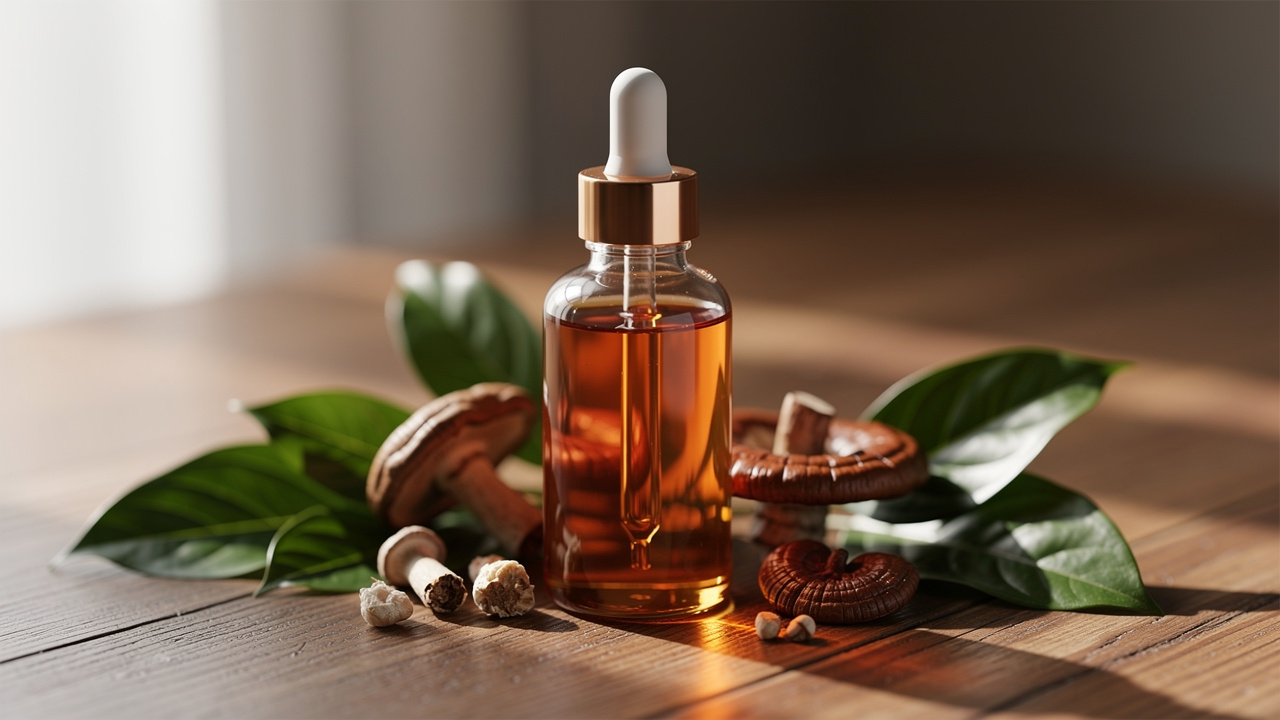
Because anandamide is fragile and swiftly broken down by FAAH, simply swallowing free anandamide is rarely effective. Modern anandamide supplements for mood focus on a combination of strategies.
1. Direct Support For Endocannabinoid Tone
Formulas such as an anandamide supplement typically aim to:
-
Provide anandamide or anandamide-like lipids in protected forms
-
Include cofactors that support natural anandamide synthesis
-
Use delivery systems that shield the molecule from early breakdown
Some products employ quick-release formats for faster onset and sustained-release matrices to extend support across several hours. For many users, this can feel more like a smooth mood lift than a sharp spike and crash.
2. Slowing Breakdown (FAAH Inhibition Support)
Another approach is to reduce how quickly your body clears anandamide by:
-
Including botanical extracts and nutrients that have been studied for FAAH modulation
-
Encouraging higher “area under the curve” for your own endocannabinoids rather than pushing very sharp peaks
This strategy respects the ECS’s role in maintaining balance instead of forcing a single pathway to dominate.
3. Improving Cerebral Blood Flow And Nutrient Delivery
Advanced stacks increasingly pair anandamide-focused ingredients with compounds that support nitric oxide and circulation. One example is adding amino acids like L‑citrulline in some formulas:
-
L‑citrulline converts to L‑arginine
-
L‑arginine fuels nitric oxide production
-
Nitric oxide relaxes blood vessels, improving blood flow to the brain
Better cerebral circulation means more efficient delivery of oxygen, anandamide, and other nutrients to neural tissue under stress. Some complex stacks may pair anandamide with ingredients similar in concept to an NO-support formula, even if the exact mix varies by brand.
Stacking Anandamide With NAD+, Mushrooms, Kanna, And Theanine
For many high-performing users, anandamide supplements for mood are rarely used alone. They are stacked with other brain-directed tools that work through different pathways.
Anandamide + Kanna + Theanine
Kanna (Sceletium tortuosum) and L‑theanine are often used to support calm focus:
-
Kanna influences serotonin reuptake and can promote a centered, talkative calm
-
Theanine increases alpha brain waves and supports GABA and dopamine balance
A nasal delivery format, such as kanna nasal spray theanine, can offer:
-
Rapid onset (bypassing much of first‑pass metabolism)
-
Practical use before social events, presentations, or high-stress blocks of work
Pairing anandamide support with a product like kanna nasal spray theanine may help:
-
Take the edge off stress and overthinking
-
Maintain verbal fluency and composure
-
Reduce the need for heavy stimulant dosing
Anandamide + NAD+ Support
NAD+ status strongly influences cellular energy, mitochondrial function, and cognitive stamina. Many longevity and performance protocols already include:
-
Oral NAD+ precursors such as NMN
-
Targeted “NAD booster” formulas like enhanced NMN nicotinamide mononucleotide
-
Clinic-based IV NAD+ sessions
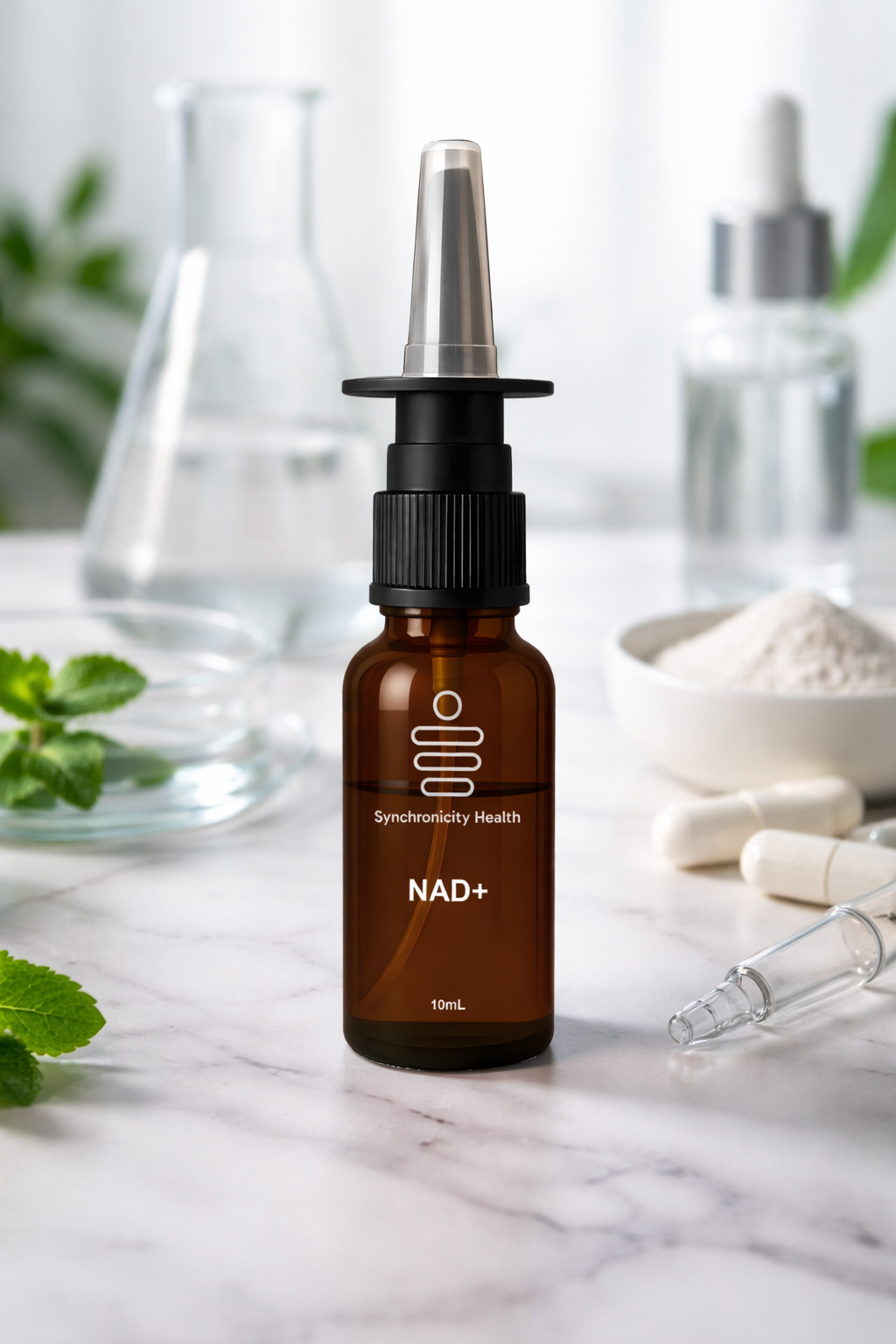
For day-to-day brain support, some users prefer intranasal options such as NAD nasal spray, which may:
-
Support mental energy and clarity without jitteriness
-
Complement anandamide-focused mood support by improving overall cellular performance
Stacking anandamide support with NAD+ tools is especially appealing to:
-
Busy professionals who can’t afford brain fog
-
Athletes in heavy training blocks
-
Individuals spacing out NAD+ IV sessions and wanting gentler in‑between support
Anandamide + Medicinal Mushrooms
Medicinal mushrooms bring a different dimension:
-
Lion’s mane – supports nerve growth factor (NGF) and may aid neuroplasticity
-
Reishi – acts as an adaptogen and supports stress resistance and immune balance
Blends such as the reishi mushroom blend can be combined with anandamide-focused products to:
-
Support long-term brain structure and resilience
-
Smooth out stress reactivity
-
Help maintain immune strength during intense training or work cycles
Used together with an anandamide supplement, these stacks target both fast-acting mood support and slower, structural brain benefits.
Safety, Side Effects, And What We Still Don’t Know
Despite the excitement around anandamide supplements for mood, the science is still developing. A few key points are worth keeping in mind.
Potential Side Effects
Most reported side effects are mild and dose-dependent, and can include:
-
Headache or lightheadedness
-
Digestive upset
-
Temporary changes in appetite
-
Sleep disruption (either drowsiness or difficulty winding down, depending on timing and stack)
If you are combining anandamide support with agents that affect GABA, serotonin, or dopamine—such as GABA blends, kanna products, or strong theanine dosing—monitor for excessive sedation or emotional blunting.
Interactions And Special Populations
Use extra caution and get medical guidance if you:
-
Take antidepressants, mood stabilizers, antipsychotics, or anti-anxiety medications
-
Have a history of serious psychiatric conditions
-
Are pregnant, breastfeeding, or planning pregnancy
-
Use high-THC cannabis frequently
Because the ECS touches many systems, quiet interactions can add up. That applies not only to anandamide itself but also to stacks that include NAD boosters, mushroom blends, and nasal sprays.
Evidence Quality
Much of the mechanistic work on anandamide comes from:
-
Animal studies
-
Small human trials
-
Indirect measurements (e.g., correlating blood anandamide with mood scores)
Experts caution against overconfident claims from influencer communities. The direction of the data is promising, but long-term, large-scale human trials are still limited, and dosages or delivery systems vary widely across studies.
How To Choose And Use Anandamide Supplements For Mood
If you decide to experiment with anandamide supplements for mood, treat them like any serious performance tool rather than a magic fix.
1. Evaluate The Formula, Not Just The Buzzwords
Look for:
-
Clear disclosure of ingredients and dosing
-
A rationale for how the product supports anandamide (direct, FAAH-related, or both)
-
Thoughtful co‑ingredients, such as circulation support, amino acids, or adaptogens
Stacks that pair anandamide support with mushrooms or mood co‑factors, similar in concept to an anandamide supplement, often appeal to users seeking both cognitive and emotional benefits.
2. Prioritize Testing And Transparency
For a science-minded audience, minimum standards should include:
-
Third‑party testing for purity and potency
-
Clear explanation of any delivery technology (quick-release vs sustained-release, encapsulation methods)
-
Realistic claims aligned with current research
If a product promises instant, permanent bliss, be skeptical. A good formula supports your own biology rather than overriding it.
3. Start Low, Adjust Slowly
When adding anandamide support—especially if you also use nasal tools like NAD nasal spray or kanna stacks—consider this framework:
-
Start at the low end of the suggested range.
-
Hold that dose for at least a week while tracking mood, sleep, and focus.
-
Adjust only one variable at a time (dose or additional stack component).
-
Avoid taking new stacks for the first time on high-stakes days.
Timing also matters:
-
Many users take anandamide-focused products earlier in the day for mood and cognitive support.
-
Evening dosing may be better for people who tend toward agitation and insomnia, but should be tested cautiously.
“Start low and go slow is still the safest rule for any brain‑active supplement.” — Common clinical guidance
4. Coordinate With A Knowledgeable Clinician
A practitioner who understands both conventional medicine and performance-oriented supplementation can help you:
-
Decide whether anandamide-focused support fits your situation
-
Integrate it with prescriptions, IV NAD+ protocols, or hormone therapy
-
Set up a trial period with clear goals and review points
That outside perspective is especially helpful if you already use several supplements or medications that act on mood, sleep, or focus.
The Bottom Line On Anandamide Supplements For Mood
Anandamide sits at the crossroads of mood, stress, pain, and performance. When this “bliss molecule” signals effectively, people tend to feel more grounded, flexible, and capable under pressure.
Lifestyle—exercise, sleep, mindset practices, and nutrition—remains your base. From there, anandamide supplements for mood, alongside tools like mushroom blends, NAD+ support, and targeted nasal sprays, offer an additional lever for those who want to refine emotional stability and mental stamina.
Used thoughtfully, tracked carefully, and grounded in real science rather than marketing exaggeration, these approaches give high performers another way to support the brain systems that keep them calm, focused, and resilient.


Leave a comment
All comments are moderated before being published.
This site is protected by hCaptcha and the hCaptcha Privacy Policy and Terms of Service apply.