
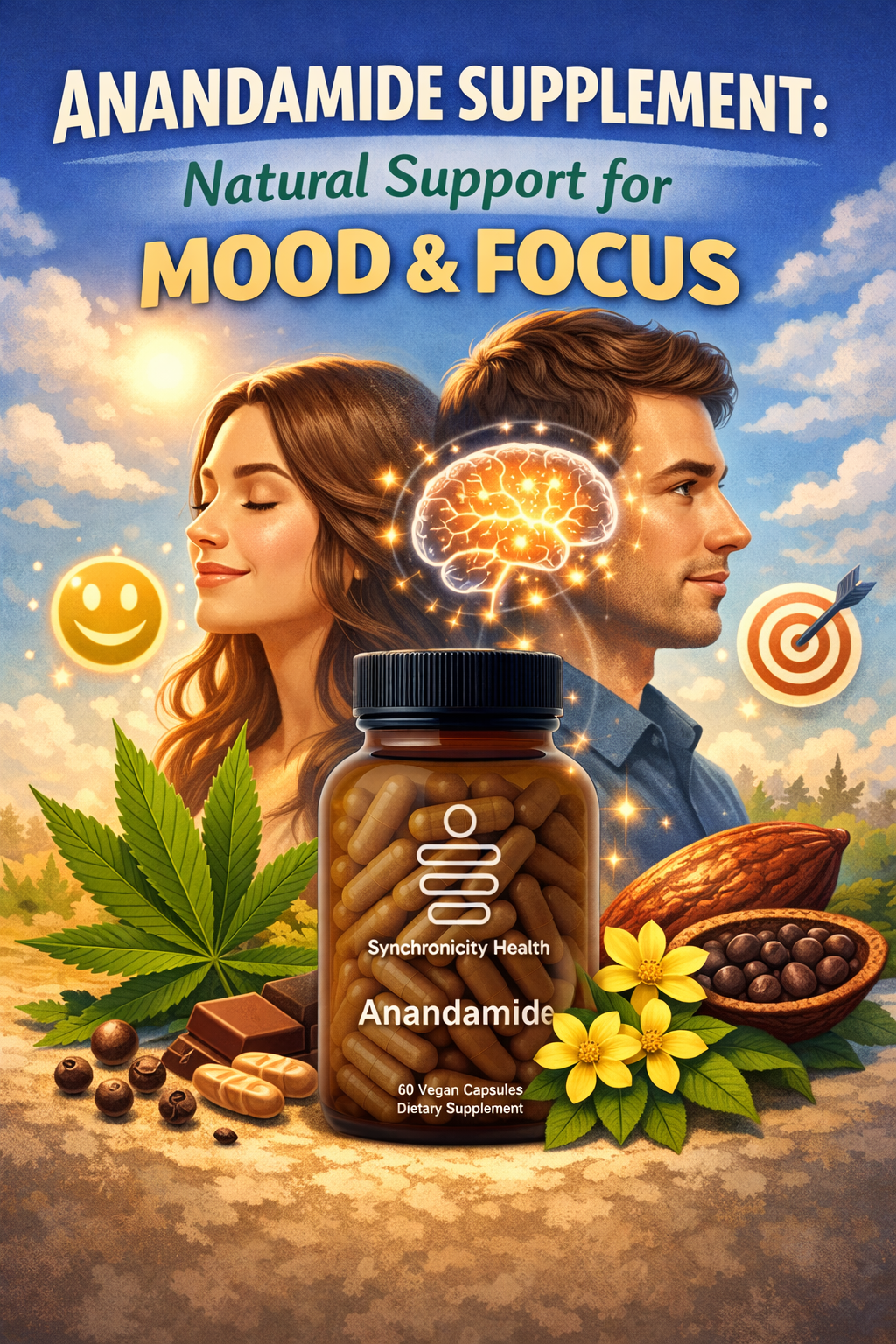
How an Anandamide Supplement Can Help Boost Your Mood Naturally
If you want sharper focus, steadier energy, and a calmer nervous system without leaning on stimulants, you’re not alone. Many high-performers now look to the endocannabinoid system (ECS) for a quieter, more sustainable way to feel and perform better—and that’s where an anandamide supplement can fit in.
Anandamide is often called the bliss molecule. It’s a neuromodulator your body already makes that helps shape mood, stress response, motivation, pain perception, and even how clearly you think. A well-designed anandamide supplement aims to support that system rather than replace it, giving your brain more of the chemistry it already uses to feel balanced.
This guide breaks down how anandamide works, what the science actually says, how an anandamide supplement pairs with tools like medicinal mushrooms, GABA, and NAD+ therapy, and how to use it thoughtfully for mood, performance, and recovery.
Anandamide 101: Meet Your Body’s Bliss Molecule
Anandamide’s full name is N‑arachidonoylethanolamine (AEA). It was first identified in 1992 by William Devane and colleagues, who named it after the Sanskrit word ananda, meaning “bliss” or “joy.”
Unlike classic neurotransmitters such as serotonin or dopamine, anandamide is:
-
A lipid messenger made from membrane fats
-
Produced on demand, not stored in vesicles
-
Rapidly broken down once it has done its job
Because it binds to the same CB1 receptors as THC, anandamide is sometimes described as the brain’s own marijuana-like molecule—but its effects are far more subtle and tightly regulated.
How Your Body Makes and Clears Anandamide
Anandamide is synthesized mainly in brain cells and some peripheral tissues:
-
It starts as a membrane phospholipid precursor called N‑arachidonoyl phosphatidylethanolamine (NAPE).
-
Enzymes such as NAPE‑selective phospholipase D (NAPE‑PLD) and related pathways then cleave NAPE to create anandamide on demand.
Once released, anandamide doesn’t linger:
-
It is taken back into cells and broken down primarily by the enzyme Fatty Acid Amide Hydrolase (FAAH).
-
FAAH rapidly converts anandamide into arachidonic acid and ethanolamine, ending its signal within seconds to minutes.
This fast turnover is one reason many people are interested in an anandamide supplement and other strategies that either add more anandamide or slow its breakdown to keep its mood-supporting signal around longer.
Inside the Endocannabinoid System: How Anandamide Regulates Mood and Focus

Anandamide works inside a larger network called the endocannabinoid system (ECS), a control layer that helps keep many body systems in balance—mood, stress, pain, appetite, immune activity, and sleep included.
The ECS has three main components:
-
Endocannabinoids – Anandamide (AEA) and 2‑arachidonoylglycerol (2‑AG)
-
Receptors – Mainly CB1 (abundant in the brain) and CB2 (immune cells and some brain regions)
-
Enzymes – That build and break down these signaling molecules
“The endocannabinoid system is perhaps the most important physiologic system involved in establishing and maintaining human health.”
— Dustin Sulak, DO
Retrograde Signaling: Anandamide as a “Circuit Breaker”
Most neurotransmitters move from the presynaptic neuron to the postsynaptic neuron. Anandamide often does the opposite:
-
A postsynaptic neuron becomes activated.
-
It synthesizes anandamide on demand from membrane lipids.
-
Anandamide travels backward across the synapse to bind CB1 receptors on the presynaptic neuron.
-
This binding reduces the release of other neurotransmitters (like glutamate or GABA), calming that circuit.
In simple terms, anandamide behaves like a built‑in circuit breaker: when neurons are firing too much, it steps in to tone things down and restore balance. This is one way anandamide helps shape:
-
Feelings of calm vs. agitation
-
How quickly you bounce back from stress
-
Mental clarity and cognitive flexibility
For people stacking supplements, pairing ECS support from an anandamide supplement with a focused nootropic such as clarity can support both emotional steadiness and clear thinking.
Beyond CB1 and CB2: Multiple Targets, Broad Effects
Anandamide doesn’t act only at CB1:
-
CB2 receptors – In immune cells and some neurons, where anandamide can influence inflammation and neuroimmune signaling.
-
TRPV1 (vanilloid) receptors – The same receptors activated by capsaicin (chili peppers); involved in pain and temperature regulation.
-
PPAR receptors – Nuclear receptors related to metabolic and anti‑inflammatory pathways.
-
GPR55 – An orphan receptor increasingly viewed as a “third” cannabinoid receptor in some tissues.
Because it touches many targets, the way anandamide feels can vary by dose, brain region, and context. Low-to-moderate increases often associate with a calmer mood and better stress resilience; very high levels may feel flat or even uncomfortable for some people. That’s important to remember when working with any anandamide supplement: more is not always better.
Neuroscientist Vincenzo Di Marzo famously summarized the ECS as helping us “relax, eat, sleep, forget, and protect”—a reminder that endocannabinoids influence nearly every part of our inner state.
Why Consider an Anandamide Supplement?
Your body constantly makes and clears anandamide. Under ideal conditions, that system keeps mood and stress in a healthy range. Real life, however, tends to stack the deck:
-
Chronic psychological stress and overtraining can reduce endocannabinoid tone.
-
Poor sleep and circadian disruption change the way the ECS signals.
-
Diets low in healthy fats can limit the raw materials required to produce anandamide supplement benefits.
-
FAAH keeps breaking anandamide down extremely quickly.
An anandamide supplement aims to counter some of that by:
-
Supplying anandamide directly, or
-
Supporting pathways that keep your own anandamide active longer, or
-
Combining both in one formula
People who often explore anandamide support include:
-
Biohackers and longevity enthusiasts who track HRV, sleep stages, and cognitive scores and want another lever for mood and stress.
-
Busy professionals who need steady concentration and emotional balance without more caffeine.
-
Athletes and fitness enthusiasts who want better training enjoyment, pain modulation, and recovery.
-
Clients at NAD+ clinics who already work on cellular energy and now want to add a mood- and motivation-focused layer.
A targeted product like the anandamide supplement from Synchronicity Health is designed to fit into exactly these kinds of protocols.
Ways to Raise Anandamide: Supplements, Stacks, and Lifestyle
1. Direct Anandamide Supplementation
Some formulas provide anandamide itself—often as part of a broader ECS-support stack. A direct anandamide supplement can:
-
Deliver a known amount of anandamide rather than relying only on your body’s production
-
Be paired with nutrients such as L‑citrulline that improve blood flow and delivery to brain tissue
-
Be formulated in capsules, powders, or other formats for different use cases
Products like Anandamide are engineered for this kind of direct support, giving you a precise, repeatable way to work with your ECS instead of guessing.
2. Indirect Support: Enzymes, Cofactors, and Adaptogens
Another strategy is to slow the breakdown of your own anandamide or support the environment it works in, rather than only adding more.
Researchers have focused heavily on FAAH inhibition—blocking the key enzyme that degrades anandamide. In animal models, FAAH inhibitors raise brain anandamide levels and show strong anti‑anxiety and antidepressant‑like effects.
Several natural substances may influence this system or support parallel pathways:
-
Turmeric (curcumin) – Early work suggests it may impact FAAH and anandamide signaling while also calming inflammation.
-
Green tea (EGCG and L‑theanine) – Supports relaxation and focus via GABA and other neurotransmitters, giving a smoother backdrop for anandamide.
-
Dark chocolate and cacao – Contain compounds structurally similar to anandamide and mild FAAH‑modulating molecules.
Adaptogens and functional mushrooms can round out anandamide support:
-
Lion’s mane medicinal mushrooms – Support neuroplasticity and cognitive function, pairing well with an anandamide supplement for mental performance.
-
A reishi mushroom blend – Traditionally used for calm and stress resilience; complements anandamide’s role in the stress response.
-
Cordyceps mushrooms for energy support – Help with oxygen use and stamina; when combined with anandamide they can support both mood and training enjoyment.
-
Cocoa blends that include lion’s mane and cordyceps (often labeled as mushroom cocoa with lion’s mane and cordyceps) bring these elements together in a daily ritual.
Fast-acting GABAergic tools can complete the stack. A product like the theanine nasal spray with GABA delivers calming amino acids through the nasal route, which many people feel within minutes. Stacking it with an anandamide supplement can help smooth out high-pressure moments without sedation.
3. Lifestyle Habits That Naturally Boost Anandamide

You can raise anandamide with no supplements at all—and then add an anandamide supplement on top for a stronger effect.
Key habits include:
-
Aerobic exercise
-
Moderate to intense cardio (the kind that produces a “runner’s high”) significantly increases circulating anandamide.
-
This contributes to post‑workout euphoria, reduced pain, and better stress tolerance.
-
-
Mind‑body practices
-
Yoga, breathing drills, and meditation are associated with higher endocannabinoid tone and lower perceived stress.
-
-
Restorative sleep
-
Inadequate best sleep supplements can blunt ECS function. Pairing good sleep hygiene with tools like sleep capsules and an anandamide supplement can support deeper rest and a smoother mood the next day.
-
-
Targeted foods
-
Dark chocolate – Choose high‑cacao, low‑sugar chocolate to get more theobromine and related compounds that may preserve anandamide.
-
Black truffles – Rare in daily life but naturally contain anandamide.
-
Nuts and seeds – Almonds, walnuts, flaxseed, chia, and hemp seeds provide essential fatty acids that serve as raw material for endocannabinoid production.
-
Turmeric – Add to food, shots, or drinks, including mushroom cocoa formulations, for dual anti‑inflammatory and ECS support.
-
Green tea – Catechins and L‑theanine together support calm focus and may indirectly support cannabinoid signaling.
-
Stacking an Anandamide Supplement for Performance, Mood, and Recovery

With a little planning, an anandamide supplement can sit at the center of different “stacks” built around your goals.
Focus and Productivity Stack
For executives, founders, and knowledge workers:
-
Morning:
-
Anandamide supplement
-
Lion’s mane‑based nootropic such as clarity
-
Light caffeine (if you tolerate it)
-
-
Midday, before a big presentation or negotiation:
-
Theanine nasal spray with GABA for fast calm
-
-
Evening:
-
Gentle bliss mood support or reishi formulas if your nervous system tends to stay “on”
-
This kind of stack can support both sharp thinking and emotional steadiness without overwhelming your adrenals with stimulants.
Recovery, Sleep, and Nervous System Reset
For people wired but tired:
-
Late afternoon or early evening:
-
Anandamide supplement (start with a modest dose)
-
A reishi mushroom blend for downshifting your stress response
-
-
One hour before bed:
-
Sleep capsules containing GABA, theanine, and calming botanicals
-
Light stretching or breathwork
-
Here, anandamide supports a calmer baseline while sleep‑focused tools help you stay asleep and wake more restored.
Training, Performance, and NAD+ Support

If you’re already working with NAD+ drips or injections to support cellular energy, an anandamide stack can focus more on the subjective side of performance—motivation, enjoyment, and resilience.
Try:
-
30–45 minutes pre‑workout:
-
Anandamide supplement
-
Energy support cordyceps mushrooms or a mushroom cocoa lions mane cordyceps blend
-
-
Post‑workout:
-
Protein plus carbohydrates
-
Light bliss mood support or reishi if your nervous system tends to stay keyed up
-
While NAD+ works at the mitochondrial level, anandamide and cordyceps focus on how training feels and how quickly you reset between sessions.
What the Science Says: Benefits of Stronger Anandamide Signaling
Most detailed data on anandamide come from animal and cellular studies, but the picture is consistent and encouraging.
Mood, Stress, and Anxiety
-
Raising anandamide—often by blocking FAAH—produces anti‑anxiety and antidepressant‑like effects in multiple rodent models.
-
Higher anandamide in key brain areas (like the prefrontal cortex and amygdala) correlates with better stress relief supplements behaviors.
-
In people, higher circulating anandamide after endurance exercise lines up with reports of mood boosting naturally, less anxiety, and lower pain.
Reward, Motivation, and Enjoyment
Anandamide strongly influences the mesocorticolimbic dopamine pathway—the brain’s reward circuit.
-
When anandamide levels increase, extracellular dopamine in the nucleus accumbens shell goes up.
-
Animals will self‑administer anandamide in some models, showing it can act as a mild behavioral reinforcer.
For humans, that likely translates into:
-
More pleasure in everyday activities and training
-
Higher willingness to engage with challenging tasks
-
Less “reward deficit” during stressful periods
Pain, Inflammation, and Recovery
By acting at CB1, CB2, TRPV1, and PPAR receptors, anandamide:
-
Dials down the transmission of pain signals
-
Reduces release of pro‑inflammatory cytokines
-
Supports nerve resilience under inflammatory stress
FAAH‑knockout mice, which have chronically higher anandamide, display hypoalgesia (reduced pain sensitivity). While that’s not the goal of an anandamide supplement, it highlights why many athletes and people with high training volume are interested in ECS support.
Neuroprotection and Brain Health
Enhanced anandamide tone has been shown to:
-
Reduce excitotoxicity (damage from excessive glutamate signaling)
-
Protect hippocampal neurons in some seizure and toxin models
-
Support synaptic plasticity—the brain’s ability to adapt and learn
Stacking an anandamide supplement with lion’s mane medicinal mushrooms, clarity, or similar nootropics may therefore support both how your brain feels and how it functions.
A Note on Dose: U‑Shaped Responses
Endocannabinoids often follow an inverted U‑shaped curve:
-
Too little anandamide: more anxiety, lower motivation
-
A moderate increase: calmer, more resilient, better mood
-
Too much for your system: flat, unmotivated, or even more anxious
That’s why starting low, paying attention, and adjusting gradually matters far more than chasing the highest possible dose from any anandamide supplement.
A useful rule many clinicians use with ECS support is “start low and go slow”—small steps make it easier to notice what actually works for you.
How Anandamide Compares to Other Mood-Support Supplements
Anandamide works through the ECS, which sets it apart from many other common mood tools.
|
Approach |
Primary Target |
Onset |
Often Used For |
|---|---|---|---|
|
Anandamide supplement |
CB1/CB2, TRPV1, PPAR |
Moderate |
Mood, stress, enjoyment, pain modulation |
|
Theanine + GABA (e.g., theanine nasal spray with GABA) |
GABA and glutamate balance |
Fast |
Performance anxiety, racing thoughts |
|
Medicinal mushrooms (lion’s mane, reishi, cordyceps) |
Neurotrophic factors, HPA-axis, immune modulation |
Steady, cumulative |
Cognitive function, stress resilience, energy |
|
Bliss mood support blends |
Amino acids, herbs, vitamins |
Varies |
General mood and calm support |
|
Caffeine-only stimulants |
Adenosine receptors, catecholamines |
Fast |
Short-term alertness (often with later crash) |
Rather than choosing one or the other, many people build a layered stack—placing an anandamide supplement at the core and then adding reishi, lion’s mane, GABA, or mushroom cocoa blends depending on time of day and demands.
Safety, Side Effects, and Smart Dosing
Anandamide is native to your biology, but extra support still deserves respect.
Possible Side Effects
Reported effects from anandamide‑raising strategies and related supplements can include:
-
Drowsiness or fatigue – Especially at higher doses or when combined with sleep capsules, reishi mushroom blends, or other calming products.
-
Mood fluctuations – Overshooting your personal sweet spot can feel flat, unmotivated, or oddly detached.
-
Digestive upset – Nausea or stomach discomfort may appear with higher oral doses or in sensitive individuals.
-
Blood pressure changes or lightheadedness – Because endocannabinoids can affect vascular tone.
If you notice any of these, step down your dose, adjust timing, or pause and speak with a clinician.
Stacking Considerations
Be conservative when stacking an anandamide supplement with other mood or nervous‑system support, such as:
-
Bliss mood support products
-
Mushroom cocoa with lion’s mane and cordyceps
-
Theanine nasal spray with GABA
-
Sleep capsules and strong reishi formulas
-
High‑dose energy support cordyceps mushroom powders
These are all helpful tools, but combined effects can become more sedating than expected—or occasionally paradoxically stimulating—if you change several variables at once.
Who Should Be Extra Cautious?
Check with a qualified healthcare professional before starting an anandamide supplement if you:
-
Are pregnant or nursing (human safety data are very limited)
-
Have a history of bipolar disorder, psychosis, or unstable depression/anxiety
-
Take medications for blood pressure, seizure disorders, or mood
-
Have significant cardiovascular or liver disease
For these groups, careful supervision, slow titration, and clear goals matter a great deal.
How to Choose and Use an Anandamide Supplement
Not every anandamide supplement formula is built the same way. Here’s what to look for if you’re serious about results.
1. Ingredient Quality and Synergy
High‑end formulas often combine anandamide with:
-
Lion’s mane medicinal mushrooms for cognitive support
-
Reishi mushroom blends for calmer stress responses
-
Energy support cordyceps mushrooms for stamina
-
Theanine or GABA for smoother, more relaxed focus
When evaluating options, you might compare a stand‑alone anandamide supplement with a more complete stack like Anandamide plus focused nootropics such as clarity.
2. Delivery Method and Convenience
Consider how you actually live:
-
Capsules – Simple, portable, easy to track.
-
Powders and cocoa blends – Great if you enjoy daily rituals like mushroom cocoa with lion’s mane and cordyceps.
-
Nasal sprays – While not anandamide themselves, products such as the theanine nasal spray with GABA can cover acute stress while the ECS stack shapes your baseline.
Busy professionals and frequent travelers tend to favor capsules and nasal sprays; athletes may enjoy pairing powders with pre‑ or post‑workout shakes.
3. Testing, Transparency, and Dosing Guidance
For a science‑driven audience, this part matters:
-
Third‑party testing for potency and purity
-
Clear labeling of anandamide content and co‑ingredients
-
Thoughtful dosing ranges with realistic guidance (not exaggerated promises)
4. Aligning With Your Routine
Ask yourself:
-
Do you want help mainly during the day (focus, emotional control) or evening (unwinding, sleep)?
-
Are you already taking NAD+, nootropics, or adaptogens that an anandamide supplement will sit next to?
-
Can you commit to a 2–4 week trial while you track mood, sleep, HRV, and performance?
Many people start with once‑daily dosing, layered with products like clarity in the morning and reishi or sleep capsules at night, then refine from there.
Bringing It All Together
Anandamide is one of your body’s most important internal signals for pleasure, calm, and resilience. Modern stress, erratic sleep, and environmental pressure can leave that system underpowered—exactly the scenario an anandamide supplement is designed to address.
By understanding how anandamide works, stacking it intelligently with tools like lion’s mane, reishi, cordyceps, GABA, and NAD+ protocols, and respecting both dose and context, you can turn ECS support into a reliable part of your performance and longevity strategy.
If you’re ready to experiment, start low, track carefully, and consider integrating a targeted product such as the anandamide supplement alongside focused nootropics like clarity and fast-acting support such as the theanine nasal spray. Done thoughtfully, this combination can help you feel more motivated, more centered, and more like your best self—naturally.


Leave a comment
All comments are moderated before being published.
This site is protected by hCaptcha and the hCaptcha Privacy Policy and Terms of Service apply.