

If you’re adding Shilajit to your stack, the question that really matters is simple: how long does it take for Shilajit to work?
You’re not looking for vague folklore. You want clear timelines, grounded in clinical data and real-life experience, so you know when to expect more energy, sharper focus, better training capacity, or hormonal support—and when it might be time to adjust your plan.
The short answer: some people feel subtle shifts in days, most measurable benefits show up over 4–12 weeks, and deeper changes appear with consistent use over several months. The longer answer depends on your goals, your baseline health, product quality, and how you dose it.
This guide breaks down how long Shilajit tends to take to work for different outcomes, what affects that timeline, and how to take it in a way that gives you the best chance of noticeable, reliable results.
What Shilajit Is And How It Works In Your Body
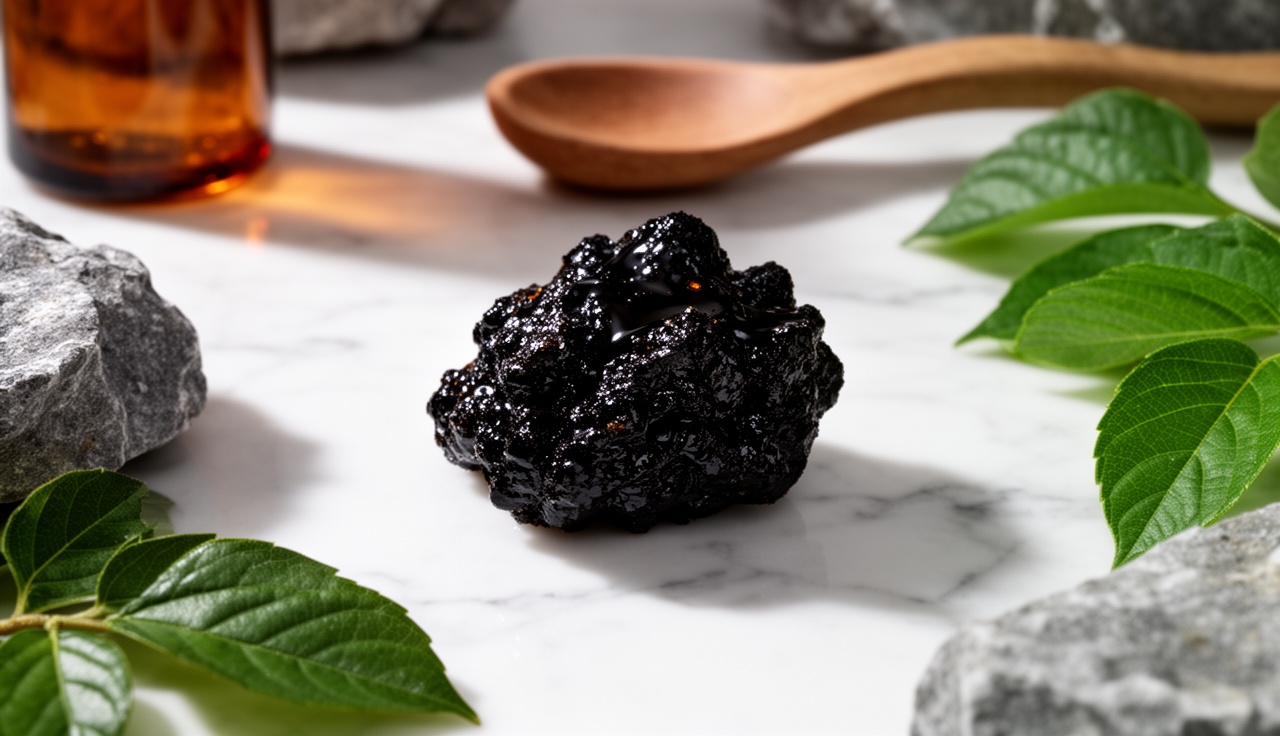
Shilajit is a tar-like resin that seeps from high-altitude rock formations in ranges like the Himalayas, Altai, and Caucasus. Over centuries, plant material and microbes break down and compress, creating a dense, mineral-rich substance traditionally used in Ayurveda as a maharasa (deep rejuvenator).
In classical Ayurvedic texts, Shilajit is described as a substance that “supports strength, stamina, and renewal when taken regularly.”
Modern analysis shows that high-quality Shilajit is a complex phytocomplex containing:
-
Fulvic and humic acids – powerful antioxidants and carrier molecules that help move minerals and nutrients into cells.
-
Dibenzo-α-pyrones (DBPs) and related compounds – support mitochondrial function and protect against oxidative stress.
-
Over 40 ionic minerals – including magnesium, zinc, selenium, iron, and others involved in hundreds of enzymatic reactions.
-
Amino acids and small peptides – building blocks for tissue repair and signaling.
For biohackers, athletes, and longevity-focused users, the key appeal is Shilajit’s impact on mitochondria and cellular energy. Preclinical and human data suggest it can:
-
Support ATP production (your cells’ energy currency).
-
Help your body handle physical and psychological stress.
-
Reduce markers of collagen breakdown in connective tissue.
-
Support hormonal balance in men over multi‑month periods.
If you’re already investing in protocols like NAD+ IV therapy to target mitochondrial function, Shilajit is often used as a daily oral complement between sessions.
How Long Does It Take For Shilajit To Work? A Quick Timeline
There is no single universal answer to how long does it take for Shilajit to work, but human trials and user reports cluster around clear time windows.
Shilajit Timeline At A Glance
|
Timeframe |
What Some People Notice |
Evidence Type |
|---|---|---|
|
Day 1–7 |
Subtle boost in energy, mental clarity, or mood (not all) |
Anecdotal + mechanistic data |
|
2–6 weeks |
More consistent energy, better focus, improved training feel |
User reports; early phase of studies |
|
8 weeks (~2 months) |
Better fatigue resistance, muscle strength retention, less collagen breakdown |
Human clinical trial (500 mg/day) |
|
30–90 days |
Hormonal support (testosterone), sperm parameters, resilience to stress |
Multiple human clinical trials |
|
3+ months |
Longevity and anti-aging support, deeper resilience, immune support (ongoing) |
Limited human data + traditional use |
Use this table as a framework—not a guarantee. How Long Does It Take to See Results from Shilajit varies by individual and goal, but the rest of this article explains what happens in each of these windows and how you can stack the odds in your favor.
Timelines For Specific Benefits Backed By Research
Energy, Focus, And Mood (Days To Weeks)
For busy professionals and high performers, the first question is usually whether Shilajit will noticeably change day-to-day energy and cognitive performance—and how long that takes.
What we know:
-
Animal and mechanistic studies show Shilajit can increase ATP levels and support mitochondrial function.
-
Human users commonly report:
-
Smoother, more stable energy (not a caffeine-style spike).
-
Clearer thinking and mental stamina.
-
Slight mood lift and better stress tolerance.
-
Typical timeline:
-
Some notice subtle changes within a few days to 1–2 weeks.
-
For others, it’s more gradual over 2–4 weeks of daily, consistent use.
Because acute human data is limited, these early effects are best viewed as a bonus, not the main reason to take Shilajit.
As many sports nutrition coaches put it, “You can feel a boost from supplements, but the biggest wins come from stacking them on top of good sleep, food, and training.”
Muscle Strength And Fatigue Resistance (Around 8 Weeks)

If you lift, train, or compete, the more practical question than “how long does it take for Shilajit to work” is: When will it actually show up in the gym or on the field?
The effects of Shilajit supplementation on fatigue-induced decreases in muscular strength showed that in a placebo-controlled study with recreationally active men:
-
Dose: 500 mg of purified Shilajit daily.
-
Duration: 8 weeks.
-
Outcome: Participants on 500 mg retained more maximal strength after a fatiguing leg exercise protocol compared with placebo and 250 mg.
In simple terms, the 500 mg group:
-
Lost less strength during repeated efforts.
-
Showed better fatigue resistance, especially those who were already stronger at baseline.
What that means for you:
-
For performance and fatigue resistance, expect the earliest clear, measurable changes around the 8‑week mark, assuming:
-
Purified, high-quality product.
-
Consistent daily dosing.
-
Solid training and recovery habits.
-
Connective Tissue And Collagen Support (Around 8 Weeks)
Effects of 8 Weeks of Shilajit supplementation on connective tissue biomarkers showed that the same trial also looked at markers related to collagen breakdown:
-
Shilajit at 500 mg/day reduced serum hydroxyproline (HYP), a biomarker associated with collagen degradation.
-
Lower HYP suggests less ongoing wear and tear on tendons, ligaments, and connective tissue.
Timeline:
-
Expect any connective tissue support to show up after 6–8 weeks of consistent supplementation, particularly if you’re subjecting your joints and tendons to regular high-volume training like:
-
Heavy resistance work.
-
Running or field sports.
-
Repetitive, impact-heavy conditioning.
-
Testosterone And Hormonal Health (About 90 Days)

For male hormone support, the question how long does it take for Shilajit to work has one of the clearest answers: about three months.
In a human trial on healthy men (mid‑40s to mid‑50s):
-
Dose: 250 mg of purified Shilajit, twice daily (500 mg total).
-
Duration: 90 days.
-
Results after 90 days:
-
Total testosterone increased by ~20%.
-
Free testosterone and DHEA also increased.
-
Luteinizing hormone (LH) stayed within normal range, indicating Shilajit did not disrupt normal signaling.
-
Key takeaway:
-
For meaningful testosterone changes, think in terms of 90 days, not weeks.
-
If you’re tracking labs, test before starting and again around 3 months.
-
You still need foundations like quality sleep, dietary fat, strength training, and stress management; Shilajit works as part of that bigger picture.
Male Fertility And Sperm Parameters (Up To 90 Days)
A separate study in men with low sperm count found:
-
Dose: 100 mg of processed Shilajit, twice daily (200 mg total).
-
Duration: 90 days, with checks at 30, 60, and 90 days.
-
Results:
-
Total sperm count increased by over 60%.
-
Sperm motility and percentage of healthy sperm improved.
-
Some changes were noticeable by 30 days, but peak improvements occurred at 90 days.
-
What this suggests:
-
For fertility-related targets, Shilajit is a multi-month intervention.
-
Expect initial shifts within the first month, but plan for at least 3 months for full effect.
-
Men trying to conceive should discuss Shilajit with a healthcare professional, especially alongside other fertility treatments.
Factors That Change How Fast Shilajit Works
Even with solid data, there’s a lot of individual variation in how long it takes for Shilajit to work. Four major variables stand out.
1. Product Quality And Purity
Not all Shilajit is the same. In fact, poor-quality product is one of the main reasons people feel nothing.
-
Avoid raw, unprocessed resin. It can contain heavy metals, fungal contaminants, and excess free radicals.
-
Look for:
-
Purified Shilajit only.
-
Third-party testing for heavy metals, microbes, and potency.
-
A Certificate of Analysis (CoA) available on request.
-
Standardized levels of fulvic acid and DBPs, similar to the forms used in research.
-
If your product is under-dosed, contaminated, or mostly filler, all the timelines in this guide become meaningless.
2. Dosage, Form, And Timing
Clinical studies that actually answer “how long does it take for Shilajit to work” use specific doses:
-
300–500 mg per day is the most common effective range.
-
500 mg/day appears in several trials for performance, connective tissue, and testosterone support.
-
200 mg/day (split into 100 mg twice daily) has been used for fertility.
Forms:
-
Resin: Traditional tar-like paste dissolved in warm water or milk.
-
Powder: Easy to mix into drinks; usually taken on an empty stomach.
-
Capsules: Most convenient and precise for dosing.
-
Liquid extracts: Dropped into water or under the tongue, depending on instructions.
Practical guidelines:
-
Start at 200–300 mg daily for 3–7 days to assess tolerance.
-
Increase toward 400–500 mg daily if you’re targeting performance or hormonal support and tolerating it well.
-
Take on an empty stomach in the morning or split morning/early afternoon if you’re sensitive to sleep disruption.
Always follow the dosing directions on your specific product, as concentration can vary.
3. Your Baseline Health, Training, And Goals
Two people on the same dose and product can experience very different timelines:
-
Someone with low energy, micronutrient gaps, or low testosterone may notice faster, more dramatic changes.
-
A well-nourished athlete with solid labs might see subtler shifts, mainly in fatigue resistance and recovery.
Factors that shape your response include:
-
Age and body weight.
-
Training volume and recovery practices.
-
Diet quality, micronutrient status, and sleep.
-
Stress load and overall metabolic health.
If you’re already running a strong lifestyle playbook (good sleep, resistance training, adequate protein, minimal ultra-processed food), Shilajit tends to act as a refinement, not a magic fix.
4. Consistency Over Time
Almost every clinical trial showing benefits from Shilajit used daily dosing for 8–12 weeks.
That means:
-
Taking it “whenever you remember” is a recipe for underwhelming results.
-
To match study timelines, you need:
-
Daily use at an effective dose.
-
A plan for at least 8–12 weeks, ideally 90 days, before making a final judgment.
-
Think of Shilajit as a long game supplement, not a pre‑workout.
How To Take Shilajit For Reliable Results

Here’s how to build a practical protocol that aligns with what the research suggests.
Step 1: Choose A High-Quality, Purified Product
Look for:
-
Clear sourcing (for example, high-altitude regions).
-
A purification process described in plain language.
-
Third-party testing and a Certificate of Analysis (CoA).
-
Fulvic acid percentage stated on the label.
If you’re using a broader adaptogenic blend that includes Shilajit—such as Synchronicity Health’s Forage Adaptogenic Mushroom Blend (Shilajit) combined with other botanicals—pay attention to the actual Shilajit dose per serving and align your expectations with that amount.
Step 2: Dial In Your Dose
A simple framework:
-
Weeks 1–2:
-
200–300 mg/day to establish tolerance.
-
-
Weeks 3–12:
-
Increase toward 400–500 mg/day if you’re targeting:
-
Training performance.
-
Hormonal support.
-
Connective tissue resilience.
-
-
For fertility-specific goals, doses around 200–500 mg/day (often in divided doses) have been used in studies.
Step 3: Pick The Right Form For Your Routine
-
Resin: Dissolve a rice-grain-sized amount in warm water or milk. Drink once or twice daily.
-
Powder: Mix into coffee, tea, or a morning shake. Often best taken on an empty stomach.
-
Capsules: Take with a small amount of water; this is typically the easiest route for busy professionals.
-
Liquid: Follow label instructions; some prefer sublingual use for rapid absorption.
Consistency matters more than the exact form. Choose what you’re most likely to stick with for at least three months.
Step 4: Consider Smart Stacks
Shilajit often pairs well with other adaptogens and mitochondrial-supportive compounds, especially if you’re building a performance or longevity stack.
Common combinations include:
-
Ashwagandha – found in Synchronicity Health’s Forage Adaptogenic Mushroom Blend; used for stress resilience, sleep quality, and cortisol modulation.
-
Adaptogenic mushrooms (e.g., cordyceps, lion’s mane) – for immune and cognitive support.
-
NAD+ precursors (like NR or NMN) – for additional mitochondrial and cellular energy support between NAD+ IV sessions.
Always bring your entire stack list to your healthcare provider so they can screen for interactions.
Safety, Side Effects, And Who Should Avoid Shilajit
When you use purified, tested Shilajit at standard doses, human data up to 90 days looks favorable. Still, it’s a potent substance, and there are some important safety points.
General Safety
-
Clinical trials up to 90 days in humans, and 91-day toxicology studies in animals, report good tolerance.
-
Most problems trace back to contaminated, raw, or adulterated products, not properly purified Shilajit.
Potential Side Effects
Possible issues (generally uncommon but important to know):
-
Digestive upset: Mild nausea, stomach discomfort, or loose stools—often dose-related.
-
Iron overload (theoretical risk):
-
Shilajit contains iron, which can help if you’re deficient.
-
In theory, long-term, high-dose use in someone with normal or high iron could contribute to overload.
-
If you notice joint pain, significant fatigue, abdominal pain, or unexplained weakness, stop and talk with your doctor.
-
-
Allergic reactions:
-
Stop immediately and seek medical help if you experience rash, itching, difficulty breathing, dizziness, rapid heart rate, or vomiting.
-
A useful rule from many clinicians: “If something feels clearly wrong after you start a new supplement, stop first and ask questions second.”
Who Should Not Take Shilajit
Until more data is available, Shilajit is not recommended for:
-
Pregnant or breastfeeding women.
-
Children and adolescents.
-
Anyone with known iron overload disorders (such as hemochromatosis), unless closely supervised by a specialist.
Because Shilajit is a dietary supplement and not reviewed by the FDA as a drug, you should always consult your healthcare provider before starting it—especially if you:
-
Take prescription medications.
-
Have chronic health conditions.
-
Receive treatments like NAD+ infusions, testosterone therapy, or anticoagulants.
How Long Should You Stay On Shilajit?
If you’re serious about answering how long does it take for Shilajit to work for your specific body, you need a realistic timeframe—and an exit strategy if it does nothing.
A practical approach:
-
Minimum commitment:
-
8 weeks for performance and connective tissue goals.
-
-
Ideal evaluation window:
-
12 weeks (90 days) for hormonal and fertility-related goals.
-
-
Cycle approach (common among biohackers):
-
8–12 weeks on, followed by a 2–4 week break.
-
Reassess energy, performance metrics, subjective well-being, and any lab markers.
-
Long-term human data beyond 90 days is limited, but centuries of traditional use suggest it can be taken for extended periods when monitored appropriately. If you plan to use Shilajit for many months or years, work with a clinician who can track labs (iron status, hormones, liver and kidney markers) at regular intervals.
When Shilajit May Not Be Working—And What To Do
If you’ve been consistent and still aren’t sold, run through this checklist:
-
Timeframe
-
Have you used it daily for at least 8–12 weeks?
-
If not, extend your trial before you write it off.
-
-
Dose
-
Are you in the 300–500 mg/day range of purified Shilajit?
-
Under-dosed blends can skew expectations; check the actual milligrams per serving.
-
-
Product Quality
-
Does the brand provide third-party testing and a CoA?
-
If not, consider switching to a verified product and reassessing.
-
-
Lifestyle Bottlenecks
-
Severe sleep deprivation, chronic caloric deficit, or unmanageable stress can blunt the impact of any supplement.
-
Shilajit works best stacked on top of solid fundamentals.
-
-
Medical Factors
-
If you feel worse on Shilajit (e.g., GI distress, headaches, irritability), or feel nothing after 3 months at an appropriate dose, stop and talk with your clinician.
-
There may be underlying issues (thyroid, anemia, low B12, etc.) that need direct attention.
-
Remember: Shilajit is supportive, not magic. If your expectations are aligned with what the research actually shows, you’ll be better able to judge whether it’s earning a place in your long-term stack.
Key Takeaways: How Long Does It Take For Shilajit To Work?
-
Short-term (Days–Weeks):
Some users notice smoother energy, better focus, or improved mood within the first 1–3 weeks, but this is not guaranteed. -
Medium-term (8 Weeks):
Human trials show improved muscle fatigue resistance and reduced markers of collagen breakdown after around 8 weeks at 500 mg/day. -
Longer-term (30–90 Days):
Testosterone support, sperm quality, and more systemic benefits typically require 30–90 days of continuous use. For male hormones, plan on about 90 days before judging results. -
Beyond 3 Months:
Potential benefits around stress resilience, immune support, and anti-aging effects depend on ongoing, consistent use, alongside strong lifestyle foundations.
If you’re asking how long does it take for Shilajit to work, the most science-aligned answer is:
Expect subtle shifts over weeks, measurable changes over 2–3 months, and compounding benefits only with consistent, daily use of a high-quality, purified product.
Approach it with the same seriousness you apply to your training, sleep, and nutrition, and Shilajit can be a meaningful part of a high-performance, longevity-focused strategy.


Leave a comment
All comments are moderated before being published.
This site is protected by hCaptcha and the hCaptcha Privacy Policy and Terms of Service apply.