
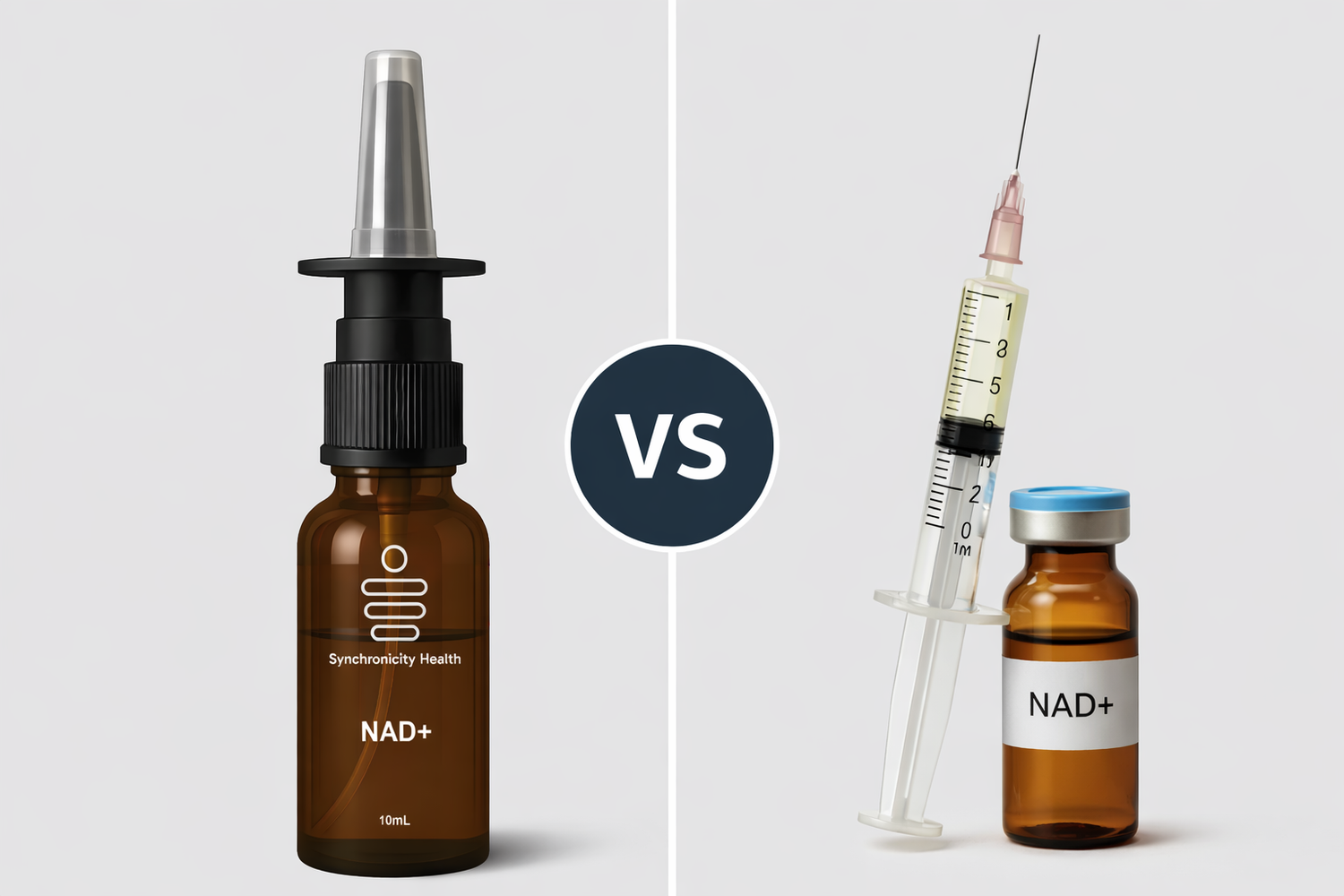
NAD nasal spray vs NAD injections is one of the most discussed topics among biohackers, longevity enthusiasts, and integrative clinicians. Both delivery methods aim to raise levels of NAD+ (nicotinamide adenine dinucleotide), a coenzyme central to cellular energy, DNA repair, and healthy aging. But they behave very differently in the body, and the route you choose can have a major impact on results, cost, and day‑to‑day convenience.
This guide breaks down how each option works, what the research suggests, and how to choose the best fit for your goals—whether you’re after sharper focus, better recovery, or long-term healthspan support.
“NAD+ levels decline with age, and supporting those levels may help cells behave more youthfully,” is a common theme across modern longevity research.
What Is NAD+ And Why Delivery Method Matters
NAD+ is present in every cell and is required for:
-
Converting food into ATP (cellular energy)
-
Repairing damaged DNA
-
Supporting sirtuins and other aging-related enzymes
-
Regulating circadian rhythms and sleep-wake cycles
-
Maintaining healthy mitochondrial function
NAD+ levels fall steadily with age, chronic stress, poor sleep, and high toxic burden. Lower NAD+ is associated with:
-
Fatigue and slower recovery
-
Brain fog and reduced focus
-
Lower resilience against age-related conditions
Because NAD+ is a relatively large molecule, delivery method is not a minor detail. It largely determines:
-
How much NAD+ actually reaches your bloodstream (bioavailability)
-
How quickly you feel it
-
How long the effects last
-
How much you pay per absorbed milligram
Oral NAD+ and NAD+ precursors (like NR or NMN) often have low bioavailability—estimated around 2–10% because of stomach acid, gut barriers, and first-pass metabolism in the liver. That’s why interest has shifted toward NAD nasal spray vs NAD injections, which bypass most of these obstacles.
Many people also combine NAD+ therapies with antioxidant and detox support. Intranasal options such as Synchronicity Health’s glutathione nasal spray, NAC nasal spray, or kanna nasal spray with theanine are used to support redox balance, mood, and cognitive performance alongside NAD+.
How NAD Nasal Spray Works

NAD nasal sprays deliver NAD+ through the mucosal lining inside the nose. This tissue is:
-
Thin and highly vascularized, allowing rapid transfer of molecules into the bloodstream
-
In close contact with the olfactory pathway, which may allow some compounds to reach the brain more directly
When you spray NAD+ into the nose, a fine mist coats the nasal mucosa. From there, NAD+ can:
-
Move into local capillaries and enter systemic circulation
-
Potentially travel along the olfactory route, supporting brain and cognitive effects
This intranasal route gives you a middle ground between low-absorption oral supplements and more intensive injection-based options.
Bioavailability, Onset, And Duration
Based on intranasal delivery research, NAD+ nasal spray is generally estimated to have:
-
Bioavailability: ~15–25% (higher than oral, lower than injections)
-
Onset of effects: ~15–30 minutes
-
Duration: typically 4–8 hours
That makes NAD nasal spray appealing for people who want:
-
Consistent, self-directed dosing
-
Relatively fast cognitive or energy support
-
Less need for clinic visits or medical supervision
A common guideline in integrative medicine is, “The best protocol is the one a patient can follow consistently.” Nasal sprays often fit that rule well.
Benefits Of NAD Nasal Spray
NAD nasal spray vs NAD injections has several distinct strengths:
-
Non-invasive and needle-free – no IV line, no injection anxiety
-
Self-administered at home or on the go – fits demanding schedules
-
Fast but manageable onset – useful before work, training, or cognitively heavy tasks
-
Lower systemic side-effect risk compared with high-dose IV infusions
-
Good fit for stacking with other nasal products such as glutathione nasal spray, NAC nasal spray, or kanna nasal spray for combined cellular, antioxidant, and mood support
Many users pair NAD nasal spray with glutathione nasal spray to support antioxidant defenses and detox pathways while raising NAD+.
Limitations Of NAD Nasal Spray
At the same time, intranasal delivery has clear boundaries:
-
Dose size is limited by the volume the nasal cavity can comfortably hold
-
Bioavailability is variable, especially with congestion, allergies, or structural issues
-
Effects are shorter-lived than a full NAD IV (hours vs days)
-
Some users report mild nasal irritation, dryness, or a brief stinging sensation
For those needing aggressive repletion of severely depleted NAD+ or complex clinical protocols, these limits can be meaningful when comparing NAD nasal spray vs NAD injections.
Other intranasal tools—like glutathione nasal spray, NAC nasal spray, and kanna nasal spray with theanine—are often layered with NAD+ for broader support of antioxidant capacity, detox, and mood.
How NAD Injections Work (IV, IM, And Subcutaneous)
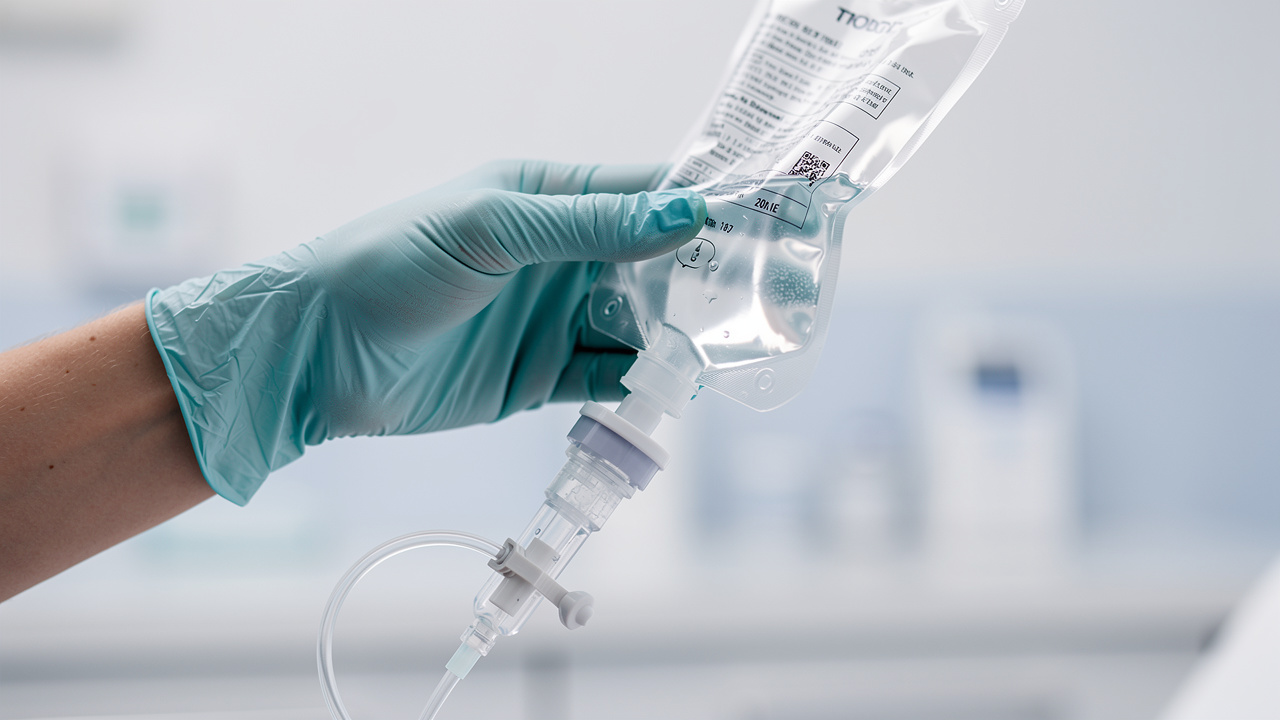
NAD injections deliver NAD+ directly into body tissues or the bloodstream, bypassing the digestive tract entirely. There are three main routes:
-
Intravenous (IV): NAD+ in saline is infused into a vein over 1–4+ hours
-
Intramuscular (IM): NAD+ is injected into a large muscle (e.g., glute, thigh)
-
Subcutaneous (SubQ): NAD+ is injected into the fatty layer just under the skin
Bioavailability, Onset, And Duration
Compared with NAD nasal spray, NAD injections are much more direct:
-
IV NAD+: up to 100% bioavailability
-
SubQ / IM NAD+: very high bioavailability, only minor local loss
-
Onset: often 5–15 minutes for IV; somewhat slower for SubQ/IM
-
Duration: higher NAD+ levels may last 24–72 hours after an infusion
This is why many clinicians think of IV NAD+ as the reference standard when aggressive repletion or intensive therapy is needed.
Benefits Of NAD Injections
Key advantages of NAD injections vs NAD nasal spray include:
-
Maximum absorption – essentially no loss to digestion or mucosal barriers
-
High and precise dosing – clinicians can adjust dose based on weight, goals, and tolerance
-
Rapid, noticeable effects – many people report fast changes in energy and mental clarity
-
Longer therapeutic window – higher NAD+ levels can persist for days
-
Versatile combinations – NAD+ is often paired in IV “cocktails” with vitamins, minerals, or even antioxidants such as glutathione nasal spray given via other routes to support detox and recovery
These features make NAD injections popular in settings targeting addiction recovery, chronic fatigue, significant burnout, or more aggressive longevity protocols.
Limitations Of NAD Injections
The power of injections comes with trade-offs:
-
Invasive – requires needles and, in the case of IV, an indwelling catheter
-
Requires medical supervision – especially for IV therapy
-
Time commitment – infusions can take several hours per session
-
Higher upfront cost – you pay for product, clinical staff, and facility overhead
-
Systemic side effects can occur during fast IV drips:
-
Nausea or stomach discomfort
-
Flushing or warmth
-
Headache or light-headedness
-
Faster heart rate or sense of pressure
-
These reactions usually resolve when the infusion rate is slowed, but they are part of the risk profile you must consider when weighing NAD nasal spray vs NAD injections.
NAD Nasal Spray Vs NAD Injections: Head-To-Head Comparison
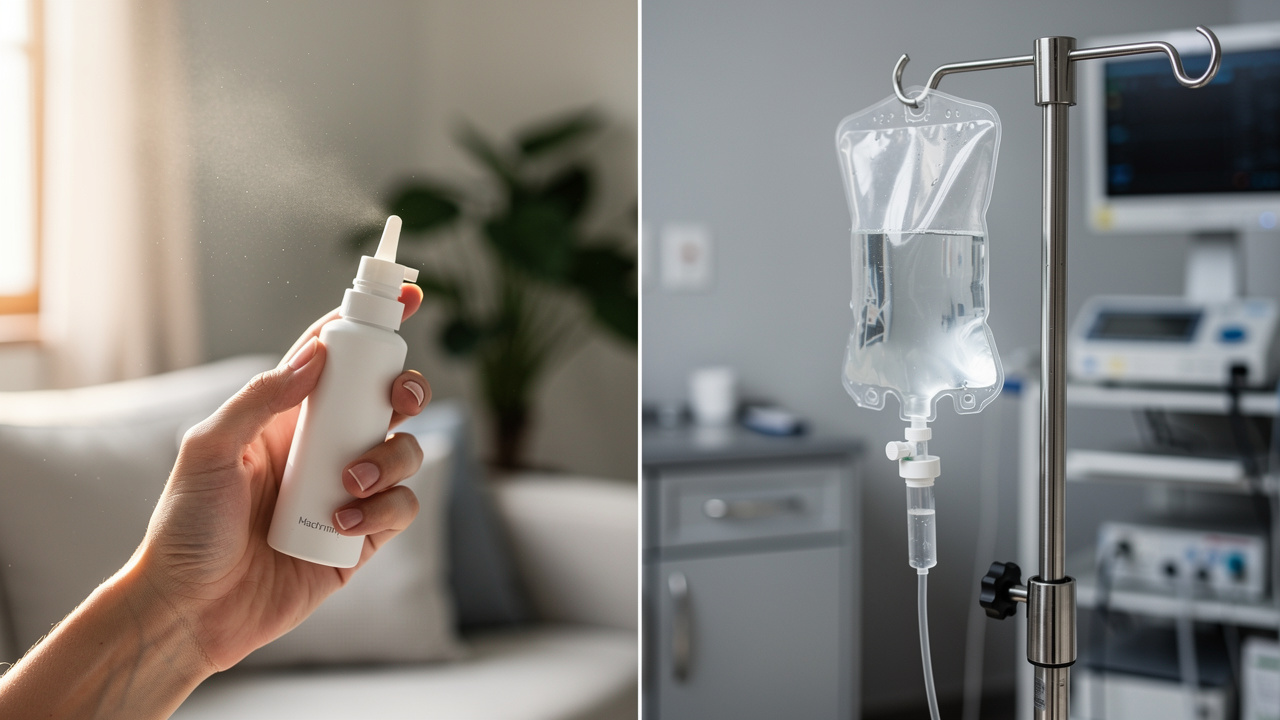
To see the differences clearly, it helps to compare NAD nasal spray vs NAD injections across key dimensions.
|
Feature |
NAD+ Nasal Spray |
NAD+ Injections (IV / IM / SubQ) |
|---|---|---|
|
Bioavailability |
~15–25% |
Up to 100% (IV); very high for IM/SubQ |
|
Onset Of Effects |
~15–30 minutes |
~5–15 minutes (IV), variable for IM/SubQ |
|
Duration Of Effects |
~4–8 hours |
~24–72 hours after IV |
|
Dose Capacity |
Limited by nasal volume |
Very high doses possible |
|
Dose Precision |
Moderate, some variability in absorption |
Precise, controlled by clinician |
|
Administration |
Self-administered at home |
Performed in clinic or under supervision (IV especially) |
|
Invasiveness |
Non-invasive, no needles |
Invasive, needles and IV lines |
|
Convenience |
Very high; portable and fast |
Lower; requires appointments and time |
|
Cost Per Session |
Typically lower |
Typically higher |
|
Best For |
Daily wellness, focus, mild fatigue, travel, stacking with glutathione nasal spray or NAC nasal spray |
Significant depletion, intense fatigue, recovery, aggressive longevity or detox protocols |
From a practical standpoint, NAD nasal spray excels for convenience, portability, and steady maintenance. In contrast, injections are the heavy-duty option when you need maximum dosing and wide systemic impact.
Safety, Side Effects, And Tolerability
Both delivery routes are generally considered safe when used appropriately, but their risk profiles differ.
A common clinical saying is, “Start low, go slow, and watch closely.” That idea applies to NAD+ no matter which route you choose.
Nasal Spray Safety
Most users tolerate NAD nasal spray well. Potential issues include:
-
Mild nasal burning or stinging immediately after spraying
-
Dryness or irritation with very frequent use
-
Reduced effectiveness when you have allergies, sinus infection, or congestion
If you already use glutathione nasal spray, NAC nasal spray, or kanna nasal spray with theanine, you’ll be familiar with the basic intranasal routine. Helpful tips include:
-
Rotating nostrils
-
Using a gentle saline rinse if needed
-
Avoiding over-spraying or using more often than directed
Because nasal dosing is lower and absorption is slower than IV, systemic side effects are rare, which is one reason many people favor NAD nasal spray vs NAD injections for long-term maintenance.
Injection Safety
NAD injections are also safe when administered correctly, but they involve:
-
Needle-related risks: pain, bruising, or local swelling at the site
-
Infection risk if sterile technique is not followed
-
Infusion-related reactions with IV therapy, particularly at higher doses or faster drip rates:
-
Nausea or abdominal pressure
-
Flushing, warmth, or chest tightness
-
Headache or dizziness
-
Temporary rise in heart rate
-
These reactions are usually dose-rate dependent and can often be controlled by lengthening the infusion time.
People with needle phobia, bleeding disorders, or limited access to medical care may find these trade-offs outweigh the benefits of injections and lean toward intranasal NAD+ plus adjuncts like glutathione nasal spray.
Cost And Practical Considerations
Beyond science, many decisions about NAD nasal spray vs NAD injections come down to real-world logistics.
NAD Nasal Spray
-
Lower cost per dose than IV therapy
-
No clinic fees, staff time, or facility overhead
-
Easy to fit into a daily routine, including travel and busy workweeks
-
You can pair NAD+ with intranasal glutathione nasal spray, NAC nasal spray, or kanna nasal spray to cover multiple wellness goals without scheduling appointments
For general wellness, energy, and cognitive support, many find that a consistent nasal protocol—sometimes stacked with glutathione nasal spray—offers a strong balance between benefit and affordability.
NAD Injections
-
Higher upfront session cost, especially for IV drips
-
Requires time off work or other activities for appointments
-
May be more cost-effective per absorbed milligram for those needing high-dose, short-term interventions
-
Often delivered as structured treatment series (e.g., several IV sessions, then SubQ maintenance)
If your goal is to rapidly restore NAD+ for a specific clinical reason, spending more in the short term on injections may produce results that would take weeks or months of lower-dose nasal spray to approximate.
How To Choose: Matching Delivery To Your Goals

There is no single “best” answer in the NAD nasal spray vs NAD injections debate. The better choice depends on your physiology, goals, and lifestyle.
1. General Wellness And Longevity Focus
Profile: Health-conscious individuals, biohackers, and people focused on aging well, steady energy, and long-term brain support.
Better Fit:
-
NAD nasal spray, often combined with:
-
Antioxidant support such as glutathione nasal spray
-
NAC nasal spray for glutathione production and detox
-
Optional kanna nasal spray with theanine for mood and stress balance
-
Reason: You get convenient, repeatable dosing that fits daily life without clinic visits, with enough bioavailability to support gradual improvements.
2. Busy Professionals And Students
Profile: High cognitive demand, long hours, travel, and unpredictable schedules.
Better Fit:
-
NAD nasal spray for fast, on-demand energy and focus
-
Stack with glutathione nasal spray to counter oxidative stress from lack of sleep, jet lag, or intense workloads
Reason: You can keep a bottle at your desk or in your bag, time doses before key meetings, exams, or creative work, and avoid the time and expense of clinic-based IVs.
3. Athletes And Serious Fitness Enthusiasts
Profile: High training volume, frequent competitions, or heavy physical demands.
Better Fit:
-
NAD injections (IV or SubQ) for block periods of higher demand or recovery
-
NAD nasal spray in between sessions for maintenance
-
Consider pairing with intranasal glutathione nasal spray and NAC nasal spray to support recovery, redox balance, and respiratory health
Reason: Injections deliver the depth needed for intense training phases, while nasal spray helps keep NAD+ levels from dropping too far between protocols.
4. Individuals Seeking Intensive Therapeutic Support
Profile: Chronic fatigue, significant burnout, addiction recovery programs, or advanced anti-aging protocols under medical care.
Better Fit:
-
IV NAD+ injections as the primary modality
-
Possible add-on of NAD nasal spray and glutathione nasal spray for maintenance between infusions
Reason: IV therapy offers the highest and most reliable dosing, fast changes in cellular NAD+, and a longer therapeutic window—features often needed in more complex clinical situations.
Whatever your profile, partnering with a knowledgeable healthcare professional is important, as AI-based Clinical Decision Support tools increasingly help clinicians evaluate personalized treatment protocols and optimize patient outcomes. They can help you weigh NAD nasal spray vs NAD injections in the context of your medical history, medications, and lab markers.
NAD Nasal Spray Vs NAD Injections: Frequently Asked Questions
Can I Combine Nasal Spray And Injections?
Yes. Many people use IV or SubQ NAD+ periodically and rely on NAD nasal spray between sessions to maintain levels. This hybrid strategy helps extend the benefits of injections and may reduce how often you need intensive IV therapy.
Can I Use NAD Nasal Spray With Other Nasal Products?
In many protocols, NAD+ is stacked with:
-
Glutathione nasal spray for antioxidant and detox support
-
NAC nasal spray to support endogenous glutathione production and respiratory health
-
Kanna nasal spray with theanine to support mood, stress response, and focus
Spacing sprays a few minutes apart and following product directions can help prevent local irritation.
Is NAD Nasal Spray Strong Enough On Its Own?
For general wellness, cognitive support, and mild fatigue, many users find NAD nasal spray sufficient—especially when they also address sleep, nutrition, and stress.
For severe depletion or complex clinical conditions, injections often provide a more substantial impact, at least for an initial loading phase.
How Fast Will I Feel A Difference?
-
NAD nasal spray: most people notice effects within 15–30 minutes, with benefits fading after several hours
-
NAD injections: effects from an IV infusion can build over the session and may last 1–3 days or longer, especially after a series of treatments
Individual response varies, so it can take a bit of self-observation (and sometimes lab testing) to understand how your body responds.
Is One Method Safer Than The Other?
Both are considered safe when used correctly:
-
Nasal spray: lower systemic risk; main concerns are local nasal irritation or variability in absorption
-
Injections: more invasive; require sterile technique and professional oversight, with a higher chance of temporary systemic side effects during IV therapy
Your comfort with needles, access to medical care, and any sinus or clotting issues should all factor into your choice.
Conclusion: Choosing The Right NAD Strategy For You
When comparing NAD nasal spray vs NAD injections, the best option depends on what you need most:
-
Convenience, portability, and daily support:
NAD nasal spray shines. It fits busy routines, supports brain and energy function, and layers well with intranasal allies like NAC nasal spray, kanna nasal spray with theanine, and glutathione nasal spray. -
Maximum potency, rapid repletion, and deeper clinical impact:
NAD injections—especially IV therapy—offer unmatched bioavailability, precise dosing, and longer-lasting increases in NAD+.
For many, the ideal approach is not either/or but a smart combination: periodic NAD injections under professional guidance, supported by consistent use of NAD nasal spray and complementary tools such as glutathione nasal spray.
Align the delivery method with your goals, budget, and tolerance for procedures, and always involve a qualified healthcare professional when adding high-dose NAD+ to your health strategy.

Leave a comment
All comments are moderated before being published.
This site is protected by hCaptcha and the hCaptcha Privacy Policy and Terms of Service apply.