
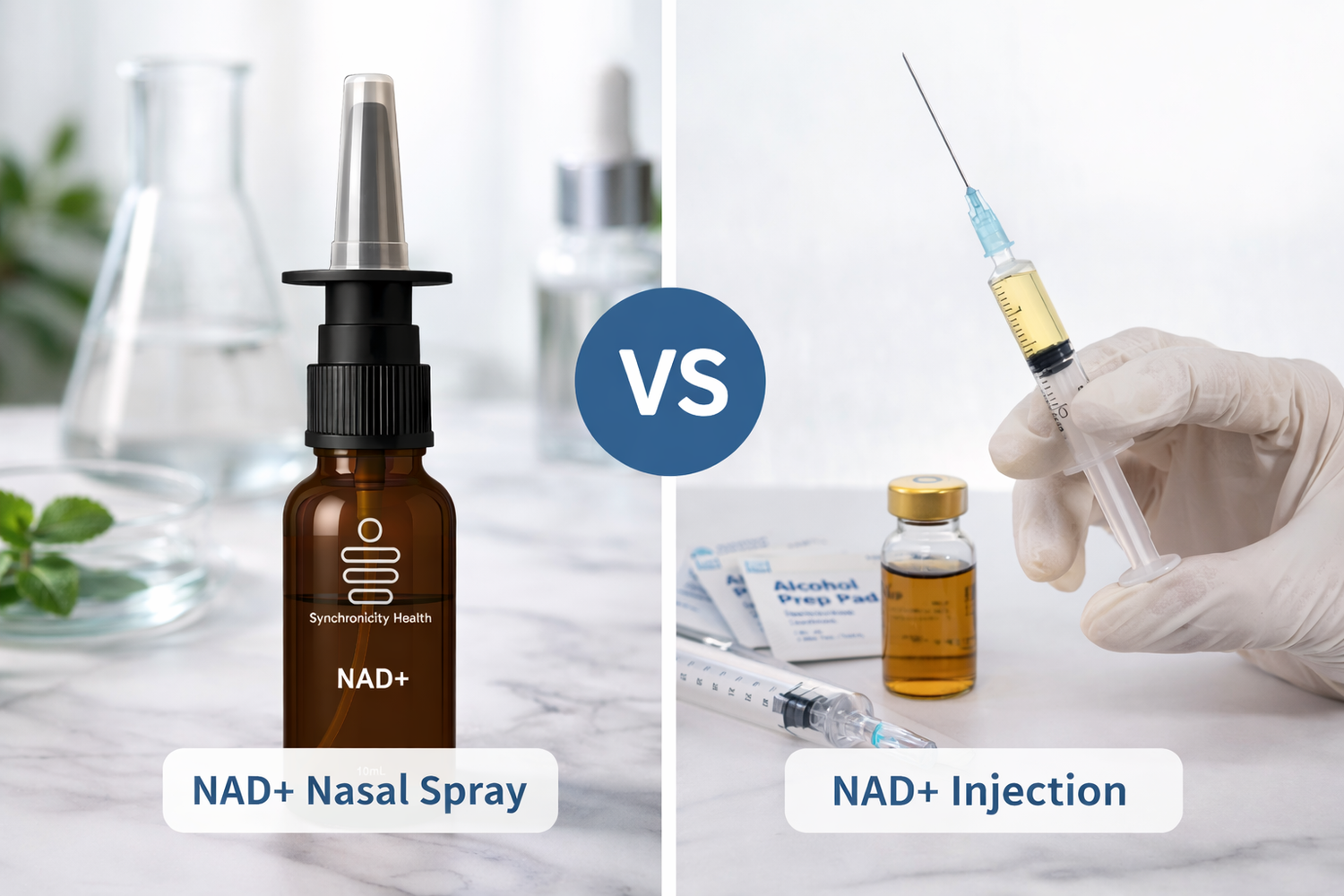
If you’re trying to decide whether NAD+ nasal spray or injection is the better fit for your goals, you’re not alone. Biohackers, busy professionals, athletes, and longevity-focused individuals are all asking the same question: what is the most effective and realistic way to raise NAD+ levels?
This guide walks you through how each method works, what the science suggests, and how to match NAD+ nasal spray or injection to your lifestyle, budget, and health targets.
This article is for educational purposes only and is not medical advice. Always discuss NAD+ therapies with a licensed healthcare professional before starting.
Why NAD+ Levels And Delivery Method Matter

Nicotinamide adenine dinucleotide (NAD+) is a coenzyme present in every cell. It sits at the center of several processes that matter for performance and healthy aging:
-
Cellular energy (ATP) production in the mitochondria
-
DNA repair and genomic stability
-
Sirtuin activity, which affects metabolism, inflammation, and stress resistance
-
Cell signaling and gene expression
-
Circadian rhythm regulation, influencing sleep–wake cycles and metabolic timing
As we age, NAD+ levels fall sharply, and research on AI-based Clinical Decision Support systems is helping clinicians better track and address age-related NAD+ decline in primary care settings. Lower NAD+ is associated with:
-
Reduced physical and mental energy
-
Slower recovery and resilience
-
Greater susceptibility to age-related conditions
As one integrative physician explains to patients, “NAD+ is like a cellular battery charger — when levels are low, every system has to work harder to keep up.”
Because NAD+ is a large, delicate molecule, how it gets into your body matters. Oral NAD+ is mostly broken down by stomach acid and first-pass liver metabolism, leaving only a small fraction available to cells. That’s why more advanced delivery methods—especially NAD+ nasal spray or injection—have become the focus for serious health enthusiasts.
How NAD+ Nasal Spray Works
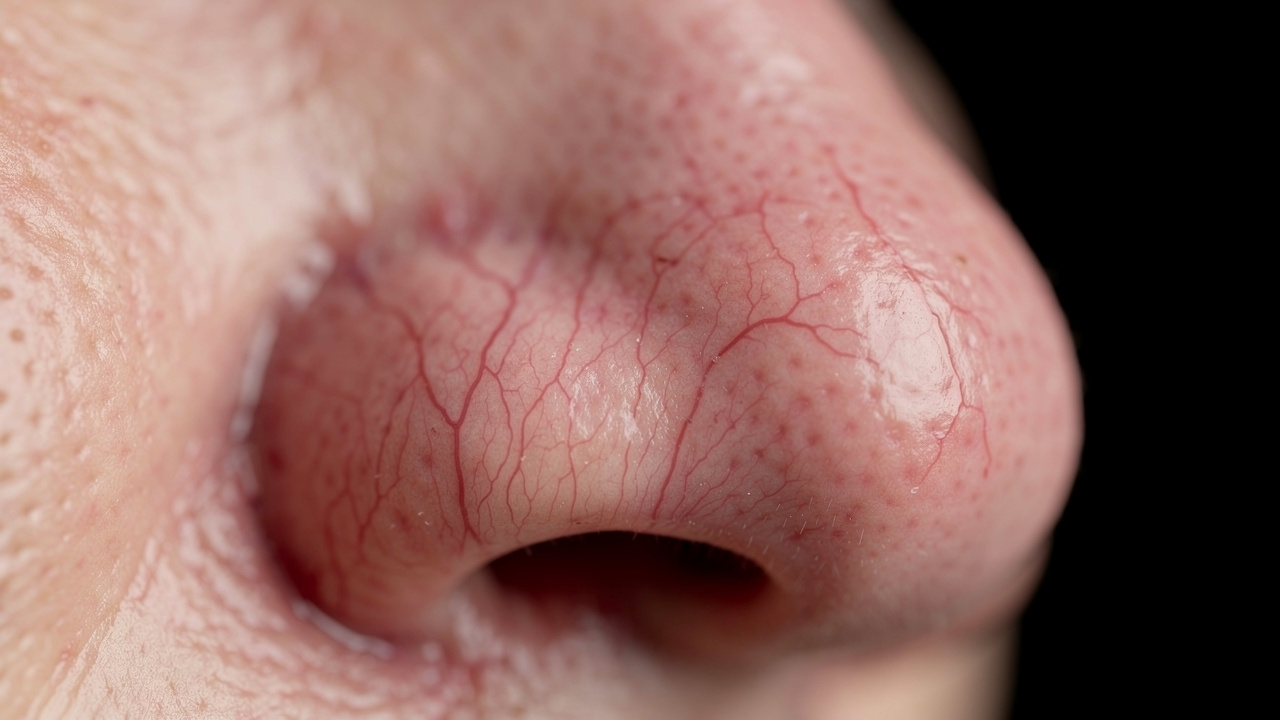
NAD+ nasal spray delivers a fine mist of NAD+ into the nasal cavity. The inside of the nose is lined with a thin, highly vascular mucosal membrane, allowing molecules to pass quickly into the bloodstream.
Key features of intranasal delivery:
-
Bypasses the digestive tract and first-pass liver metabolism
-
Rapid absorption through nasal blood vessels
-
Potential direct access to the brain via the olfactory region, which may be helpful for cognitive support
This same route is used for other advanced nasal formulations, such as NAC nasal spray, and antioxidant-focused options like glutathione nasal spray. Sleep-focused users may also be familiar with melatonin nasal spray, which relies on the same fast-acting pathway.
Pros Of NAD+ Nasal Spray
For many people, NAD+ nasal spray offers an appealing mix of science and practicality:
-
Non-invasive and needle-free
Ideal for anyone who dislikes injections or wants a low-friction routine. -
Fast onset
Many users report feeling effects within 15–30 minutes, thanks to rapid mucosal absorption. -
At-home and travel-friendly
Small bottles are easy to carry and discreet to use, whether you’re at your desk, at the gym, or on a flight. -
Steady support
Regular dosing (for example, once or several times a day) can provide a more stable background of NAD+ support, instead of large peaks and valleys. -
Lower systemic risk compared with IV
Doses per administration are generally lower than injections, which may mean fewer whole-body side effects for many users.
Estimated intranasal NAD+ bioavailability is often cited around 15–25%—significantly higher than oral NAD+, though still below injection-based delivery.
Limitations Of NAD+ Nasal Spray
Despite the advantages, NAD+ nasal spray is not ideal for every situation:
-
Variable absorption
Congestion, allergies, a deviated septum, or chronic sinus issues can all reduce uptake and make dosing less predictable. -
Dose ceiling
The nasal cavity can only comfortably hold so much fluid at once. This makes very high, therapeutic doses harder to achieve compared with IV infusions. -
Shorter duration of effect
Effects typically last 4–8 hours, so ongoing use may be needed throughout the day for sustained benefits. -
Local irritation
Some people notice temporary burning, dryness, or mild irritation in the nose, similar to what may occur with NAC formulations or glutathione.
For most wellness and performance goals, NAD+ nasal spray is best thought of as a convenient, moderate-intensity NAD+ support option rather than a maximal, clinical intervention.
How NAD+ Injections Work (IV, IM, And Subcutaneous)
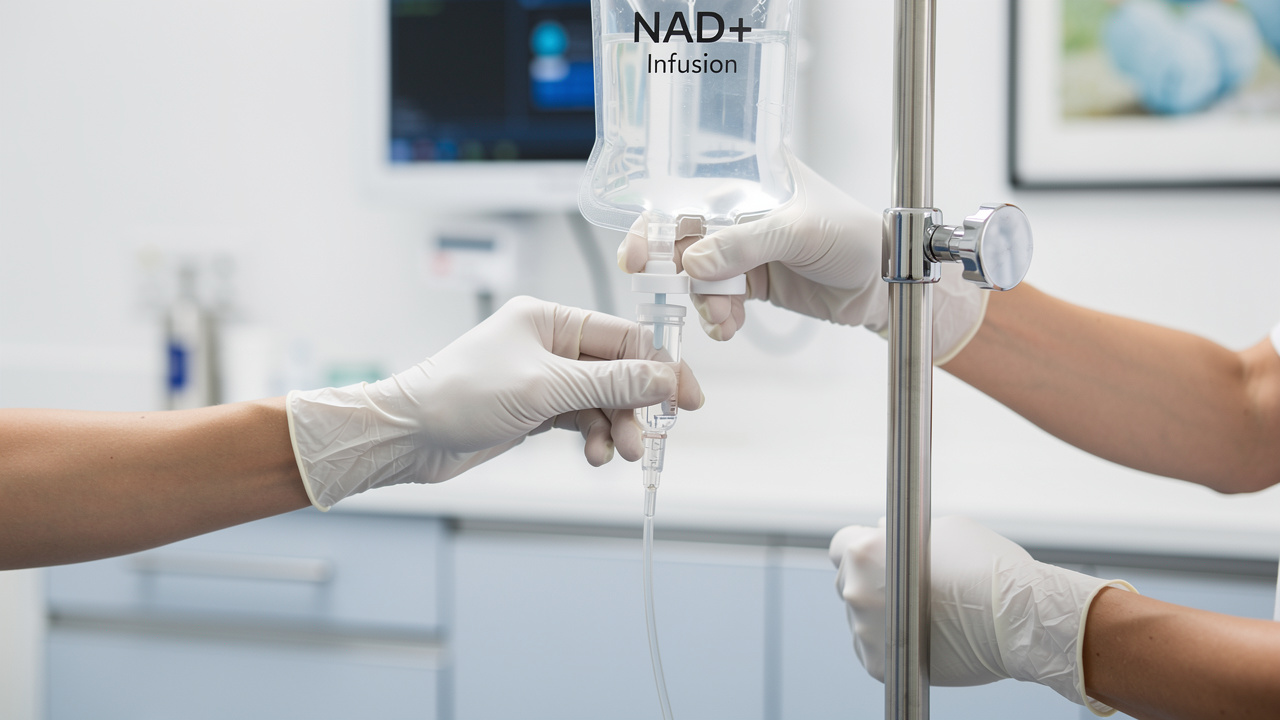
NAD+ injections introduce NAD+ directly into the body’s tissues or bloodstream, bypassing natural absorption barriers.
Common approaches include:
-
Intravenous (IV) infusion
NAD+ mixed in saline and dripped directly into a vein over 1–4+ hours. This is considered the most potent delivery route. -
Intramuscular (IM) or subcutaneous (SQ) injection
NAD+ injected into a muscle or just under the skin, where it gradually diffuses into circulation. Often used as maintenance between IV sessions or as a quicker clinic visit.
Pros Of NAD+ Injections
NAD+ injections are favored when the goal is maximal effect and precise dosing:
-
Near-100% bioavailability (IV)
An IV infusion delivers essentially the entire dose into circulation, making it the most efficient way to raise NAD+. -
Rapid and pronounced effects
Many patients notice changes in energy, clarity, or mood during or shortly after an infusion. -
High and adjustable dosing
Clinicians can change the dose and drip rate based on body weight, tolerance, and specific conditions—something that’s not possible with a spray bottle. -
Sustained elevated NAD+ levels
After IV therapy, NAD+ levels can remain elevated for 24–72 hours, creating a longer therapeutic window than nasal or oral approaches. -
Best suited for intensive protocols
People addressing serious fatigue, recovery after illness or surgery, addiction protocols, or pronounced age-related decline are often steered toward injections.
Limitations Of NAD+ Injections
The potency of NAD+ injections comes with clear trade-offs:
-
Invasive procedure
Needles and IV lines are a non-starter for some people due to discomfort or anxiety. -
Clinic time and scheduling
IV sessions require a medical setting, sterile technique, and often several hours per visit, plus travel and scheduling. -
Higher upfront cost
Professional oversight, equipment, and clinic overhead make injections more expensive per session than a bottle of nasal spray. -
Side effects during infusion
Some patients experience nausea, flushing, headache, chest tightness, or increased heart rate during an IV drip. These effects often improve if the infusion rate is slowed. -
Injection-site risks
IV, IM, and SQ injections carry a small but real risk of bruising, pain, or infection at the site.
In short, NAD+ injections are usually best suited for targeted, high-intensity NAD+ restoration under professional supervision.
NAD+ Nasal Spray Or Injection: Side-By-Side Comparison

When choosing between NAD+ nasal spray or injection, it helps to compare them on the metrics that matter most: bioavailability, onset, duration, convenience, and cost.
|
Feature |
NAD+ Nasal Spray |
NAD+ Injection (IV / IM / SQ) |
|---|---|---|
|
Bioavailability (estimate) |
~15–25% |
IV: ~100%; IM/SQ: high |
|
Onset Of Effects |
~15–30 minutes |
IV: ~5–15 minutes; IM/SQ: ~15–45 minutes |
|
Duration Of Effects |
~4–8 hours |
IV: ~24–72 hours; IM/SQ: several hours |
|
Dose Range |
Low–moderate |
Moderate–very high (therapeutic) |
|
Precision Of Dosing |
Fixed spray amounts |
Precisely calibrated per patient |
|
Invasiveness |
Non-invasive, needle-free |
Needle-based; IV requires venous access |
|
Setting |
At home, work, or while traveling |
Typically in a clinic; IM/SQ can sometimes be at home |
|
Cost Per Session |
Lower per bottle |
Higher per infusion or injection |
|
Best Use Case |
Daily wellness & maintenance |
Intensive repletion and clinical protocols |
|
Needle/Sinus Considerations |
Best for needle-averse; not ideal for chronic sinus issues |
Best for people comfortable with needles and able to visit a clinic |
Think of NAD+ nasal spray as a flexible, everyday support tool, and NAD+ injections as a higher-intensity intervention used less frequently but with more dramatic impact.
What NAD+ Therapy May Help With (Any Delivery Method)

Regardless of whether you prefer NAD+ nasal spray or injection, raising NAD+ levels may support several key areas of health.
Cognitive Performance And Brain Health
-
Sharper focus and sustained attention
-
Reduced “brain fog” and mental fatigue
-
Support for neuronal resilience and neuroprotection
-
Possible support for mood and stress resilience, similar to how the Selank Peptide | Benefits, Safety & Buying Advice research demonstrates cognitive and anxiolytic effects through enhanced neurotransmitter modulation
Because of the potential nose-to-brain route, some users pair NAD+ nasal spray with brain-supportive options such as glutathione nasal spray for added antioxidant support.
Energy, Metabolism, And Physical Performance
-
Better mitochondrial function and ATP production
-
Less day-to-day fatigue
-
Improved stamina during training blocks or demanding workweeks
-
Faster recovery after intense workouts or competitions
Athletes and high performers sometimes choose injections when they need a rapid, noticeable shift in energy or recovery capacity.
Cellular Repair, Aging, And Inflammation
-
Support for DNA repair enzymes (such as PARP family enzymes)
-
Activation of sirtuins associated with healthy aging
-
Improved mitochondrial quality and function
-
Modulation of inflammatory signaling, which may support pain reduction and tissue health
Many longevity-focused users treat NAD+ as a foundational cellular support, and then add targeted antioxidants like glutathione nasal spray to address oxidative stress from training, toxins, or environmental exposure.
Circadian Rhythm And Sleep
Because NAD+ is involved in the molecular clock that governs circadian rhythm, better NAD+ balance can indirectly support:
-
More stable sleep–wake cycles
-
Better daytime alertness
-
More restorative sleep quality
Those who want more direct sleep support may combine NAD+ with products such as melatonin nasal spray, which use the same intranasal route for fast, targeted effects.
Safety And Side Effects: Nasal Spray Vs Injection
Both NAD+ nasal spray and NAD+ injections deliver a molecule your body already uses every day, but each has a different safety profile.
Safety Of NAD+ Nasal Spray
NAD+ nasal sprays are generally well tolerated when used as directed, similar to other intranasal products like NAC or glutathione nasal spray.
Common, usually mild effects:
-
Temporary nasal stinging or warmth
-
Mild dryness or irritation inside the nose
-
Occasional sneezing or brief congestion after use
Less common concerns:
-
Worsening of existing sinus issues if used excessively
-
Rare allergic reactions to preservatives or other ingredients
If you regularly use other intranasal products—such as glutathione nasal spray or NAC—you and your clinician should factor in the total frequency of sprays to avoid over-irritating nasal tissues.
Safety Of NAD+ Injections
Because injections deliver high doses rapidly, they require more care and monitoring.
Common short-term effects during or shortly after IV:
-
Nausea or stomach cramping
-
Headache or pressure in the head
-
Flushing, warmth, or chest tightness
-
Temporary increase in heart rate
-
Fatigue or “wiped out” feeling as cells ramp up repair
These are often managed simply by slowing the infusion rate, allowing the body to adjust.
Local injection-site risks:
-
Soreness or bruising
-
Redness or irritation
-
Small risk of infection if sterile technique is not followed
Many clinicians use a “start low, go slow” approach with NAD+ infusions to keep patients comfortable and give the body time to adapt.
Because of these factors, NAD+ injections—especially IV infusions—should always be supervised by trained healthcare professionals.
Who Should Consider NAD+ Nasal Spray?
NAD+ nasal spray is often the better fit if you:
-
Prioritize convenience and consistency
You want something that fits into a daily routine with minimal friction. -
Prefer to avoid needles
Needle phobia or simple dislike of invasive procedures makes nasal sprays an easier choice. -
Travel frequently or have a demanding schedule
You can carry a bottle in your bag and dose when it works for you, rather than booking clinic time. -
Aim for wellness, maintenance, and gradual support
You’re focusing on longevity, general cognitive performance, or steady energy rather than an aggressive medical protocol. -
Already use other intranasal products successfully
If you tolerate formulations like NAC or glutathione nasal spray well, you may do similarly well with NAD+ nasal spray.
People with chronic sinusitis, severe nasal congestion, or structural nasal issues should discuss whether nasal delivery is appropriate, since absorption can be inconsistent in these cases.
Who May Be Better Served By NAD+ Injections?
NAD+ injections may be a better match if you:
-
Need higher, therapeutic dosing
You’re working with a clinician on chronic fatigue, addiction recovery support, cognitive decline, or other serious concerns. -
Want rapid, intensive NAD+ repletion
You’re looking for a noticeable shift within a short window—such as around major life stress, recovery from illness, or a demanding training cycle. -
Value precision and medical oversight
You prefer a doctor-managed protocol, with lab monitoring and customized dosing. -
Can accommodate clinic visits and higher costs
You have the time and budget to commit to sessions that may run from $150–$500+ per infusion, depending on dose and setting. -
Do not mind needles or IV lines
You’re comfortable with more invasive procedures in exchange for a stronger effect.
For many, a hybrid model works best: periodic injection cycles for deep replenishment, supported by NAD+ nasal spray (and sometimes glutathione nasal spray) between sessions.
Practical Steps To Get Started With NAD+ Therapy
If you’re leaning toward either NAD+ nasal spray or injection, a structured approach will help you start safely and gauge benefits clearly.
1. Consult A Knowledgeable Healthcare Professional
Look for a clinician experienced with NAD+ therapies and related intranasal formulas such as NAC or glutathione nasal spray. Discuss:
-
Your main goals (energy, cognition, longevity, recovery, sleep)
-
Current medications and supplements
-
Medical history (cardiovascular issues, bleeding disorders, sinus problems, etc.)
They can help determine whether NAD+ nasal spray or injection fits you best, and whether you might also benefit from adjuncts like glutathione nasal spray or melatonin nasal spray.
2. Choose A High-Quality Product Or Clinic
For sprays and injectables, quality matters:
-
Favor providers who use pharmaceutical-grade NAD+
-
Look for transparent ingredient lists and testing where available
-
For injections, choose clinics with strong safety protocols and experienced staff
Synchronicity Health, for example, offers targeted intranasal options such as glutathione nasal spray, which many users pair with NAD+ strategies for antioxidant and detox support.
3. Start Low And Titrate
Whether using NAD+ nasal spray or injection:
-
Begin with a lower dose than the maximum suggested, especially if you’re sensitive or have never used NAD+ before.
-
Gradually increase under your provider’s guidance based on your response.
This approach helps reduce side effects and gives you time to understand how your body reacts.
4. Track Your Response
Keep simple notes for a few weeks, including:
-
Energy levels throughout the day
-
Mental clarity and focus
-
Workout performance and recovery
-
Sleep quality and mood
These observations help you and your clinician adjust dose, frequency, or delivery method. You might find that nasal spray is sufficient—or that you benefit from adding a short course of injections alongside ongoing sprays and occasional glutathione nasal spray.
The Bottom Line On NAD+ Nasal Spray Or Injection
Both NAD+ nasal spray and injection can meaningfully raise NAD+ levels and support energy, cognition, and cellular health. The best choice depends less on which method is “stronger” and more on how it fits your life:
-
Choose NAD+ nasal spray if you want a convenient, needle-free, at-home option for ongoing wellness, with fast onset and flexible day-to-day use.
-
Choose NAD+ injections if you need high-dose, medically supervised therapy for more intensive goals, and you’re willing to invest the time and cost.
Many people end up using both approaches at different times—building a foundation with sprays, then layering in clinic-based injection protocols when deeper support is needed, often alongside antioxidant support from glutathione nasal spray.
With clear goals, professional guidance, and an understanding of how each delivery method works, you can choose the NAD+ strategy that best aligns with your performance, longevity, and day-to-day reality.


Leave a comment
All comments are moderated before being published.
This site is protected by hCaptcha and the hCaptcha Privacy Policy and Terms of Service apply.