

If you care about performance, focus, recovery, or calmer sleep, understanding anandamide is worth your time. This endocannabinoid signaling molecule shapes how your brain handles mood, stress, pain, and memory—and it’s the direct target of every high-quality anandamide supplement on the market.
At Synchronicity Health, we formulated our anandamide supplement to support your brain’s own “bliss molecule” rather than override it. Before you add it to your stack, we’ll look at what anandamide actually does in the brain, how your body regulates it, and where smart supplementation fits in.
What Is Anandamide?
Anandamide, also known as N-arachidonoylethanolamine (AEA), is an endocannabinoid—one of the cannabinoids your body produces on its own. Its name comes from the Sanskrit word ananda, meaning “joy” or “bliss,” which is why it’s often called the “bliss molecule.”
Anandamide is a key player in your endocannabinoid system (ECS), a regulatory network that helps keep the body in balance (homeostasis). Research summarized in this Harvard overview shows that the ECS influences:
-
Mood and emotional regulation
-
Stress response and resilience
-
Pain perception
-
Sleep and circadian rhythm
-
Appetite and metabolism
-
Memory, learning, and neuroplasticity
-
Immune and inflammatory responses
As the Synchronicity Health team often explains, “Your endocannabinoid system acts like a set of dimmer switches, nudging brain and body activity up or down so you can stay in balance.”
Your body doesn’t store anandamide the way it stores serotonin or dopamine. Instead, it synthesizes anandamide on demand from fatty acids in cell membranes whenever it needs to fine-tune brain activity—during stress, movement, social connection, and deep focus.
How Anandamide Works In The Brain
To understand what anandamide does to the brain, you need a quick look at how the ECS signals.
CB1, CB2, And Retrograde Signaling
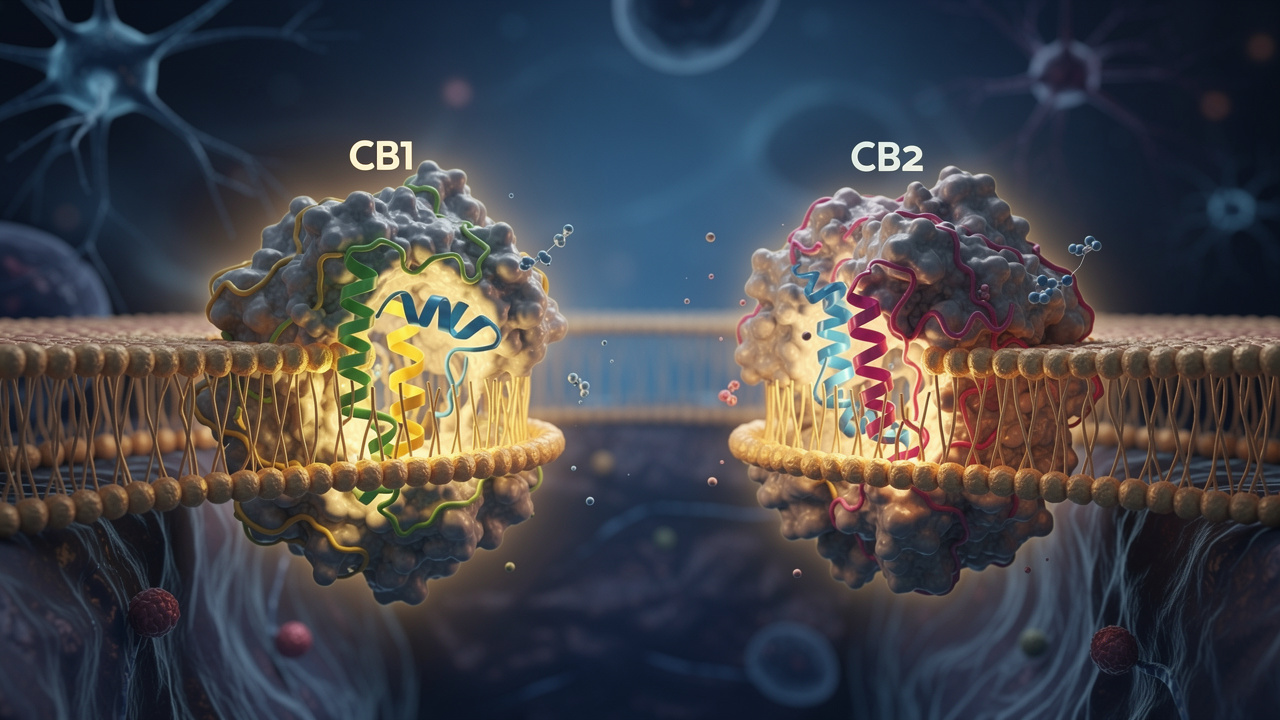
Anandamide primarily binds to:
-
CB1 receptors – found densely in the brain and spinal cord (especially cortex, hippocampus, basal ganglia, cerebellum, and amygdala).
-
CB2 receptors – found mainly in immune cells and peripheral tissues.
Unlike many neurotransmitters that travel from the sending neuron (presynaptic) to the receiving neuron (postsynaptic), anandamide usually works in reverse:
-
A postsynaptic neuron becomes active.
-
It synthesizes anandamide on demand.
-
Anandamide travels backward across the synapse.
-
It binds to CB1 receptors on the presynaptic neuron.
-
This reduces the release of other neurotransmitters (such as glutamate or GABA).
This “retrograde” signaling allows anandamide to act as a fine-tuner, preventing excessive firing and helping the brain avoid overload. That’s part of why it’s so important for stress buffering, emotional balance, and cognitive performance.
FAAH: Why Anandamide Doesn’t Last Long
Once anandamide has done its job, the body clears it rapidly with an enzyme called Fatty Acid Amide Hydrolase (FAAH). FAAH breaks anandamide down into arachidonic acid and ethanolamine in just seconds. You can think of FAAH as the clean-up crew that keeps anandamide spikes brief and tightly controlled.
This rapid breakdown is great for tight control, but it also means:
-
Anandamide’s “bliss” effects are usually short-lived.
-
Many people may want support to maintain healthy anandamide tone.
-
Any anandamide supplement has to work with this biology rather than ignore it.
Key Brain Benefits Of Healthy Anandamide Levels
So what does anandamide actually do to your brain? Research links healthy endocannabinoid tone—with anandamide as a central player—to several domains that high-performers care about.
1. Mood, Stress, And Anxiety Support

Anandamide interacts with brain regions like the amygdala (fear center) and prefrontal cortex (executive function), where it can:
-
Damp down excessive fear and threat responses
-
Help your brain “turn the volume down” on mild anxiety
-
Promote a calmer, more even emotional baseline
The ECS also interacts with the HPA axis (hypothalamic–pituitary–adrenal axis), which manages stress hormones like cortisol. Healthy anandamide signaling can:
-
Reduce the intensity of acute stress responses
-
Support a more measured return to baseline after challenges
-
Promote resilience to everyday stressors
People often describe this as feeling more “even-keeled” and less reactive, not sedated or numb. This is not a treatment for anxiety disorders—but for many people, better anandamide tone means less reactivity and more composure under pressure.
2. Trauma, Fear Extinction, And Emotional Processing
One of anandamide’s most interesting roles is in “fear extinction”—the process of weakening the emotional charge attached to old, unwanted memories.
By influencing circuits that link the prefrontal cortex, hippocampus, and amygdala, anandamide helps your brain:
-
Decouple memories from overwhelming fear
-
Relearn that past threats are no longer dangerous
-
Move away from rigid, stuck patterns of emotional response
This is a key reason why endocannabinoid research is so active in the area of trauma and stress-related responses (again, as support—never as a stand-alone treatment).
3. Cognitive Function, Learning, And Focus
Anandamide affects synaptic plasticity—the ability of neurons to strengthen, weaken, or reorganize connections. That matters for:
-
Learning new skills
-
Forming and consolidating memories
-
Forgetting irrelevant or intrusive information
Balanced anandamide levels can support:
-
Clearer thinking under stress
-
Better “signal-to-noise ratio” in your mental processes
-
Easier entry into flow states—deep, immersive concentration with low mental chatter
4. Pain, Movement, And Motor Control
Anandamide operates in pain and movement centers, including:
-
Periaqueductal gray (PAG) – a major pain-modulation hub in the brainstem
-
Basal ganglia and cerebellum – critical for coordination, timing, and execution of movement
Through CB1 and CB2 signaling, anandamide may:
-
Reduce the transmission of pain signals
-
Influence the emotional perception of pain
-
Support smooth, coordinated movement and motor learning
For athletes and high-movement lifestyles, this endocannabinoid support can be an important piece of the recovery and performance puzzle.
5. Sleep Quality And Circadian Rhythm
Because anandamide modulates both stress hormones and neuronal excitability, it also links tightly with sleep architecture and circadian rhythm:
-
Preclinical work suggests higher anandamide tone can increase total sleep time.
-
By calming the stress response and hyperactive neural circuits, it may help with sleep onset and continuity.
-
The ECS participates in fine-tuning daily rhythms, which matter for consistent energy and cognitive clarity.
This is where an anandamide supplement can pair well with light exposure, consistent wake time, and other circadian strategies.
6. The “Runner’s High” And Exercise Euphoria
For years, the “runner’s high” was credited purely to endorphins. Newer data points clearly to anandamide:
-
Sustained aerobic exercise can sharply raise circulating anandamide levels.
-
Anandamide crosses the blood–brain barrier and activates CB1 receptors.
-
The result: better mood, reduced pain perception, and lower anxiety after a hard session.
If you love that post-workout mental clarity and calm, anandamide is a major part of why.
Why Direct Anandamide Is Hard To Supplement
If anandamide is so helpful, why not just swallow it in a capsule?
Biochemistry makes that harder than it sounds:
-
Fragile, lipid-based molecule – vulnerable to heat, oxidation, and digestion.
-
Poor oral bioavailability – stomach acid and digestive enzymes can degrade it before absorption.
-
First-pass metabolism – the liver breaks down much of what remains.
-
FAAH enzyme everywhere – rapidly degrades any anandamide that makes it into circulation.
That’s why many strategies focus on supporting your own anandamide—by providing building blocks, influencing its breakdown, or supporting the ECS—rather than dumping large amounts of exogenous anandamide into the system without a delivery strategy.
How Synchronicity’s Anandamide Supplement Supports Your Brain
Instead of fighting your biology, the Synchronicity Health approach is to work with it. Our anandamide supplement is designed to support your endocannabinoid system and give your natural anandamide a better environment to work in.

Targeting The Endocannabinoid System Intelligently
Our formula focuses on:
-
Endocannabinoid-supportive fats – to provide structural building blocks for anandamide production.
-
PEA (palmitoylethanolamide) – an endocannabinoid-like molecule that:
-
Competes for FAAH, slowing anandamide breakdown
-
Works through the “entourage effect” to support endocannabinoid tone
-
Has been widely studied for comfort and inflammatory balance
-
By reducing how quickly anandamide is cleared and supporting the ECS more broadly, this style of anandamide supplement aims to:
-
Extend the life of your own anandamide
-
Support calm focus without sedation
-
Promote a smoother, more resilient stress response
Together, these nutrients are designed to nudge your endocannabinoid system toward a healthier baseline rather than forcing abrupt shifts.
Not THC. Not CBD. Your System, Supported.
A few key distinctions:
-
Not THC – THC directly overstimulates CB1 receptors and causes intoxication. Our supplement does not contain THC and does not produce a “high.”
-
Not CBD – CBD primarily works as a FAAH inhibitor and via other non-cannabinoid targets. While it can indirectly support anandamide, our formula is centered around endocannabinoid-like lipids such as PEA.
-
Endogenous-first approach – The goal is to help your own endocannabinoid system perform more effectively, not override it.
The result many users report: calm clarity, smoother mood, and better sleep-wake balance—without impairment, and with the understanding that everyone’s response is individual.
Who May Benefit From An Anandamide Supplement?
An anandamide supplement is not only for people who feel “off.” It can be a strategic tool for several groups:
High-Pressure Professionals
If your days involve back-to-back meetings, constant decisions, and little margin for error, you may notice:
-
Mental fatigue late in the day
-
Racing thoughts at night
-
Overreaction to minor stressors
Supporting endocannabinoid tone may help you maintain composure, focus, and decision quality under pressure.
Athletes And Dedicated Exercisers
Regular training stresses both the nervous system and musculoskeletal system. Anandamide support can help with:
-
Exercise enjoyment and mood during training
-
Perception of discomfort after intense sessions
-
Relaxation and sleep quality between workouts
Many athletes describe a more “balanced” feel—both mentally and physically—when ECS support is dialed in.
Sleep And Circadian Rhythm Seekers
If you:
-
Fall asleep too late despite fatigue
-
Wake in the middle of the night with a “wired but tired” brain
-
Struggle with non-refreshing sleep
an anandamide supplement taken consistently with a strong sleep routine may help smooth out the stress component interfering with healthy sleep architecture.
Cognitive And Longevity Enthusiasts
For brain-health focused individuals, endocannabinoid tone intersects with:
-
Neuroplasticity and learning
-
Long-term neuronal resilience
-
Emotional flexibility across the lifespan
While research is ongoing, supporting a well-functioning ECS is a sensible component of a long-term brain health strategy.
How To Use Synchronicity’s Anandamide Supplement Effectively
Getting the most from any anandamide supplement is about consistency and context, not megadoses.
Dosing And Timing
General guidance (always follow the product label and your clinician’s advice):
-
Take it with a meal that contains healthy fats.
-
Fats improve absorption of lipid-based compounds.
-
-
Start low, stay consistent.
-
Begin with the lowest suggested daily amount.
-
Give it at least 2–4 weeks of regular use to assess your response.
-
-
Experiment with timing.
-
For stress and focus: many people prefer morning or early afternoon.
-
For sleep support: some prefer taking it with the evening meal.
-
Synchronicity Health guidance: “Start low, stay steady, and adjust one variable at a time so you can actually tell what’s working.”
Track changes in:
-
Mood and reactivity
-
Sleep onset and continuity
-
Mental clarity and focus
-
Recovery from workouts or busy days
Stacking With OEA For Metabolic And Mood Support
One smart pairing is OEA (oleoylethanolamide), another fatty acid ethanolamide that interacts with related pathways.
Our OEA page explains how OEA:
-
Supports healthy appetite regulation and metabolic signaling
-
Shares biochemical “family ties” with anandamide
-
May complement the mood and stress benefits of an ECS-supportive stack
Used together thoughtfully, anandamide- and OEA-focused supplements can support both brain and metabolic balance.
Natural Ways To Support Anandamide (Alongside Supplementation)
A high-quality anandamide supplement is most effective when it sits on top of strong lifestyle fundamentals. These habits are all known or suspected to support healthy anandamide tone:
1. Exercise
-
Moderate to vigorous aerobic exercise (jogging, cycling, rowing, circuits) for 30–45 minutes can boost circulating anandamide and contribute to the “runner’s high.”
-
Mix steady-state work with occasional higher-intensity intervals for strong endocannabinoid signaling.
2. Nutrition And Specific Foods

Certain foods either contain anandamide-like molecules or impact FAAH:
-
Dark chocolate / raw cacao
-
Contains N-acylethanolamines, including compounds that can inhibit FAAH and support anandamide activity.
-
-
Healthy fats
-
Sources of essential fatty acids (such as fatty fish, pastured eggs, nuts, seeds) provide the raw materials for endocannabinoid synthesis.
-
-
Leafy greens and cruciferous vegetables
-
Foods rich in flavonoids like kaempferol (e.g., kale, spinach, broccoli) may influence FAAH and ECS activity.
-
3. Stress-Reduction Practices
Chronic, unmanaged stress depletes endocannabinoid tone. Techniques that consistently reduce stress can support anandamide:
-
Daily meditation or mindfulness
-
Breathwork (slow, diaphragmatic breathing)
-
Yoga, tai chi, or similar mind–body practices
-
Regular down-time without screens
As we often remind customers, “No supplement can replace the basics of movement, real food, and quality sleep.”
These strategies can amplify what your anandamide supplement is doing at the biochemical level.
Safety, Side Effects, And Precautions
Because our anandamide supplement works by supporting your body’s own signaling molecules, most people find it gentle and well-tolerated. That said, any tool that affects the brain deserves respect. As with other dietary supplements, it is not evaluated by the FDA to diagnose, treat, cure, or prevent disease.
Possible Side Effects
Most are mild and infrequent, but may include:
-
Digestive discomfort, especially if taken on an empty stomach
-
Mild drowsiness in sensitive individuals
-
Temporary change in how you perceive stress or alertness as your system recalibrates
If you notice anything concerning, stop use and discuss it with your healthcare professional.
Who Should Be Cautious
You should talk with a qualified practitioner before using an anandamide-focused product if you:
-
Are pregnant, nursing, or trying to conceive
-
Take prescription medications (especially those affecting mood, blood pressure, or liver enzymes)
-
Have a history of serious psychiatric conditions
-
Have significant medical conditions affecting liver, kidney, or cardiovascular function
-
Are combining it with other supplements that strongly affect mood or sleep
Our product is designed for adults and is not intended for children unless a medical professional specifically recommends and supervises it.
Benefits At A Glance
When used consistently alongside strong lifestyle habits, an anandamide supplement like Synchronicity’s formula may help:
-
Support mood and emotional balance
-
Reduce the impact of everyday stress and mild anxiety
-
Promote clear thinking and learning
-
Support neuronal health and long-term brain resilience
-
Encourage comfort and healthy pain perception
-
Improve sleep quality and stress-related sleep disruption
Direct Vs. Indirect Anandamide Support
To put your stack in context, it helps to see how different strategies compare.
|
Approach |
Examples |
How It Helps Anandamide |
Strengths |
Considerations |
|---|---|---|---|---|
|
Indirect: Lifestyle |
Exercise, meditation, sleep hygiene |
Stimulates natural production and release |
Free, wide-ranging benefits, core foundation |
Requires consistency and behavior change |
|
Indirect: Diet & Herbs |
Dark chocolate, omega-rich foods, CBD, PEA |
Provides precursors, slows breakdown (FAAH) |
Broad health effects, often easy to integrate |
Effects can be subtle and vary between individuals |
|
Direct ECS-Supportive Formula |
Synchronicity’s anandamide supplement with PEA |
Supports endocannabinoid tone and signaling |
More targeted, easier to dose and track |
Works best when combined with healthy habits |
Most people do best using both: foundational lifestyle + a well-designed anandamide supplement that fits their goals.
Conclusion: Supporting Your Brain’s Bliss Molecule Intelligently
Anandamide is one of your brain’s most important regulators of calm, focus, and resilience. It shapes how you respond to stress, how you sleep, how you learn, and even how much you enjoy a long run or a good laugh.
Because this molecule is produced on demand and broken down quickly, many people benefit from thoughtful support—especially under modern stress, heavy cognitive loads, or intense training schedules.
That’s why we created the Anandamide Supplement at Synchronicity Health: to support your own endocannabinoid system with targeted lipids like PEA and complementary nutrients, so your brain can maintain clearer focus, steadier mood, and calmer sleep—without intoxication or impairment.
If you’re ready to support your inner calm and cognitive performance naturally,
Buy Anandamide Supplement from Synchronicity Health and put your brain’s bliss molecule to work for you.
FAQs
Why Is Anandamide Called The “Bliss Molecule”?
Anandamide earned the nickname “bliss molecule” because of its strong links to feelings of well-being, ease, and contentment. When it binds to CB1 receptors in mood and reward regions of the brain, many people experience:
-
Reduced anxiety and tension
-
A sense of “everything is okay”
-
Enjoyment of social connection, movement, and play
Its name comes from ananda, the Sanskrit word for joy or bliss.
Can Anandamide Help With Stress And Anxiety?
Healthy anandamide tone can support your response to everyday stress and mild anxiety:
-
It dampens excessive fear signaling in the amygdala.
-
It helps regulate the HPA axis and cortisol output.
-
It can make it easier to stay composed during routine stressors.
This is not a treatment for generalized anxiety disorder or other psychiatric diagnoses, but many people find that supporting their endocannabinoid system reduces reactivity and improves emotional balance.
Does Anandamide Help With Sleep?
Yes, indirectly. Anandamide influences:
-
How activated your brain feels near bedtime
-
How your body processes stress that would otherwise disturb sleep
-
The architecture of sleep stages and total sleep time (based mainly on preclinical data)
By supporting a calmer nervous system and healthier stress response, an anandamide supplement can be a valuable part of a broader circadian and sleep-support plan.
Is Synchronicity’s Anandamide Supplement The Same As THC Or CBD?
No. Synchronicity’s formula is not THC and not CBD:
-
It does not produce a “high” or intoxication.
-
It is designed to support your own endocannabinoid system instead of acting like a drug.
-
It uses lipid-based nutrients, including PEA, to influence anandamide tone and ECS balance.
The goal is calm clarity and more resilient stress handling—not impairment.
What Supplements Can Boost The Effectiveness Of An Anandamide Supplement?
One powerful complement to an anandamide-focused product is OEA (oleoylethanolamide), another fatty-acid palmitoylethanolamide with related signaling roles.
Our OEA resource explains how it:
-
Supports healthy appetite and body composition
-
Interacts with similar biochemical families as anandamide
-
Can round out a stack aimed at mood, metabolic health, and long-term wellness
Taken together—with the guidance of a healthcare professional—anandamide- and OEA-focused supplements can create a well-rounded support system for both brain and body.


Leave a comment
All comments are moderated before being published.
This site is protected by hCaptcha and the hCaptcha Privacy Policy and Terms of Service apply.