

Melatonin Nasal Spray With Theanine: Does It Really Improve Sleep?
For high performers who track HRV, juggle time zones, and care about longevity, a melatonin nasal spray paired with theanine can sound almost too efficient: fast absorption, targeted ingredients, and no pills before bed. Products such as melatonin nasal spray are designed to support quicker sleep onset than standard capsules, with theanine added to calm a wired mind.
But does this format genuinely change sleep quality, recovery, and next-day performance—or is it just another supplement trend? This guide breaks down how melatonin and theanine work, what’s different about intranasal delivery, how it compares with other sleep tools, and why it must not be confused with illegal tanning sprays like Melanotan.
How Melatonin Regulates Sleep And Circadian Rhythm

Melatonin is a hormone released by the pineal gland in response to darkness, and research suggests that melatonin could act as a barrier against various health challenges beyond sleep regulation. It doesn’t “knock you out” like a sedative. Instead, it sends a timing signal to your internal clock that says, “Night has started.”
Key roles of melatonin include:
-
Sleep timing: Helps you fall asleep at an appropriate hour.
-
Circadian alignment: Keeps your sleep–wake cycle in sync with light–dark cues.
-
Jet lag support: Helps reset the clock when shifting time zones.
-
Age-related decline: Endogenous melatonin production tends to drop with age, often alongside more fragmented sleep.
Blue light exposure at night, irregular schedules, late training sessions, and high stress can all blunt or delay melatonin release. That’s why some people add melatonin supplements—capsules, sublingual tablets, oral sprays, or melatonin nasal spray—to nudge their circadian rhythm back toward alignment.
A nasal format like melatonin nasal spray is designed primarily for people who need speed: those who have trouble falling asleep on demand, are shifting time zones frequently, or need to anchor a disrupted schedule after late shifts or evening events.
“Sleep is the single most effective thing we can do to reset our brain and body health each day.”
— Matthew Walker, Why We Sleep
Why Theanine Is Paired With Melatonin

L-theanine (commonly just “theanine”) is an amino acid most abundant in green tea. Unlike sedative drugs, it promotes a calm-but-alert brain state rather than blunt drowsiness.
Research suggests theanine may:
-
Increase alpha brain waves, associated with relaxed focus.
-
Support GABA, serotonin, and dopamine activity, which can steady mood.
-
Reduce subjective stress and modestly lower cortisol in some studies.
-
Support sleep quality, especially in people whose sleep is undermined by mental tension.
That profile makes theanine a natural companion to melatonin:
-
Melatonin handles timing (when you feel ready to sleep).
-
Theanine helps with mental quiet (whether you can actually switch off).
Formulas that combine both—whether as oral supplements or in a melatonin nasal spray—often also include other compounds such as GABA, kanna, or glutathione. You’ll see references to:
-
Theanine nasal spray or theanine nasal spray GABA blends
-
Kanna nasal spray theanine combinations
-
Glutathione nasal spray used alongside sleep-focused ingredients
These combinations are aimed at people whose sleep is sabotaged more by stress, overthinking, and nervous system overactivity than by simple schedule problems.
What Makes A Melatonin Nasal Spray Different?
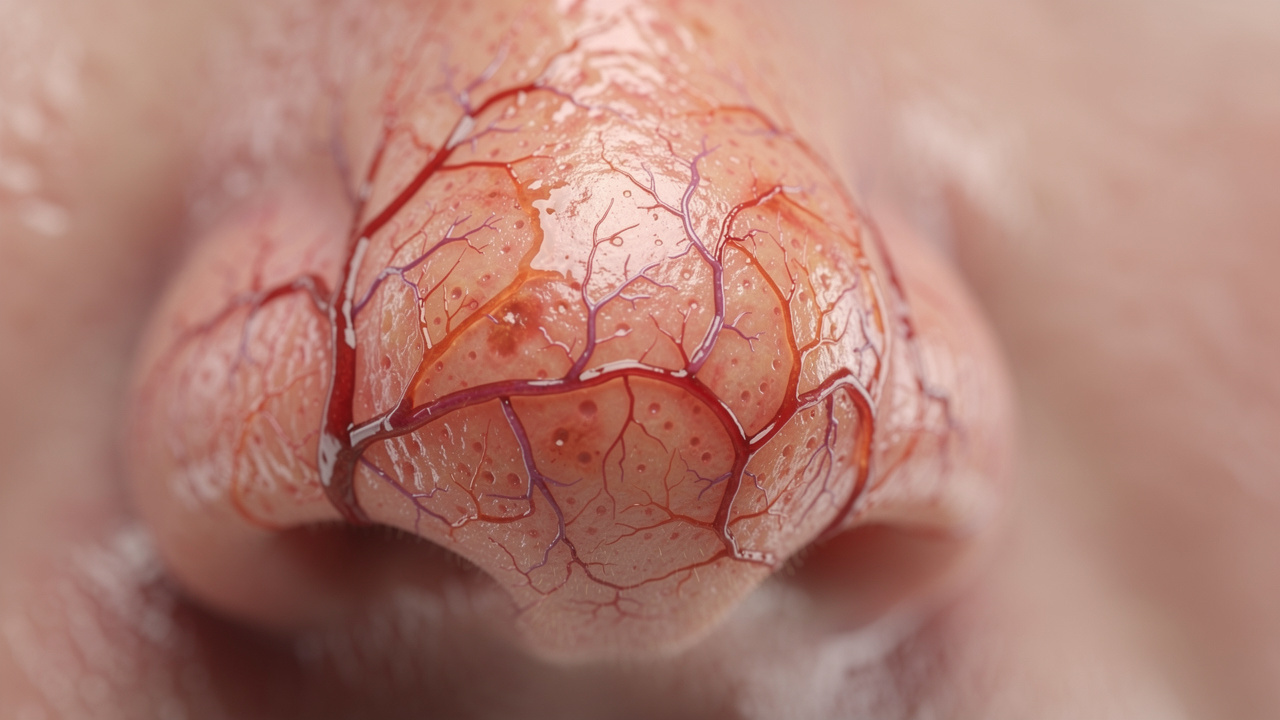
Most “melatonin sprays” you’ll find on big marketplaces are oral or sublingual, not nasal. They’re sprayed into the mouth and absorbed through the oral mucosa.
A true melatonin nasal spray is different:
-
It’s designed for intranasal use.
-
The mist is absorbed through the nasal mucosa, a highly vascular surface.
-
This route bypasses the digestive tract and much of first-pass liver metabolism.
Why that matters:
-
Faster onset: Peak levels can be reached more quickly than with standard capsules that must dissolve and be absorbed in the gut.
-
Less variability: Gastric pH, food intake, and digestive issues have less influence.
-
Lower doses may suffice: In some cases, faster and more direct entry can allow effective results at lower melatonin amounts, reducing the risk of next-morning grogginess.
Products like melatonin nasal spray are intended for those who want a rapid, targeted pre-sleep signal, often on a tight schedule—think late-running founders, shift workers, or athletes competing across time zones.
When a melatonin nasal spray also includes theanine, you get a one-two combination: a timing cue for the circadian system plus a calming effect on a restless mind.
For best use, most clinicians recommend:
-
Angling the nozzle slightly outward, toward the outer wall of the nostril
-
Spraying gently while breathing normally (not sniffing hard)
-
Avoiding lying flat immediately afterward to reduce drip into the throat
Synergy: Melatonin Nasal Spray With Theanine (And Other Co-Factors)
Faster Sleep Onset
Melatonin reduces sleep latency—the time it takes to fall asleep—especially when your internal clock is delayed (late bedtimes, jet lag, shift work). Theanine, by calming brain activity and reducing perceived stress, makes it easier to stop ruminating when you hit the pillow.
Delivered as a melatonin nasal spray, these compounds can reach effective levels faster than standard sleep capsules, which need to survive digestion and first-pass metabolism before entering circulation.
More Stable, Restorative Sleep
Melatonin helps consolidate nighttime sleep and can reduce unwanted awakenings in some people. Theanine supports:
-
Less nighttime agitation
-
Smoother transitions between sleep stages
-
A calmer nervous system baseline
When combined—especially in blends that also include GABA (a primary inhibitory neurotransmitter)—many users report:
-
Fewer mid-night wake-ups
-
A more “complete” night of sleep
-
Better continuity, even when total time in bed is unchanged
Clearer Mornings And Cognitive Performance
One common complaint about higher-dose oral melatonin is morning grogginess. Theanine may counter some of that by supporting:
-
More balanced neurotransmitter activity
-
A smoother shift from sleep to wakefulness
-
Better mood upon waking
By keeping doses reasonable and relying on the speed of a melatonin nasal spray, many users can get the benefit of a strong night signal without feeling “hung over” the next day.
Stress, Mood, And Cell-Level Support
Some advanced formulas don’t stop at melatonin and theanine. You might also see:
-
GABA: Added to deepen relaxation and reinforce the calming effect.
-
Kanna (Sceletium tortuosum): A botanical with potential mood-supporting and stress-modulating properties, sometimes delivered as kanna nasal spray or in kanna nasal spray theanine blends.
-
Glutathione nasal spray: A major intracellular antioxidant that supports detox pathways, redox balance, and possibly long-term brain health.
For biohackers and longevity-focused users—especially those already exploring IV therapy clinics for NAD+ treatments—stacking melatonin nasal spray with theanine and glutathione is appealing because it targets both short-term sleep quality and long-term neuronal resilience.
Who Might Benefit Most From Melatonin Nasal Spray With Theanine?
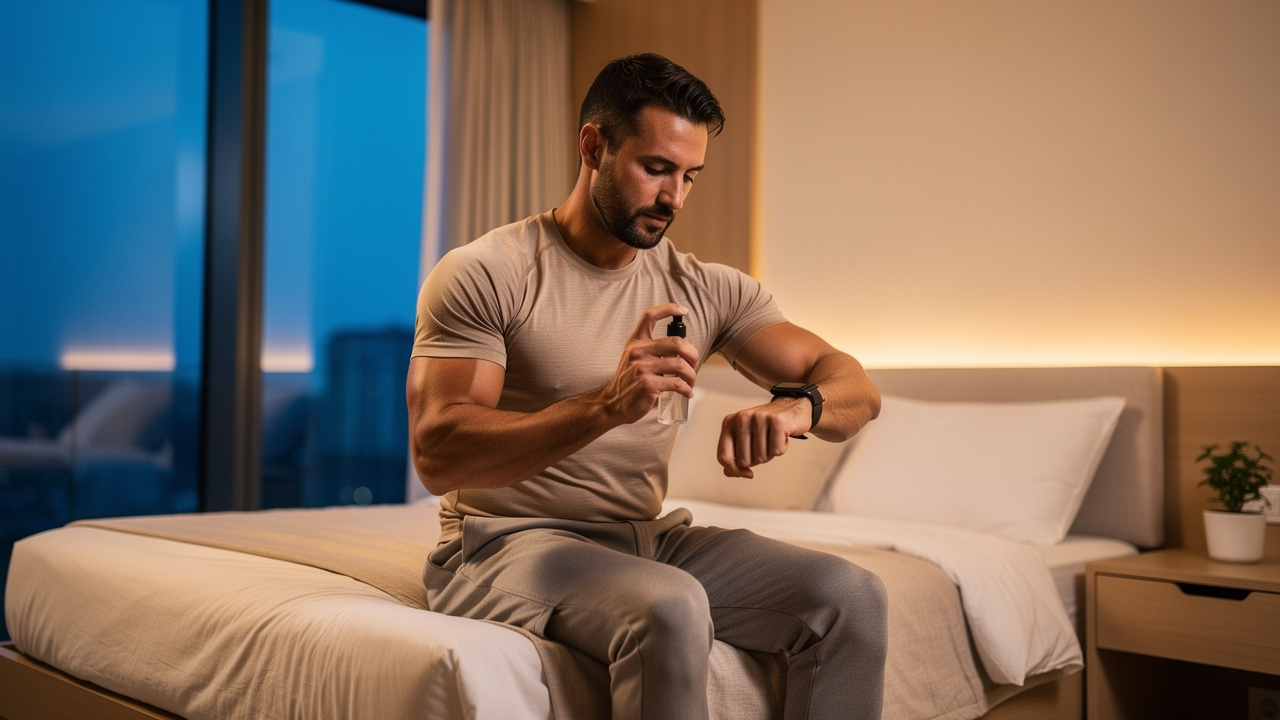
A targeted melatonin nasal spray with theanine and related compounds is not for everyone, but it can be especially helpful for specific groups.
High Performers And Busy Professionals
If your evenings are full of late meetings, blue light, and mental stimulation, but you still want high HRV and strong deep sleep:
-
Melatonin helps you shift into night mode on schedule.
-
Theanine helps dial down racing thoughts.
-
The nasal route speeds everything up when you don’t have time for a capsule to take effect.
Frequent Travelers And Shift Workers
Crossing time zones or rotating shifts repeatedly hammers circadian biology. A melatonin nasal spray can:
-
Support faster clock realignment
-
Be timed precisely relative to local bedtime
-
Pair with theanine to reduce travel-related anxiety and “wired but tired” states
For long-haul travelers, combining melatonin nasal spray with strict light exposure control (bright light after landing, darkness before bed) is a powerful circadian strategy.
Biohackers And Longevity Enthusiasts
If you already track sleep stages, glucose, and recovery metrics:
-
Nasal melatonin with theanine offers a higher-control input into your night signal.
-
Optional additions like glutathione nasal spray appeal if you’re focused on oxidative stress, brain aging, or ongoing NAD+ regimens.
These users tend to respond well to the fast feedback loop: change timing or dose, then watch Oura, WHOOP, or polysomnography trends over weeks.
Athletes And Hard-Training Individuals
Heavy training, late evening workouts, and competition stress can keep the sympathetic nervous system activated at night. A melatonin nasal spray combined with theanine, GABA, or kanna can help:
-
Downshift nervous system activity
-
Preserve deep sleep and growth hormone pulses
-
Improve recovery scores and subjective readiness
Older Adults
Melatonin production naturally declines with age, and older adults often experience:
-
More fragmented sleep
-
Earlier wake times
-
Difficulty falling back asleep
Properly dosed melatonin nasal spray with theanine can offer a gentler, more physiologic way to support sleep than stronger sedatives, though older users should always discuss it with a clinician first.
People Who Dislike Or Can’t Tolerate Pills
For those with swallowing issues, reflux, or GI sensitivities, oral sleep capsules may be uncomfortable or less effective. A melatonin nasal spray bypasses the gut entirely, offering a more convenient route without extra pill burden.
How To Use Melatonin Nasal Spray Safely And Effectively
Timing And Dosing Basics
-
Start low and go slow. Begin with the lowest effective dose recommended on your melatonin nasal spray product.
-
Use it 20–30 minutes before bed. This timing usually aligns well with melatonin’s signaling role and the fast absorption of the nasal route.
-
Be consistent. Especially if you’re correcting a delayed or erratic sleep schedule, consistent bedtime and spray timing matter as much as the supplement itself.
-
Avoid nightly overuse, as chronic administration of melatonin requires careful consideration of dosing patterns and individual response to maintain effectiveness and minimize potential side effects. Periodically reassess whether you still need it, rather than treating it as a permanent crutch.
If your product also contains theanine, GABA, or kanna, remember that these may have their own dose–response curves and can feel different from pure melatonin capsules.
Build A Sleep-First Environment
Even the best melatonin nasal spray cannot fully counteract poor sleep hygiene. To get the most from it:
-
Dim lights and cut blue light 60–90 minutes before bed.
-
Avoid heavy meals and intense workouts close to bedtime.
-
Add a wind-down routine: breathing, light stretching, or reading.
-
Keep your room cool, dark, and quiet.
If you’re already using tools like mouth taping, magnesium, or sound machines, a melatonin nasal spray with theanine can fit neatly into that stack.
As the National Sleep Foundation notes, “most adults need between seven and nine hours of sleep per night” to function at their best. A spray can help you get there, but it can’t replace the fundamentals of good sleep habits.
Smart Stacking With Other Therapies
If you also use:
-
Glutathione nasal spray
-
Sleep capsules
-
Herbal blends
-
IV NAD+ or other longevity protocols
speak with a healthcare professional who understands supplements and your medical history. Combining multiple sleep aids without oversight can increase the risk of:
-
Morning sedation
-
Drug–supplement interactions
-
Overcorrecting your natural melatonin rhythm
Safety, Side Effects, And Who Should Avoid It
For most healthy adults, low-dose melatonin and theanine have a solid safety profile, but they’re not side-effect free.
Possible issues with melatonin nasal spray and related products:
-
Drowsiness or grogginess, especially with higher doses or late use
-
Headache, mild dizziness, or nausea
-
Temporary nasal irritation or dryness
-
Vivid dreams in some users
Theanine is generally well tolerated but may cause:
-
Mild GI upset in sensitive people at higher doses
-
Restlessness or overstimulation in rare cases
Use extra caution and medical guidance if you:
-
Are pregnant, nursing, or trying to conceive
-
Take anticoagulants, antidepressants, immune-modulating drugs, or seizure medications
-
Have autoimmune, endocrine, or major psychiatric conditions
-
Are giving any form of melatonin or theanine to children or adolescents
When in doubt, review your plan with a clinician before starting a melatonin nasal spray or a theanine nasal spray, especially if it’s part of a larger supplement stack.
Melatonin Nasal Spray Vs Melanotan “Tanning” Sprays: Critical Differences
Because “melatonin” and “Melanotan” sound similar and both can appear in spray form, it’s easy for consumers to confuse them. They are not the same—and the difference matters.
What Melanotan Is (And Why It’s Dangerous)
Melanotan II is a synthetic analog of alpha-melanocyte-stimulating hormone (α-MSH). It’s designed to:
-
Stimulate melanocytes (pigment-producing cells)
-
Increase melanin production
-
Darken the skin, mimicking a tan without sun exposure
It’s sold illicitly as:
-
Injections (“tanning jabs”)
-
Melanotan nasal sprays
Key points:
-
Melanotan products are unlicensed medicines.
-
In many countries, including the UK, it is illegal to sell or supply them.
-
They have not undergone proper safety, quality, or effectiveness testing.
Reported concerns include:
-
Unknown ingredients and contamination
-
Unpredictable dosing and purity
-
Adverse effects such as nausea, flushing, and changes in moles or pigmented lesions
Most concerning, case reports have linked Melanotan II to malignant melanoma, including:
-
A 22-year-old woman who developed a rare oral mucosal melanoma after using a Melanotan II nasal spray, with pigmented oral lesions appearing soon after starting the product.
-
Additional cases of skin melanoma and changes in moles in users of Melanotan injections.
Health organizations advise stopping Melanotan immediately and consulting a doctor if you’ve used it, especially if you notice new or changing skin lesions.
How Melatonin Nasal Spray Differs
By contrast, melatonin is:
-
A naturally occurring hormone involved in sleep–wake timing
-
Sold in the US as an over-the-counter dietary supplement
-
Intended for sleep support, not cosmetic tanning
A legitimate melatonin nasal spray like melatonin nasal spray contains melatonin (often with theanine or similar compounds) and is formulated to support sleep onset and circadian alignment—not skin pigmentation.
They share only:
-
A vaguely similar name
-
Sometimes, a spray format
They do not share mechanisms, purposes, or risk profiles.
Safer Alternatives For Tanning
If you want a tan, avoid both UV overexposure and Melanotan. Safer options include:
-
Sunless tanning creams and sprays containing dihydroxyacetone (DHA), which react with dead skin cells in the outer layer to temporarily darken the skin.
-
Professional spray tans using the same ingredient.
Regulators have reviewed DHA-based cosmetic products and, when used as directed, consider them acceptable from a safety standpoint. Regardless of how you achieve a tan, remember:
-
A tan does not equal UV protection.
-
You still need shade, protective clothing, and broad-spectrum sunscreen (SPF 30+).
Use melatonin nasal spray solely for sleep-related purposes, and never as a tanning agent.
How Melatonin Nasal Spray Compares With Other Sleep Options
Here’s how a melatonin nasal spray with theanine stacks up against other common approaches:
|
Sleep Option |
Onset Speed |
Main Target |
Pros |
Cons |
|---|---|---|---|---|
|
Oral melatonin capsules/tablets |
Moderate–slow |
Circadian timing |
Widely available, inexpensive |
Slower absorption, variable GI effects |
|
Oral melatonin sprays/sublinguals |
Moderate |
Circadian timing |
Faster than capsules, flexible dosing |
Still routed through oral mucosa and GI/liver in part |
|
Melatonin nasal spray with theanine |
Fast |
Timing + mental calm |
Rapid absorption, no pill, multi-pathway support |
Nasal irritation in some, requires correct technique |
|
Prescription hypnotics (e.g., “Z-drugs”) |
Fast |
Sedation |
Strong soporific effect |
Habit-forming potential, complex side-effect profile |
|
Herbal blends and sleep capsules |
Variable |
Relaxation, mild sedation |
Gentle, familiar ingredients |
Inconsistent potency, slower onset |
|
Glutathione nasal spray alone |
N/A (not a sedative) |
Antioxidant and detox support |
Cell and brain support |
Not designed to induce sleep directly |
For many people, a melatonin nasal spray with theanine offers a middle ground:
-
More targeted and rapid than standard capsules
-
Gentler and less dependency-prone than prescription hypnotics
-
Easier to fine-tune within a broader performance and longevity protocol
What Users And Early Research Are Showing
Formal long-term trials specifically on melatonin nasal spray with theanine are limited, but several lines of evidence and user experience are encouraging:
-
Oral melatonin has a strong track record for shortening sleep latency and helping with jet lag and shift work.
-
Theanine has been studied for its calming effects and appears to support sleep quality, especially in people with high stress or anxiety.
-
Intranasal delivery has been well studied for other compounds and consistently shows faster absorption and higher bioavailability compared with oral routes.
Users of melatonin nasal spray blends that include theanine, GABA, or kanna often report:
-
Falling asleep more quickly than with previous sleep capsules
-
Easier “shut-off” of repetitive or anxious thoughts
-
Greater convenience compared with swallowing pills
-
Less morning grogginess when dosing is kept modest
Some also compare these experiences to glutathione nasal spray they’ve used for antioxidant support, noting that while glutathione feels more like a daytime or long-term health tool, melatonin–theanine sprays feel more directly sleep-focused.
Individual responses vary, and not everyone experiences dramatic changes. But for many who track metrics, the combination seems to move the needle on:
-
Sleep onset time
-
Nighttime wake-ups
-
Subjective restfulness and cognition the next day
Is Melatonin Nasal Spray With Theanine Right For You?
If you’re:
-
A biohacker dialing in circadian rhythm and recovery
-
A busy professional who needs sleep on a tight schedule
-
An athlete or frequent traveler managing irregular bedtimes
-
Or simply someone who wants a fast, targeted sleep cue without heavy sedatives
then a melatonin nasal spray that includes theanine—and potentially GABA, kanna, or glutathione—may be worth considering.
Before you add melatonin nasal spray to your routine:
-
Fix the basics: Light, timing, caffeine, alcohol, and stress hygiene still matter more than any supplement.
-
Clarify your goal: Faster sleep onset? Fewer awakenings? Better jet lag control? Choose a product and timing strategy that matches the outcome you care about.
-
Check your stack: If you already take sleep capsules, prescription meds, or use NAD+ and other advanced therapies, align everything with guidance from a clinician.
-
Avoid look-alikes: Never confuse sleep-focused melatonin products with illegal Melanotan tanning sprays or injections.
Used thoughtfully, a melatonin nasal spray with theanine can be a precise tool in a performance- and longevity-oriented sleep strategy, helping you fall asleep faster, sleep more consistently, and wake ready to use your day.


Leave a comment
All comments are moderated before being published.
This site is protected by hCaptcha and the hCaptcha Privacy Policy and Terms of Service apply.