
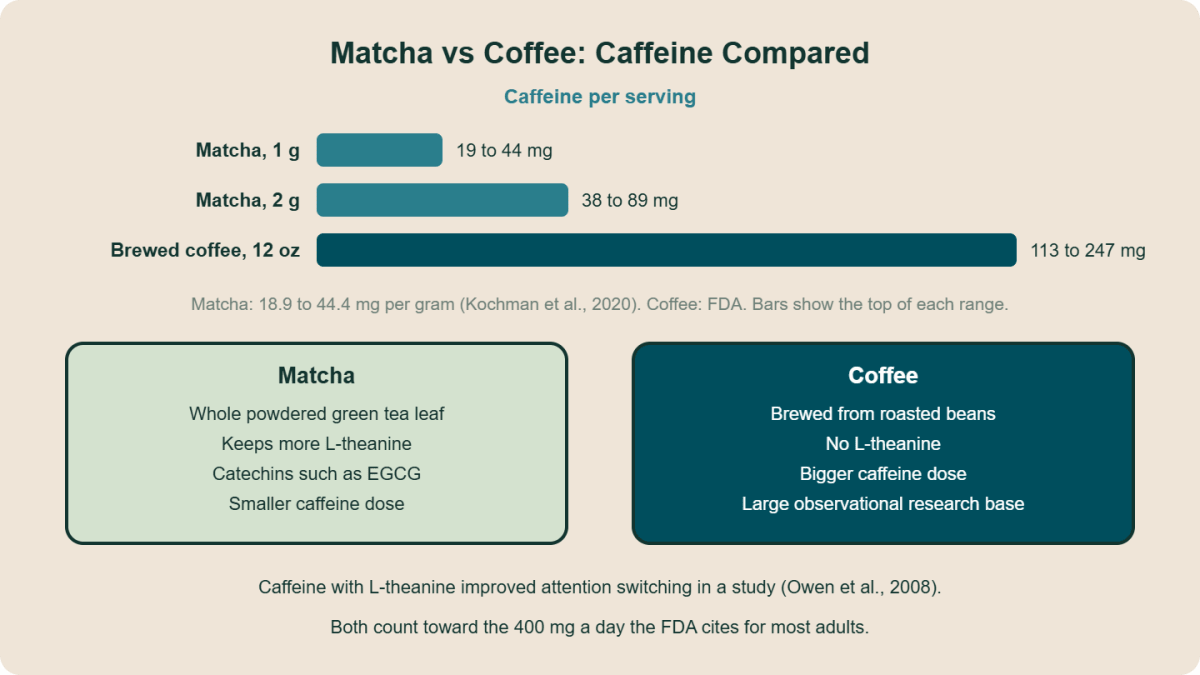
Matcha usually has less caffeine per cup than coffee, and it brings L-theanine along with it. Matcha powder holds about 18.9 to 44.4 mg of caffeine per gram (Kochman et al., 2020), so a 1 to 2 gram serving works out to roughly 19 to 89 mg. A 12-ounce cup of regular brewed coffee holds 113 to 247 mg (FDA). Which is better depends on how much caffeine you want, how you react to it and what you like to drink. This guide compares caffeine, effects and research, and how to choose.
It is educational, not medical advice.
Key Takeaways
- Caffeine in matcha: 18.9 to 44.4 mg per gram of powder (Kochman et al., 2020), about 19 to 44 mg in a 1 gram serving.
- Caffeine in coffee: 113 to 247 mg in 12 ounces of brewed coffee (FDA).
- The theanine factor: shade growing helps matcha keep more theanine, an amino acid that has been studied alongside caffeine (Kochman et al., 2020).
- Pairing research: caffeine with L-theanine improved speed and accuracy on an attention switching task in a placebo-controlled study (Owen et al., 2008).
- Both count: the FDA cites 400 mg of caffeine a day as an amount not generally linked to negative effects for most adults (FDA).

Featured in this article
Theanine Nasal Spray36 mg of L-theanine per serving, caffeine-free, to pair with your coffee or tea.
Shop Theanine Nasal SprayThird-party tested ingredients. Vegan, non-GMO, made in the USA.

Matcha vs Coffee at a Glance
| Matcha | Brewed coffee | |
|---|---|---|
| What it is | Powdered whole green tea leaves, whisked into water or milk | Hot water run through ground roasted coffee beans |
| Caffeine | About 19 to 44 mg per gram of powder | 113 to 247 mg per 12 oz |
| L-theanine | Yes, kept higher by shade growing | No |
| Other compounds | Catechins such as EGCG, chlorophyll | Varies by bean and roast |
| Flavor | Grassy, savory, slightly sweet | Roasted, bitter, acidic |
Caffeine figures for matcha come from a 2020 review (Kochman et al., 2020); coffee figures are the FDA's typical range for 12 ounces (FDA).
How Much Caffeine Is in Matcha?
Matcha is made from shade-grown tea leaves that are stone ground into powder. Because you drink the whole leaf rather than an infusion, you take in everything in the powder. A review of matcha's composition reported 18.9 to 44.4 mg of caffeine per gram of matcha, compared with 11.3 to 24.67 mg per gram in other green teas and 10.0 to 12.0 mg per gram in most coffee beans (Kochman et al., 2020).
| Matcha used | Approximate caffeine |
|---|---|
| 0.5 g (a small scoop) | 9 to 22 mg |
| 1 g (about half a teaspoon) | 19 to 44 mg |
| 2 g (about one teaspoon) | 38 to 89 mg |
| 4 g (a double latte) | 76 to 178 mg |
These amounts are calculated from the per gram range above. The real number depends on the grade, the harvest and how much powder you scoop. Lab tests of 15 green teas found matcha generally had more caffeine than bagged and gunpowder teas (Meyer et al., 2023).
How Much Caffeine Is in Coffee?
Regular brewed coffee holds 113 to 247 mg per 12 ounces (FDA). Espresso is more concentrated: USDA data list 212 mg of caffeine per 100 grams of espresso (USDA FoodData Central), or roughly 64 mg in a 1 ounce shot. So one teaspoon of matcha can land close to a shot of espresso, while a large mug of drip coffee usually carries more.
Why Matcha Can Feel Different
Matcha's shade growing keeps theanine from breaking down, which is part of its savory taste (Kochman et al., 2020). Studies have tested L-theanine and caffeine together. In one, 50 mg of caffeine with 100 mg of L-theanine improved speed and accuracy on an attention switching task and reduced distraction in a memory task (Owen et al., 2008). In another, 97 mg of L-theanine with 40 mg of caffeine improved task switching accuracy and self-reported alertness and reduced tiredness (Giesbrecht et al., 2010).
Those studies used set doses, not cups of matcha, so they show what the pairing can do rather than what every latte will do. Matcha also tends to be sipped more slowly, and smaller servings mean less caffeine at once. Our guide to L-theanine and caffeine covers ratios and timing.
What Research Shows for Each
Coffee has a large body of observational research. An umbrella review of more than 200 meta-analyses found coffee was more often linked with benefit than harm, with the largest reductions in risk at three to four cups a day, including a 17% lower risk of death from any cause compared with none (Poole et al., 2017). Observational studies show links, not cause and effect.
Matcha research focuses mostly on what is in the powder: catechins such as EGCG, theanine, caffeine and chlorophyll (Kochman et al., 2020). Among matcha samples, less expensive culinary grades had more total phenolics and higher antioxidant capacity than ceremonial grades in lab tests (Meyer et al., 2023). Read more about green tea's catechins in green tea extract and EGCG.
Yerba mate is another caffeinated alternative; see yerba mate vs coffee for how its caffeine compares.
Which Should You Choose?
- Choose matcha: if you want a smaller, steadier amount of caffeine and you like the taste of green tea.
- Choose coffee: if you want a bigger lift or you enjoy espresso drinks. Keep an eye on your daily total with our guide to how much caffeine is too much.
- Mix them: a coffee in the morning and a matcha in the early afternoon can keep your total lower than two coffees.
- Watch timing: for both drinks, an early afternoon cutoff protects sleep. See how long caffeine lasts.
If coffee leaves you with an afternoon slump, our guide to the caffeine crash and our list of coffee alternatives may help you plan your day.
Where Our Products Fit
Theanine Nasal Spray gives 36 mg of L-theanine per serving and is caffeine-free, so coffee drinkers can pair it with their usual cup without adding caffeine. The Energy Stack combines NAD+ Nasal Spray, Forage and Methyl B-12 Nasal Spray in one daily energy routine. Read more on our L-theanine ingredient page and the Non-Stimulant Energy and Focus hub. If you want a warm drink with less caffeine than coffee, our Mushroom Cacao is a mushroom hot chocolate with 500 mg each of lion's mane and cordyceps per serving.

Featured in this article
Energy StackNAD+ Nasal Spray, Forage and Methyl B-12 Nasal Spray together in one daily energy routine.
Shop Energy StackThird-party tested ingredients.
Frequently Asked Questions
Does matcha have more caffeine than coffee?
Not per cup, in most cases. A 1 gram serving of matcha has roughly 19 to 44 mg (Kochman et al., 2020), while 12 ounces of brewed coffee has 113 to 247 mg (FDA).
Is matcha healthier than coffee?
They are different. Coffee has more observational research linking it with benefit than harm (Poole et al., 2017), while matcha research mostly measures its catechins, theanine and caffeine (Kochman et al., 2020).
Can matcha replace coffee?
For many people, yes, especially those who want less caffeine. Two teaspoons of matcha can come close to a regular coffee, so adjust the amount to suit you.
Does matcha give you jitters?
It can if you use a lot. A 4 gram double serving can hold 76 to 178 mg of caffeine, calculated from the per gram range (Kochman et al., 2020).
How much matcha is safe a day?
There is no separate limit for matcha. Count its caffeine toward the 400 mg a day the FDA cites for most adults (FDA).
Is matcha or coffee better before a workout or a big task?
Coffee gives more caffeine per cup. Matcha gives less caffeine with theanine, and the caffeine and L-theanine pairing improved attention switching in studies (Owen et al., 2008).
Can I drink matcha in the evening?
It still contains caffeine, so the same timing rules apply as for coffee. Most people do best with an early afternoon cutoff.
Matcha vs espresso: which is stronger?
A 1 ounce espresso shot has roughly 64 mg of caffeine based on USDA data (USDA FoodData Central), similar to the top of the range for a 1.5 gram serving of matcha.
Sources
- Kochman J, Jakubczyk K, Antoniewicz J, Mruk H, Janda K. Health benefits and chemical composition of matcha green tea: a review. Molecules. 2020. PubMed 33375458
- U.S. Food and Drug Administration. Spilling the Beans: How Much Caffeine Is Too Much? FDA
- Owen GN, Parnell H, De Bruin EA, Rycroft JA. The combined effects of L-theanine and caffeine on cognitive performance and mood. Nutr Neurosci. 2008. PubMed 18681988
- Giesbrecht T, Rycroft JA, Rowson MJ, De Bruin EA. The combination of L-theanine and caffeine improves cognitive performance and increases subjective alertness. Nutr Neurosci. 2010. PubMed 21040626
- Meyer BR, White HM, McCormack JD, Niemeyer ED. Catechin composition, phenolic content, and antioxidant properties of commercially-available bagged, gunpowder, and matcha green teas. Plant Foods Hum Nutr. 2023. PubMed 37923855
- Poole R, Kennedy OJ, Roderick P, et al. Coffee consumption and health: umbrella review of meta-analyses of multiple health outcomes. BMJ. 2017. PubMed 29167102
- U.S. Department of Agriculture. FoodData Central: Beverages, coffee, brewed, espresso, restaurant-prepared (FDC 171891). FoodData Central
Our products are not intended to diagnose, treat, cure or prevent any disease. This article is for education only and is not medical advice.


Leave a comment
All comments are moderated before being published.
This site is protected by hCaptcha and the hCaptcha Privacy Policy and Terms of Service apply.