

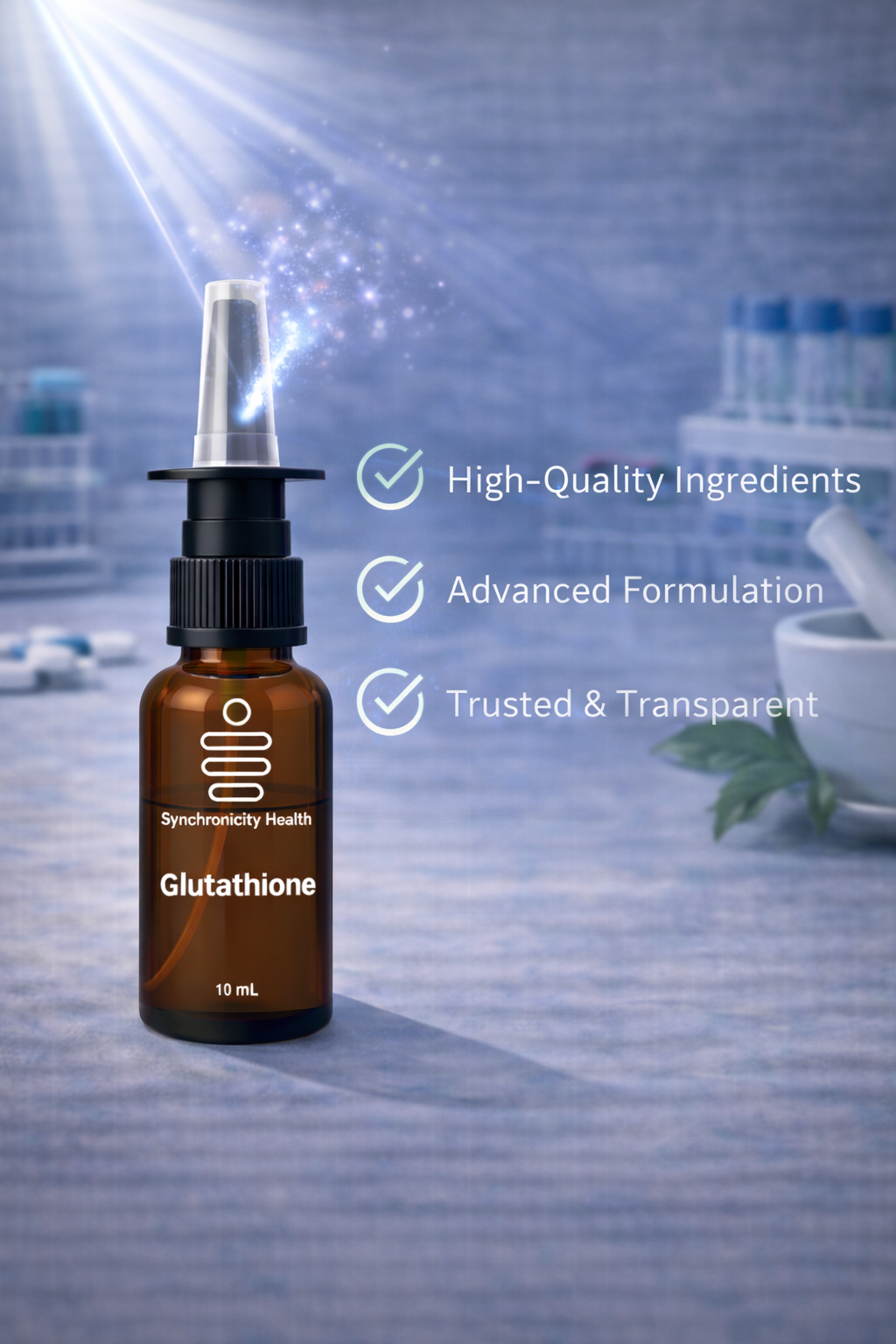
Many performance-focused people are looking beyond basic multivitamins and protein powders toward targeted tools that support brain function, energy, recovery, and long-term health. One option gaining attention in this space is GSH Nasal Spray, an intranasal form of glutathione offered by Synchronicity Health and backed by a Yale MD.
Glutathione is often called the body’s “master antioxidant.” A thoughtfully formulated GSH Nasal Spray aims to deliver this critical molecule directly through the nasal passages, where it may reach the brain and upper respiratory tract more efficiently than traditional oral supplements.
This article breaks down what glutathione does, why the intranasal route is compelling, what current research shows, and how Synchronicity Health’s GSH Nasal Spray may fit into a science-informed wellness strategy for high performers, athletes, and longevity-focused individuals. It is written for people who want clear, research-grounded information before deciding whether to experiment with intranasal glutathione.
What Is Glutathione And Why It Matters

Glutathione (often abbreviated GSH) is a small protein-like molecule made from three amino acids: cysteine, glutamate, and glycine. Your cells produce it continuously, and it exists in two forms:
-
Reduced glutathione (GSH): The active, antioxidant form
-
Oxidized glutathione (GSSG): The form created after GSH neutralizes free radicals
The ratio of GSH to GSSG inside cells is a key marker of oxidative stress. A higher ratio indicates a more resilient cellular environment, while a lower ratio suggests that free-radical damage and inflammation are gaining ground.
“Glutathione is the most important molecule you need to stay healthy.” — Mark Hyman, MD
That quote sums up why so many researchers pay attention to this molecule: it sits at the crossroads of antioxidant defense, detox capacity, and cell signaling.
Key Functions Of Glutathione
Glutathione is involved in several core processes that matter to anyone focused on performance, longevity, or recovery:
-
Antioxidant defense: Neutralizes reactive oxygen species (ROS) and supports enzymes such as glutathione peroxidase, protecting membranes, proteins, and DNA.
-
Detox support: Binds to many toxins, pollutants, and metabolites, making them easier to excrete through bile or urine.
-
Immune regulation: Supports the function and proliferation of lymphocytes and helps maintain balanced immune responses.
-
Mitochondrial health: Helps preserve mitochondrial structure and function, which is closely tied to energy production and fatigue resistance.
-
Cellular signaling: Participates in pathways related to cell growth, inflammation, and programmed cell death (apoptosis).
What Happens When Glutathione Is Low
Research links reduced glutathione levels to:
-
Age-related increases in oxidative stress
-
Chronic inflammatory and respiratory conditions
-
Neurodegenerative diseases such as Parkinson’s and Alzheimer’s
-
Greater vulnerability to environmental toxins
Glutathione tends to decline with age and may be further depleted by poor sleep, high training load, chronic stress, alcohol intake, environmental exposures, and certain medications. This is one reason many health-conscious individuals look for ways to support or restore glutathione status.
Why Consider A GSH Nasal Spray Instead Of Other Forms
Glutathione can be taken orally, intravenously, or via other routes. Each has trade-offs.
Limitations Of Oral And IV Glutathione
-
Oral glutathione: Traditional capsules or powders have low and inconsistent bioavailability. Much of the compound can be broken down in the digestive tract before it reaches systemic circulation.
-
IV glutathione: Intravenous administration can raise blood levels but:
-
Requires clinical visits or skilled administration
-
Is more time-consuming and expensive
-
Is not practical for daily or long-term use for most people
-
These limitations have led many clinicians and researchers to explore an alternative: intranasal glutathione delivered as a GSH Nasal Spray and NAD+ Nasal Spray.
To summarize how the main delivery routes compare:
|
Route |
Main Advantages |
Main Limitations |
|---|---|---|
|
Oral glutathione |
Widely available; simple to take |
Variable absorption; breakdown in the gut |
|
IV glutathione |
Direct access to bloodstream; higher short-term levels |
Requires appointments; higher cost; less convenient for routine use |
|
Intranasal glutathione (GSH Nasal Spray) |
Self-administered; may reach brain and airways more directly |
Research is still developing; needs high product quality |
How A GSH Nasal Spray Is Different

With a GSH Nasal Spray, glutathione is delivered directly to the nasal mucosa, leveraging advances in inhaled nanoparticle delivery technology to optimize absorption. This route offers two primary avenues for absorption:
-
Nose-to-brain pathways
-
Glutathione can access the central nervous system via the olfactory and trigeminal nerves.
-
It may also diffuse across the olfactory epithelium and plate.
-
Because glutathione is a small (about 307 Da), water-soluble molecule, it fits within the size range shown to cross these pathways without added absorption enhancers.
-
-
Systemic absorption through nasal blood vessels
-
The nasal passages are highly vascular.
-
Glutathione can enter systemic circulation, where it may then reach tissues throughout the body.
-
Together, these routes mean a GSH Nasal Spray may:
-
Bypass much of the breakdown that occurs in the gut and liver
-
Reach the brain and upper respiratory tract more directly
-
Offer a non-invasive, self-administered alternative to IV therapy
Potential Benefits Of GSH Nasal Spray For High Performers
Evidence for intranasal glutathione is still emerging. Existing data include small clinical trials, imaging studies, and real-world patient surveys. While more rigorous research is needed, several potential benefit areas are of interest to health-focused users.
Brain Health And Cognitive Performance
For busy professionals, biohackers, and older adults, brain resilience is a top priority. Intranasal glutathione and NAD+ has been explored mainly in the context of Parkinson’s disease, where brain glutathione depletion appears early in the disease process.
Key points from current research:
-
A magnetic resonance spectroscopy (1H-MRS) study in Parkinson’s patients found that a single intranasal glutathione dose increased brain glutathione levels between 20 and 45 minutes after administration.
-
Two small randomized, placebo-controlled trials using daily doses of 300–600 mg intranasal GSH over three months did not show clear superiority over placebo on standard Parkinson’s rating scales. All groups, including placebo, improved, likely reflecting a strong placebo effect and underpowered study design.
-
These trials suggest that intranasal glutathione can be delivered safely but leave open questions about optimal dosing, duration, and clinical impact.
For healthy users, this research does not prove performance improvement, but it supports the idea that a GSH Nasal Spray may reach the brain and influence glutathione status there. People interested in cognitive support, focus, and long-term brain health often find this mechanism appealing, especially when combined with:
-
Consistent, high-quality sleep
-
Nutrient-dense food patterns
-
Regular exercise and cognitive training
Energy, Recovery, And Fatigue

In a safety survey of patients prescribed intranasal glutathione, 24.2% of respondents reported improved energy, and nearly 29% noted a better overall sense of well-being. While this was not a controlled clinical trial, it aligns with glutathione’s role in:
-
Supporting mitochondrial function and ATP production
-
Countering oxidative stress from heavy training or long work hours
-
Assisting detox pathways that may influence subjective fatigue
For athletes and active individuals, a GSH Nasal Spray is often considered as one component of a broader recovery stack that includes nutrition, hydration, and calibrated training loads.
Respiratory And Sinus Support
The intranasal route places glutathione in direct contact with the nasal passages and sinuses. In patient surveys, intranasal glutathione was most commonly prescribed for:
-
Multiple chemical sensitivity (MCS) – 42%
-
Allergies and chronic sinusitis – 36.2%
Reported benefits included:
-
Fewer sinus infections (27.3%)
-
Reduced headache frequency (15.2%)
-
Improved sense of smell (12.1%)
While these results are self-reported and not placebo-controlled, they fit with known biology:
-
Chronic sinus and airway conditions are associated with oxidative stress and reduced local glutathione levels.
-
Replenishing glutathione locally with a GSH Nasal Spray may help support mucosal defenses and inflammatory balance.
Detox Support And Immune Balance
Because glutathione helps process many environmental toxins and supports balanced immune responses—with research demonstrating the anticancer, antioxidant, and anti-inflammatory properties of glutathione—some clinicians use GSH Nasal Spray as part of protocols for:
-
MCS and environmental sensitivity
-
Lyme disease and post-infectious syndromes (reported by a smaller subset of survey participants)
-
General immune and detox support during high exposure periods
Again, formal trials are limited, so these uses are based on mechanism, clinical experience, and patient feedback rather than definitive outcome data. For health enthusiasts, this makes a GSH Nasal Spray an intriguing option, but one that should be integrated thoughtfully and under professional guidance when dealing with complex conditions.
Longevity, Aging, And Sleep

Oxidative stress and declining glutathione levels are closely tied to aging. Lower GSH has been observed in brain regions affected by Alzheimer’s disease and in older adults with greater amyloid plaque burden.
Although intranasal glutathione has not yet been tested directly in Alzheimer’s patients:
-
Lower brain glutathione appears to correlate with markers of neurodegeneration.
-
Some researchers hypothesize that raising glutathione could help preserve brain function with age.
Glutathione also interacts with cellular redox signaling that influences circadian rhythms and sleep quality. While human data are sparse, some people experimenting with GSH Nasal Spray as part of an evening wind-down or circadian-support routine report calmer sleep and better recovery, particularly when combined with light management, temperature control, and consistent sleep timing.
What The Science Says About Intranasal Glutathione
A balanced view of GSH Nasal Spray requires looking at both its promise and its current limits.
Pharmacokinetics And Brain Delivery
-
Imaging data show that intranasal reduced glutathione can raise brain glutathione levels within roughly 20–45 minutes in some individuals.
-
There is large variability between people in baseline levels and magnitude of response.
-
It remains unclear:
-
How long the increase in brain glutathione is sustained
-
Which brain regions receive the highest exposure
-
What dosing schedule best maintains elevated levels
-
More detailed pharmacokinetic work is needed to answer these questions.
Neurodegenerative Disease Research
Parkinson’s disease (PD):
-
Both a Phase 1/2a and Phase 2b trial used 300 mg/day and 600 mg/day doses of intranasal glutathione over three months.
-
Neither trial showed clear clinical benefit over placebo on the Unified Parkinson’s Disease Rating Scale (UPDRS).
-
One trial observed a steeper cognitive decline on the Montreal Cognitive Assessment (MoCA) in treated groups one month after stopping therapy, a finding that requires further investigation.
-
Researchers suspect that:
-
The studies were underpowered
-
Doses and schedules may not have been adequate to reach disease-relevant brain regions consistently
-
Alzheimer’s disease (AD):
-
No clinical trials of intranasal glutathione in AD have been completed.
-
Postmortem and imaging studies show:
-
Lower glutathione in brain areas affected by AD and mild cognitive impairment
-
Higher oxidative stress and lower glutathione in some APOE4 carriers, who are at elevated genetic risk
-
-
Whether raising brain glutathione with a GSH Nasal Spray could slow cognitive decline remains an open question.
Patient-Reported Outcomes
A survey of 66 users of intranasal glutathione found:
-
78.8% reported an overall positive experience.
-
62.1% felt they received specific health benefits from the therapy.
-
Over 86% said the nasal spray was comfortable and easy to administer.
These results support the practicality and user acceptance of a GSH Nasal Spray, but they do not substitute for controlled trials.
Safety Profile And Side Effects Of GSH Nasal Spray
Overall, intranasal glutathione has been well tolerated in clinical trials lasting up to three months and in long-term outpatient use surveyed over a median of two years.
Commonly Reported Side Effects
In the safety survey:
-
Only 12.1% of respondents reported any adverse effects.
-
Most issues were local to the nasal passages:
-
Sinus or nasal irritation: 18.2%
-
Headaches: 9.1%
-
Occasional nosebleeds: 7.6%
-
-
People with Multiple Chemical Sensitivity (MCS) were about twice as likely to report side effects compared with those using it for other conditions.
In Parkinson’s trials:
-
Sinus irritation occurred at similar rates in both the glutathione and placebo (saline) groups, suggesting that some irritation may relate to the act of spraying rather than glutathione itself.
-
Lab testing, including blood counts, liver enzymes, and kidney function markers, did not show consistent abnormalities attributable to treatment.
A Rare Serious Event And Dose Considerations
One serious event was reported in a Phase 2b Parkinson’s trial:
-
A patient receiving 600 mg/day intranasal glutathione developed cardiomyopathy and tachycardia.
-
Symptoms resolved after stopping treatment.
-
Investigators proposed that very high antioxidant levels, especially when combined with other strong antioxidants, might cause “reductive stress” in heart cells.
This highlights the importance of:
-
Avoiding self-escalation to very high doses
-
Discussing a GSH Nasal Spray with a knowledgeable clinician, particularly if you use other antioxidant-heavy protocols or have cardiovascular risk factors
As with any supplement, individual responses vary. Anyone experiencing persistent nasal irritation, headaches, palpitations, or other concerning symptoms should discontinue use and seek medical advice.
Dosing, Quality, And Practical Use
What Has Been Used In Studies
In Parkinson’s trials, intranasal glutathione was compounded by specialized pharmacies and delivered with a mucosal atomization device, at:
-
100 mg or 200 mg per dose
-
Three times daily
-
For total daily intakes of 300 mg or 600 mg
These doses were safe for most participants but did not yield clear clinical benefits in those short-term studies. The optimal dose, frequency, and duration for health-focused users remain undefined.
Why Product Quality Matters
Because intranasal glutathione is typically a compounded or specialty product, quality and stability are not guaranteed across all sources. Important considerations include:
-
Purity of raw glutathione
-
Protection of glutathione from oxidation (to keep it in the reduced, active GSH form)
-
Proven stability over the intended shelf life
-
Third-party testing for potency and contaminants
A GSH Nasal Spray that degrades quickly will not deliver the intended level of support.
Why Synchronicity Health’s GSH Nasal Spray Stands Out
Synchronicity Health’s GSH Nasal Spray is designed for discerning users who care about both science and quality control.
Key aspects of the Synchronicity Health approach include:
-
Medical oversight: The product line is backed by a Yale MD, with formulations informed by current research and clinical experience.
-
High potency and purity: The GSH Nasal Spray is crafted to deliver meaningful amounts of reduced glutathione in each spray.
-
Third-party testing: Batches are tested by independent laboratories to confirm identity, potency, and absence of common contaminants.
-
User-friendly format: The nasal spray format makes it straightforward to integrate into a morning or evening routine, and easy to travel with compared with IV infusions.
For health-focused professionals, athletes, and longevity enthusiasts looking for targeted redox and respiratory support, this combination of rigor and practicality is especially appealing.
How To Think About GSH Nasal Spray In Your Routine
If you are considering a GSH Nasal Spray as part of your wellness strategy, keep these guidelines in mind:
-
Work with a clinician
Especially if you have chronic illness, take multiple medications, or use other antioxidant therapies, collaborate with a healthcare professional familiar with intranasal glutathione. -
Start conservatively
Begin with a lower dosing frequency and monitor how you feel, including nasal comfort, sleep, energy, and performance. Do not assume that more is always better. -
Pair it with fundamentals
Glutathione support works best when stacked on top of:-
High-quality nutrition
-
Consistent sleep and circadian habits
-
Thoughtful training and recovery
-
Sensible alcohol and toxin exposure limits
-
-
Stay realistic
Current science supports the biological plausibility and safety of intranasal glutathione, but large, definitive trials are still lacking. A GSH Nasal Spray should be viewed as a promising tool, not a cure-all.
“Supplements work best when they support, not replace, the basics: sleep, food, movement, and stress management.” — Common guidance in integrative and functional medicine
Thinking about GSH Nasal Spray through that lens helps keep expectations grounded while still making space for experimentation.
Final Thoughts
Glutathione sits at the center of antioxidant defense, detox capacity, and cellular resilience. Delivering it intranasally through a GSH Nasal Spray offers a compelling way to reach both the brain and the upper respiratory tract while sidestepping many limitations of oral and IV forms.
The emerging evidence base—combined with real-world reports from users—suggests that intranasal glutathione may support brain health, energy, sinus function, and overall well-being in some individuals, with a generally favorable safety profile when used responsibly.
For those who want a research-informed, quality-controlled option, Synchronicity Health’s GSH Nasal Spray offers a thoughtfully designed product backed by medical expertise and third-party testing.
As with any advanced tool in your health stack, the most effective approach is informed, measured, and integrated into a broader foundation of sleep, nutrition, movement, and regular medical care.
These statements have not been evaluated by the Food and Drug Administration. This product is not intended to diagnose, treat, cure, or prevent any disease.


Leave a comment
All comments are moderated before being published.
This site is protected by hCaptcha and the hCaptcha Privacy Policy and Terms of Service apply.