
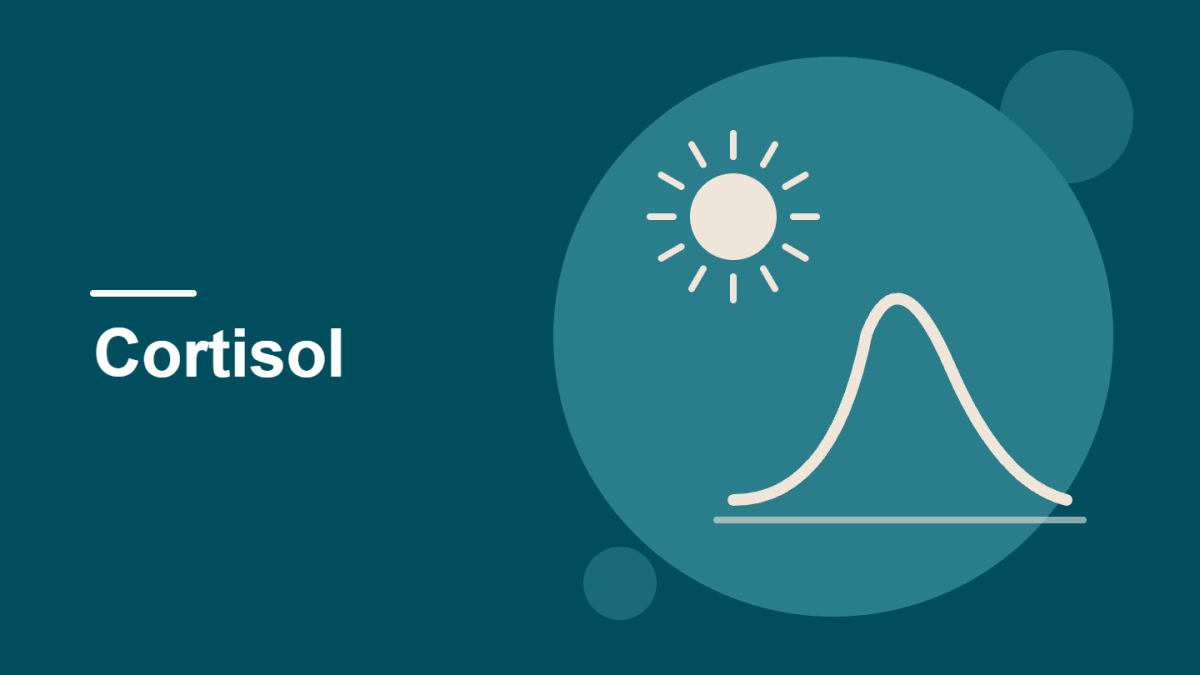
Cortisol is a steroid hormone made by your adrenal glands, which sit on top of your kidneys. It is often called the stress hormone, but stress is only one of its jobs: cortisol also helps control how your body uses energy, keeps blood sugar and blood pressure steady, calms inflammation in short bursts and sets your daily wake-up rhythm. Levels normally peak just before you wake and fall to their lowest in the evening. This guide explains what cortisol does, how your body controls it, what normal cortisol levels look like, and what happens when levels run too high or too low.
It is educational, not medical advice.
Key Takeaways
- Made by the adrenal glands, cortisol affects almost every organ and tissue in the body (Cleveland Clinic).
- More than a stress hormone: it helps regulate metabolism, blood sugar, blood pressure, inflammation and the sleep-wake cycle.
- Daily rhythm: cortisol is highest just before you wake and lowest in the evening.
- Normal morning level: 5 to 25 mcg/dL (138 to 690 nmol/L) for a blood sample taken at 8 a.m., though ranges vary slightly between labs (MedlinePlus).
- Too high or too low for a long time can cause problems that need a doctor; everyday stress raises cortisol only for a while.

Featured in this article
Theanine Nasal SprayL-theanine for calm, focus, and steady energy without sedation.
Shop Theanine Nasal SprayThird-party tested ingredients. Vegan, non-GMO, made in the USA.

What Is Cortisol?
Cortisol is a steroid hormone, one of a group called glucocorticoids. Your two adrenal glands, small glands on top of your kidneys, make it and release it into your blood. From there it reaches almost every organ and tissue in your body, which is why it affects so many things at once (Cleveland Clinic).
What Does Cortisol Do?
|
Role |
What cortisol does |
|---|---|
|
Stress response |
Keeps your body on alert after adrenaline and has the liver release sugar for quick energy |
|
Metabolism |
Helps control how your body uses glucose, fat and protein for energy |
|
Blood sugar |
Raises blood sugar so your brain and muscles have fuel |
|
Inflammation |
Limits inflammation in short bursts; consistently high levels can work the other way |
|
Blood pressure |
High cortisol can raise blood pressure and low cortisol can lower it |
|
Sleep-wake cycle |
Peaks just before waking and falls in the evening, part of your daily rhythm |
Cortisol also plays a part in bone growth, immune function and the nervous system (MedlinePlus). Cleveland Clinic notes that in short bursts cortisol limits inflammation and can support immunity, while consistently high levels may promote inflammation and weaken the immune system (Cleveland Clinic).
Is Cortisol a Stress Hormone?
Partly. Cortisol is central to how your body handles acute and long-term stress, but calling it "the stress hormone" describes only one of its roles (Cleveland Clinic). A short rise during a hard workout, an exam or a deadline is normal and helpful. Problems come when levels stay high for weeks or months, or when the daily rhythm is thrown off.
Cortisol's rise after waking is part of how your body starts the day; our morning routine checklist covers simple habits for the first hour.
How Your Body Controls Cortisol
Cortisol is controlled by a chain of three glands, often called the HPA axis:
- The hypothalamus in your brain senses when cortisol is low and releases corticotropin-releasing hormone (CRH).
- The pituitary gland responds to CRH by making adrenocorticotropic hormone (ACTH).
- The adrenal glands respond to ACTH by making and releasing cortisol.
Your body keeps checking the level and adjusts, so all three glands need to work properly for cortisol to stay in balance (Cleveland Clinic).
Normal Cortisol Levels
Because cortisol changes through the day, a "normal" level depends on when the sample is taken. For a blood sample taken at 8 in the morning, normal values are 5 to 25 mcg/dL, or 138 to 690 nmol/L, and ranges may vary slightly between labs (MedlinePlus). Evening and late-night levels are normally much lower. Your result should always be compared with the range printed on your own lab report for that time of day.
Cortisol can be measured in blood, urine and saliva, including with at-home saliva kits. Our guide to how to test cortisol levels explains each test and how to prepare.
High Cortisol
Ongoing stress and illness can keep cortisol higher than usual. Our guide to the signs of high cortisol covers what it can feel like and the physical signs doctors look for, and cortisol belly looks at the link with fat around the middle. Higher than normal test results can reflect stress or an acute illness, as well as medical conditions that a doctor diagnoses (MedlinePlus).
Low Cortisol
Low cortisol is less common. It can happen when the adrenal glands or the pituitary gland do not make enough, or when long-term steroid medicines suppress the body's own production (MedlinePlus). Symptoms can include long-lasting fatigue, muscle weakness, weight loss, dizziness on standing and darker skin (NIDDK). It always needs a doctor's assessment.
How to Keep Cortisol in a Healthy Range
For most people, the goal is a healthy daily rhythm rather than a lower number. Regular sleep, daily movement, steady meals and ways to manage stress all help. Our cortisol guides go deeper:
- How to lower cortisol naturally: sleep, exercise, food and daily habits.
- Cortisol triggering foods: what raises cortisol and what may help.
- Cortisol cocktail: what is in the popular drink and whether it works.
- Supplements to lower cortisol: what human trials show.
- Stress and aging: how long-term strain affects the body.
For calm on stressful days, our Theanine Nasal Spray provides 36 mg of L-theanine per two-spray serving. Our stress, mood and nervous system guide brings the topic together.
Cortisol's daily rhythm shifts earlier with age, one of the factors covered in our guide on why you wake up at 3am.
When to See a Doctor
Safety note: see a doctor if you have several signs of high cortisol together, such as weight gain around the middle and face, wide purple stretch marks, easy bruising and muscle weakness, or signs of low cortisol, such as long-lasting fatigue, weight loss, dizziness on standing and darkening skin. These can point to conditions such as Cushing's syndrome or Addison's disease. Never stop a steroid medicine suddenly without your doctor's advice. Get urgent care for severe weakness, confusion or fainting.
Featured in this article
Theanine Nasal SprayL-theanine for calm, focus, and steady energy without sedation.
Shop Theanine Nasal SprayThird-party tested ingredients. Vegan, non-GMO, made in the USA.
Sources
- Herman JP et al. Regulation of the hypothalamic-pituitary-adrenocortical stress response. Comprehensive Physiology, 2016. PubMed
- Chan S, Debono M. Replication of cortisol circadian rhythm: new advances in hydrocortisone replacement therapy. Therapeutic Advances in Endocrinology and Metabolism, 2010. PubMed
- Van Cauter E et al. Effects of gender and age on the levels and circadian rhythmicity of plasma cortisol. Journal of Clinical Endocrinology and Metabolism, 1996. PubMed
Frequently Asked Questions
What is cortisol in simple terms?
Cortisol is a hormone made by your adrenal glands that helps your body handle stress, use energy, keep blood sugar and blood pressure steady and wake up in the morning.
Is cortisol a hormone?
Yes. Cortisol is a steroid hormone, one of the glucocorticoids, made by the adrenal glands on top of the kidneys.
What is a normal cortisol level?
For a blood sample taken at 8 a.m., normal values are 5 to 25 mcg/dL (138 to 690 nmol/L). Ranges vary slightly by lab and are much lower in the evening, so compare your result with your lab's range.
What time of day is cortisol highest?
Just before you wake up. It then falls through the day and is lowest in the evening.
What causes high cortisol?
Ongoing stress and acute illness can raise it. Less often, a medical condition causes the body to make too much, which a doctor diagnoses with testing.
What does cortisol do to your body?
It keeps you alert under stress, releases sugar for energy, helps control metabolism and blood pressure, limits inflammation in short bursts and sets your daily rhythm.
How can I lower my cortisol naturally?
Protect your sleep, move every day, eat regular meals, keep caffeine to the morning and use stress tools such as slow breathing and time outdoors. Our guide to how to lower cortisol naturally covers each one.
How do I check my cortisol levels?
With a blood, urine or saliva test, ordered by a doctor or done with an at-home saliva kit. Results should be reviewed with a doctor.
These statements have not been evaluated by the Food and Drug Administration. This content is for education and is not medical advice. Our products are not intended to diagnose, treat, cure or prevent any disease. Talk with a healthcare provider before starting a new supplement if you are pregnant, breastfeeding or taking medication.


Leave a comment
All comments are moderated before being published.
This site is protected by hCaptcha and the hCaptcha Privacy Policy and Terms of Service apply.