
Introduction
Chronic stress is linked with faster biological aging in human research: people under long term strain tend to have shorter telomeres and older readings on epigenetic clocks, the DNA methylation tests that estimate biological age. Stress acts mostly on how genes are marked and used, rather than on the genetic code you inherited. When we talk about stress and aging, we are talking about a shift in biological time, not only a bad week at work.
Science now shows that the stress response reaches deep into the core of our cells. Hormones such as cortisol and adrenaline touch our DNA, our mitochondria, and the tiny caps at the ends of chromosomes called telomeres. Over time this ongoing hit to our biology leads to more broken DNA, weaker energy production, and shorter telomeres. That quiet engine behind stress and aging often runs in the background for high performers who look fine on the outside but feel depleted on the inside.
In this article we walk through how stress signals in the brain turn into real wear and tear inside cells. We cover four main pathways that connect stress and aging, how they feed chronic inflammation, and why that shows up as fatigue, brain fog, and slower recovery. Then we share a systems level strategy we use at Synchronicity Health, including NAD+ pathway support, antioxidants, and adaptogens, so that anyone serious about longevity can push their biology back in a better direction.
“It’s not stress that kills us; it is our reaction to it.”
- Hans Selye, pioneer of stress research
Key Takeaways
Here is the core story in simple form: stress chemistry does not stay in the mind. It shapes how fast cells age.
- Stress keeps alert circuits stuck on. The sympathetic nerves and HPA axis keep firing. That repeated surge links stress and aging tightly.
- Stress chemistry damages cell structures. These chemicals raise oxidative molecules that hit DNA and mitochondria. Damaged cells slide into senescence and act like slow embers. This process feeds inflammaging and keeps stress and aging locked together.
- Targeted support can slow the slide. NAD+ Nasal Spray support, antioxidants, and adaptogens support normal cellular repair and a calm stress response. At Synchronicity Health we stack these tools into Sync Stacks for people who want practical longevity support.

Featured in this article
NAD+ Nasal SpraySupports cellular energy, focus and healthy aging. A needle-free alternative to NAD+ IV.
Shop NAD+ Nasal SprayThird-party tested ingredients. Vegan, non-GMO, made in the USA.
For the everyday signs that stress is affecting your body, see our guide to the physical symptoms of stress.
How Chronic Stress Triggers Accelerated Biological Aging
To understand stress and aging, we need to see what happens when we feel pressure. The brain reads a threat, whether it is an angry email or a real emergency, and flips on the stress response. This response is helpful in short bursts because it keeps us alert and ready to act.
One arm of this system is the sympathetic nervous system, often called the fight-or-flight side of the nerves. It tells the adrenal glands and nerve endings to release norepinephrine and epinephrine, the chemicals that speed the heart, tense muscles, and raise blood sugar. When this surge happens once in a while, the body clears it and recovers. When it happens again and again, those same chemicals start to wear down cells and pull stress and aging closer together.
The other arm is the HPA axis (hypothalamic-pituitary-adrenal axis), a chain that runs from the brain down to the adrenal glands. The brain releases a signal to the pituitary gland, which then tells the adrenals to make cortisol. Short bursts of cortisol raise blood sugar, sharpen focus, and quiet some forms of inflammation. Long term high cortisol, which is common with constant deadlines and sleep loss, changes gene expression, disrupts circadian rhythm, and pushes stress and aging faster.
Over months and years this constant stress chemistry hits the core drivers of aging, often called the hallmarks of aging. These include:
- Unstable DNA and more frequent DNA breaks
- Shortened telomeres that limit how many times cells can divide
- Damaged mitochondria that make less ATP and more reactive oxygen species
- Cells stuck in senescence, alive but no longer dividing
Studies of caregivers, grieving spouses, and people under long academic pressure find higher stress markers along with shorter telomeres and older-looking immune cells. In plain terms the link between stress and aging is not just about mood; it shows up on lab tests and inside tissues as accelerated biological aging.
For how researchers measure this, see our guide to biological age, which explains epigenetic clocks and how accurate the tests are.
What Human Studies Show About Stress, Telomeres and Epigenetic Clocks
Most of what we know about stress and biological aging in people comes from studies that measure a stress score and an aging marker in the same group. These studies show associations, and the pattern has repeated across different groups and markers.
- Telomeres. In a 2004 study of 58 healthy mothers, 39 of them caring for a chronically ill child, the women with the highest perceived stress had telomeres shorter by the equivalent of at least a decade of extra aging compared with the women with the lowest stress. A 2016 meta-analysis of 22 studies with 8,948 people found the same direction overall, with a very small average link (r = -0.06).
- Epigenetic clocks. In 392 adults from an urban, African American cohort, cumulative lifetime stress predicted an older epigenetic age, and 85 of the clock's DNA sites sat in regions that respond to glucocorticoids, the hormone family that includes cortisol. The authors proposed cortisol signaling as one route from stress to the clock. A 2021 study of 444 adults aged 19 to 50 linked cumulative stress with faster aging on the GrimAge clock.
- Resilience. In that same 2021 study, people who scored higher on emotion regulation showed a weaker link between stress and faster epigenetic aging.
The Four Cellular Mechanisms Connecting Stress To Aging
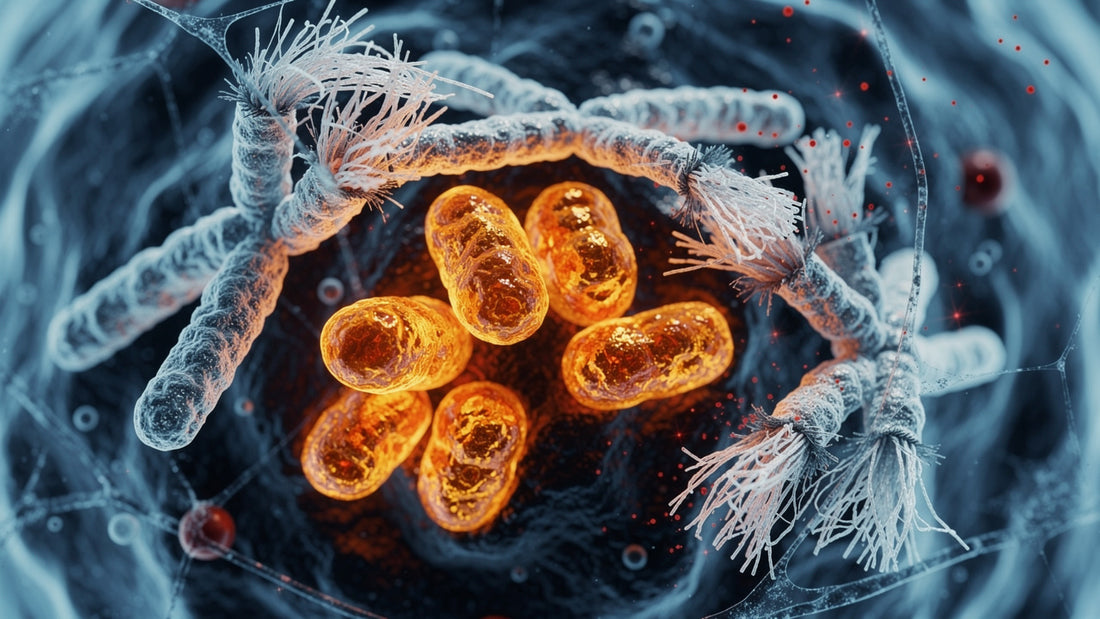
Once we see how the stress response works, we look inside the cell. Stress and aging connect through a set of well-studied pathways. When these pathways stay overworked, they speed the slide from temporary stress into lasting biological decline.
- Oxidative Stress And DNA Damage is often the first direct hit. Extra norepinephrine and epinephrine push mitochondria to burn more fuel, which makes more reactive oxygen species (ROS), the unstable molecules that rust our cells from the inside. At the same time an enzyme called MAO-A breaks down those stress chemicals and makes hydrogen peroxide. In small doses the body clears these sparks, but during chronic stress they overwhelm repair systems, break DNA strands, and leave the genetic code less stable. Over time this shows up as more mutations, tired tissues, and faster aging.
- Telomere Attrition is the next layer in the link between stress and aging. Telomeres are protective caps at the ends of chromosomes that naturally shorten each time a cell divides, like a fuse burning down. Reactive oxygen species target these delicate regions and chop them faster. In lab studies, cortisol has lowered the activity of telomerase, the enzyme that rebuilds telomeres, in immune cells. When the fuse gets too short, cells stop dividing or self-destruct, which means tissues repair more slowly and age sooner. Human studies connect high perceived stress with shorter telomeres, especially in immune cells that are constantly renewing.
As psychologist Elissa Epel, PhD, has written, chronic stress can make our cells age faster by shortening telomeres and changing how they repair DNA.
- Mitochondrial Dysfunction is the energy crash that many people feel as stress and aging pile up together. Mitochondria make ATP, the energy currency of cells, and also produce most reactive oxygen species. Stress hormones crank up mitochondrial work, which raises both energy output and oxidative waste. Over time the waste side wins, damaging mitochondrial DNA that sits close to the source of the fire. Damaged mitochondria then leak even more ROS and are cleared more slowly if mitophagy, the clean-up process, is blocked by ongoing stress. The lived experience is familiar: afternoon crashes, poor exercise tolerance, and foggy concentration.
- Cellular Senescence is where all these hits finally push cells to give up dividing but continue to stay alive. Short telomeres, broken DNA, and weak mitochondria flip internal switches such as p53 and p16INK4a. These switches lock the cell in a frozen, zombie-like state. Senescent cells then release a mix of inflammatory molecules known as SASP (senescence-associated secretory phenotype) that damage nearby tissue and call in more immune activity. Higher stress exposure in humans links with more of these senescent markers in blood cells, which ties daily strain directly to stress and aging.
Inflammaging - The Chronic Inflammation That Links Stress And Aging

All four of those cellular changes show up in the body as a single pattern we can feel. That pattern is chronic low-level inflammation tied to getting older, often called inflammaging. With stress and aging walking together, the immune system sits in a constant half-on state. It is not an intense fever, yet it is not real rest either, so many stressed adults live with foggy focus, stiff joints, and slow recovery.
Common signs of this low-grade inflammation include:
- Persistent fatigue even after a full night of sleep
- Achy muscles or joints without a clear injury
- Brain fog, low motivation, or low mood
- Slower recovery from workouts, travel, or illness
Senescent cells are one major driver because they secrete large amounts of inflammatory messengers like IL-6 and TNF-alpha through the SASP pattern. These zombie-like cells build up in tissues, and each one behaves like a tiny factory that keeps pouring irritants into the local area and the blood. At the same time long term cortisol can make immune cells less sensitive to its calming signal. When that happens, cortisol is high yet inflammation still runs hot.
The sympathetic nervous system also talks to the immune system through norepinephrine. This signal flips on a control switch called NF-kappa B inside immune cells, which boosts production of inflammatory cytokines. Those signals create more cell damage, which creates more senescent cells, which then send out more inflammatory messengers. That feedback loop is how stress and aging can feel like a trap, and it also points toward better recovery plans.
If you are wondering whether stress has pushed your own cortisol up, our guide to the signs of high cortisol explains what symptoms can and cannot tell you.
How To Counter Stress Induced Aging - A Systems Level Approach

Knowing how stress and aging connect is only helpful if we have clear levers to pull. We focus on a systems level plan that supports repair instead of chasing one symptom at a time. That means helping cells make and use energy well, lowering reactive oxygen species, and improving sleep and recovery. Synchronicity Health was built around these ideas so that performers can get strong support without spending all their time at an IV clinic.
At a high level, an effective plan should:
- Support NAD+ metabolism and cellular repair
- Reduce oxidative stress and support clearance pathways
- Help the brain and nervous system shift out of constant threat mode
First we support NAD+, because it sits at the center of DNA repair, mitochondrial energy production, and sirtuin activity. Chronic stress drains this pool, which is one reason energy and mood crash. Our NAD+ Nasal Spray and Enhanced NMN give you a needle-free alternative to IV: the spray delivers NAD+ through the nasal lining so it enters the blood quickly, while NMN capsules provide a daily precursor base. We often pair them with our Berberine Blend for metabolic support (berberine has been studied for its effects on AMPK).
For the mood side of chronic stress, saffron has a growing body of human trials; our saffron supplement guide covers the evidence, and our Saffron Mood and Calm Capsules (28 mg saffron extract with 200 mg L-theanine per serving) have a waitlist open.
Next we go after oxidative stress, the spark that damages DNA, lipids, and proteins when stress and aging combine. Glutathione is the body’s main antioxidant, and many stressed adults run low. Our Glutathione Nasal Spray supports this antioxidant system, which can support recovery, clearer thinking, and fewer crashes during heavy workloads. It is absorbed through the lining of the nose instead of being swallowed like a capsule, so some of each dose skips digestion, and you get steady support without needing large pill stacks.
Finally we help the brain and nervous system respond to life with less wear. Adaptogens help the HPA axis settle after a demanding day and ease wired-but-tired evenings. Our Forage mushroom blend combines reishi, lion’s mane, cordyceps, and other functional mushrooms with Himalayan shilajit and ashwagandha root extract to support stress resilience and cognition, and our Sleep Stack (Melatonin Nasal Spray, Theanine Nasal Spray, and Lithium Orotate) supports deep sleep. By building Sync Stacks that match real schedules and goals, we give people a way to push back against stress and aging every single day.
These products work best alongside the basics: consistent sleep, regular movement, real food, sunlight, and honest boundaries around work and devices. The more these foundations are in place, the more targeted support has room to work.
Habits Research Links With Healthier Aging Markers
These habits have human data behind them for stress, sleep and aging markers, and they are the base any supplement plan sits on.
- Sleep. In 2,078 postmenopausal women in the Women's Health Initiative, more insomnia symptoms were linked with an older epigenetic age in blood. Women with five insomnia symptoms measured nearly two years older than women of the same age with none, and short sleep of 5 hours or less went with fewer naive T cells, the fresh immune cells the body relies on for new threats. A steady bedtime and a dark, quiet room are simple places to start.
- Movement. In a small study of 63 healthy postmenopausal women, each point on a perceived stress scale went with 15 times higher odds of short telomeres in women who were inactive. In women who met the CDC's recommended level of vigorous activity, stress and telomere length were not related.
- Social connection. A 2010 review of 148 studies with 308,849 people, followed for about 7.5 years on average, found a 50% higher likelihood of survival for people with stronger social relationships. Regular time with friends, family or a community group belongs in a stress plan, not on the extras list.
Conclusion

Chronic stress is not just a feeling; it is a daily signal that reshapes stress and aging inside our cells. Through oxidative damage, telomere loss, mitochondrial slowdown, senescent cells, and inflammaging, stress and aging move forward side by side. The encouraging news is that these pathways are well described, and that gives us real handles we can use.
By supporting NAD+ pathways, antioxidant defenses, and stress resilience with smart adaptogens, we can support the systems that chronic stress wears on. If this matters to you, we invite you to explore Synchronicity Health Sync Stacks and build a plan that respects your future self and the years you want to feel sharp, strong, and present.
Sources
- Epel ES et al. Accelerated telomere shortening in response to life stress. Proceedings of the National Academy of Sciences, 2004. PubMed
- Bierhaus A et al. A mechanism converting psychosocial stress into mononuclear cell activation. Proceedings of the National Academy of Sciences, 2003. PubMed
- Zannas AS et al. Lifetime stress accelerates epigenetic aging in an urban, African American cohort: relevance of glucocorticoid signaling. Genome Biology, 2015. PubMed
- Srinivas N et al. Telomeres and telomere length: a general overview. Cancers, 2020. PubMed
- Safwan-Zaiter H et al. P16INK4A: more than a senescence marker. Life (Basel), 2022. PubMed
- Mathur MB et al. Perceived stress and telomere length: a systematic review, meta-analysis, and methodologic considerations for advancing the field. Brain, Behavior, and Immunity, 2016. PubMed
- Harvanek ZM et al. Psychological and biological resilience modulates the effects of stress on epigenetic aging. Translational Psychiatry, 2021. PMC
- Carroll JE et al. Epigenetic aging and immune senescence in women with insomnia symptoms: findings from the Women's Health Initiative Study. Biological Psychiatry, 2016. PubMed
- Puterman E et al. The power of exercise: buffering the effect of chronic stress on telomere length. PLoS One, 2010. PubMed
- Holt-Lunstad J et al. Social relationships and mortality risk: a meta-analytic review. PLoS Medicine, 2010. PubMed
- Frolkis VV. Stress-age syndrome. Mechanisms of Ageing and Development, 1993. PubMed
FAQs
Questions about stress and aging come up in nearly every conversation we have with customers and fellow biohackers. Here we answer a few common ones so the science feels clear and practical.
Does Stress Actually Speed Up Aging Or Is That An Exaggeration?
Human studies link long term stress with faster biological aging, and this is measured with lab markers, not guessed. Studies of caregivers and other high stress groups show shorter telomeres, more DNA damage, and higher levels of p16INK4a in immune cells. That means their cells look older than those of people with similar birthdays.
Researchers also see changes in epigenetic clocks, patterns of DNA methylation that track biological age. People under heavy, unrelenting stress often show older epigenetic ages than their calendar age would predict.
What Does Cortisol Do To Your Cells Over Time?
Short spikes of cortisol help us wake up, focus, and handle acute stress. When levels stay high for months, cortisol can weaken mitochondrial function and can make immune cells less responsive to its calming effect. The result is more oxidative stress, more inflammation, and a faster slide in biological age.
Over time, this can show up as:
- More belly fat and blood sugar swings
- Poorer sleep quality and lighter, more fragmented rest
- Lower mood, irritability, or a sense of being “tired but wired”
Cortisol is not bad by itself, but it needs a healthy daily rhythm with clear peaks and valleys rather than staying elevated around the clock.
Can Supplements And Sprays Really Help Counter Stress Induced Aging?
Supplements and sprays can be one part of a plan for stress and aging. When we target NAD+ pathways, antioxidant defenses, mitochondrial clean-up, and cortisol control, we support the same hallmarks that stress damages. That is why NAD+ nasal sprays, glutathione, theanine, and adaptogenic mushrooms work well together.
At Synchronicity Health we design Sync Stacks around these pathways so daily habits favor repair instead of wear. Combined with sleep, movement, nutrition, and stress-management practices such as breath work or meditation, this kind of stack is designed to support how your body handles daily stress.
How Does Chronic Stress Change Your DNA?
Chronic stress does not rewrite the genes you inherited. The changes researchers measure are mostly in the chemical tags on DNA, called methylation, that help switch genes on and off, and in the telomere caps at the ends of chromosomes. In one study of 392 adults, cumulative lifetime stress was linked with an older methylation age, and 85 of the clock's sites sat in regions that respond to cortisol type hormones. Stress chemistry can also add to oxidative damage to DNA strands.
What Is Stress Age Syndrome?
Stress age syndrome is a term from aging research. The gerontologist V. V. Frolkis used it in a 1993 paper to describe how aging brings a set of hormonal, nervous system and immune changes that resemble a long running stress response. It is a research concept rather than a diagnosis. Today scientists study the same overlap with markers such as telomere length, epigenetic clocks and daily cortisol patterns.
Does Poor Sleep Make You Age Faster?
Poor sleep is linked with older aging markers in human studies. In the Women's Health Initiative study of 2,078 women, those with more insomnia symptoms had an older epigenetic age, while sleep length on its own was not related to epigenetic age. That makes sleep quality, not just hours in bed, worth protecting during stressful periods. If trouble sleeping lasts for weeks, talk to your doctor.
Featured in this article
NAD+ Nasal SpraySupports cellular energy, focus and healthy aging. A needle-free alternative to NAD+ IV.
Shop NAD+ Nasal SprayThird-party tested ingredients. Vegan, non-GMO, made in the USA.


Leave a comment
All comments are moderated before being published.
This site is protected by hCaptcha and the hCaptcha Privacy Policy and Terms of Service apply.