

Introduction
How does acetylcholine affect memory? Acetylcholine is the neurotransmitter that tells the brain to pay attention to new information and helps it store that information. In the hippocampus and cortex, higher acetylcholine during focused waking pushes circuits toward encoding new memories, while lower levels during slow-wave sleep let the brain consolidate what it learned. That is why acetylcholine and memory are so closely linked, and why balance matters more than sheer amount.
The moment a name vanishes mid-sentence, or a key idea slips away right before a big presentation, it can feel like the brain just hit a glitch. For high performers who pride themselves on sharp thinking, these slips are more than annoying. They raise a deeper question about how well the brain is actually wiring and storing information, and where acetylcholine for memory fits into that picture.
We look at many nootropics as quick fixes, but one of the most important levers sits inside the brain’s own chemistry. Acetylcholine is the learning neurotransmitter that helps decide what sticks, what fades, and how clearly thoughts come together. When we talk about acetylcholine for memory, we are really talking about the signal that tells brain circuits, “Pay attention, this matters, save this.”
At Synchronicity Health, we build our formulas around this kind of core biology instead of surface buzzwords. With clean-label-designed stacks and third-party tested ingredients, we focus on acetylcholine for memory, attention, and learning in a way that stays grounded in research and real-world performance.
In this article, we walk through what acetylcholine is, how it encodes new memories at the cellular level, why more is not always better, why it is important for mental clarity and how to support healthy levels in daily life. By the end, anyone who cares about performance will have a clear, science-based playbook for using acetylcholine for memory in a smart, balanced way.
Key Takeaways

- Acetylcholine is the brain’s main learning signal. When people talk about acetylcholine for memory, they mean better encoding, sharper attention, and clearer focus. It links incoming information with the circuits that need to store it. Without it, new facts have a hard time sticking.
- Acetylcholine supports memory through four key actions. It boosts incoming signals, shapes theta brain waves, supports short-term holding of information, and helps long-term synapses grow stronger. These steps turn brief experiences into lasting memories.
- Healthy acetylcholine is about balance. Too little is linked with age-related changes in memory, while too much can block consolidation and overload the system. Smart support for acetylcholine for memory focuses on timing, precision, and quality, not just higher numbers.
Acetylcholine works like the brain’s internal “pay attention” signal because of its role in deciding what gets stored and what gets ignored.

Featured in this article
Clarity CapsulesA daily nootropic blend that supports memory, recall and mental clarity.
Shop Clarity CapsulesThird-party tested ingredients. Vegan, non-GMO, made in the USA.
What Is Acetylcholine And Why Does It Matter For Memory?

Acetylcholine is an excitatory neurotransmitter, a small chemical that lets nerve cells talk to each other and to muscles. The body makes it from choline, an essential nutrient found in eggs, beef liver, and soybeans, plus an acetyl group that comes from glucose metabolism. An enzyme called choline acetyltransferase links these pieces together at the end of the neuron, right where signals are passed.
Once produced, acetylcholine is packed into tiny vesicles at the axon terminal. When an electrical impulse arrives, these vesicles fuse with the cell membrane and release acetylcholine into the synaptic cleft, the narrow space between two cells. On the other side, receptors wait to catch it and pass the message along. This basic loop sits at the heart of how acetylcholine for memory actually works.
There are two main receptor families, and both matter for memory:
- Nicotinic receptors act fast. They are ion channels that open quickly when acetylcholine binds, boosting incoming sensory signals and sharpening attention to new information.
- Muscarinic receptors act more slowly through G-proteins. They tune the balance between encoding and retrieval, support working memory, and help control REM sleep, the sleep stage tied to memory consolidation.
After acetylcholine delivers its message, an enzyme called acetylcholinesterase breaks it down into choline and acetate in a split second. The neuron then reuses choline to make more acetylcholine. Many strategies that support acetylcholine for memory, including our own, focus on gentle slowing of this breakdown step so more acetylcholine stays active when needed.
Inside the brain, major acetylcholine hubs in the basal forebrain and mesopontine tegmentum send long projections to the hippocampus and cortex. These regions handle spatial maps, life events, and complex thinking. During focused wakefulness, higher acetylcholine levels push the system toward encoding new information. During slow-wave sleep, lower levels allow the brain to replay and store what was learned. That daily rhythm is one reason supporting acetylcholine for memory often shows up as better recall, cleaner focus, and smoother learning over time.
How Acetylcholine Encodes New Memories At The Cellular Level
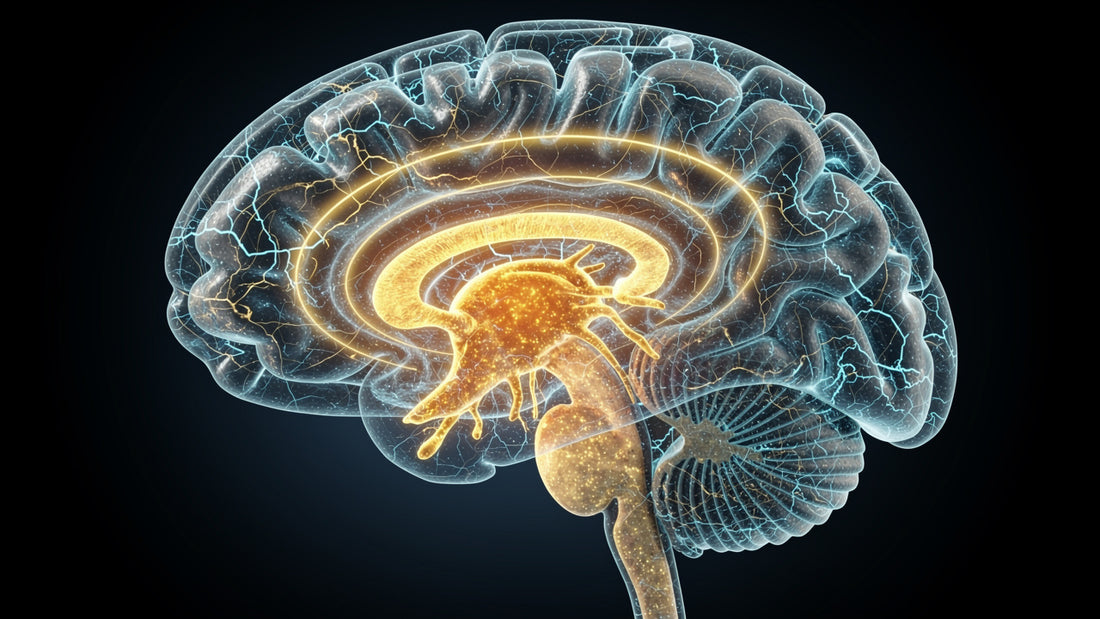
For biohackers and high performers, it helps to know what acetylcholine for memory is doing under the hood. Its role is not vague “brain support.” It changes how circuits handle signals in very specific ways that match four main mechanisms.
“Neurons that fire together wire together” is a phrase often attributed to psychologist Donald Hebb, and it captures how repeated activity can strengthen connections and form memory.
You can think of acetylcholine’s role in memory as four linked steps:
-
Directing attention toward new information
Acetylcholine shifts the brain toward fresh input and away from internal noise from older patterns. When levels rise, nicotinic receptors boost the strength of afferent input coming from sensory areas and other brain regions. At the same time, muscarinic receptors at feedback synapses reduce glutamate release inside loops such as the hippocampal CA3 network.- External signals get turned up.
- Internal chatter gets turned down.
During a study block or a high-stakes meeting, that is exactly how acetylcholine for memory helps the brain lock onto what is happening now.
-
Shaping theta rhythm brain waves
Acetylcholine shapes theta rhythm brain waves in the hippocampus, usually in the 4 to 8 hertz range. Cholinergic neurons in the medial septum fire in a theta pattern and help pace hippocampal circuits. Within each cycle, some phases favor encoding and others favor retrieval. By keeping these windows in order, acetylcholine for memory reduces interference between new learning and old recall, which keeps details cleaner. -
Supporting working memory and persistent firing
Acetylcholine supports persistent spiking and working memory in regions such as the entorhinal and perirhinal cortex. Under cholinergic influence, a neuron can keep firing for seconds or minutes after a brief input. That persistent activity acts like a mental “hold” button, keeping a phone number, a face, or a key instruction online while it is processed.
When drugs like scopolamine block acetylcholine receptors, this persistent firing fades, and working memory performance drops. That link is one of the clearest windows into how acetylcholine for memory feels in daily life. -
Making long-term strengthening of synapses easier
Acetylcholine lowers the threshold for long-term potentiation (LTP), the strengthening of synapses that underlies long-term memory. In the hippocampus, entorhinal cortex, and piriform cortex, cholinergic input makes it easier for a pair of neurons to form a lasting bond when they fire together.
In practice, good acetylcholine for memory support means that repeated patterns during language study, skill training, or strategic thinking are more likely to become stable networks instead of fading traces.
These effects are also region specific. The hippocampus leans on acetylcholine for spatial and episodic encoding, while the perirhinal cortex relies on it for object and recognition memory. When we design products at Synchronicity Health, we keep this full map in mind. The goal is to support the entire cholinergic network so that attention, short-term holding, and long-term storage all work together.
The Balance Problem: Why More Acetylcholine Is Not Always Better

It is tempting to think that if acetylcholine for memory is good, then pushing it higher and higher must be even better. Research points in a different direction. The relationship is bidirectional, which means both too little and too much acetylcholine can impair thinking.
On the low side, research in older adults with memory complaints shows what happens when acetylcholine signals fade. There is a marked loss of cholinergic neurons in the basal forebrain, which cuts acetylcholine supply to the cortex and hippocampus. This drop in acetylcholine for memory tracks with the well-known decline in recall, orientation, and learning.
On the high side, constant or extreme increases also cause trouble. High doses of cholinergic agonists or very strong acetylcholinesterase blockade can interfere with memory consolidation, especially during sleep, when the brain needs lower acetylcholine to replay and store experiences. In practice, that means pushing acetylcholine for memory at the wrong time or with blunt tools can blur the very gains someone is chasing.
Toxic exposures show the far end of this spectrum. Nerve agents and some pesticides irreversibly block acetylcholinesterase, leading to overwhelming acetylcholine buildup, muscle paralysis, seizures, and death. While this is far from normal supplementation, it highlights how tightly acetylcholine must be controlled.
What Does Too Much Acetylcholine Mean?
In everyday life, the body keeps acetylcholine in check on its own: acetylcholinesterase clears it from the synapse almost as soon as it is released. Too much acetylcholine in the medical sense, called cholinergic crisis, happens when that enzyme is strongly blocked, for example by organophosphate pesticides or nerve agents, or by an overdose of prescription cholinesterase inhibitors such as those used for myasthenia gravis. Signs include heavy sweating, drooling and tearing, nausea, vomiting, diarrhea, a slow heart rate, muscle twitching and weakness, and trouble breathing (Adeyinka et al., StatPearls). It is a medical emergency that needs immediate care.
Very high choline intake is a separate issue: the NIH Office of Dietary Supplements sets the adult upper limit at 3,500 mg of choline a day and links high intakes with a fishy body odor, vomiting, heavy sweating and salivation, and low blood pressure.
For serious biohackers, the lesson is clear: the target is a dynamic balance, not permanent stimulation. At Synchronicity Health, we design around this by using precise, reversible support for acetylcholine for memory. Ingredients such as Huperzine A are dosed to help maintain healthy levels during high-demand cognitive states without pushing the system into constant overdrive.
Choline is the raw material for acetylcholine, and citicoline is one choline source that has been tested in human trials; see Citicoline Benefits for what the studies found, how much to take and side effects. Our Citicoline and PQQ Brain Energy Capsules give 500 mg citicoline, 20 mg PQQ and 25 mg L-ergothioneine per serving; join the waitlist on the product page to hear when they launch.
In a 12-week randomized, placebo-controlled trial of 100 healthy adults aged 50 to 85 with age-associated memory complaints, 500 mg of citicoline a day improved episodic memory and a composite memory score more than placebo (Nakazaki et al., 2021). To see how citicoline and plain choline differ as sources of choline, read our guide to citicoline vs choline.
How To Support Healthy Acetylcholine Levels For Memory

Once the science is clear, the next step is practical. Supporting acetylcholine for memory works best when it combines targeted products, food choices, and daily habits, instead of chasing a single magic pill.
Here are the main levers to consider:
-
Targeted support with Synchronicity Health’s Clarity Nasal Spray
Our primary tool for direct cholinergic support is Synchronicity Health’s Clarity Nasal Spray. It includes Huperzine A (alongside NAD+), a potent but reversible acetylcholinesterase inhibitor that slows the breakdown of acetylcholine so more of it is available during learning and focus. It also provides Alpha-GPC, a choline-donating phospholipid that supplies the raw material the brain uses to make acetylcholine. At 10 to 20 mg per serving, depending on strength, it is a small supporting amount that works alongside the huperzine A. To compare alpha GPC with citicoline, see citicoline vs alpha GPC.Clarity is a nasal spray, absorbed through the lining of the nose rather than swallowed. Each serving (one spray in each nostril) of the Maximum Strength provides NAD+ 150 mg, Alpha-GPC 20 mg, Huperzine A 200 mcg and vitamin B12 500 mcg, with lower amounts in the Regular and Extra Strengths, made with third-party tested ingredients. Follow the label directions for use.
-
Nutritional support with choline-rich foods
Food still matters. Choline-rich foods such as eggs, beef liver, roasted soybeans, shiitake mushrooms, and cod give the raw material the brain needs to make acetylcholine. A solid base of these foods makes any acetylcholine for memory product work more smoothly and may help keep brain chemistry more stable across the day. -
Plant extracts with cholinergic activity
Several plant extracts, including Bacopa monnieri and Ginkgo biloba, show modest acetylcholinesterase-inhibiting activity in research and may add gentle support to the cholinergic system. Quality varies a lot between brands, so look for a product that clearly states the extract and the amount per serving. -
Lifestyle habits that protect cholinergic neurons
Lifestyle keeps the cholinergic system stable:- Sleep: Enough sleep, especially dream-rich REM sleep, supports both memory consolidation and recovery of acetylcholine stores.
- Movement: Regular physical movement helps protect cholinergic neurons and boosts neuroplasticity. It also improves blood flow to brain areas that rely on acetylcholine for memory.
- Stress management: Stress hormones can interfere with attention and encoding. Breath work, meditation, time outdoors, or simple breaks lower background noise that competes with acetylcholine’s “learning signal.”
Consistent habits beat extreme shortcuts. A moderate dose of support for acetylcholine for memory, combined with good sleep, movement, and nutrition, tends to outperform high-dose shortcuts taken on top of poor basics.
Because acetylcholine interacts with prescription drugs, anyone already using medical acetylcholinesterase inhibitors or managing a neurological diagnosis should speak with a clinician before adding extra cholinergic support. That includes discussing products like Clarity Nasal Spray with a qualified professional who understands your full medication list.
Conclusion
Acetylcholine is far more than a background chemical. It is the core signal that marks information as important, shapes attention, holds details online, and turns brief experiences into lasting networks. Thoughtful support of acetylcholine for memory can mean better recall, stronger focus, and smoother learning across work, study, and sport.
The key is balance instead of brute force. We built Synchronicity Health’s Clarity Nasal Spray, with Alpha-GPC and Huperzine A alongside NAD+, as one practical way to support acetylcholine for memory at home. For anyone serious about long-term brain performance, this is one of the smartest levers to pull.
Sources
- NIH Office of Dietary Supplements. Choline: Fact Sheet for Health Professionals. ODS
- Hasselmo ME. The role of acetylcholine in learning and memory. Current Opinion in Neurobiology, 2006. PubMed
- Zhang HY et al. Non-cholinergic effects of huperzine A: beyond inhibition of acetylcholinesterase. Cellular and Molecular Neurobiology, 2008. PubMed
- Nakazaki E, Mah E, Sanoshy K, Citrolo D, Watanabe F. Citicoline and memory function in healthy older adults: a randomized, double-blind, placebo-controlled clinical trial. J Nutr. 2021;151(8):2153-2160. PubMed 33978188
- Adeyinka A, Patel A, Kondamudi NP. Cholinergic Crisis. StatPearls, NCBI Bookshelf, 2025. NCBI Bookshelf NBK482433
FAQs
What does acetylcholine do for memory?
Acetylcholine helps the brain encode new information by boosting incoming signals, shaping theta brain waves, and supporting persistent firing in key circuits. It also lowers the threshold for long-term potentiation, which is the synaptic strengthening behind long-term storage, making acetylcholine for memory central to learning.
What happens to acetylcholine as memory declines with age?
In older adults with memory complaints, many cholinergic neurons in the basal forebrain die, which sharply reduces acetylcholine levels in the cortex and hippocampus. This loss of acetylcholine for memory contributes to problems with recall and learning.
Which neurotransmitter is crucial for memory?
Several work together. Glutamate carries most fast excitatory signals in the brain and is central to long-term potentiation, the synapse strengthening that underlies long-term memory. Acetylcholine sets the brain’s state for learning: it turns up attention to new input, helps pace theta rhythms in the hippocampus and lowers the threshold for long-term potentiation. That is why acetylcholine is the neurotransmitter most often linked with memory and learning.
How is acetylcholine involved in learning?
Acetylcholine levels rise during focused, attentive waking, the state in which the brain takes in new information. Through nicotinic receptors it boosts incoming sensory signals, and through muscarinic receptors it quiets interference from older memories, so new patterns can be laid down cleanly. That is why it is called the learning neurotransmitter, and why drugs such as scopolamine, which block its receptors, impair working memory.
Is acetylcholine more important for short-term or long-term memory?
Both. For short-term or working memory, acetylcholine helps neurons in the entorhinal and perirhinal cortex keep firing for seconds after a brief input, which holds information in mind while it is used. For long-term memory, it makes synapse strengthening easier while you learn, and its levels then fall during slow-wave sleep so the brain can consolidate what it learned.
How can I support healthy acetylcholine levels naturally?
Start with choline, the raw material the body uses to make acetylcholine. The NIH Office of Dietary Supplements sets the Adequate Intake at 550 mg a day for adult men and 425 mg a day for adult women, and eggs, beef liver, soybeans and cod are rich food sources. Regular sleep, movement and stress management also help keep the cholinergic system steady.
Featured in this article
Clarity CapsulesA daily nootropic blend that supports memory, recall and mental clarity.
Shop Clarity CapsulesThird-party tested ingredients. Vegan, non-GMO, made in the USA.


Leave a comment
All comments are moderated before being published.
This site is protected by hCaptcha and the hCaptcha Privacy Policy and Terms of Service apply.