

Introduction
Every second, tiny hits land on DNA inside your cells. Sunlight, normal metabolism, even breathing create small marks and breaks. Add that up across your whole body and you get tens of thousands of DNA lesions in each cell every single day. On paper that sounds like a recipe for disaster, yet the only reason things do not fall apart is that your repair systems keep up.
Right in the center of that repair network sits one master molecule. When people talk about NAD+ for energy or healthy aging, they often forget one of its most important jobs. NAD+ and DNA Repair are tightly linked. This coenzyme is not only about ATP and mitochondria; it is the fuel your key repair enzymes burn every time they rush to a damaged strand of DNA.
When NAD+ levels fall, those enzymes slow down. DNA damage piles up faster than your cells can handle. Over years, that looks like faster aging, less energy, more inflammation, and a brain that feels less sharp. For biohackers, athletes, and busy professionals, that connection between NAD+ and DNA makes the difference between just coping and performing at a higher level for longer.
This guide walks through how NAD+ powers DNA repair, why levels decline with age and stress, and what current science says about bringing that fuel tank back up. Along the way, you will see how strategies like precursors, lifestyle, and Synchronicity Health’s at-home NAD+ Nasal Spray and Sync Stacks can support the same pathways expensive IV clinics aim at, but with more control and less friction in daily life.
Key Takeaways
- NAD+ is the required fuel for two major groups of DNA repair enzymes, PARPs and Sirtuins. When NAD+ is low, these enzymes cannot respond properly to DNA damage, no matter how good the rest of your biology looks.
- NAD+ levels decline with age and with chronic stressors such as poor sleep, inflammation, and environmental toxins. This decline directly weakens the cell’s ability to keep DNA stable and working.
- Ongoing DNA damage can drive a loop of PARP overactivation, NAD+ depletion, mitochondrial stress, and even more damage. Breaking this loop is one of the most important ways to slow cellular aging.
- Research on NAD+ precursors like NMN and NR shows promising effects on repair activity, mitochondrial clean-up, and markers of healthspan in models of premature aging.
- Daily habits such as quality sleep, regular exercise, smart nutrition, and stress control work together with NAD+ support. This combination helps your cells maintain DNA and energy output for the long term.

Featured in this article
NAD+ Nasal SpraySupports cellular energy, focus and healthy aging. A needle-free alternative to NAD+ IV.
Shop NAD+ Nasal SprayThird-party tested ingredients. Vegan, non-GMO, made in the USA.
What Is NAD+ and Why Does Every Cell Depend On It?
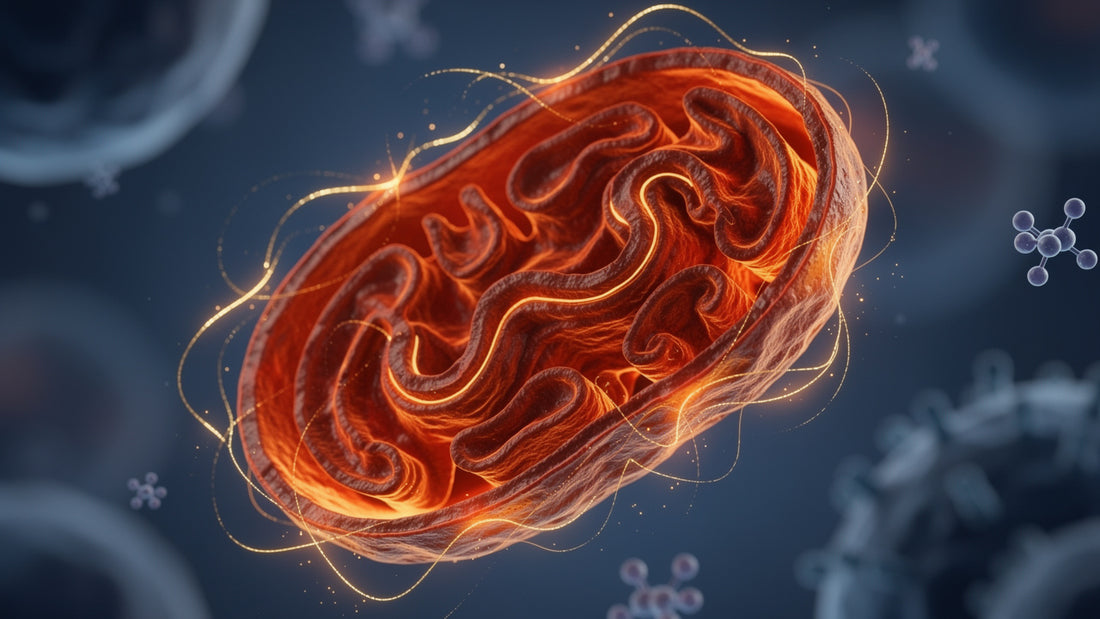
NAD+ stands for nicotinamide adenine dinucleotide, and it sits in every cell you have. It flips between two states, NAD+ and NADH, as it moves electrons through metabolic pathways. That flip is how your body takes calories from food and converts them into ATP, the energy that runs muscles, brain cells, and everything else you do.
In core pathways like glycolysis, the Krebs cycle, and oxidative phosphorylation, NAD+ acts as an electron taxi. It accepts electrons and becomes NADH, then drops those electrons off in the mitochondria so ATP can be made. The ratio of NAD+ to NADH gives a quick snapshot of how a cell handles fuel. A higher NAD+ to NADH ratio is linked with better metabolic flexibility and cleaner energy production.
NAD+ has a second, less obvious job. Certain enzymes do not just use NAD+ as a helper. They actually consume it. They split NAD+ apart to drive signaling reactions related to NAD+ and DNA Repair, gene expression, and stress responses. These enzymes include PARPs and Sirtuins, both of which sit at the heart of genome protection.
As years pass, total NAD+ levels drop. In one study of human skin samples from people aged newborn to 77, NAD+ levels were lower with increasing age in both men and women. Part of this drop comes from extra consumption by enzymes that respond to inflammation and DNA damage. Part comes from slower recycling of spent NAD+. Researchers are studying how this decline relates to slower recovery, brain fog and fatigue with age.
A simple way to picture NAD+ is to split its roles into two buckets.
|
Role Of NAD+ |
What It Does |
Why It Matters For You |
|---|---|---|
|
Metabolic coenzyme |
Moves electrons in energy pathways and supports ATP production |
Direct impact on daily energy, exercise capacity, and basic cell function |
|
Signaling fuel |
Feeds DNA repair and gene-regulating enzymes like PARPs and Sirtuins |
Direct impact on how fast damage builds up and how well your cells age |
You can think of NAD+ as the currency your cells spend on both energy production and DNA repair.
When you protect or restore NAD+, you are not just pushing metabolism. You are giving your DNA repair team more fuel to work with.
How NAD+ Is Made: The Biosynthesis Pathways
Your body makes and recycles NAD+ through several overlapping routes. Understanding those routes explains why certain supplements and delivery methods work better than others.
- One route starts from the amino acid tryptophan. This path runs through many steps and is active in some tissues, but it is relatively slow and not the main source for day-to-day NAD+ needs.
- Another route uses nicotinic acid, a form of vitamin B3 often called niacin. Cells can turn nicotinic acid into NAD+, but again this is not the leading path in most human tissues.
The main way your body keeps NAD+ up is the salvage pathway. Every time enzymes like PARPs and Sirtuins use NAD+, they release nicotinamide as a byproduct. The salvage pathway catches that nicotinamide and turns it back into NAD+. The key enzyme here is NAMPT. When NAMPT activity falls with age or poor lifestyle, the salvage loop slows down, and your NAD+ tank drops.
Two popular precursors, nicotinamide riboside (NR) and nicotinamide mononucleotide (NMN), plug into this salvage system. NR is turned into NMN by NRK enzymes, and NMN is the immediate step before NAD+. That is why NMN supplements, such as Enhanced NMN from Synchronicity Health, sit at the center of many NAD+ support plans. They hand your cells ready-to-use building blocks instead of asking slow, upstream pathways to keep up on their own.
The Constant Threat: Understanding DNA Damage
DNA looks stable in textbook drawings, yet inside real cells it is under constant stress. Every normal day, each cell faces tens of thousands of small hits to its DNA. Some come from the inside as a side effect of simply staying alive. Others come from the outside as part of everyday living.
Inside the cell, major internal sources of DNA injury include:
- Mitochondria releasing reactive oxygen species while they make ATP. These reactive molecules can nick DNA strands or change single bases.
- Spontaneous chemical reactions that pop bases off the DNA backbone or swap one base for another.
- Copying mistakes that slip through when cells divide.
Outside the cell, external hits stack up as well:
- Sunlight brings ultraviolet rays that link bases together in ways that block normal reading and copying.
- X-rays and other ionizing radiation can snap strands outright.
- Certain pollutants, smoke, and byproducts of some foods form DNA adducts, sticky chemical attachments that distort the helix.
Even at low levels, these events keep your repair machinery busy both day and night.
The damage itself comes in different shapes:
- Single-strand breaks involve only one side of the DNA ladder. These are common and often fixed quickly.
- Double-strand breaks involve both sides and are far more dangerous, since they can lead to lost or rearranged pieces of chromosomes.
- Base lesions change the chemical identity of a single letter in the code, which can cause misreading during replication or repair.
To handle all this, cells rely on the DNA Damage Response. This network of sensors and signaling proteins patrols the genome, spots damage, pauses the cell cycle, and calls in the right repair crew. One key player, ATM kinase, becomes active when it senses double-strand breaks. It then tags many other proteins, turning on checkpoints and repair steps. How well this whole system works shapes long-term cellular health, brain aging, and other age-related changes.
PARPs: The First Responders That Run On NAD+
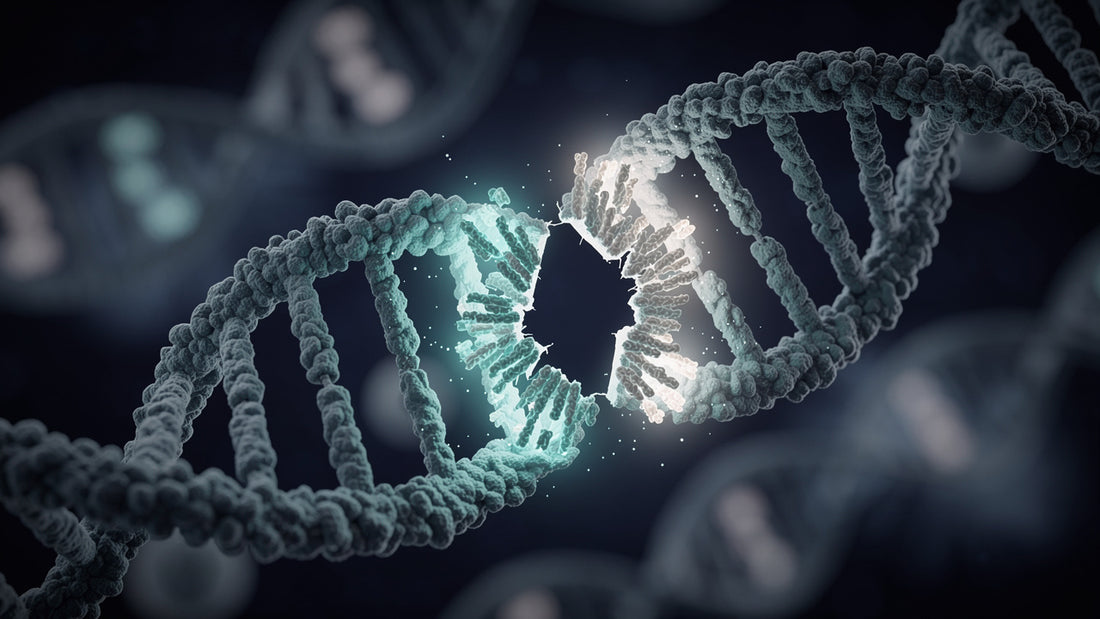
Among the first proteins to leap into action when DNA breaks occur are PARPs, especially PARP1. PARP1 lives in the nucleus and constantly scans DNA for trouble. When it finds a break, it grabs on and changes shape in a way that switches on its enzyme activity. At that moment, it starts burning through NAD+.
PARP1 uses NAD+ as its only fuel. It splits NAD+ into nicotinamide and ADP-ribose, then strings many ADP-ribose units together to form long, branching chains called poly ADP-ribose, or PAR. These chains can attach to PARP1 itself, to histones that package DNA, and to other nearby proteins. This process is known as PARylation.
PARylation matters for two main reasons:
- When PAR chains build up on histones, they loosen the local DNA packaging. That gives repair proteins physical access to the damaged site.
- The chains act like a sticky landing pad that attracts other repair factors, including the scaffold protein XRCC1. XRCC1 helps organize multiple enzymes needed for base excision repair and for fixing single-strand breaks.
Under strong genotoxic stress, PARP1 turns this reaction up to an extreme level. Studies show PAR chain production can rise hundreds of times over baseline within minutes after heavy DNA damage. That response buys time by making repair faster, yet it also drains the cellular NAD+ pool at high speed.
You can think of PARP1 as a fire alarm that also controls the fire sprinklers.
Put simply, PARP1 converts the detection of a DNA break into a loud biochemical signal, and that signal runs entirely on NAD+.
When NAD+ is plentiful, this system helps you keep DNA stable even under repeated hits. When NAD+ is low, the alarm either cannot sound as strongly or it burns through the last reserves and leaves other systems without fuel.
PARP Hyperactivation and the NAD+ Depletion Cascade
A short burst of PARP activity after a sudden insult is protective. The trouble starts when DNA damage never really stops. Chronic exposure to oxidative stress, toxins, or replication problems keeps PARP1 turned on more often than not. This pattern leads to PARP hyperactivation.
When PARP1 stays busy, it chews through NAD+ faster than your cells can rebuild it through the salvage pathway. Nuclear NAD+ falls first, then the whole-cell pool begins to shrink. As that pool drops, other NAD+-dependent enzymes start to lose activity. Mitochondrial energy chains slow down, and ATP production falters.
In a mild state, this leaves cells tired and less able to handle extra stress. Repair systems miss more lesions. Mutations slip through that would have been fixed in a younger, better fueled cell. Under heavier stress, NAD+ depletion and the related energy crash can push a cell into programmed death. Apoptosis in a small number of cells is normal, but wide-spread loss adds to tissue aging.
This sets up a feedback loop:
- More DNA damage triggers more PARP activity.
- More PARP activity drains more NAD+.
- Lower NAD+ weakens other repair tools, which allows more damage to appear.
Without outside support, this loop quietly speeds up wear and tear over years.
Sirtuins: NAD+-Dependent Guardians Of Genomic Stability
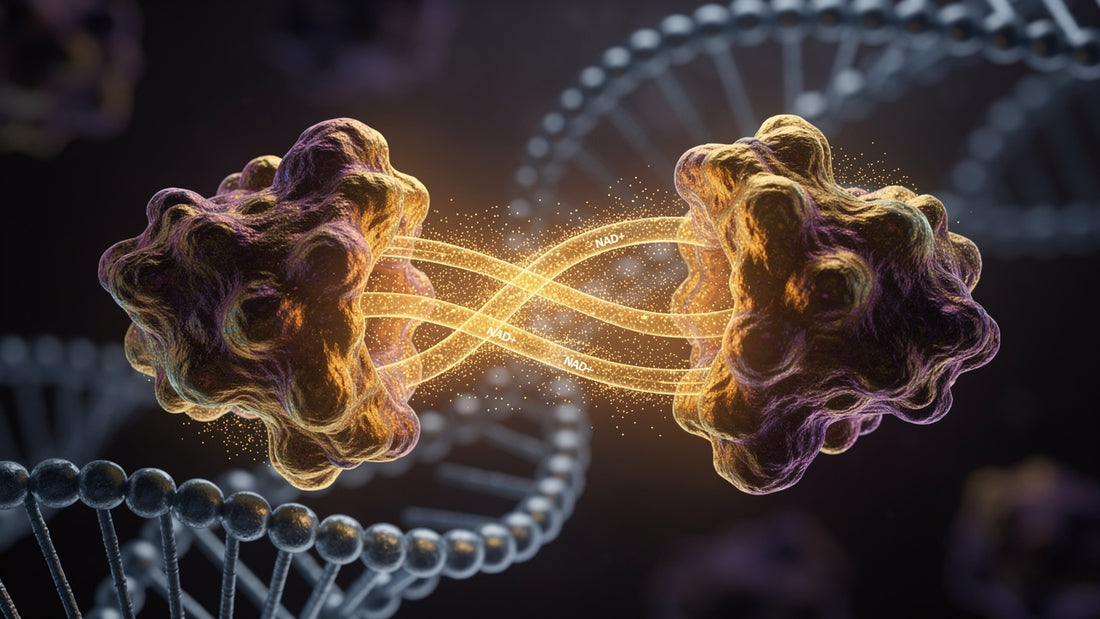
Sirtuins are another family of enzymes that sit on the front line of cellular defense. In mammals there are seven main Sirtuins, named SIRT1 through SIRT7. They act as deacetylases and ADP-ribosyltransferases, meaning they remove acetyl groups from proteins or shift ADP-ribose units. In doing so, they switch many target proteins on or off.
The key point for you is that Sirtuins work only when NAD+ is present. Every deacetylation event they carry out consumes one molecule of NAD+. That makes their activity a live readout of your NAD+ pool. High NAD+ favors strong Sirtuin signaling. Low NAD+ dampens it.
Two Sirtuins stand out for NAD+ and DNA Repair:
- SIRT1 influences several repair pathways by deacetylating proteins involved in sensing breaks and fixing them. It also shifts chromatin structure, opening up regions of DNA that need attention. Beyond the nucleus, SIRT1 supports mitophagy, the process by which cells identify and remove damaged mitochondria.
- SIRT6 works even closer to hard DNA damage. It is recruited directly to sites of double-strand breaks. Once there, it helps organize repair complexes and guide non-homologous end joining, one of the main ways cells reconnect broken DNA ends. Animals lacking SIRT6 show severe genomic instability and signs of early aging.
PARPs and Sirtuins draw from the same NAD+ pool. When PARP1 is hyperactive, it can starve Sirtuins of substrate. That means a cell may pour resources into the emergency response to DNA breaks while backing off from long-term maintenance tasks like mitophagy and anti-inflammatory signaling. Over time, the balance shifts toward a state of higher damage, poorer repair, and more inflammation.
A simple way to compare these enzyme groups is in a side-by-side view.
|
Feature |
PARPs |
Sirtuins |
|---|---|---|
|
Main trigger |
Direct DNA strand breaks |
Cellular energy status, stress signals, and NAD+ levels |
|
Core action |
Add PAR chains to proteins to recruit repair machinery |
Remove acetyl groups or add ADP-ribose to adjust protein function |
|
Repair focus |
Early sensing and assembly of repair complexes |
Fine-tuning of repair proteins, chromatin structure, and mitochondrial quality control |
|
NAD+ use |
Large bursts of consumption during damage events |
Ongoing use that reflects long-term NAD+ availability |
In practical terms, healthy NAD+ levels let your “first responders” (PARPs) and “management team” (Sirtuins) work together instead of competing for fuel.
Keeping NAD+ strong lets both sides of this team perform. That balance supports not only DNA stability but also metabolism, inflammation control, and brain health.
The NAD+ Depletion-Aging Feedback Loop
Aging is not just about calendars. At the cellular level, aging looks like a slow drift toward lower NAD+, higher DNA damage, and tired mitochondria. These changes are linked, not random. Together they form a loop that can either move faster or slower depending on how you care for your cells.
When nuclear DNA damage stays high, PARP1 spends more time active. That drains NAD+ locally and then across the cell. As nuclear NAD+ falls, SIRT1 activity drops. With less SIRT1 signaling, the gene programs that guide mitophagy and mitochondrial biogenesis lose power. New, clean mitochondria appear more slowly, and old, damaged ones linger.
Damaged mitochondria still try to make energy, but they leak more reactive oxygen species in the process. Those reactive molecules spread back into the nucleus and create more DNA lesions. Now you have a closed circle:
- DNA damage drives NAD+ loss.
- NAD+ loss weakens Sirtuins.
- Weak Sirtuins leave broken mitochondria in place.
- Those mitochondria fire off extra oxidative hits at DNA, and the cycle repeats.
Some rare genetic conditions show this loop running at high speed. When the ATM gene is faulty, the normal DNA Damage Response is blunted. Damage signals stay on, PARP1 stays highly active, and NAD+ plunges. Mitochondria in these models show major structural problems and high levels of oxidative stress, along with nerve damage and movement issues. Other inherited DNA repair defects also combine faulty repair with signs of NAD+ shortage and early aging.
In experimental models of these inherited repair defects, supplementing with NAD+ precursors decreased the build-up of DNA damage, improved mitochondrial shape and function, and extended healthy lifespan.
Brain aging appears tied to similar loops. Research in animal models of age-related memory changes points to NAD+ loss and Sirtuin decline as early events, with supplementation helping to restore some aspects of DNA repair and mitochondrial clean-up. For someone in midlife noticing brain fog or slower recovery, these patterns make NAD+ an appealing target to support.
How Lifestyle Factors Accelerate NAD+ Decline
Outside of genetics, everyday habits can push NAD+ down faster than it would fall on its own. The good news is that this part is under your control.
- Poor or short sleep weakens the circadian rhythms that guide NAD+ recycling. The key enzyme NAMPT follows a daily pattern, and disrupted nights tend to lower its activity. Over many months, that means less recycling of nicotinamide into fresh NAD+ and a quieter Sirtuin network.
- Long periods of sitting and low physical activity reduce the healthy stress signals that normally boost mitochondrial function. Exercise encourages cells to refresh their mitochondria and can raise NAD+-related enzymes. Without that stimulus, damaged mitochondria linger, raising reactive oxygen species and driving more PARP activity.
- Alcohol use and smoking bring in direct DNA toxins. They increase oxidative stress and create lesions that need repair, which keeps PARP1 busier than usual. As PARP1 burns through NAD+ to cope, less is left for long-term maintenance tasks such as mitophagy and gene regulation.
- Chronic psychological stress raises cortisol and inflammatory signals. Separately, CD38, another NAD+-consuming enzyme found on immune and other cells, becomes more active with age, and CD38 breaks down NAD+ and its precursors, shrinking the pool even when intake looks normal.
Lifestyle alone may not restore youthful NAD+ in someone over 35, yet it sets the base. Supplement strategies work far better on top of good sleep, movement, and stress control than in their absence.
What The Science Says: NAD+ Supplementation and DNA Repair Evidence
Mechanistic biology gives strong reasons to expect NAD+ support to help DNA repair. PARPs and Sirtuins literally cannot work without it. The next question is whether raising NAD+ in real organisms changes outcomes that matter, such as repair speed, mitochondrial quality, and function.
Studies in cells and animal models say yes. In models of inherited DNA repair defects, for example, adding nicotinamide riboside to the diet raised NAD+ levels and triggered better mitophagy. Mitochondria in treated animals looked more normal under the microscope. Markers of PARylation, which signal extreme DNA damage response, fell closer to normal levels. Behavior tests showed better motor control and improved learning and memory.
On the pure DNA repair side, researchers have used laser micro-irradiation to watch proteins assemble on damaged DNA in live cells. When they blocked NAMPT to lower NAD+, the key scaffold XRCC1 failed to gather at damage sites. The result was a broken repair complex. When NAD+, NMN, or NR were supplied, XRCC1 recruitment returned. This visual evidence links NAD+ levels directly to the physical assembly of repair machinery.
Similar work in ATM-deficient cells found that raising NAD+ through precursors partially restored non-homologous end joining activity. That means double-strand breaks were handled more like they are in healthy cells. The improvement depended on SIRT1 and SIRT6, which fits with what you already know about their roles.
NMN has shown strong effects on NAD+ levels in many tissues in animal research. It supports mitochondrial function, glucose handling, and markers of vascular health. Human trials so far suggest that both NMN and NR can safely raise blood and tissue NAD+ in people and may improve some measures related to muscle performance, insulin sensitivity, and fatigue, with recent work on the Effects of nicotinamide riboside also showing improvements in NAD+ levels and cognition in a recent clinical trial.
Not all NAD+ products are equal. Direct oral NAD+ tends to break down before it reaches cells in useful amounts. Precursor forms, and delivery routes that let some of each dose skip digestion, offer other ways to feed the salvage pathway and repair systems.
Some of the most helpful findings can be summed up as follows:
- Raising NAD+ with NR or NMN improves markers of DNA repair activity in several models, including better double-strand break repair and base excision repair.
- Higher NAD+ supports mitophagy and healthier mitochondria, which feeds back into lower oxidative DNA damage.
- Benefits show up not only in lab measures but also in function, such as movement, learning, and survival in models of premature aging.
The consistent theme across this research is that when NAD+ comes back up, both DNA repair and mitochondrial housekeeping tend to work more like they do in younger cells.
NAD+ Precursors Explained: NMN, NR, and Beyond
With many NAD+ products on the market, it helps to know what each main precursor does once it is inside your body.
NMN (nicotinamide mononucleotide) sits one step away from NAD+ in the salvage pathway. Cells pull NMN in and convert it to NAD+ through a single enzymatic move. This makes NMN a direct and efficient way to refill the pool, which is why Synchronicity Health builds NMN into its NAD+ support through Enhanced NMN.
NR (nicotinamide riboside) is another form of vitamin B3. Inside cells, NRK enzymes turn NR into NMN, which then becomes NAD+. NR has a strong research base in both animals and humans and clearly raises NAD+ in blood and tissues. Some people respond better to NR, others to NMN, depending on genetics and tissue needs.
Nicotinamide itself can also recycle into NAD+ through NAMPT. At very high doses, though, it may interfere with Sirtuin activity, so most advanced strategies favor NMN and NR instead of large nicotinamide doses. Direct oral NAD+ is less attractive, since it often degrades in the gut before it has a chance to help.
An emerging route is intranasal delivery. By placing NAD+ across the nasal mucosa, you can let some of each dose skip digestion. This is the thinking behind Synchronicity Health’s NAD+ Nasal Spray, which is designed for high bioavailability to support NAD+ levels.
How Synchronicity Health Supports NAD+ For DNA Repair
Understanding the science behind NAD+ and DNA Repair is only half the story. The next step is putting that science to work in a way that fits real life. Long clinic sessions with IV drips are not realistic for most professionals, parents, or athletes. You need options that respect your time and still aim at the same deep pathways.
Synchronicity Health focuses on NAD+ support that brings the same thinking into daily routines. All products are clean-label and made with third-party tested ingredients, and every ingredient amount is listed plainly on the label so you know what is in each bottle. The formulas are built around how PARPs, Sirtuins, and mitochondria actually use NAD+, not just around trendy terms.
The NAD+ Nasal Spray is at the center of this approach. By delivering NAD+ through the nasal passages, it lets some of each dose skip digestion. Nasal tissue has rich blood supply, which allows NAD+ to reach circulation quickly. Researchers are also studying whether molecules delivered this way can travel along nerve pathways toward the brain. For anyone focused on cognitive performance or resilience under stress, this delivery route is worth knowing about.
Brain and muscle cells both run high-demand DNA repair and mitochondrial cycles that depend on NAD+, which is why steady, daily support matters more than occasional doses.
To feed the salvage pathway from the inside, Synchronicity Health pairs the spray with Enhanced NMN. These capsules provide a strong base of nicotinamide mononucleotide that cells can rapidly convert to NAD+. This supports ongoing needs of PARPs and Sirtuins across many tissues, not only in the brain.
What ties these pieces together is the Flexible Sync Stack design. Instead of a one-size-fits-all approach, you can combine Enhanced NMN with NAD+ Nasal Spray in patterns that match your goals. That might mean daily capsules with spray used on high-demand days, or a consistent mix for those working on long-term longevity and performance.
Quality and practicality matter as much as ingredients. Synchronicity Health aims to offer a daily alternative to IV NAD+ therapy, in a format you can keep up with at home, with no needles or clinic chairs.
Synchronicity Health is designed for those who want science-driven NAD+ support as a needle-free alternative to IV, without the time drain.
For health-conscious professionals, biohackers, and athletes, that blend of depth and convenience makes it far easier to support DNA repair consistently.
Practical Strategies To Protect Your NAD+ and Your DNA Every Day

Supplements are useful tools, yet they work best when they sit on top of smart behaviors. A practical plan to support NAD+ and DNA Repair rests on several pillars that work together:
- Supplementation
- Movement
- Sleep
- Nutrition
- Stress management
The supplementation pillar focuses on giving your cells the raw materials and immediate NAD+ access they need. High-quality NMN or NR with verified purity feeds the salvage pathway, while something like Synchronicity Health’s NAD+ Nasal Spray adds a nasal route that reaches the bloodstream quickly. Consistency counts. In human trials, precursors raised blood NAD+ over weeks of daily use rather than from occasional doses.
Movement forms the exercise pillar. Moderate aerobic work, such as brisk walking or cycling, signals your cells to increase NAMPT and other enzymes tied to NAD+. Resistance training adds a stimulus for mitochondrial growth and repair in muscle. Together, these changes reduce the load of damaged mitochondria that leak oxidative stress toward DNA.
Sleep is another vital pillar. Deep, regular sleep gives your body the main window to run heavy DNA repair and mitophagy. Circadian rhythm aligns the timing of NAD+ synthesis and Sirtuin activity. Sleeping in a dark, cool room, keeping a stable bedtime, and avoiding late-night screens help your internal clock keep NAD+ in a healthier pattern.
Nutrition matters as well. Less ultra-processed food and lower alcohol intake reduce incoming DNA toxins and cut back on chronic PARP activation. At the same time, eating enough protein with sources of tryptophan, along with vitamin B3 from whole foods, gives your body basic building blocks for NAD+. Pairing that with colorful vegetables adds antioxidants that take some burden off your repair systems.
Finally, stress management rounds out the plan. Practices such as mindfulness, slow breathing, time outside, and real social connection shift your nervous system toward a calmer state.
A useful rule of thumb is: every choice that helps you sleep, move, and relax a bit better is also a quiet vote for healthier NAD+ and steadier DNA repair.
You do not need perfection on every pillar. Even modest improvements in these habits are worth making.
Conclusion
The more you learn about it, the more clear it becomes that NAD+ is not optional. It is the fuel that powers your DNA repair machinery. PARPs need it to sense and flag damage. Sirtuins need it to fine-tune repair proteins, maintain chromatin, and clear out faulty mitochondria. Without enough NAD+, these guardians cannot keep up, and damage slips through.
Across the years, NAD+ levels tend to fall while DNA damage rises. Extra hits from toxins and stress push PARP1 into overdrive, which burns through the remaining NAD+. As that pool shrinks, Sirtuins lose activity, mitochondria falter, and oxidative damage increases. The loop circles back with even more DNA injury and faster cellular aging.
The promising news is that science no longer leaves you on the sidelines. Research on NAD+ precursors such as NMN and NR shows gains in repair activity, mitochondrial quality, and functional healthspan in a range of models. Paired with good sleep, movement, nutrition, and stress control, NAD+ support is one more way to support those systems.
Synchronicity Health’s Sync Stack concept, built around Enhanced NMN and NAD+ Nasal Spray, turns this science into something you can actually follow at home. It brings clean-label NAD+ support, made with third-party tested ingredients, to the same repair pathways that high-end clinics target, in a format that fits a normal schedule.
Your DNA repair system is working around the clock, every single day. Supporting NAD+ is one way to look after it, alongside the daily habits above. If that goal matters to you, exploring Synchronicity Health’s NAD+ lineup is a logical next step.
Sources
- Massudi H et al. Age-associated changes in oxidative stress and NAD+ metabolism in human tissue. PLoS One, 2012. PubMed
- Fang EF et al. NAD+ replenishment improves lifespan and healthspan in ataxia telangiectasia models via mitophagy and DNA repair. Cell Metabolism, 2016. PubMed
- Ramsey KM et al. Circadian clock feedback cycle through NAMPT-mediated NAD+ biosynthesis. Science, 2009. PubMed
- Camacho-Pereira J et al. CD38 dictates age-related NAD decline and mitochondrial dysfunction through an SIRT3-dependent mechanism. Cell Metabolism, 2016. PubMed
FAQs
What Does NAD+ Have To Do With DNA Repair?
NAD+ is the fuel that DNA repair enzymes burn each time they act. PARP proteins use NAD+ to build PAR chains that flag and organize repair at broken strands. Sirtuin proteins such as SIRT1 and SIRT6 also consume NAD+ as they adjust repair factors and open chromatin around damage. If NAD+ levels drop too low, these enzymes cannot do their jobs well, and DNA damage starts to outpace repair.
Does NAD+ Decline With Age, and Does That Affect DNA Repair?
Yes. Research shows that NAD+ levels fall with age. This decline is driven by higher consumption through enzymes like PARPs and CD38, along with slower recycling through NAMPT. As NAD+ availability shrinks, both PARP and Sirtuin activity weaken. That shift leaves DNA lesions unrepaired for longer, which contributes to age-related problems in tissues such as brain, muscle, and immune cells.
Can NAD+ Supplements Actually Improve DNA Repair?
Evidence from cell and animal studies says they can. When NAD+ is lowered on purpose in lab settings, key repair proteins fail to gather at damage sites. Adding back NAD+, NMN, or NR restores that assembly. In models of premature aging, nicotinamide riboside raised NAD+, improved double-strand break repair, boosted mitophagy, and extended healthy lifespan. Human studies are still growing, yet early results already show reliable NAD+ increases, which is the first step toward better repair.
What Is The Best Way To Take NAD+ For DNA Repair Support?
Direct oral NAD+ often breaks down before it can help your cells, so precursors are usually a better choice. NMN and NR feed into the salvage pathway that naturally keeps NAD+ up, and both have strong safety records in early trials. Intranasal delivery, such as Synchronicity Health’s NAD+ Nasal Spray, provides another path, since some of each dose skips digestion. Many people get the best of both worlds by pairing daily Enhanced NMN with regular use of a nasal spray. As with any supplement plan, it is wise to discuss your approach with a healthcare professional.
Is NAD+ Nasal Spray Effective For Cellular Health and DNA Repair?
NAD+ nasal spray is designed for high bioavailability, delivering NAD+ across the nasal lining. Some of each dose skips digestion this way, and researchers are studying whether a nose-to-brain route could matter for tissue like the brain with high repair and energy needs. Sprays such as Synchronicity Health’s NAD+ Nasal Spray are designed to support overall NAD+ levels, the same pool PARP and Sirtuin systems draw on, and give a convenient alternative to IV sessions.
Featured in this article
NAD+ Nasal SpraySupports cellular energy, focus and healthy aging. A needle-free alternative to NAD+ IV.
Shop NAD+ Nasal SprayThird-party tested ingredients. Vegan, non-GMO, made in the USA.


Leave a comment
All comments are moderated before being published.
This site is protected by hCaptcha and the hCaptcha Privacy Policy and Terms of Service apply.