

Introduction
More than one in seven American adults lies awake at night, staring at the ceiling, wondering why sleep feels so hard. Many have a cabinet full of sleep supplements—half-empty bottles that promised deep rest, delivered a few groggy nights, then stopped doing anything. The issue is not a lack of options; it is that most of those options are built on the wrong model of how sleep actually works.
Maybe this sounds familiar:
-
A friend recommends melatonin, so you try 10 mg, feel sleepy for a week, then nothing.
-
Someone swears by magnesium.
-
Another pushes valerian root tea.
-
An antihistamine knocks you out, but you wake up foggy and wired.
You start to wonder if your body is broken or if good sleep is just for other people, despite research showing that Current Evidence on Common dietary supplements for sleep quality remains mixed and often inconclusive.
The deeper problem is that many products treat sleep like a light switch and sleep supplements like the finger that flips it. Real sleep is not a simple “on/off” state. It is a coordinated set of signals: circadian rhythm timing, nervous system balance, NAD+–driven cellular repair, muscle recovery, and basic sleep hygiene. When a company tosses one ingredient at that system—with poor absorption and guesswork dosing—disappointment is almost guaranteed.
“You are not healthy, whatever you may think, if you do not sleep well.” — William C. Dement, MD, PhD
This guide explains why standard sleep aids fall short and what actually helps. We will look at bioavailability, timing, nervous system regulation, circadian amplitude, muscle engagement, and objective tracking. Then we will show how Synchronicity Health, guided by a Yale MD, uses nasal delivery, third-party tested ingredients, and an integrated 2025 Sync Stack to work with your biology instead of fighting it. By the end, you will see a clear, science-based path from “nothing works for me” to a repeatable sleep protocol you can test and refine.
Key Takeaways
-
Most sleep supplements try to sedate you instead of strengthening the systems that create real sleep. When products ignore circadian timing, nervous system balance, and muscle recovery, they may knock you out but rarely improve deep, restorative sleep.
-
Delivery method is a hidden make-or-break factor. Oral pills lose a large share of their active ingredients to digestion and liver metabolism. Nasal sprays from Synchronicity Health move compounds into the bloodstream within minutes, with far higher bioavailability and more predictable timing.
-
Sustainable improvement needs a system, not a single ingredient. That system must support circadian rhythm amplitude (NAD+), nervous system downshifting (GABA/theanine), precise melatonin timing, and real recovery demand from resistance training.
-
No supplement can cover for poor sleep hygiene. Light exposure, bedroom temperature, caffeine timing, alcohol intake, and screen habits still set the stage for every night of sleep.
-
Objective tracking with wearables and, when possible, lab tests turns sleep from a guessing game into a measurable project. Metrics like deep sleep percentage, HRV, and wake time after sleep onset show whether your stack and habits are working.
The Harsh Truth About Why Your Sleep Supplements Aren't Working

It is easy to blame your genetics or stress level when sleep supplements seem useless. In reality, many products are almost set up to disappoint you before you open the bottle. The way they are designed, delivered, and dosed often clashes with how human sleep actually operates.
A few big problems show up over and over:
-
Poor absorption
Most sleep formulas are pills or gummies. They:-
Pass through stomach acid
-
Hit the liver first, where a large share gets broken down
This “first-pass metabolism” can destroy 40–70% of certain compounds before they ever reach your bloodstream. That 3 mg melatonin capsule might leave you with closer to 1 mg in circulation, at an unpredictable time.
-
-
The single-ingredient trap
Sleep is run by a network: GABA, melatonin, adenosine, NAD+, temperature, light signals, and muscle recovery. Yet many sleep supplements lean on one star—often melatonin, magnesium, or an antihistamine—and ignore the rest. You may feel drowsy, but your sleep architecture (especially deep and REM stages) often stays poor. -
Inconsistent quality
Because dietary supplements are not regulated like prescription drugs, actual doses can drift far from the label. Independent tests have found melatonin products containing a fraction of the stated dose or several times more. Some blends even include unlisted ingredients, so one bottle may feel different from the next. -
Tolerance and rebound
Antihistamine-based aids such as diphenhydramine or doxylamine often feel strong for a week or two, then fade as your body adapts. You end up chasing sleep with higher doses and heavier next-day grogginess.
And under all of this sits the root issue: most products try to force sedation instead of asking *why* your brain is not powering down naturally, a problem highlighted in scoping reviews of Over-the-counter products for insomnia in randomised controlled trials. They rarely address weakened circadian amplitude from low NAD+, sympathetic overdrive from chronic stress, or the lack of muscular stress that gives your body a reason to “earn” deep recovery at night. Add random timing from slow, uneven absorption, and it is no surprise people bounce from brand to brand without steady progress.
The "Pill-As-Solution" Fallacy – Why Sleep Requires A System, Not A Supplement
There is a big difference between **knocking yourself out** and **building healthy sleep**. Sedation presses the off switch on consciousness. Healthy sleep follows structured **sleep architecture**—cycling through light sleep, deep slow-wave sleep, and REM. Many single-ingredient aids disrupt those patterns instead of supporting them. Research from Yale and other centers points to four major pillars of deep, restorative sleep:
-
A balanced nervous system
-
Strong circadian timing
-
Adequate NAD+ for cellular repair
-
Metabolic readiness from daytime activity, especially resistance training
Treating sleep with one ingredient is like turning up a single speaker in a broken sound system. You hear more noise, but the music still sounds wrong. Skeletal muscle is a missing piece in most conversations. When you challenge muscle with resistance training, you create micro-damage and metabolic demand that tell your brain, “We need deep repair tonight.” Without that signal, your body has less reason to spend long stretches in slow-wave sleep, where growth hormone pulses and tissue rebuilding happen. **Synchronicity Health** designed its **2025 Sync Stack** around this systems view. Instead of a single pill, the stack supports:
-
Circadian amplitude with NAD+ Nasal Spray
-
Nervous system downshifting with Theanine Nasal Spray (GABA)
-
Precise timing with Melatonin Nasal Spray
-
Real recovery demand through structured resistance training and protein intake
Supplements become amplifiers of a solid behavioral and physiological base, not stand-ins for it.
The Bioavailability Crisis – How Delivery Method Makes Or Breaks Effectiveness

Most conversations about **sleep supplements** obsess over ingredients and ignore *delivery*. But *how* those ingredients enter the body often matters more than what is on the label. With **oral supplements**, the path looks like this:
-
Capsule or gummy breaks down in the stomach.
-
Contents mix with whatever food is present.
-
Compounds travel to the liver, which filters and converts a large share.
For many molecules, including melatonin and NAD+ precursors, this means:
-
Lower effective dose in the bloodstream.
-
Highly variable timing, depending on your last meal, gut speed, and liver activity.
Take the same pill at 7 pm on an empty stomach and at 8 pm after a heavy dinner, and the absorption peak can shift by 30–60 minutes or more. That matters because melatonin is a **timing signal**, not a knockout drug. If the peak hits out of sync with your natural window, the signal gets fuzzy. **Nasal sprays** follow a different route. The inside of your nose is lined with thin, highly vascular tissue very close to the brain. Compounds delivered there:
-
Enter the bloodstream quickly, often within 5–10 minutes
-
Bypass first-pass liver metabolism
-
Reach more consistent levels night after night
While many oral drugs and **sleep supplements** end up with 30–50% bioavailability, nasal delivery can reach 70–90% for certain molecules. Higher bioavailability lets you use smaller, more physiologic doses instead of megadoses that your liver destroys anyway. For sleep and circadian support, this precision matters. When you know that a **Melatonin Nasal Spray** will reach effective levels in about 10 minutes, you can time it reliably one to two hours before your target bedtime. When you know **NAD+ Nasal Spray** hits quickly after a morning dose, you can anchor your circadian clock more consistently. **Synchronicity Health** builds its dosing protocols around this pharmacokinetic reality instead of guesswork.
Comparing Delivery Methods – Why IV Clinics Cost 10X More For Similar NAD+ Results
NAD+ has become popular has become popular in the longevity and performance world, often delivered as an IV drip in clinics at $400–$800 per session, commonly weekly. That can mean $1,600–$3,200 per month for more energy and better sleep. Both **IV** and **nasal** NAD+ share one key edge over oral precursors:
-
They skip digestive breakdown.
-
They avoid first-pass liver loss.
In an IV setting, NAD+ enters the bloodstream instantly. With **NAD+ Nasal Spray**, it takes around 10–15 minutes—still far faster and more predictable than a capsule. From a lifestyle angle:
-
IV: 2–4 hours per visit, scheduling, travel, needles.
-
Nasal spray: a few seconds at home, every morning.
Consistency is much easier with nasal use, and consistent, moderate input tends to support circadian amplitude better than rare mega-doses. A massive weekly infusion creates a sharp rise and fall. Daily sprays tend to provide a smoother signal for clock genes and mitochondrial function. **Synchronicity Health’s NAD+ Nasal Spray** delivers pharmaceutical-grade NAD+ at a fraction of IV clinic pricing. Independent third-party testing verifies purity and potency. In practical terms, you get near-clinic bioavailability at home, without clinic-level cost or time.
The Five Critical Sleep System Failures (And How To Address Each One)

When sleep keeps breaking down, it is rarely from a single cause. People with chronic insomnia or poor-quality sleep usually have several systems under strain at once. In this framework, there are five common failure points:
-
Weak circadian rhythm amplitude
-
Nervous system dysregulation (sympathetic overdrive)
-
Melatonin timing and sensitivity issues
-
Lack of muscle recovery demand
-
Broken basic sleep hygiene
This section looks at the first three, which are tightly linked to how **sleep supplements** interact with your biology. Later sections on muscle engagement and sleep hygiene cover the remaining two.
Failure Point #1 – Circadian Rhythm Amplitude Decline
Circadian rhythm is more than “day vs. night.” **Amplitude** describes how strong that rhythm is:
-
High amplitude: clear separation—alert days, deep consolidated nights.
-
Low amplitude: a flattening—sluggish mornings, wired evenings, restless sleep.
NAD+ plays a central part here. Levels naturally Levels naturally fall with age, especially after 40. NAD+ is tied to clock genes such as SIRT1 and CLOCK, which help cells keep accurate time. When NAD+ drops, signals from these genes get weaker, and your internal clocks lose power. You see this in both feelings and data:
-
Irregular bedtimes and wake times
-
Waking up at odd hours
-
Wearables (Oura, WHOOP, Apple Watch) showing wide swings in sleep duration and onset time
Light and NAD+ work especially well together:
-
Bright morning light within an hour of waking gives the brain a clear “day” signal.
-
NAD+ Nasal Spray in the morning helps cellular clocks translate that signal into stronger rhythms.
Most people notice:
-
Within 1–2 weeks: slightly more predictable bedtimes and fewer random night wakings.
-
Within 8–12 weeks: stronger day–night separation and more stable sleep patterns, often visible on wearables first.
Failure Point #2 – Nervous System Dysregulation (Sympathetic Overdrive)
Modern life keeps many brains stuck in low-grade fight-or-flight mode. Late-night emails, endless notifications, financial pressure, and even intense evening workouts push the **sympathetic nervous system**. Sleep requires the opposite: **parasympathetic** dominance (“rest and digest”). Signs of sympathetic overdrive include:
-
Elevated resting heart rate
-
Lower heart rate variability (HRV)
-
Racing thoughts at bedtime
-
Muscle tension and shallow breathing
GABA is the main inhibitory neurotransmitter, the “brake pedal” for the nervous system. Many **sleep supplements** try to boost GABA with oral capsules, but standard GABA struggles to cross the blood-brain barrier in meaningful amounts when taken by mouth. **Synchronicity Health** approaches this differently with **Theanine Nasal Spray (GABA support)**. L-theanine can support GABA activity, and nasal delivery offers a more direct route toward the brain. The goal is not heavy sedation, but a smoother shift from “go” to “rest.” Behavior still matters:
-
Slow breathing practices
-
Earlier-in-the-day resistance training
-
Short evening wind-down rituals
Combined with **Theanine Nasal Spray** 30–60 minutes before bed, many users see HRV start to climb within 2–4 weeks. Bedtime begins to feel like a glide into calm rather than a nightly struggle.
Failure Point #3 – Melatonin Timing And Sensitivity Issues
Few **sleep supplements** are as misunderstood as **melatonin**. Melatonin is not a sleeping pill. It is a hormone that tells the brain, “Night is starting now.” Two common mistakes make melatonin backfire:
-
Timing
The body normally starts producing melatonin 1–3 hours before natural sleep onset. Many people take it at bedtime or even after getting into bed. That is late. For most adults, the sweet spot is 1–3 hours before target bedtime. -
Dose
Store-bought melatonin often comes in 5–10 mg doses doses. Research suggests 0.5–3 mg is often more appropriate. Chronic high doses may blunt melatonin receptor sensitivity over time, and Long-term use of melatonin supplements may carry negative health effects according to recent cardiovascular research.
**Synchronicity Health’s Melatonin Nasal Spray** uses physician-guided dosing geared toward nasal delivery and circadian support, not a drug-like knockout effect. It works especially well for:
-
Jet lag
-
Shift work
-
“Social jet lag” from late weekends
Paired with bright morning light and dim evenings, melatonin turns from a blunt hammer into a precise timing tool in your sleep system.
The Muscle-Sleep Connection – Why Recovery Requires Resistance Training

Most attempts to “fix” sleep focus on the brain and forget that most of the body is **muscle and tissue** below the neck. Skeletal muscle is not just for lifting; it is a metabolic organ that talks constantly with the brain, immune system, and hormones. When you train muscle—especially with resistance work—you:
-
Improve insulin sensitivity
-
Help clear glucose from the blood
-
Release signaling proteins called myokines
These signals tell your brain and endocrine system, “Hard work happened today; we need repair tonight.” That message drives deeper **slow-wave sleep (deep sleep)**, where:
-
Growth hormone pulses
-
Tissue rebuilding accelerates
-
Muscles, tendons, and even the brain get maintenance
If your days are mostly sitting and light activity, the body never receives a strong “repair me” message. Sleep may stay shallow and fragmented, no matter how many **sleep supplements** you try. Aging magnifies this. After about age 50, muscles respond less intensely to the same dose of protein and exercise (anabolic resistance). Without deliberate resistance training and adequate protein, muscle mass drops, recovery demand falls, and sleep quality often worsens. **Synchronicity Health** builds this reality into the **2025 Sync Stack**. The system includes:
-
Two to three resistance sessions per week
-
Focus on compound moves: squats, presses, rows, hinges.
-
-
Post-workout protein
-
About 30–40 g within two hours after training.
-
This training creates strong recovery demand. **Sleep supplements** then work in a body that *wants* deep sleep, which can make them feel far more effective. Wearables usually show this quickly. Within 3–4 weeks of consistent resistance training, many people see:
-
Higher deep sleep percentage
-
Lower overnight heart rate
-
Better subjective sleep quality
Overcoming Anabolic Resistance – The 50+ Sleep Optimization Protocol
For adults over 50, the muscle–sleep story needs a few extra tweaks. Key adjustments include:
-
More protein per meal
-
Aim for ~40 g of high-quality protein, especially after resistance sessions.
-
Prioritize leucine-rich foods: whey, dairy, eggs, lean meats.
-
-
Eccentric-focused training
-
Emphasize the lowering phase of movements (e.g., 3–4 seconds to lower into a squat).
-
This creates more stimulus per rep and stronger signals for repair.
-
-
Mitochondrial support
-
Aging muscle relies heavily on NAD+ for energy and recovery.
-
Morning use of NAD+ Nasal Spray, as part of the Sync Stack, aims to support mitochondrial function and protein synthesis signals.
-
Realistic timelines:
-
3–4 weeks: noticeable strength and stamina gains.
-
6–8 weeks: clearer improvements in deep sleep and fewer night wakings.
-
12+ weeks: visible shifts in body composition (more muscle, less visceral fat).
Two to three well-planned resistance sessions per week, combined with consistent protein intake, are the practical minimum. Within Synchronicity Health’s Yale MD–guided framework, muscle is not about vanity—it is a primary driver of better sleep in aging bodies.
Beyond Supplements – The Non-Negotiable Sleep Hygiene Foundation
Even the best sleep supplements cannot erase poor habits. If caffeine is still in your system at midnight, your phone is glowing inches from your face, and your bedroom is too warm, no spray or capsule can fully rescue the night.
Core sleep hygiene basics:
-
Light
-
Get bright light (preferably outdoors) within 30–60 minutes of waking.
-
Keep lights dim in the evening, especially the last hour before bed.
-
Use warm, low lamps instead of bright overhead lighting.
-
-
Temperature
-
Aim for a bedroom at or below ~68°F (around 20°C).
-
A warm shower 60–90 minutes before bed can help, as the post-shower cooling supports sleep onset.
-
Avoid heavy bedding and stuffy rooms, especially if prone to night sweats.
-
-
Consistency
-
Keep bedtime and wake time within about 30–60 minutes every day, including weekends.
-
Avoid “social jet lag” from drastic weekend shifts.
-
-
Caffeine and alcohol
-
Caffeine’s half-life is around 5–6 hours; for sensitive sleepers, a noon cutoff is sensible.
-
Alcohol may help you fall asleep faster but fragments sleep and suppresses REM in the second half of the night.
-
-
Screens and bedroom association
-
Aim for at least one screen-free hour before bed.
-
Reserve the bed for sleep and intimacy; avoid working or scrolling there.
-
If you are not asleep within 20–30 minutes, get up, go to a dim room, and do something quietly boring until you feel sleepy again.
-
These habits are the ground every other intervention stands on. Without them, Synchronicity Health’s Sync Stack can help, but you will always be swimming upstream.
The Quality Control Crisis – Why Third-Party Testing Is Non-Negotiable
The supplement aisle looks impressive—rows of calming labels and promises—but quality behind many products is shaky.
Common issues include:
-
Dose mismatch
-
Studies show 20–30% of supplements contain more or less active ingredient than the label claims.
-
Some melatonin products have several times the listed dose; others have far less.
-
-
Contamination
-
Heavy metals (lead, arsenic, mercury) and other contaminants show up worryingly often in independent tests.
-
A few “sleep aid” products have even been caught with unlisted prescription drugs added for stronger sedation.
-
For people serious about health and performance, that kind of uncertainty is unacceptable. You would not accept it in a prescription; you should not accept it in sleep supplements you use nightly either.
Synchronicity Health takes a different path:
-
Every batch goes through independent third-party testing for:
-
Identity (correct ingredient)
-
Purity (no unwanted compounds)
-
Strength (accurate dosing)
-
-
Manufacturing happens in pharmaceutical-grade GMP facilities.
-
Certificates of Analysis (COAs) are available so you can see the data, not just read marketing copy.
-
A Yale MD reviews formulations for ingredient interactions, dosing sanity, and longer-term safety.
This level of control costs more than bargain-bin products—but it also means you are getting what you think you are getting, which is the entire point of a supplement.
The 2025 Sync Stack – A Physician-Designed System For Comprehensive Sleep Optimization
By now, it should be clear why a single capsule feels weak. Sleep is a system, so it responds best to a system-level approach.
The 2025 Sync Stack from Synchronicity Health is built on that idea. Instead of “another all-in-one sleep pill,” the stack combines targeted nasal sprays, an adaptogenic mushroom blend, and lifestyle protocols, all guided by a Yale-trained physician.
Key components:
-
NAD+ Nasal Spray
-
Anchors circadian rhythm amplitude
-
Supports mitochondrial function and daytime energy
-
-
Melatonin Nasal Spray
-
Provides precise timing signals
-
Typically used 1–2 hours before target bedtime
-
-
Theanine Nasal Spray (GABA support)
-
Helps the nervous system shift into a calmer state in the evening
-
Aims for relaxation without heavy sedation
-
-
Forage Adaptogenic Mushroom Blend
-
Supports stress resilience and HPA axis balance
-
Especially helpful when chronic stress keeps you “on” at night
-
-
Lifestyle integration
-
Resistance training templates (2–3 sessions weekly)
-
Protein timing guidelines (30–40 g post-workout; 25–30 g at other meals)
-
Light exposure schedule and consistent daily routines
-
Yale MD guidance shapes not only the formulas but also the sequence:
-
Establish sleep hygiene and gather baseline data.
-
Layer in melatonin and theanine sprays.
-
Add resistance training and protein timing.
-
Introduce NAD+ support.
This staged rollout avoids overwhelm and clarifies what is working.
Objective tracking is built in. With a wearable, you can monitor:
-
HRV
-
Deep and REM sleep percentages
-
Sleep onset latency
-
Wake time after sleep onset
Expected timeline:
-
Weeks 1–2: Faster sleep onset, slightly steadier mornings.
-
Weeks 4–6: Higher HRV, fewer and shorter night wakings.
-
Weeks 8–12: Higher deep sleep percentage, favorable body composition shifts, and better lab markers (often in fasting glucose and inflammation).
Compared to weekly NAD+ IV drips or random sleep supplements, the Sync Stack offers a physician-designed, testable system that respects your time, budget, and biology.
How To Implement The Sync Stack – Your Week-By-Week Protocol
A clear roadmap reduces guesswork. Use this structure as a starting point and adjust with your physician if needed.
-
Week 1 – Establish The Foundation
-
Pick a realistic bedtime and wake time and follow it seven days straight.
-
Get 10–30 minutes of outdoor light within an hour of waking.
-
Cool the bedroom, cut screens at least one hour before bed.
-
If you use a wearable, collect baseline data for seven nights.
-
-
Week 2 – Add Core Nasal Sprays
-
Keep all Week 1 habits.
-
Take Melatonin Nasal Spray (physician-guided dose) about two hours before bedtime.
-
Use Theanine Nasal Spray 30–60 minutes before bed.
-
Continue morning light and consistent wake time.
-
Rate sleep each morning on a simple 1–10 scale.
-
-
Week 3 – Initiate Resistance Training
-
Maintain Weeks 1–2 habits and sprays.
-
Start two full-body resistance sessions per week (squats, pushes, pulls, hinges).
-
Consume 30–40 g of protein within two hours after each session.
-
Add NAD+ Nasal Spray in the morning to support circadian amplitude.
-
-
Weeks 4–8 – Monitor And Adjust
-
Review wearable data weekly, not night by night.
-
Track trends in sleep onset latency, deep sleep percentage, and HRV.
-
If sleep onset is still longer than ~20 minutes, shift melatonin timing earlier or slightly adjust dose (within recommended range).
-
If recovery looks good, you can move to three resistance sessions per week.
-
For high stress, consider adding the Forage Adaptogenic Mushroom Blend.
-
-
Weeks 8–12 – Optimize And Stabilize
-
Fine-tune protein distribution (e.g., a small pre-bed, casein-rich snack if you wake hungry).
-
Lock in supplement timing based on your data, not guesses.
-
Consider lab work (fasting glucose, HbA1c, hsCRP, hormone panels) to see deeper changes.
-
Settle into a sustainable long-term routine rather than a short-term “sprint.”
-
Measuring What Matters – Using Wearables And Labs To Track Sleep System Performance
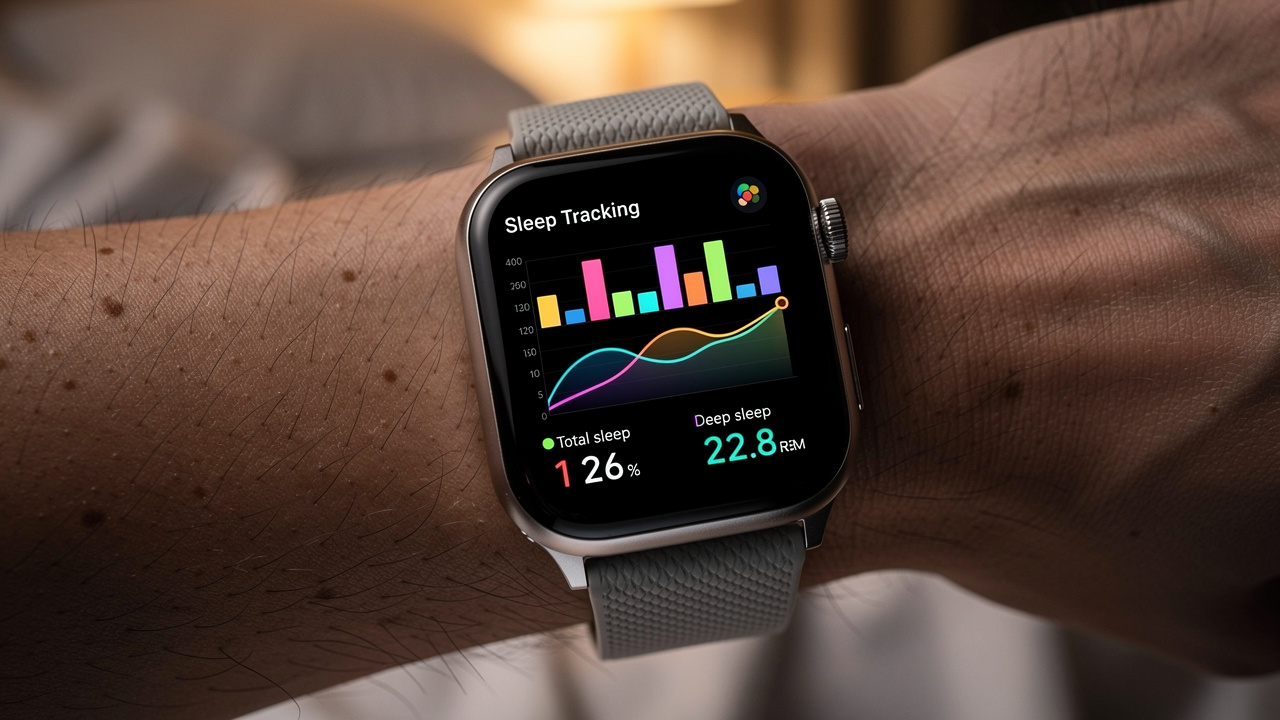
Most people judge sleep by how they feel when the alarm goes off. Feelings matter, but they are noisy. Caffeine, stress, and mood can hide improvements or exaggerate bad nights.
Data gives a cleaner view.
“What gets measured gets managed.” — Peter Drucker
Modern wearables—Oura Ring, WHOOP, Apple Watch—track heart rate, movement, and sometimes skin temperature all night. From those signals, they estimate sleep stages and autonomic activity. They are not perfect, but they are accurate enough to guide your decisions.
Five especially useful metrics:
-
-
Time from “lights out” to sleep.
-
Target: under 20 minutes most nights.
-
-
Wake after sleep onset (WASO)
-
Total minutes awake in the middle of the night.
-
Target: under ~30 minutes.
-
-
Deep sleep percentage
-
Aim: about 15–25% of total sleep.
-
-
REM sleep percentage
-
Aim: about 20–25% of total sleep.
-
-
Heart rate variability (HRV)
-
Higher (relative to your own baseline) usually means better recovery and nervous system balance.
-
Use a weekly review, not night-by-night reactions:
-
Average each metric over seven days.
-
Change one thing at a time (e.g., add NAD+ Nasal Spray, or shift workout days) and track for 2–3 weeks.
-
Look for shifts such as:
-
10–20% drop in sleep onset latency
-
WASO falling from 45 to 20–30 minutes
-
Deep sleep rising from ~10–12% to 15–18%
-
HRV climbing 10–30 points above baseline
-
Lab tests can confirm deeper benefits:
-
Fasting glucose / HbA1c: often improve with steadier sleep.
-
hsCRP: may fall as inflammation drops.
-
Sex hormones (testosterone, estradiol, etc.): can rise toward healthy ranges with better deep sleep.
-
Salivary cortisol curve: often shifts toward a more natural pattern as circadian rhythms stabilize.
Treat your sleep supplements and habits like levers you can test. Change, measure, decide—rather than guessing.
Special Populations – Sleep Optimization Strategies For Unique Challenges
Some groups face sleep challenges beyond typical stress and screens: shift workers, frequent travelers, and women in perimenopause or menopause. Synchronicity Health’s system still rests on the same pillars—circadian amplitude, nervous system balance, muscle recovery, and hygiene—but the details need adjustments.
Shift Workers And Travelers – Managing Circadian Disruption
Shift work and jet lag force your internal clock and the outside world out of sync. Night shifts ask you to be alert when your biology thinks it is 3 am. Long flights drop you in time zones your brain has not reached yet.
Smart melatonin and light use can help:
-
Melatonin
-
Use small doses (often 0.5–1 mg) at the time you want your biological evening to begin.
-
Night-shift example: take melatonin in late afternoon before a pre-shift nap.
-
Eastbound travel: use melatonin in the new local evening to push your clock forward.
-
-
Light exposure
-
Get bright light when you want your “morning” to be, even if that is 2 pm.
-
Block light with blackout curtains and eye masks when sleeping in daylight.
-
Use NAD+ Nasal Spray on waking in the new time zone to support clock gene adjustment.
-
-
Anchor sleep
-
Aim for at least one consistent 4-hour block of sleep at roughly the same local time each day.
-
After long flights, combine:
-
Morning light
-
Evening melatonin
-
Strict wake times for 3–5 days
-
-
Plan for about one day of adjustment per time zone crossed, and use your wearable to see when your rhythms settle.
Women In Perimenopause And Menopause – Addressing Hormonal Sleep Disruption
Hormonal shifts in perimenopause and menopause change sleep patterns dramatically. Declining estrogen and progesterone affect temperature control, breathing stability, and GABA signaling, leading to:
-
Night sweats and hot flashes
-
Early morning awakenings
-
New-onset insomnia or lighter sleep
Helpful strategies:
-
Temperature management
-
Keep the bedroom around or below 65°F if possible.
-
Choose breathable bedding and moisture-wicking sleepwear.
-
Consider a cooling mattress topper if heat surges wake you regularly.
-
-
Nervous system support
-
Falling progesterone reduces natural GABA-like effects.
-
Theanine Nasal Spray can help restore some inhibitory support without heavy sedation.
-
Magnesium (in an appropriate form and dose discussed with a clinician) may support relaxation and temperature control.
-
-
Resistance training and protein
-
Weight-bearing work supports bone density and muscle mass.
-
Two to three sessions per week, plus higher protein per meal, help counter muscle loss and support deep sleep pressure.
-
Many women also consider hormone replacement therapy (HRT). The Sync Stack can work alongside HRT, but any combination should be supervised by a physician. This group gains the most from a coordinated plan where medical care and Synchronicity Health’s protocols align.
The Prescription Sleep Aid Exit Strategy – How To Transition Off Dependency
For many people, prescription sleeping pills started as a short-term fix and quietly turned into a nightly habit. Benzodiazepines and “Z-drugs” (like zolpidem) can create dependence and weaken natural sleep systems over time.
Key principles for stepping away:
-
Never stop abruptly on your own.
Sudden withdrawal, especially from benzodiazepines, can trigger severe rebound insomnia, anxiety, and dangerous symptoms. This is a medical matter. -
Use a physician-supervised taper.
Commonly, doses are reduced by 10–25% every 1–2 weeks, with changes based on how you respond. The full process can take 3–6 months or longer after long-term use. -
Build your alternative system first.
For 4–6 weeks before tapering, put the core pieces in place:-
Consistent sleep and wake times
-
Cleaned-up caffeine and alcohol habits
-
Initial Synchronicity Health stack (Melatonin, Theanine, NAD+ Nasal Sprays)
-
Resistance training and light exposure patterns
-
During taper:
-
Expect rougher nights in the first 1–2 weeks after each dose reduction.
-
Lean on Theanine Nasal Spray for evening calm and keep training to build daytime sleep pressure.
-
Consider CBT-I (Cognitive Behavioral Therapy for Insomnia) to retrain thoughts and behaviors around sleep.
If withdrawal symptoms are intense or rebound insomnia lasts more than 2–3 weeks at any step, pause and consult your physician. The goal is steady progress toward natural sleep, not a fast, punishing break.
The Economic Reality – What Quality Sleep Optimization Actually Costs
Poor sleep is expensive, even if you never see a line item labeled “insomnia” on a bill.
Common costs:
-
Lost productivity
-
Slower work, more mistakes, and more sick days can cost thousands per year.
-
-
The “supplement graveyard”
-
Half-used bottles of random sleep supplements at $30–$60 each add up over time.
-
-
Long-term prescription use
-
Even with insurance, many sleeping pills cost $40–$150 per month when you add co-pays and visits.
-
-
NAD+ IV clinics
-
At $400–$800 per session, weekly visits can reach $1,600–$3,200 monthly.
-
The Sync Stack from Synchronicity Health is designed to deliver near–IV-level NAD+ impact and targeted sleep support at a fraction of that cost. You pay for:
-
NAD+ Nasal Spray
-
Melatonin Nasal Spray
-
Forage Adaptogenic Mushroom Blend (if indicated)
Plus optional items:
-
A basic gym membership or home equipment (or even just bodyweight training)
-
A wearable device (one-time cost of roughly $200–$400)
The first couple of months may feel like an investment while you buy sprays and adjust routines. By months 3–6, many people notice:
-
Fewer afternoon crashes
-
More stable performance
-
Fewer sick days
Over years, better sleep also supports lower healthcare costs and higher earning potential. Sleep feels “free,” but chronic poor sleep is not.
Common Mistakes And How To Avoid Them
Even with good tools, people often repeat the same patterns when they try to fix sleep. Knowing these mistakes early makes them easier to avoid.
Mistake #1 – Expecting Immediate Transformation
Drug ads teach us to expect overnight miracles. System-level sleep work rarely behaves that way. You may notice:
-
1–2 weeks: faster sleep onset, slightly better mornings.
-
4–6 weeks: clearer shifts in HRV, deep sleep, and WASO.
-
8–12+ weeks: deeper changes in energy, mood, and health markers.
Wearable data often improves before your subjective sense of “I feel different” catches up. Patience pays off.
Mistake #2 – Implementing Too Many Changes Simultaneously
When you are exhausted, it is tempting to change everything at once—new diet, several sleep supplements, hard workouts, strict bedtime. If things get worse, you have no idea which change caused the problem.
The Sync Stack protocol staggers changes by week so you can see the impact of each lever. Combined with wearable data, this helps you build a personal playbook instead of living in confusion.
Mistake #3 – Neglecting The Muscle-Recovery Connection
Many people focused on brain performance skip resistance training, believing diet and supplements alone will carry them. That choice leaves a huge sleep lever untouched.
Even two to three short resistance sessions per week can:
-
Raise sleep pressure
-
Increase deep sleep
-
Improve metabolic health
When you give your body something to repair, your sleep supplements work in a richer context.
Mistake #4 – Inconsistent Application
Some people follow perfect routines Monday through Thursday and throw everything out on Friday and Saturday—late nights, heavy drinks, erratic sleep. The result is social jet lag that can take half the week to clear.
Real life includes events and curveballs, but you can use damage-control tactics:
-
Keep wake time steady, even after a late night.
-
Get strong morning light the next day.
-
Return to your normal bedtime the following night instead of dragging the chaos across several days.
Conclusion
Most failed sleep supplements are not proof that your body is broken. They are evidence that the products were never designed to match how sleep really works.
Across this article, we covered five major failure points:
-
Faded circadian rhythm amplitude from age-related NAD+ decline
-
Nervous system dysregulation and chronic fight-or-flight
-
Poor bioavailability and random timing of many oral supplements
-
Lack of muscle recovery demand from resistance training
-
Weak sleep hygiene and the absence of meaningful measurement
The shift that changes everything is moving from “Which pill should I try?” to “How do I build a sleep system that works together?”
Synchronicity Health’s 2025 Sync Stack exists for that purpose. Physician-formulated nasal sprays—NAD+, Melatonin, and Theanine—are third-party tested for purity and potency. They are paired with resistance training, smart light exposure, clear protein targets, and wearable-guided feedback.
If you have cycled through products and felt like nothing works, the problem has been the approach, not your biology. With 4–8 weeks of steady application—and 8–12 weeks for deeper changes—many people see clear progress in both how they feel and what their data shows.
To move from reading to action:
-
Choose a start date.
-
Put Week 1 of the Sync Stack protocol on your calendar.
-
Treat the next 12 weeks as a structured experiment, not a vague hope.
Night by night, data point by data point, better sleep can become your new baseline.
FAQs
Question – How Long Does It Take To See Results From The Sync Stack?
Most people notice early changes within 1–2 weeks of starting the Sync Stack. Common first shifts include:
-
Falling asleep faster
-
Fewer wake-ups in the first part of the night
-
Slightly more stable daytime energy
Between weeks 4 and 6, wearable metrics such as HRV, deep sleep percentage, and wake time after sleep onset usually show clearer improvement. Deeper changes—better body composition, nicer blood sugar and inflammation markers—often appear between 8 and 12 weeks.
Age, starting health, and how closely you follow the protocol all influence timing. Those with long-standing circadian disruption may need 12–16 weeks for full benefit. Slow, steady progress is far more sustainable than dramatic overnight swings.
Question – Can I Use The Sync Stack If I Am Already Taking Prescription Sleep Medication?
In many cases, yes—but always with medical guidance.
Best practice:
-
Talk with the doctor who prescribed your medication.
-
Share exactly which sleep supplements you plan to add (NAD+ Nasal Spray, Melatonin Nasal Spray, Theanine Nasal Spray, and any adaptogenic blends).
Many physicians are comfortable combining physiologic doses of these products with existing prescriptions, because the Sync Stack supports natural sleep pathways rather than adding more sedation.
A common strategy is:
-
Build the Sync Stack and sleep hygiene habits first while keeping your prescription dose stable for 4–6 weeks.
-
Watch for signs that your natural sleep is getting stronger: faster sleep onset, more stable nights, better daytime energy.
-
When the time is right, your doctor can guide a slow taper off the prescription drug while you continue the Sync Stack.
This combination often makes the transition smoother—but your clinician’s oversight is essential for safety and long-term success.


Leave a comment
All comments are moderated before being published.
This site is protected by hCaptcha and the hCaptcha Privacy Policy and Terms of Service apply.