
Introduction
During an all-out sprint, the muscle fibers in the legs can demand more than one hundred times the ATP they use at rest. Every one of those ATP molecules depends on a quiet workhorse inside cells called NAD+. When people talk about biohacking, supplements, or workout plans, NAD+ and exercise often stay in the background, even though this molecule helps decide how long hard efforts can last and how fast recovery feels.
NAD+ (nicotinamide adenine dinucleotide) is a coenzyme that lives in every cell. It flips back and forth between two forms, NAD+ and NADH, moving electrons so cells can turn food into ATP. It also supports DNA repair and cell signaling. That means NAD+ sits right where energy, aging, and training stress meet.
Here is the tension: as the years pass, NAD+ levels drop. Intense training, poor sleep, and daily stress put more strain on the same pool. For many active adults, this shows up as fading energy, slower recovery, and workouts that feel harder than they used to, even with the same effort.
NAD+ is not the only energy system at work during hard efforts. Creatine refills ATP in the first seconds of a sprint or a heavy lift, which is why it is one of the most studied supplements for strength training. Our Creatine Monohydrate Powder, 5 g per scoop, is coming soon.
This article walks through how NAD+ and exercise fit together. It covers:
- What NAD+ actually does in muscle
- What happens to it during a workout
- How training changes NAD+ over time
- What the research says on precursors like NMN and NR
- Where Synchronicity Health’s NAD+ system fits in
By the end, you will have a clear playbook for using science-backed strategies to support cellular energy, endurance, and recovery.
Think of NAD+ as a metabolic switchboard that decides whether your cells can keep up when training gets hard.
Key Takeaways
- NAD+ is a central coenzyme for ATP production in working muscle. When levels fall, energy production during hard efforts becomes less efficient and fatigue arrives faster. It also supports DNA repair and cell signaling that keep muscle cells healthy over time. For this reason, NAD+ and exercise are tightly linked at the most basic cellular level.
- Exercise briefly stresses NAD+ but raises capacity over time. A single workout temporarily disrupts NAD+ balance, yet regular training pushes the body to build the enzymes that recycle and rebuild NAD+. This means exercise stresses NAD+ in the short term but raises baseline capacity over weeks and months. In midlife, age-related decline can outpace this natural gain, which is when smart support with targeted supplementation starts to matter more.
- Context and delivery route matter for supplementation. Research points toward NAD+ precursors helping most when there is clear NAD+ deficit, such as in older adults or people with metabolic issues. NMN shows promising human data for insulin sensitivity and aerobic efficiency, while NR has stronger data in specific animal models than in healthy athletes. Delivery route is key, and high-bioavailability options like Synchronicity Health’s NAD+ Nasal Spray pair well with NMN and Sync Stacks for a complete training and recovery plan.

Featured in this article
NAD+ Nasal SpraySupports cellular energy, focus and healthy aging. A needle-free alternative to NAD+ IV.
Shop NAD+ Nasal SprayThird-party tested ingredients. Vegan, non-GMO, made in the USA.
What Is NAD+ And Why Does It Matter For Exercise?
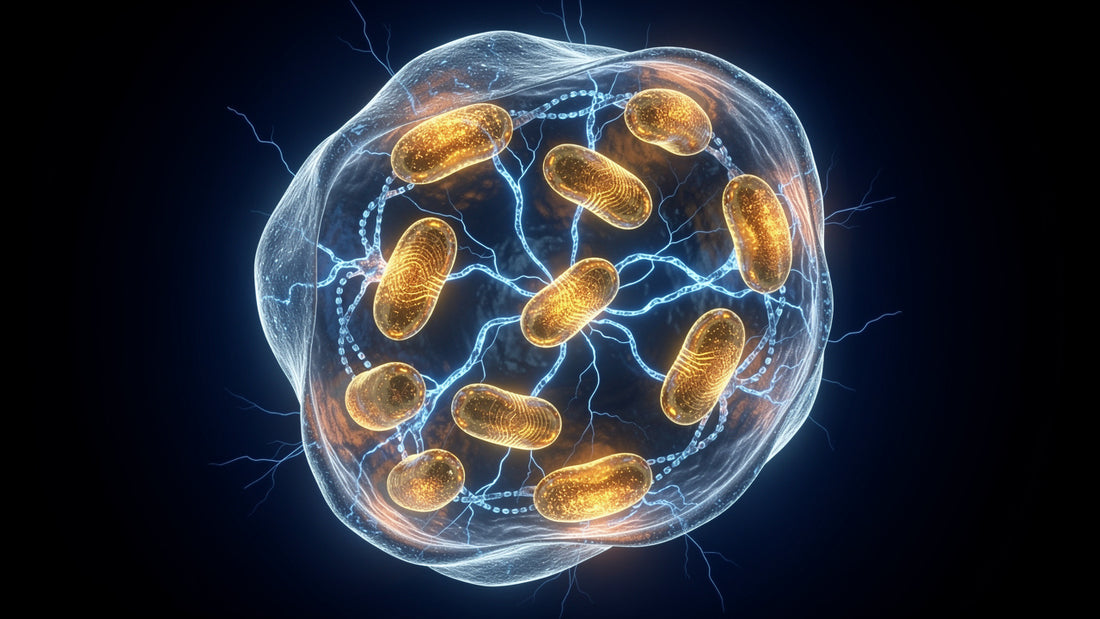
NAD+ is a coenzyme found in every living cell. It rotates between an oxidized form (NAD+) and a reduced form (NADH). Together, this pair works as the main electron shuttle in metabolism. When food is broken down, electrons move onto NAD+, turning it into NADH. NADH then drops those electrons into the mitochondrial electron transport chain so ATP can be made.
For exercise, this matters because nearly all ATP used for muscle contraction depends on this NAD+/NADH cycle. During glycolysis in the cytosol and the TCA cycle in mitochondria, NAD+ picks up electrons and becomes NADH again and again. In oxidative phosphorylation, NADH donates those electrons, the cell rebuilds NAD+, and ATP production continues. If NAD+ runs low, this cycle slows, and so does power output.
NAD+ also feeds key enzymes that control signaling and repair:
- Sirtuins (SIRT1-SIRT7) are NAD+-dependent enzymes that help manage gene expression, mitochondrial function, and stress resistance.
- PARPs use large amounts of NAD+ when they repair DNA.
- CD38 and CD157 break down NAD+ during immune and calcium signaling.
These families all tap into the same NAD+ pool.
Skeletal muscle is especially sensitive to the state of this pool. During intense bouts of NAD+ and exercise stress, working fibers burn through ATP at high speed. Mitochondria must keep up, and sirtuins and PARPs are very active. If NAD+ availability drops too far, both energy metabolism and repair suffer.
So NAD+ is far more than an “energy vitamin.” It acts as a master regulator for cellular health. It helps decide:
- How well muscle cells meet high ATP demand
- How cleanly mitochondria run
- How quickly DNA damage from heavy training gets repaired
When thinking about NAD+ and exercise, that full picture of both energy and repair is what really matters.
Energy, repair, and resilience all meet at the level of NAD+.
How Exercise Affects NAD+ Levels: Acute Disruption To Chronic Adaptation
Exercise does not have a simple “up or down” effect on NAD+. A single workout can temporarily disturb NAD+ and NADH, while months of training can raise overall NAD+ capacity. Understanding both sides explains why training is one of the strongest tools for long-term NAD+ support.
The Immediate Impact: What Happens To NAD+ During A Single Workout

In resting human skeletal muscle, NAD+ sits around 1.5 to 1.9 mmol per kilogram of dry tissue, while NADH is much lower. This means the NAD+/NADH ratio is high and favors energy production. As soon as a workout begins, that balance shifts in ways that depend on how hard the session is.
- Low to moderate intensity (easy cycling or a comfortable jog): mitochondria can keep up with the NADH made by glycolysis and the TCA cycle. NADH is re-oxidized back to NAD+ at a good rate. In some work, total NADH even drops a bit, which means the NAD+/NADH ratio stays steady or climbs.
- Near threshold and all-out efforts: glycolysis speeds up sharply. NADH production can exceed the rate at which mitochondria can clear it. NADH can double compared with rest. To keep glycolysis going, cells push more pyruvate toward lactate, which helps rebuild NAD+ quickly in the cytosol. This is one reason lactate rises with hard work.
These shifts are not a failure. They are the stress signals that later lead to adaptation of NAD+ pathways and mitochondria. Exact patterns will vary with training status, age, and type of exercise, but the general trend remains.
A simple overview of how the NAD+/NADH balance behaves at different intensities looks like this:
|
Exercise Intensity |
NADH Trend In Muscle |
NAD+/NADH Ratio Trend |
Main Features |
|---|---|---|---|
|
Rest |
Low and stable |
High |
Supports steady ATP production at baseline |
|
Easy To Moderate |
Stable or slightly lower |
Stable or slightly higher |
Mitochondria handle demand well |
|
Near Threshold |
Rising |
Falling |
Glycolysis speeds up, more lactate formed |
|
Maximal Sprints |
Marked rise |
Sharp fall |
Very high glycolytic flow, strong NAD+ recycling through lactate |
Long-Term Adaptations: How Chronic Training Rebuilds The NAD+ System
While each session briefly disrupts NAD+ balance, regular training pushes the body to build a stronger NAD+ network. One of the key players here is NAMPT, the rate-limiting enzyme in the main salvage pathway that recycles nicotinamide back into NAD+.
Research in both animals and humans shows that people who train regularly have higher NAD+ rebuilds in muscle than sedentary peers. Over time, this raises baseline NAD+ content and helps muscle handle repeated bouts of NAD+ and exercise stress with more ease. The more efficient salvage pathway can refill NAD+ faster after each hard effort.
A major signaling link is AMPK, an energy sensor that turns on when cells sense a drop in ATP and a rise in AMP. Intense bouts increase AMPK activity. In turn, AMPK boosts NAMPT gene expression. With repeated activation, the muscle builds higher NAMPT protein levels, and the salvage loop becomes more active even at rest.
This pattern is not limited to muscle:
- The liver adjusts its NAD+ handling in response to training.
- Adipose tissue releases extracellular NAMPT that may support brain NAD+.
- The brain itself appears to benefit from repeated mild metabolic stress during regular exercise.
The key idea is that every workout is both a short-term stress and a long-term investment. On the day of the session, NAD+ is pushed hard. Across weeks and months, the cell responds by raising its NAD+ recycling capacity, giving a higher ceiling for both performance and recovery.
Consistent training teaches your cells to guard and rebuild their NAD+ supply more efficiently over time.
NAD+ And Mitochondrial Adaptation: Separating Signal From Noise
As NAD+ moved into the spotlight of biohacking and longevity, one story became very popular. The idea was that NAD+ and exercise help performance almost entirely through a single pathway centered on SIRT1 and PGC-1α. This story is attractive and simple, but the full picture is more complex.
The SIRT1/PGC-1α Paradigm: The Theory That Captured The Field
The classic model goes like this. When cells face energy stress from exercise or calorie restriction, the NAD+/NADH ratio rises. Higher NAD+ activates SIRT1. Active SIRT1 then removes acetyl groups from PGC-1α, which boosts PGC-1α activity. That leads to more mitochondrial biogenesis and stronger oxidative capacity in muscle.
Cell culture work gave this idea strong support. In C2C12 muscle cells, extra SIRT1 led to higher expression of mitochondrial genes. When glucose was lowered, which was thought to raise NAD+, the SIRT1-PGC-1α network turned on and pushed the cells toward a more oxidative state. Similar findings in neurons and liver cells added more appeal.
For a while, this created a neat view: raise NAD+, trigger SIRT1, and gain better mitochondria and performance. Many NAD+ boosters were then marketed as if this was the full story for NAD+ and exercise.
What In Vivo Research Actually Shows
Once researchers tested this model in live animals and humans, the data became far less simple. Some of the most telling work comes from mice where SIRT1 was removed just from skeletal muscle. These animals still showed normal mitochondrial gains from both acute and chronic training. In other words, classic training benefits did not require muscle SIRT1 at all.
When SIRT1 was overexpressed in mouse muscle, the result was not a straight line to better mitochondria either. In some cases, SIRT1 overexpression led to less PGC-1α and a drop in important mitochondrial proteins. Some studies even saw total SIRT1 protein levels fall after exhaustive exercise, even though its activity markers rose.
Human data point in the same direction. While exercise can change SIRT1 activity and related genes, blocking or boosting SIRT1 alone does not seem to make or break the mitochondrial response to training. Other sirtuins, such as the mitochondrial SIRT3, as well as AMPK and many NAD+-independent pathways, help carry the load.
The main lesson is that biology uses several overlapping networks to protect such a vital response as training adaptation. NAD+ still matters, but not only through SIRT1 and PGC-1α. For people interested in NAD+ and exercise, this means better NAD+ status can support energy production, repair, and stress management through many routes, not just one fashionable pathway.
When it comes to adaptation, there is no single “magic switch”: NAD+ supports a web of systems that rise or fall together.
Aging, NAD+ Decline, And The Exercise-Performance Gap

One of the most consistent findings in aging research is that NAD+ levels fall across tissues with time. Skeletal muscle, liver, and brain all show this pattern. For active adults in their late thirties, forties, and fifties, that decline can show up as lower energy, slower recovery, and more soreness that lingers between sessions.
Two main forces drive this drop:
- NAD+ consumption rises. CD38, a major NAD+-breaking enzyme on cell surfaces, becomes more active with age. At the same time, long-term DNA damage builds up, and PARPs stay more active to deal with it. Both CD38 and PARPs draw down the NAD+ pool.
- NAD+ synthesis through the salvage pathway becomes less efficient. Levels and activity of NAMPT tend to fall, so cells have a harder time recycling nicotinamide into fresh NAD+. That means the same training stress taps into a smaller and slower-to-rebuild pool of NAD+.
For exercise, the downstream effects add up:
- Mitochondria do not produce ATP as cleanly, so threshold efforts feel harder and endurance fades more quickly.
- SIRT3 activity in mitochondria may slide, so key enzymes stay less active and oxidative stress grows.
- DNA repair becomes slower, and low-grade inflammation builds, which many researchers refer to as inflammaging.
- Muscle protein turnover also slows, so fibers rebuild more slowly after heavy sessions.
For adults over 40, the combined effect of age-related NAD+ depletion and exercise-induced NAD+ demand creates a recovery deficit that compounds with each training cycle.
Exercise itself still helps. Regular training raises NAMPT, improves mitochondrial function, and is one of the best tools for long-term NAD+ support. Yet for many midlife athletes and busy professionals, age, stress, and workload can outrun the body’s natural capacity to keep NAD+ high. This is exactly where well-designed NAD+ support can make a real difference for NAD+ and exercise performance.
NAD+ Supplementation And Exercise: What The Science Actually Says
As interest in NAD+ and exercise has grown, many people have turned to precursors like NMN and NR. Research has looked at these compounds both in models with low NAD+ and in healthy, young athletes. Looking at the science with clear eyes helps set smart expectations.
NMN Supplementation: The More Promising Precursor
NMN (nicotinamide mononucleotide) sits just one step away from NAD+ in the salvage pathway. Inside cells, NMN can be turned into NAD+ without going through the rate-limiting NAMPT step. This gives it a logical edge over some older vitamin B3 forms.
A few key findings:
- In one important trial, women with above-normal blood sugar took 250 mg of NMN daily for ten weeks. They showed better insulin sensitivity in skeletal muscle, a strong sign of improved metabolic health. Detailed analysis also found shifts in the muscle NAD+ metabolome, suggesting that NMN was entering the pathway and affecting how NAD+ was handled.
- Another study followed amateur runners during six weeks of endurance training. Groups received 300, 600, or 1200 mg of NMN daily. VO2max did not change, yet power and oxygen use at the ventilatory threshold improved. That threshold marks the point where breathing and lactate begin to rise more quickly. A higher threshold usually means better real-world pace in events that last several minutes to an hour.
- Animal work in aged mice lines up with these findings. Long-term NMN intake helped older animals keep better exercise capacity and muscle function than controls.
Taken together, these results suggest that NMN can support NAD+ and exercise adaptation, especially where there is some metabolic stress or early deficit.
NR Supplementation: From Animal Models To Healthy Athletes
Nicotinamide riboside (NR) is another vitamin B3 form that can feed into NAD+ production. Early rodent research created a lot of hope. In one widely cited study, mice on a high-fat diet that received NR stayed leaner, had higher energy use, and showed around a 25 percent gain in endurance, along with more mitochondria in muscle.
Further work in specific animal models supported NR in certain settings:
- In mouse models of inherited muscle conditions, NR helped restore muscle NAD+, improve mitochondrial function, and support better movement.
- These are states where NAD+ machinery is clearly strained and extra support meets an obvious need.
However, when studies moved to healthy humans or those with reduced insulin sensitivity, the story changed:
- In men with excess body weight and reduced insulin sensitivity, twelve weeks of NR at one gram twice a day did not raise muscle NAD+ or improve mitochondrial respiration.
- Another study in older men, with one gram daily for three weeks, also did not improve mitochondrial measures.
- In young, healthy men, one week of NR loading at one gram per day before an endurance session did not raise muscle NAD+, NMN, or nicotinamide. Markers related to SIRT1, SIRT3, and PGC-1α signaling after exercise also stayed the same.
Metabolite profiles showed that NR was processed, with more downstream products like Me2PY and Me4PY.
These findings support a consistent idea: both NMN and NR seem most helpful when cells start from a place of low NAD+ or stressed metabolism. Context matters more than any single compound.
Supplements tend to help the most when they correct a real deficit, not when the system is already close to its ceiling.
How Synchronicity Health Addresses The Real Barriers To NAD+ Optimization

Three real-world barriers stand between many people and better NAD+ status:
- Oral forms often have poor bioavailability.
- IV therapy is costly and time-heavy.
- Age-related changes slow NAD+ synthesis even when lifestyle is solid.
Synchronicity Health was built to address these exact problems.
The NAD+ Nasal Spray sits at the center of this approach. Intranasal delivery means NAD+ is absorbed through the lining of the nose instead of being swallowed like a capsule, so some of each dose skips digestion. This route is designed for high bioavailability. It has a rapid onset and supports cellular and brain energy.
NMN Capsules then provide steady background support. While the spray offers a rapid rise in available NAD+, daily NMN gives cells more raw material to build their own NAD+ through the salvage pathway. This pairing speaks directly to what research suggests about NAD+ and exercise in midlife, where both acute performance and baseline capacity matter.
Sync Stacks combine these tools with targeted allies such as Cordyceps mushroom to support VO2 max, endurance, and recovery goals. Instead of depending on a single ingredient, these stacks align several pathways at once, including:
- Mitochondrial function
- Circulation
- Healthy aging defenses
Glutathione Nasal Spray adds another layer during heavy training blocks. Hard efforts raise oxidative stress, and glutathione is one of the body’s main internal antioxidants. Intranasal glutathione can support redox balance when NAD+ pathways are working at high speed. Melatonin Nasal Spray rounds out the system at night, helping align sleep and nighttime repair, when many NAD+-dependent DNA repair and clean-up processes are most active.
All Synchronicity Health products are formulated to a clean-label standard and made with third-party tested ingredients, verified for identity, purity, and potency, so users can trust what they are actually taking.
Synchronicity Health's NAD+ Nasal Spray delivers a needle-free alternative to IV without the clinic or the four-figure price tag.
For people serious about NAD+ and exercise performance, that combination of a high-bioavailability design, clean-label formulation, and stackable protocols offers a practical path to better cellular energy at home.
Practical Strategies: Optimizing NAD+ For Training And Recovery
Perfect NAD+ status does not come from a single capsule or spray. It grows from layers that fit together: training, smart support, sleep, and redox balance. A simple framework makes it easier to connect NAD+ and exercise in daily life.
-
Structured Movement
The first layer is structured movement. Consistent endurance and resistance training raise NAMPT, build mitochondrial capacity, and support higher baseline NAD+. For most adults, this means several sessions of moderate to hard cardio each week, mixed with at least two strength sessions that challenge large muscle groups. -
Targeted Supplementation
The second layer is targeted supplementation. Morning use of Synchronicity Health’s NAD+ Nasal Spray can align with natural cortisol and energy rhythms, giving cells a ready pool of NAD+ when the day’s demands start. NMN Capsules support the salvage pathway across the day, building a more generous background pool over weeks. -
Sleep And Circadian Rhythm
The third layer is sleep and circadian rhythm. NAD+ levels and sirtuin activity move in daily cycles linked to clock genes. High-quality sleep is when much DNA repair and mitochondrial clean-up happens. Using Melatonin Nasal Spray at night can support deeper, more regular sleep so those NAD+-dependent processes run closer to their best. -
Antioxidant Support
The fourth layer is antioxidant support. During hard blocks of training, pairing NAD+ sprays with Glutathione Nasal Spray can help the body manage extra reactive oxygen species. This can support better day-after readiness, especially when workouts stack close together.
Some people will gain the most from this layered approach. Examples include:
- Adults over 35 who feel energy slipping, experience more soreness, or need more days between hard sessions
- Athletes in very high-volume training phases
- People moving from sedentary habits to regular training, where NAD+ demand rises before NAMPT has time to adapt
A simple sample stack can help put these ideas into practice:
|
Goal |
Products |
Timing |
|---|---|---|
|
Better Daily Energy And Focus |
NAD+ Nasal Spray, NMN Capsules |
Spray in the morning, NMN with breakfast |
|
Faster Recovery Between Hard Sessions |
NAD+ Nasal Spray, NMN Capsules, Glutathione Nasal Spray |
Spray and NMN in the morning, glutathione after training or evening |
|
Endurance And VO2 Support |
NAD+ Nasal Spray, NMN Capsules, Cordyceps in Sync Stack |
Spray before training, NMN in the morning, Cordyceps with meals |
|
Sleep And Overnight Repair |
NMN Capsules, Melatonin Nasal Spray |
NMN in the morning, melatonin before bed |
Synchronicity Health NAD+ support is built for steady energy and mental clarity. Steady use works best when paired with regular training and good sleep.
Think of NAD+ support as a training partner: it cannot do the work for you, but it can help you show up fresher and recover faster.
Conclusion
NAD+ is not a passing wellness trend. It is a foundational molecule that powers ATP production, supports DNA repair, and guides key signaling pathways in almost every cell. When thinking about NAD+ and exercise, this means the state of an athlete’s NAD+ network has a direct impact on how hard they can push, how well they recover, and how they age.
The science tells a clear three-part story:
- NAD+ drives energy production during each workout.
- Exercise itself trains the body to build and recycle more NAD+ over time.
- Age, stress, and heavy training can draw down NAD+ faster than the body can replace it, especially from the mid-thirties onward.
Supplementation works best when it addresses a real need. NMN and similar precursors are most helpful where NAD+ is strained, not in already well-functioning muscle. Delivery route then decides how much of what is taken by mouth or nose actually reaches the cells that matter. This is where intranasal NAD+, designed for high bioavailability, and thoughtful stacking come in.
For anyone serious about long-term performance and healthspan, NAD+ deserves a firm spot beside training, nutrition, and sleep. Synchronicity Health’s Sync Stacks, NAD+ Nasal Spray, NMN Capsules, and supporting sprays give a science-based way to support that system every day. The goal is not a quick fix, but steady support for cellular energy that carries through years of training, work, and life.
Support NAD+, and you are investing in the engines that power every stride, lift, and interval you complete.
Sources
- Steinberg GR, Hardie DG. New insights into activation and function of the AMPK. Nature Reviews Molecular Cell Biology, 2023. PubMed
- Camacho-Pereira J et al. CD38 dictates age-related NAD decline and mitochondrial dysfunction through an SIRT3-dependent mechanism. Cell Metabolism, 2016. PubMed
- Yoshino M et al. Nicotinamide mononucleotide increases muscle insulin sensitivity in prediabetic women. Science, 2021. PubMed
- Liao B et al. Nicotinamide mononucleotide supplementation enhances aerobic capacity in amateur runners: a randomized, double-blind study. Journal of the International Society of Sports Nutrition, 2021. PubMed
- Dollerup OL et al. Nicotinamide riboside does not alter mitochondrial respiration, content or morphology in skeletal muscle from obese and insulin-resistant men. Journal of Physiology, 2020. PubMed
FAQs
Question 1: Does NAD+ Supplementation Actually Improve Athletic Performance?
Current evidence suggests that NAD+ support helps most when there is some degree of NAD+ deficit. This includes older adults, people with insulin resistance, or anyone under long-term metabolic stress. In these groups, NMN has shown gains in muscle insulin sensitivity and modest improvements in ventilatory threshold during training.
High-bioavailability forms like NAD+ Nasal Spray, paired with the Shilajit in Forage, can be part of that support. Benefits may show up not only as better numbers in the gym but also as:
- Steadier energy during the day
- Faster recovery between sessions
- Clearer focus during workouts
Question 2: What Is The Best NAD+ Supplement For Exercise Recovery?
The most important factor is how much NAD+ actually reaches the bloodstream and tissues. Intranasal NAD+ is designed for high bioavailability. That makes Synchronicity Health’s NAD+ Nasal Spray a strong base for recovery support.
NMN Capsules add steady background support by feeding the salvage pathway. For people who want a more complete plan, Sync Stacks that combine NAD+ Nasal Spray, NMN, and Cordyceps can support both aerobic power and post-workout repair. During intense phases, Glutathione Nasal Spray adds antioxidant support that pairs well with higher NAD+ turnover.
Question 3: How Does Age Affect NAD+ And Exercise Performance?
With age, enzymes that break down NAD+, such as CD38 and PARPs, become more active, while NAMPT in the salvage pathway often slows down. The result is a steady drop in NAD+ across tissues, including skeletal muscle. This leads to:
- Weaker mitochondrial output
- Slower DNA repair
- More inflammation
- Delayed muscle recovery
Adults over 35 may notice this as longer soreness, less tolerance for back-to-back hard days, and a general sense that “the tank empties faster.” In this group, well-planned NAD+ support and consistent training can help narrow that gap.
Question 4: Can I Get Enough NAD+ Support From Exercise Alone?
Regular training is one of the strongest natural drivers of higher NAD+. By raising NAMPT and pushing mitochondria to adapt, exercise builds a more capable NAD+ system over time. For younger adults with no major health issues, this may be enough.
As the years pass, though, age-related enzyme changes and life stress often mean that exercise alone cannot return NAD+ to youthful levels. In those cases, adding high-bioavailability NAD+ support, such as NAD+ Nasal Spray plus NMN, can act as a helpful partner to an already solid exercise habit.
Question 5: Is NAD+ IV Therapy Worth It For Athletes?
NAD+ IV programs send NAD+ straight into the bloodstream at high doses, yet they come with real costs. Sessions can run into several hundred dollars and take two to four hours in a clinic chair. For most athletes and busy professionals, that makes regular use hard to maintain.
Synchronicity Health’s NAD+ Nasal Spray offers a needle-free alternative without the clinic visit. It makes daily NAD+ and exercise support realistic, which is what matters most if the goal is steady gains in performance and recovery rather than a one-time spike. Check out our blog to learn more.
Featured in this article
NAD+ Nasal SpraySupports cellular energy, focus and healthy aging. A needle-free alternative to NAD+ IV.
Shop NAD+ Nasal SprayThird-party tested ingredients. Vegan, non-GMO, made in the USA.


Leave a comment
All comments are moderated before being published.
This site is protected by hCaptcha and the hCaptcha Privacy Policy and Terms of Service apply.