
Introduction
Testosterone is often talked about like a “gym hormone,” but it runs far more than muscle. It quietly shapes how strong a person feels, how sharp the mind works, how steady the mood is, and how high or low energy stays through the day. When levels slip, it can feel like someone turned the dimmer switch down on strength, drive, and focus. That is when many people start searching for supplements to support testosterone and wondering what actually works. Herbs such as epimedium are covered in our horny goat weed guide, and the link between drive and brain chemistry in what is dopamine.
Science is clear that testosterone does not stay at its peak forever. Levels tend to drop about 0.4 to 2 percent per year after age 30, and more than one-third of men over 45 live with levels below the normal range. At the same time, a huge supplement market promises easy fixes with “testosterone boosters,” “testosterone supplements,” and every kind of herbal blend. The trouble is that the claims often sound stronger than the data behind them.
This guide takes a different route. It looks at which supplements to support testosterone have been studied in men, what those studies measured, and how lifestyle, cellular energy, and stress control set the real foundation for healthy hormones. It also shows how Synchronicity Health focuses on upstream factors like NAD+ status, mitochondrial health, and stress resilience so the body is better prepared to regulate testosterone on its own. By the end, you will have a clear, science-backed plan to support hormones naturally, avoid risky products, and build a long-term protocol that matches performance and longevity goals.
Key Takeaways
- Most people start looking for supplements to support testosterone when strength, energy, and libido feel lower than they used to. Some of this change is normal with age, but that does not mean feeling drained is “just how it has to be.” A targeted blend of smart lifestyle choices and a few well-chosen testosterone-supporting supplements can make a real difference.
- The supplement aisle is crowded with testosterone boosters built on long lists of herbs and vitamins. The human research behind each ingredient varies widely, and a few have even been linked to a drop in testosterone in some studies. Learning which ingredients have science behind them protects both health and wallet.
- Hormones do not work in isolation, and testosterone is no exception. Choices around sleep, training, stress, diet, and cellular energy support (such as NAD+-focused products from Synchronicity Health) set the stage for how well any supplement for testosterone works. When the foundation improves, modest, evidence-based supplements go much further.

Featured in this article
Berberine BlendBerberine paired with Ceylon cinnamon for healthy blood sugar and metabolic support.
Shop Berberine BlendThird-party tested ingredients. Vegan, non-GMO, made in the USA.
Understanding Testosterone Function, Decline, and Natural Support Options
Testosterone is the main male sex hormone, but both men and women rely on it. In men, it drives sperm production, supports libido, and shapes the deeper voice and facial and body hair during puberty. It also helps keep muscles strong, bones dense, and reaction speed and cognitive function sharp. In women, smaller amounts support mood, energy, muscle tone, and sex drive because much of their testosterone converts to estrogen.
As the years pass, several systems that control testosterone begin to slow down. The testes may not produce as much, the signaling loop between the brain and testes (the hypothalamic-pituitary-gonadal axis) can weaken, and extra body fat increases aromatase, the enzyme that converts testosterone into estrogen. More fat often leads to more estrogen and even less testosterone, which can create a frustrating cycle.
Low or low-normal testosterone can show up in many ways. Common signs include:
- Loss of muscle or strength
- Gain in belly fat
- Reduced libido or sexual interest
- Erectile issues
- Breast tissue growth in men
- Irritability or low mood
- Brain fog or slower thinking
- Daytime fatigue
These symptoms are non-specific and can also come from poor sleep, low mood, thyroid problems, or medication side effects. Because testosterone naturally fluctuates through the day, a proper diagnosis needs careful blood testing and a doctor who understands the clinical picture. That is why self-diagnosing from symptoms alone and grabbing random testosterone supplements is not a smart move.
Hormones respond to habits long before they respond to pills.
The Critical Difference: Supplements Vs. Testosterone Replacement Therapy (TRT)
There is an important difference between over-the-counter testosterone boosters and medical testosterone replacement therapy (TRT). Many store-bought products are blends of vitamins, minerals, and herbs sold as natural supplements to support testosterone. They may promise better libido, more muscle, and higher energy by nudging the body to make more of its own hormone. The Food and Drug Administration does not treat these as drugs, which means they cannot legally claim to treat low testosterone as a disease, and they do not go through the same pre-approval testing as prescriptions.
Testosterone replacement therapy, often shortened to TRT, is something very different. It uses prescription testosterone in the form of injections, gels, or patches. Doctors prescribe TRT to people whose lab tests confirm testosterone well below the normal range plus clear symptoms, or for gender-affirming care in transgender and some non-binary individuals. Because TRT delivers testosterone directly, it comes with a defined benefit and risk profile, needs regular blood work, and requires medical supervision to adjust dose and watch for side effects.
This article focuses on natural support strategies and supplements for testosterone in people with normal-to-low or borderline levels, not on replacing the hormone itself. Anyone with significant symptoms should talk to a medical professional, get proper testing, and discuss whether lifestyle, supplements, TRT, or a mix of these is the safest plan.
The Supplement Industry Reality Check and What Science Actually Says
Walk into any supplement shop and it looks like everyone has suddenly discovered a quick fix for testosterone. Roughly half of adults in the United States take some kind of supplement, and testosterone boosters have become a major category aimed at men who want more strength, sex drive, and energy. Slick branding and bold promises make it hard to resist, especially when fatigue and low motivation are already a problem.
When researchers examined the composition and claims of popular testosterone supplements, the picture changed dramatically. Ninety percent of those products claimed to boost testosterone or “free T.” Many also promised more lean muscle, stronger workouts, or a hotter sex life. But when scientists broke down the labels, they found 109 different active ingredients across the products and an average of more than eight ingredients per bottle, with one formula packing in 29. Only about one-quarter of those ingredients had any published data showing a rise in testosterone in men.
The situation becomes more concerning from there:
- For more than 60 percent of those ingredients, there were no human male studies on testosterone at all. Marketing claims were based on theory, animal data, or nothing clear.
- Roughly 10 percent of the ingredients had data suggesting they lower testosterone, including licorice root, rosemary extract, and vitamin B6 in some contexts.
- Even among the ingredients with positive studies, more than half also had conflicting research showing no change, so the effect is far from certain.
On top of that, supplements are not checked by the FDA for purity, dose accuracy, or contamination before they hit store shelves. Some products use massive doses of vitamins or minerals because it looks impressive on the label, even if those amounts are above the safe upper limit. Others hide amounts behind “proprietary blends,” so buyers cannot even see the exact doses. This is why educated skepticism matters. Instead of chasing every new testosterone supplement, it makes sense to focus on the few ingredients with reasonable human data and safe dosing, and to choose brands that value science and testing over marketing tricks.
Evidence-Based Supplements That Actually Support Testosterone

Not all testosterone supplements are smoke and mirrors. Research examining the effects of various nutrients and compounds shows that a small group has decent evidence behind them, especially when there is a true deficiency or high stress load. These do not work like TRT, but they can help the body do its own job better when paired with sleep, training, and nutrition. The following ingredients are the ones most worth considering and discussing with a healthcare provider.
Quick Overview Of Key Testosterone-Supporting Supplements
|
Supplement |
Primary Role |
Evidence Summary (Men) |
Typical Supplemental Dose* |
Key Cautions |
|---|---|---|---|---|
|
Hormone-like vitamin in Leydig cells |
Helps when deficient |
2,000 to 4,000 IU/day, guided by labs |
Fat-soluble; avoid megadoses without testing |
|
|
Zinc |
Mineral needed for testosterone synthesis |
Clear benefit in deficiency |
15 to 30 mg/day (≤40 mg/day total) |
High doses can lower copper and HDL, cause anemia |
|
Magnesium |
Mineral for energy and hormone balance |
Several trials show higher total and free T, esp. with exercise |
200 to 400 mg/day (≤350 mg from supplements) |
Can cause loose stools; choose gentle forms |
|
Ashwagandha |
Adaptogenic herb lowering stress and cortisol |
Some trials show higher T and better sperm |
300 to 600 mg/day standardized extract |
Possible digestive upset; rare liver stress |
|
D-Aspartic Acid |
Amino acid affecting LH and testosterone |
Studied at 3 to 6 g/day; results varied by dose |
3 to 6 g/day in studies |
Higher doses have lowered T in some trials |
|
Fenugreek |
Herb affecting testosterone metabolism |
Some trials show higher free T and libido |
500 to 600 mg/day standardized extract |
Rare clotting events; affects blood sugar |
|
DHEA |
Hormone precursor to T and estrogen |
Often raises blood T in older adults |
25 to 50 mg/day (men), 10 to 25 mg/day (women) |
Hormonal side effects; needs medical oversight |
*Always confirm dosing with a clinician who knows your medical history.
1. Vitamin D: The Sunshine Hormone Connection
Vitamin D acts more like a hormone than a typical vitamin, and its receptors sit in the Leydig cells of the testes, where testosterone is made. Many adults have low vitamin D, especially in northern regions, people who work indoors, or those with darker skin who get less conversion from sunlight. In one year-long study of overweight men with low vitamin D, those who took about 3,300 IU of vitamin D daily saw total testosterone rise from 10.7 to 13.4 nmol/L, while the placebo group saw no significant change.
Not every study shows a benefit, and trials that start with people who already have decent vitamin D levels often see little change. That suggests vitamin D is most helpful for those who are actually deficient. A common approach is 2,000 to 4,000 IU per day, adjusted based on blood testing of 25-hydroxyvitamin D, aiming for roughly 40 to 60 ng/mL.
If you prefer drops to capsules, our Vitamin D3 + K2 Drops pair vegan D3 with K2 as MK-4 and MK-7 and are available now; test your 25-hydroxyvitamin D level first so you know whether you need it.
Because vitamin D is fat-soluble, very high doses without testing can cause problems such as digestive issues, weakness, and heart rhythm changes. Fatty fish, fortified milk, and egg yolks add small amounts, but many people still need a supplement. For someone with low levels, vitamin D is one of the simpler supplements to support testosterone in a safe, targeted way.
2. Zinc: Essential Mineral For Testosterone Production
Zinc plays a direct role in testosterone synthesis in the testes and supports many enzymes involved in male reproductive health. A clear zinc deficiency is strongly linked with lower testosterone levels, and research shows that long-term zinc intake can raise levels, especially in people who started out low. That is one reason zinc appears in so many commercial testosterone boosters and general supplements for testosterone.
People most at risk for low zinc include those who do not eat much meat, heavy exercisers who lose minerals through sweat, and anyone with digestive issues that damage absorption. Typical supplemental doses range from 15 to 30 milligrams per day, with 40 milligrams set as the usual upper limit for daily intake from supplements. Going beyond that repeatedly carries risks, including lower “good” HDL cholesterol, interference with copper and iron, anemia, and weaker immune function. Oysters, lean beef, pumpkin seeds, and oats are strong food sources. Zinc works well when it corrects a deficiency, but more is not better, and it should be used carefully rather than piled on in massive doses.
3. Magnesium: The Exercise Performance Amplifier
Magnesium is involved in more than 300 enzyme reactions, many of which touch energy production and hormone balance. Several studies show that magnesium intake can raise both total and free testosterone, and the benefit appears stronger in men who exercise. That makes sense because training stresses muscles, and magnesium helps with recovery, nerve function, and blood sugar balance.
Daily supplemental doses in the range of 200 to 400 milligrams are common, keeping in mind that 350 milligrams from supplements is the usual upper recommended limit for many adults. Forms like magnesium glycinate or citrate are usually absorbed better and cause fewer gut issues than magnesium oxide. Since magnesium is found in nuts, seeds, leafy greens, beans, whole grains, and even dark chocolate, diet can supply a base level, with supplements filling the gap. For active people, magnesium is one of the most useful supplements for testosterone and performance, especially when combined with strength training and high-intensity intervals.
4. Ashwagandha: The Adaptogenic Stress Buster
Ashwagandha is an adaptogenic herb from Ayurvedic medicine that has become popular among performance-focused users for good reason. Chronic stress raises cortisol, and cortisol tends to move in the opposite direction from testosterone. High cortisol makes it harder to build muscle, easier to add belly fat, and tougher to get deep, restorative sleep. Several clinical trials have found that specific ashwagandha extracts raised testosterone and improved sperm parameters in men compared with placebo.
Most studies use 300 to 600 milligrams per day of a standardized extract containing about five percent withanolides. Effects build over 8 to 12 weeks, so this is not a “take it once and feel it in an hour” kind of supplement. Ashwagandha is generally tolerated well but can cause digestive discomfort for some, and rare reports describe liver stress, which is why high-quality products made with third-party tested ingredients matter. When stress and poor sleep are major triggers, ashwagandha may be one of the more meaningful supplements to support testosterone indirectly by quieting the cortisol side of the seesaw.
5. D-Aspartic Acid (DAA): The Controversial Amino Acid
D-aspartic acid is an amino acid that first gained attention after small studies suggested it could raise luteinizing hormone and in turn stimulate testosterone production. That early excitement led many companies to pack DAA into their testosterone supplements and market it as a sure thing. Later trials tested 3 and 6 grams per day, and at 6 grams per day testosterone dropped.
This dose-dependent pattern worries many experts, because the very doses sold in “hardcore” formulas are the ones linked with lower levels. Because of that drop at higher doses, talk with a clinician before trying DAA, and avoid the high doses sold in “hardcore” formulas.
6. Fenugreek: The Traditional Herb With Modern Evidence
Fenugreek is a spice and herb used for centuries in various cuisines and traditional remedies. Modern studies suggest fenugreek extracts may raise free testosterone by slowing the enzymes that convert testosterone to its more potent form DHT or to estrogen. Several trials report improved libido, sexual function, and even strength when fenugreek is used consistently at doses around 500 to 600 milligrams of standardized extract per day.
However, the story is not simple. There is a published case of serious blood clots in the lungs in a person using a fenugreek-containing testosterone supplement. While such events are rare, they show that “natural” does not mean risk-free. Fenugreek can also cause digestive upset, change body odor to a maple syrup scent, and affect blood sugar, which matters for anyone on diabetes medication. People with clotting disorders or those who use blood thinners should be especially cautious. Fenugreek is one of the supplements to support testosterone that should be used only after a careful talk with a healthcare provider.
7. DHEA: The Precursor Hormone
DHEA, short for dehydroepiandrosterone, is a hormone made mainly by the adrenal glands and used as a building block for both testosterone and estrogen. Levels are high in early adulthood and drop steadily with age, which is why many anti-aging protocols include DHEA. A large number of clinical trials show that DHEA supplements can raise blood testosterone levels in both men and women, particularly in older adults.
Symptom changes vary from person to person: some people report more energy, better mood, or improved sexual function. Typical doses range from 25 to 50 milligrams per day in men and 10 to 25 milligrams in women, often guided by a DHEA-S blood test. DHEA can raise blood pressure, lower HDL cholesterol, and worsen hormone-sensitive conditions like certain cancers or severe acne. It is banned by many sports organizations as a performance-enhancing substance. For these reasons, DHEA should never be treated like a casual over-the-counter vitamin. It is a hormone that calls for medical supervision, regular testing, and a clear plan, even though it can raise testosterone levels on lab panels.
Boron plays a smaller part: in one short study of healthy men, 10 mg a day for a week raised free testosterone. Our boron benefits guide covers the dose and the safe upper limit.
Horny goat weed is another herb often sold for testosterone, and our guide to horny goat weed for men and women covers what the research on it shows. For how ashwagandha compares with shilajit, see shilajit and ashwagandha.
The Foundational Four Lifestyle Strategies That Outperform Supplements
Before adding any capsule or NAC nasal spray, it is worth looking at the daily choices that move testosterone more than any pill. Four factors shape hormone signaling every hour:
- Body fat level
- Training style
- Sleep quality
- Stress load
Supplements to support testosterone work best when these foundations are dialed in.
You can’t out-supplement poor sleep, no training, high stress, and a fast-food diet.
1. Body Composition: The Single Most Important Factor

Excess belly fat is one of the strongest enemies of healthy testosterone. Fat tissue, especially around the waist, is rich in aromatase, the enzyme that converts testosterone into estrogen. As this process speeds up, testosterone drops and estrogen rises, which encourages even more fat storage in the chest, stomach, and hips. Studies show that for every one-point drop in body mass index, testosterone can rise by about one point, and gaining just a few inches around the waist raises the chance of below-normal testosterone dramatically.
Excess body weight is one of the most powerful modifiable drivers of declining testosterone in men. A long-term goal of keeping body fat under roughly 20 percent and shrinking visceral fat around the organs does more for hormones than any single supplement. Practical steps include:
- A modest calorie deficit, not a crash diet
- Higher protein intake to protect muscle
- Consistent resistance training
- More daily movement, such as walking or light activity
Even a few pounds of fat loss can lead to better energy and libido within weeks, with larger hormone shifts often showing up over three to six months. If someone wants to focus on the one change with the biggest hormonal payoff, improving body composition is it.
2. Strategic Exercise: Resistance Training and HIIT
Not all exercise affects testosterone the same way. Heavy resistance training with big compound moves such as squats, deadlifts, rows, and presses triggers a strong, short-term rise in testosterone and growth hormone. Over time, building more muscle mass also nudges the body toward higher baseline testosterone because there is more tissue to maintain. Working mostly in the 6 to 12 rep range with challenging weights a few times per week is a reliable pattern.
High-intensity interval training (HIIT) adds a second layer. Short bursts of near-max effort followed by rest periods, whether on a bike, rower, or track, have been shown to support testosterone and overall metabolic health more than endless steady-state cardio. In contrast, heavy endurance training with long hours of moderate-intensity running or cycling, especially paired with low calorie intake, can depress testosterone.
A smart weekly plan often includes:
- Three to five strength sessions
- Two or three short HIIT sessions
- At least one or two easier days for recovery
This kind of training complements supplements for testosterone by giving the body a strong reason to keep hormone levels supportive of strength and performance.
3. Sleep: The Testosterone Production Window

Testosterone production is tightly linked to sleep, especially deep and REM sleep. The body makes most of its daily testosterone during the first several hours of uninterrupted rest, which is why morning levels are usually highest. When sleep is short, broken, or pushed late into the night, those production windows shrink and testosterone levels fall.
Research has shown that even a week of severely shortened sleep can lower testosterone in healthy men. Poor sleep also increases hunger hormones and cravings for sugary foods, making fat gain and further hormone trouble more likely. Aiming for seven to nine hours of sleep in a dark, cool room and keeping a regular schedule is one of the simplest, strongest hormone interventions available. Helpful habits include:
- Dimming screens an hour or two before bed
- Avoiding late heavy meals and alcohol
- Keeping the bedroom dark, quiet, and cool
- Sticking to consistent bed and wake times
No stack of supplements to support testosterone can make up for chronic sleep debt.
4. Stress Management: Taming the Cortisol Beast
Modern life keeps many people in a near-constant low-grade stress state, even without physical danger. The stress hormone cortisol is useful in short bursts, but when levels stay high all day, testosterone pays the price. Cortisol and testosterone sit on a hormonal seesaw, and when one goes up, the other tends to go down. High cortisol also drives cravings for comfort foods and stores more fat around the belly, which feeds back into more aromatase activity and lower testosterone.
Practical stress management does not have to be complicated. Short daily mindfulness or breathing sessions, ten minutes of quiet walking outdoors, time with supportive friends, or creative hobbies all send the body a signal that it is safe to relax. Adaptogens such as ashwagandha can support this process, but they work far better when combined with real changes in schedule and boundaries. Seeing stress management as a basic health need, rather than an optional luxury, helps protect testosterone and overall resilience.
Nutritional Strategies For Eating For Optimal Testosterone
Food choices and hormone balance are tightly linked. What goes on the plate influences inflammation, insulin sensitivity, body fat, and the raw materials the body uses to make hormones. Both extremely low-fat diets and very high-fat, junk-heavy diets can drag testosterone down. A steady pattern of whole foods, adequate protein, and smart fats supports both daily energy and long-term hormone health.
“Let food be thy medicine and medicine be thy food.”, often attributed to Hippocrates
Macronutrient Balance For Hormonal Health
Protein, fats, and carbohydrates all matter for testosterone. Adequate protein intake, often in the range of about 0.8 to 1 gram per pound of body weight for active people, helps maintain muscle and keeps appetite in check, but very extreme protein intake far above that has been linked with lower testosterone in some research.
Fats are needed because cholesterol is the starting material for testosterone, so dropping fat too low can be harmful. Many people do well with around 30 to 35 percent of calories from fats, focusing on olive oil, nuts, seeds, avocados, and omega-3 rich fish.
Carbohydrates support thyroid function and training performance, which indirectly help testosterone. Very strict low-carb diets can reduce performance and make intense strength training harder to recover from for some people. A moderate carb intake centered on fruits, vegetables, and whole grains often works best.
Large, long-term calorie cuts also signal the body that resources are scarce, which can lower testosterone. Short periods of modest deficit for fat loss are fine, but chronic crash dieting is not friendly to hormones.
Testosterone-Supporting Foods To Emphasize
Several foods naturally supply vitamins and minerals needed for testosterone production:
- Oysters, grass-fed beef, pumpkin seeds, chickpeas, and cashews provide zinc, a key mineral for testosterone synthesis.
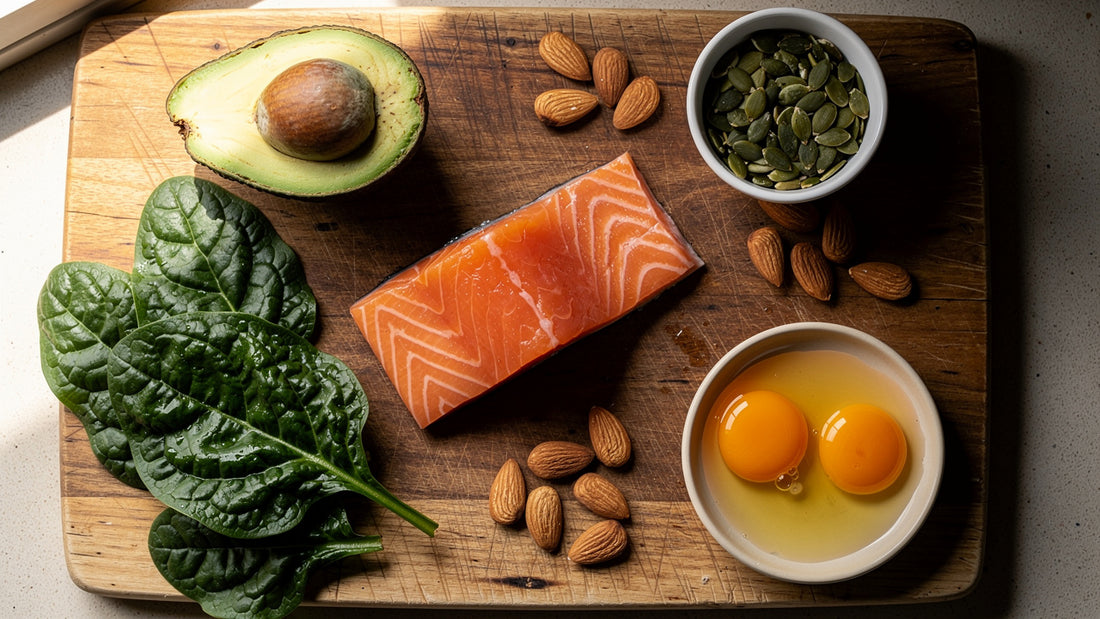
- Dark leafy greens such as spinach and Swiss chard, along with almonds, black beans, and avocado, bring magnesium that supports hormone balance and muscle function.
- Fatty fish like salmon, sardines, and mackerel, plus egg yolks and fortified dairy, offer vitamin D and healthy fats.
- Brazil nuts are famous for selenium, with just one or two often giving a full day’s worth, while tuna or sardines add more.
- Cruciferous vegetables including broccoli, cauliflower, and Brussels sprouts help the body process estrogen in a balanced way, which matters when testosterone is being converted.
- Pomegranates and green tea provide antioxidants that support blood vessel health and metabolism, both important for sexual function.
- Fermented foods such as yogurt, kefir, sauerkraut, or kimchi support healthy gut, and a healthy gut plays a role in how the body processes hormones.
Building meals around these foods supports the same hormone pathways that many supplements for testosterone try to target.
Foods and Habits To Limit or Avoid
Some eating patterns push testosterone in the wrong direction. Diets high in trans fats, excessive saturated fat, and refined sugars raise inflammation and reduced insulin sensitivity, which often lowers testosterone and increases abdominal fat. Heavily processed snacks, fast food, and sugary drinks fit into this category.
While moderate alcohol intake can be part of social life, more than about two drinks per day on a regular basis raises estrogen and can directly suppress testosterone production. There has been concern about soy foods, but moderate amounts such as a serving or two of tofu or soy milk per day appear safe for most people. The problem is more with high intakes of processed soy additives.
Herbs like licorice root can meaningfully lower testosterone if used in large quantities, and very heavy use of mint teas may also have mild anti-androgen effects. High caffeine intake beyond about 400 milligrams per day can raise cortisol in some people, which then affects testosterone. Focusing most meals on whole, minimally processed foods while trimming these habits supports the same hormonal health that supplements for testosterone aim to help.
Environmental Factors and Hidden Testosterone Disruptors
Beyond food and training, many everyday products contain chemicals that interfere with hormones. These endocrine-disrupting compounds can mimic or block natural hormones and are suspected contributors to the gradual drop in average male testosterone levels seen over recent decades. They are found in plastics, personal care products, pesticides, and household dust. Reducing exposure where possible is another way to protect testosterone without adding more pills.
Major Endocrine Disruptors To Avoid
Several common chemicals are worth watching:
- Bisphenol A (BPA): Used in many plastic bottles, food can linings, and thermal receipt paper. It can leach into food and drinks, especially when containers are heated or scratched. Reading labels for BPA-free products, storing food in glass or stainless steel, and not microwaving food in plastic helps lower contact. Handling receipts less and washing hands after touching them also reduces exposure, since BPA can absorb through the skin.
- Phthalates: Chemicals used to make plastics flexible and found in many fragranced body care items and cleaning products. They often hide under the simple word “fragrance” on ingredient lists. Choosing unscented or clearly phthalate-free shampoos, lotions, and colognes, along with avoiding heating plastic wrap over food, can cut down intake.
- Organophosphate pesticides: These show up on many fruits and vegetables and can disrupt hormone signaling. Washing all produce thoroughly and buying organic options for the highest-residue items, like strawberries and spinach, helps.
- Triclosan and parabens: These compounds appear in some antibacterial soaps, toothpastes, and cosmetics. Regular soap and water clean hands just as well without the hormonal questions that come with triclosan. Reading labels and favoring personal care products labeled paraben-free further reduces endocrine load.
None of these steps has to be perfect, but each one moves daily exposure in a better direction.
Practical Daily Habits For EDC Reduction
Simple habits taken together make a meaningful dent in hormone-disrupting chemicals:
- Use glass or stainless-steel containers for drinking water and food storage, especially for hot items.
- Install a good home water filter to reduce pesticide residues and industrial contaminants where possible.
- Vacuum and wet-mop floors often so dust, which can carry these chemicals, does not build up.
- Leave shoes at the door to keep outdoor pesticides from tracking across rugs and floors.
- Choose cleaning products with short, simple ingredient lists or make basic cleaners with vinegar and baking soda.
- Open windows for a few minutes each day to bring in fresh air.
While none of these habits directly raise testosterone the way a supplement might, they give the endocrine system less interference so hormones, including testosterone, can regulate more smoothly.
A Note On Opioid Medications and Testosterone
Prescription opioid pain medications can have a strong, often hidden effect on testosterone. Drugs such as morphine, oxycodone, hydrocodone, fentanyl, and codeine act on the brain’s pain pathways but also blunt the signals that tell the testes to produce testosterone. This suppression can begin within hours or days of starting a medication and grows stronger with higher doses and longer use.
Men on long-term opioid therapy often notice fatigue, lower mood, loss of muscle, weight gain, erectile problems, and reduced libido, yet may not connect these changes to their pain treatment. The good news is that testosterone levels usually recover, at least partly, once opioids are reduced or stopped under medical guidance, although it can take months. Anyone who must take opioids for a long period should talk with a doctor about monitoring testosterone and discussing options such as careful tapering, non-opioid pain therapies, physical therapy, or, in some cases, medically supervised TRT. Awareness is key because stacking more and more supplements to support testosterone will not correct a strongly drug-induced suppression without addressing the source.
Testosterone Support Across Different Populations
Testosterone is not just a “men’s hormone.” It affects the health of women and people across the gender spectrum. Support strategies must be shaped to each person’s biology and goals, and medical care is especially important when hormones are used directly.
Testosterone In Women’s Health
Women produce testosterone in their ovaries and adrenal glands, and much of it converts into estrogen. Even so, testosterone helps maintain bone density, lean muscle, mood, energy, and sexual desire. Levels decline gradually with age and can drop sharply after menopause or surgical removal of the ovaries. Signs that testosterone may be running low in women include low libido, ongoing fatigue, apathy, and reduced muscle tone, which can overlap with other midlife changes.
Some professional groups, including the American College of Obstetricians and Gynecologists, support the careful use of testosterone therapy for postmenopausal women with persistently low sexual desire, although there is not yet an FDA-approved product for this exact purpose. Doses for women are far lower than for men, and taking too much can lead to effects such as facial hair growth, acne, deeper voice, or clitoral enlargement.
Many of the same lifestyle levers that support testosterone in men, such as resistance training, good sleep, stress control, and smart nutrition, also help women. Any woman considering hormone therapy or strong supplements for testosterone should work with a clinician who understands female endocrine health.
Gender-Affirming Testosterone Therapy
For transgender men and some non-binary people, testosterone therapy plays a central role in gender-affirming care. Medical-grade testosterone, given as injections, gels, or patches, helps produce changes such as a deeper voice, facial and body hair growth, more muscle, changes in fat distribution, and the stopping of menstrual periods. Some shifts appear within a few months, while others build over several years.
This process always requires medical supervision, regular blood testing, and dose adjustments to reach levels that align with goals while staying in a safe range. Over-the-counter testosterone supplements or general supplements to support testosterone are not appropriate substitutes for gender-affirming hormone therapy. They cannot produce the same physical changes and may introduce extra health risks without meaningful benefit. People on gender-affirming testosterone still benefit from the same lifestyle and foundational support described in this article, including attention to body composition, sleep, stress, and diet, to keep overall health strong during hormone therapy.
The Synchronicity Health Approach Supporting Foundational Cellular Health For Hormonal Balance
Most testosterone products focus directly on hormone levels without addressing the deeper systems that control how the body creates and responds to those hormones. Synchronicity Health takes another approach by supporting cellular energy, mitochondrial function, and stress resilience first. These upstream factors influence how well the testes and other tissues can do their jobs. Synchronicity Health products are not testosterone boosters; they are designed to support cellular energy and stress resilience as one part of a wider routine.
NAD+ Support As The Cellular Energy Foundation
NAD+ is a coenzyme that sits at the core of energy production in every cell. Levels of NAD+ fall with age, much like testosterone, and that decline is linked with lower energy, slower recovery, and more oxidative stress. The cells that make hormones, including the Leydig cells in the testes, rely on healthy mitochondria and adequate NAD+ to run their machinery. When cellular energy is low, hormone production often stalls.
Synchronicity Health offers clean-label NAD+ Nasal Spray and Enhanced NMN, both designed for high bioavailability. The nasal spray is absorbed through the lining of the nose instead of being swallowed like a capsule, so some of each dose skips digestion. Supporting cellular energy is one piece of the training, sleep and recovery habits that support healthy testosterone.
Each formula is developed around published research in aging biology and is made with third-party tested ingredients. They are meant to sit alongside the training, sleep, and stress habits covered above, not to replace them.
Ashwagandha and The Stress-Testosterone Connection
As discussed earlier, chronic stress and high cortisol can quietly drain testosterone over time. A carefully standardized ashwagandha extract is the usual way to address this stress hormone imbalance. It aims to lower cortisol while also supporting mitochondrial function, helping people feel calmer and more energized without the jittery effect of stimulants. This steadier state supports more consistent training and better sleep, two major pillars of hormone balance.
Because libido weaves together biology, psychology, and relationships, products that reduce background stress and improve recovery can have a real effect on sexual desire and confidence. Whatever brand you choose, look for standardized levels of active compounds and third-party tested ingredients so each dose is predictable. Judge any stress or sleep supplement over four to twelve weeks, and remember it does not replace medical treatment when needed.
Comprehensive System Approach With Sync Stacks For Male Vitality
Instead of selling isolated ingredients with bold promises, Synchronicity Health organizes its products into complementary stacks that support entire systems. For male vitality, that could mean combining the NAD+ Nasal Spray for cellular energy with Forage, a mushroom blend that includes cordyceps, which researchers have looked at in relation to exercise performance.
These Sync Stacks are flexible, allowing people to match combinations to their current goals, whether that is sharper mental focus, stronger training days, or better long-term recovery. Across the line, the brand maintains clean-label dosing, transparent labels, and third-party tested ingredients. This system-level strategy pairs well with targeted supplements to support testosterone like vitamin D, zinc, and magnesium, because it strengthens the energy and stress systems that hormones depend on instead of focusing only on lab numbers.
Key Takeaways
Lifestyle changes have more influence on testosterone than any single capsule or powder. Improving body composition, lifting weights, adding short, intense cardio, cleaning up sleep, and getting stress under control can shift hormones in a meaningful way.
Most over-the-counter testosterone boosters do not live up to their claims. Careful reviews show that only a small fraction of ingredients in common formulas have any human data, and some even lower testosterone. Focusing on a short list of evidence-backed ingredients such as vitamin D, zinc, magnesium, and ashwagandha, especially when there is a known deficiency or stress issue, is a far better strategy.
Quality of products matters as much as ingredient choice. Supplements made with third-party tested ingredients, clear dosing, and transparent formulation help avoid contamination, hidden megadoses, and weak fillers. Brands like Synchronicity Health, which emphasize high-purity ingredients and advanced delivery methods, offer an alternative to random proprietary blends with flashy labels.
Cellular health and environmental health are part of hormone health. Supporting NAD+ levels, improving mitochondrial function, trimming exposure to endocrine disruptors, and managing medications like opioids all matter for testosterone as much as direct hormone-focused supplements. Aligning these factors, in consultation with a healthcare provider, and then adding targeted supplements to support testosterone when needed creates a strong path toward steady, long-term results.
Conclusion
Testosterone touches nearly every part of health that people care about as they age, from strength in the gym to alertness at work and presence in intimate relationships. When levels slide, life can feel a bit duller and harder, even if lab numbers are only slightly outside the youthful range. The supplement industry offers countless testosterone boosters that promise quick fixes, yet careful research shows that most are built on weak or missing data, and a few even risk making hormone balance worse.
The good news is that the body already has strong levers for natural testosterone support. Losing excess belly fat, lifting heavy things several times a week, adding some well-planned sprints, sleeping seven to nine hours, and learning to lower daily stress can create changes in hormone signaling that no pill can match. On top of that, a handful of well-studied supplements for testosterone, such as vitamin D, zinc, magnesium, and ashwagandha, can support specific weak points when used at smart doses and checked with lab work.
Synchronicity Health focuses on foundational systems like NAD+ status, mitochondrial function, and stress resilience as one part of a broader plan for hormonal health. Rather than chasing one hormone at a time, this upstream, clean-label approach focuses on the cellular energy and stress systems behind performance, resilience, and longevity. With solid information and thoughtful choices, anyone can move beyond marketing slogans, build a plan that fits their goals, and support testosterone naturally over months and years instead of hoping for an overnight fix.
Sources
- Leproult R et al. Effect of 1 week of sleep restriction on testosterone levels in young healthy men. JAMA, 2011. PubMed
- Melville GW et al. Three and six grams supplementation of d-aspartic acid in resistance trained men. Journal of the International Society of Sports Nutrition, 2015. PubMed
- Cinar V et al. Effects of magnesium supplementation on testosterone levels of athletes and sedentary subjects at rest and after exhaustion. Biological Trace Element Research, 2011. PubMed
- Clemesha CG et al. 'Testosterone boosting' supplements composition and claims are not supported by the academic literature. The World Journal of Men's Health, 2020. PubMed Central
- Smith SJ et al. Examining the effects of herbs on testosterone concentrations in men: a systematic review. Advances in Nutrition, 2021. ScienceDirect
Featured in this article
Berberine BlendBerberine paired with Ceylon cinnamon for healthy blood sugar and metabolic support.
Shop Berberine BlendThird-party tested ingredients. Vegan, non-GMO, made in the USA.
FAQs
Question 1: Do Testosterone Supplements Actually Work Or Are They a Scam?
Some testosterone supplements have good evidence behind them, while many others offer more marketing than science. Nutrients like vitamin D, zinc, and magnesium can support testosterone when there is a true deficiency, and herbs like ashwagandha can help by lowering chronic stress and cortisol. On the other hand, many products combine long lists of herbs and vitamins, and only some of those ingredients have been studied for testosterone in men. A few ingredients, such as high-dose vitamin B6 or licorice, can even lower testosterone in some contexts. The best approach is to choose a few evidence-based supplements to support testosterone, at reasonable doses, and pair them with strong lifestyle changes rather than relying on a single “quick fix” formula.
Question 2: How Long Do Supplements To Support Testosterone Take To Work?
The time frame depends on the supplement and the person. Correcting a clear vitamin D or zinc deficiency might begin to affect energy and libido within several weeks, while full changes in hormone levels can take a few months. Herbs such as ashwagandha often need 8 to 12 weeks of daily use before their full benefit on stress and testosterone shows up. Lifestyle changes, like losing belly fat and improving sleep, also work over months, not days. Thinking in terms of at least three to six months for a full program that includes both supplements to support testosterone and foundational habits helps set realistic expectations.
Question 3: Can Women Use Supplements To Support Testosterone?
Women also produce and need testosterone, so in some cases, supporting this hormone can help with libido, mood, and energy. However, women are far more sensitive to testosterone changes, and doses that are safe for men can be far too high for them. For most women, focusing on strength training, good sleep, stress control, and a nutrient-dense diet is the first step. Some may benefit from low-dose vitamin D, zinc, or magnesium if lab tests show deficiencies, but stronger supplements for testosterone or hormone therapy should always be guided by a clinician who understands female endocrinology. This reduces the risk of unwanted effects such as acne, hair changes, or voice changes.
Question 4: Is It Safe To Combine Supplements To Support Testosterone With TRT?
Combining over-the-counter supplements with prescription testosterone replacement therapy (TRT) is common, but it should never be done without a doctor’s input. Some supplements, like moderate doses of vitamin D or magnesium, are generally safe and may support overall health while on TRT. Others, especially hormonal agents like DHEA or high-dose herbal extracts, can push hormone levels higher than intended or interfere with lab monitoring. Too many overlapping testosterone boosters can raise red blood cell counts, blood pressure, or cholesterol issues. If someone is on TRT, the best plan is to bring any supplements for testosterone to their clinician and decide together what makes sense and what should be avoided.
Question 5: Do I Need Lab Tests Before Taking Supplements To Support Testosterone?
Lab testing is one of the smartest steps before starting any serious hormone-focused protocol.
You can’t manage what you don’t measure.
Measuring total and free testosterone, along with vitamin D, zinc, magnesium, and possibly DHEA-S, provides a baseline and shows where support is actually needed. This avoids guessing and keeps people from taking supplements for testosterone that they do not need or that might push levels too high. Follow-up testing after a few months also shows whether the plan is working and allows for fine-tuning. While basic lifestyle upgrades can start without labs, pairing those changes with proper testing gives a clearer, safer path forward.


Leave a comment
All comments are moderated before being published.
This site is protected by hCaptcha and the hCaptcha Privacy Policy and Terms of Service apply.