
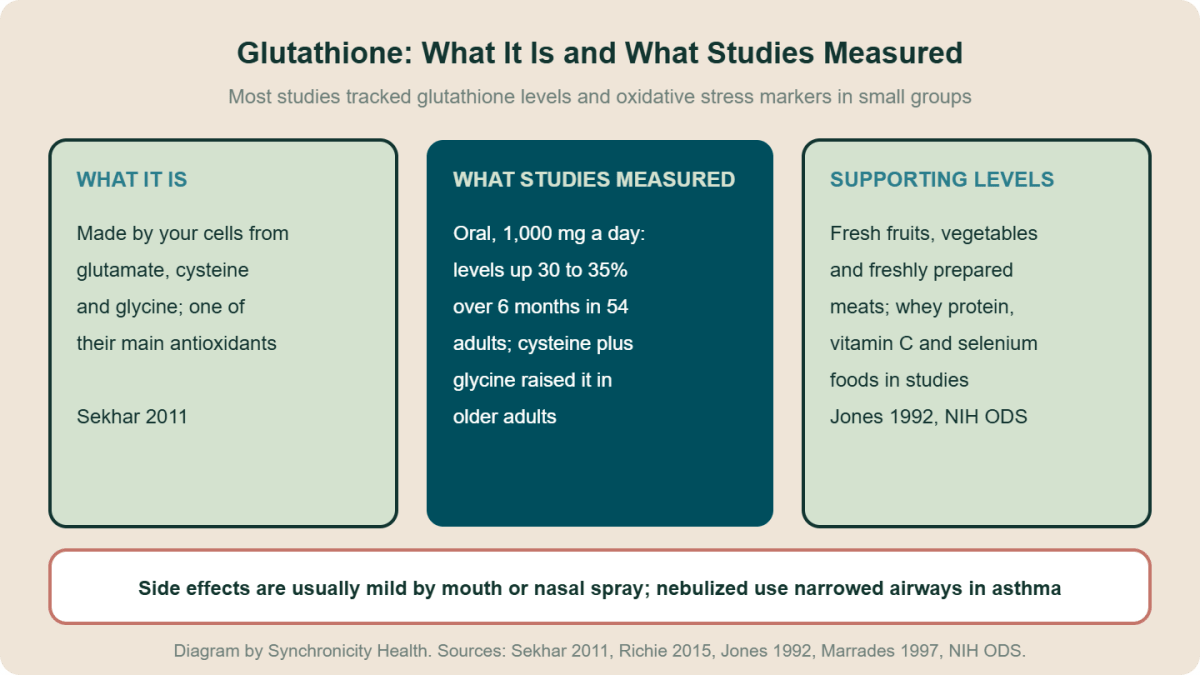
Glutathione is a small molecule your cells make from three amino acids, glutamate, cysteine and glycine, and use as one of their main antioxidants. The benefits research has actually measured center on that antioxidant role: studies have tracked how foods, building blocks, capsules, liposomal liquids and nasal sprays change glutathione levels and oxidative stress markers, mostly in small groups of adults.
This pillar guide links to our deeper guide on each route. It is educational, not medical advice.
Key Takeaways
- Glutathione is built from glutamate, cysteine and glycine, and cells use it as one of their main antioxidants (Sekhar et al., 2011).
- Oral glutathione raised blood and cell levels 30 to 35% over 6 months in 54 adults; a 4 week trial in 40 volunteers found no change.
- A liposomal form raised blood glutathione within two weeks in a 12 person pilot, and a single nasal dose raised brain glutathione above baseline in 15 adults.
- Side effects are usually mild by mouth or as a nasal spray; breathing it in from a nebulizer narrowed airways in people with mild asthma.

Featured in this article
Glutathione Nasal SpraySupports antioxidant defense and the body's own clearance pathways.
Shop Glutathione Nasal SprayThird-party tested ingredients. Vegan, non-GMO, made in the USA.
What Is Glutathione?
Glutathione is a tripeptide, a short chain of three amino acids, made from glutamate, cysteine and glycine (Whillier et al., 2011). Your cells assemble it themselves, and they use it as one of their main antioxidants (Sekhar et al., 2011; Minich and Brown, 2019).
Of the three building blocks, cysteine is the key one, and glycine can run short with age (Sekhar et al., 2011). That is why so much research looks at supplying the building blocks rather than glutathione itself. Our guide to NAC vs glutathione explains the difference between a precursor and the finished molecule. Looking for glutamine instead? See glutamine vs glutathione. Ergothioneine is another antioxidant, one the body gets only from food; our guide to ergothioneine vs glutathione compares the two.
What Does Glutathione Do in the Body?
- Antioxidant defense. Glutathione helps balance reactive oxygen molecules, and an imbalance is called oxidative stress. In older adults, two weeks of cysteine plus glycine lowered markers of oxidative stress (Sekhar et al., 2011). Our glycine benefits guide covers that study.
- Enzyme partner. Selenium is part of the glutathione peroxidase enzymes (NIH ODS: Selenium).
- Immune cells. Several studies below measured glutathione inside immune cells. In a liposomal pilot, natural killer cell activity rose up to 400% by two weeks (Sinha et al., 2018).
- The brain. In the brain, glutathione is the main defense against oxidative stress, and it also helps protect mitochondria, the parts of the cell that make energy (see cellular energy and mitochondria). In 276 healthy adults aged 20 to 70, glutathione in one brain area was lower in older participants, and higher glutathione in two brain areas went with better visuospatial memory (Hu et al., 2024). These are associations, which do not show cause and effect; our glutathione and brain fog guide goes further.
Levels also differ with age: in a study of 8 older and 8 younger adults, the older group had about half the red blood cell glutathione and higher markers of oxidative damage (Sekhar et al., 2011). Genetic differences also change how much each person responds to the foods and nutrients that influence it (Minich and Brown, 2019).
What Research Has Measured, Route by Route
Each study below enrolled a specific group, so the results may not apply to others.
| Route | Study and who took part | What was measured and found |
|---|---|---|
| Oral capsules | Richie et al., 2015: 54 non-smoking adults, 250 or 1,000 mg a day or placebo for 6 months | At 1,000 mg, glutathione rose 30 to 35% in red blood cells, plasma and immune cells |
| Oral capsules | Allen and Bradley, 2011: 40 healthy volunteers, 500 mg twice a day for 4 weeks | No change in oxidative stress markers or red blood cell glutathione |
| Liposomal | Sinha et al., 2018: 12 healthy adults, 500 or 1,000 mg a day for one month | About 40% higher in whole blood and 100% in immune cells by two weeks; oxidative stress markers fell |
| Building blocks | Sekhar et al., 2011: 8 older and 8 younger adults, cysteine plus glycine for 2 weeks | Older adults' glutathione rose about 95%; oxidative stress and damage markers fell to the younger group's levels |
| Building blocks | Kumar et al., 2023: 24 older adults, glycine plus NAC or placebo for 16 weeks | Low glutathione improved |
| Nasal spray | Mischley et al., 2016: 15 adults, one 200 mg nasal dose | Brain glutathione rose above baseline and stayed there for at least the hour scanned |
| IV | Davids et al., 2016: review of IV trials, mostly a few doses or 4 to 12 weeks | Most trials reported no or minimal side effects; no study had looked at long-term use |
Oral capsules
In the 6 month trial, levels rose with dose and time and returned to where they started a month after stopping (Richie et al., 2015). The shorter trial found no change at 4 weeks (Allen and Bradley, 2011), so dose and time both appear to matter. Our guide to the best glutathione supplement by form compares every format.
Liposomal glutathione
The pilot also found rises of 25% in red blood cells and 28% in plasma, with no difference between the two doses (Sinha et al., 2018).
Building blocks: NAC, glycine and cysteine
In an open-label pilot, 8 older adults took glycine plus NAC for 24 weeks; their low red blood cell glutathione returned to young adult levels, several cognitive test scores improved, and the benefits declined 12 weeks after stopping (Kumar et al., 2021). The 16 week placebo-controlled trial confirmed the rise in glutathione but did not include thinking tests (Kumar et al., 2023). Both enrolled older adults, so the results may not apply to younger people or to glycine taken alone.
Nasal spray
Beyond the brain imaging study (Mischley et al., 2016), a survey of 70 people who had used nasal glutathione found 79% reported an overall positive experience and 12% reported side effects in a survey, not a controlled trial (Mischley et al., 2013). See glutathione nasal spray vs oral glutathione for how the formats differ in practice.
IV and injections
In 2026 the FDA reported at least 30 patients with adverse events after IV glutathione made with a supplement grade ingredient, including fever, chills, dizziness and signs of shock; some were hospitalized (FDA, 2026). Our glutathione injections guide covers what to ask first.
Glutathione and Skin: What Studies Measured
Small oral trials reported modest changes in skin melanin, and long-term safety for this use has not been established (Arjinpathana and Asawanonda, 2012). The Philippine FDA warned against IV glutathione for skin lightening because of reported adverse effects (Sonthalia et al., 2016). We make no skin tone claims for any glutathione product.
How to Support Your Glutathione Levels
Glutathione content varies by food group and processing (Jones et al., 1992):
| Food group | Glutathione content |
|---|---|
| Fresh fruits and vegetables | Moderate to high |
| Freshly prepared meats | Relatively high |
| Frozen foods | Similar to fresh |
| Dairy, cereals and breads | Generally low |
| Other processed and preserved foods | Much lower |
- Whey protein. In an open-label study of 31 healthy adults, 45 g a day of pressurized whey protein for two weeks raised immune cell glutathione by about 24%, while 15 g a day did not change it (Zavorsky et al., 2007).
- Vitamin C. In a double-blind study in healthy adults, 500 mg a day raised red blood cell glutathione by nearly 50% from baseline, and 2,000 mg a day did no better (Johnston et al., 1993).
- Selenium. Brazil nuts, seafood, meat, poultry and organ meats are the richest sources. Adults need 55 mcg a day, one Brazil nut contains 68 to 91 mcg, and the adult upper limit is 400 mcg a day, so a single nut covers more than a day's need (NIH ODS: Selenium).
The building block studies above are the other route researchers have tested. Our glutathione foods guide turns this into a shopping list. For the trials that gave glycine with NAC, see GlyNAC: NAC and glycine together.
Side Effects and Who Should Check With a Clinician
Side effects are usually mild when glutathione is taken by mouth or as a nasal spray. In 60 healthy medical students, 500 mg a day for 4 weeks was very well tolerated (Arjinpathana and Asawanonda, 2012). In a 3 month trial in 30 people with Parkinson's disease, adverse events with 300 or 600 mg a day as a nasal spray did not differ meaningfully from a saline spray (Mischley et al., 2015). In a second trial in 45 people with Parkinson's disease, one high dose participant developed cardiomyopathy, and the abstract does not say whether glutathione caused it (Mischley et al., 2017).
The route matters. In eight people with mild asthma, 600 mg breathed in from a nebulizer caused major airway narrowing, cough or breathlessness (Marrades et al., 1997).
Safety note: check with a clinician before using glutathione in any form if you are pregnant or breastfeeding (the trials above did not include them), have asthma or another breathing condition, take prescription medication or are under care for a medical condition, are considering IV or injected glutathione (ask how the product was made), or have had an allergic reaction to glutathione or any ingredient in a product. Stop and get medical help if you notice wheezing, swelling, a rash, a high fever or feel faint. Our full glutathione side effects guide goes route by route.
Where Our Glutathione Nasal Spray Fits
Our Glutathione Nasal Spray contains reduced glutathione (GSH) with alkaline water as the other ingredient, and nothing else is added. Glutathione nasal spray delivers reduced glutathione directly to the nasal mucosa. It comes in three strengths, Regular (35 mg), Extra (100 mg) and Maximum (170 mg) of glutathione per serving, with 30 servings in every bottle.
- How to use it: follow the product page: two sprays, one in each nostril, is one serving, used once daily. Breathe in gently while you spray, then tilt your head back and wait at least 60 seconds before blowing your nose.
- Who should check first: follow the label and check with your healthcare provider if you are pregnant, nursing or taking medication.
For a daily routine, read our guide to using glutathione nasal spray daily, and if you are weighing it against NAD+, see NAD vs glutathione. You can browse every ingredient guide on our Learn page.
Our immunity collection pairs Forage mushroom capsules for immune support with Glutathione and NAC Nasal Sprays for antioxidant support. To get all three in one daily routine, see the Immunity Stack.
Featured in this article
Glutathione Nasal SpraySupports antioxidant defense and the body's own clearance pathways.
Shop Glutathione Nasal SprayThird-party tested ingredients. Vegan, non-GMO, made in the USA.
Frequently Asked Questions
What does glutathione do?
Cells use glutathione as one of their main antioxidants, helping keep reactive oxygen molecules in balance (Sekhar et al., 2011). Selenium is part of the glutathione peroxidase enzymes.
What are the benefits of glutathione according to research?
Studies mostly measure glutathione levels and oxidative stress markers. Oral, liposomal and building block approaches have raised measured levels in specific groups, such as 54 adults on oral glutathione (Richie et al., 2015) and older adults on glycine plus NAC (Kumar et al., 2023).
Is NAC or glutathione better?
They work at different steps. NAC supplies cysteine, the building block your body is most often short of when making glutathione, while glutathione is the finished molecule. Our NAC vs glutathione guide covers both.
Which foods support glutathione?
Fresh fruits and vegetables and freshly prepared meats contain the most, frozen foods keep similar amounts, and dairy, cereals and breads contain little. Whey protein, vitamin C and selenium foods such as Brazil nuts also appear in the research.
Does glutathione change skin?
Small oral trials reported modest changes in skin melanin, and long-term safety for that use is not established. Regulators have warned against IV glutathione for skin lightening (Sonthalia et al., 2016).
Is glutathione safe to take?
By mouth or as a nasal spray, side effects are usually mild in short trials. Nebulizer use narrowed airways in people with mild asthma, and IV products have been linked to reactions. See the safety note above.
How do you use the Glutathione Nasal Spray?
Follow the product page: two sprays, one in each nostril, is one serving, used once daily. Each bottle holds 30 servings and lasts 30 days. See the Glutathione Nasal Spray page for the three strengths.
Sources
- Sekhar RV, et al. Am J Clin Nutr. 2011. PubMed 21795440
- Minich DM, Brown BI. 2019. PubMed 31484368
- Whillier et al. 2011. PubMed 21749648
- Richie JP, et al. 2015. PubMed 24791752
- Allen J, Bradley RD. 2011. PubMed 21875351
- Sinha et al. 2018. PubMed 28853742
- Kumar et al. 2021. PubMed 33783984
- Kumar P, et al. 2023. PubMed 35975308
- Hu et al. 2024. PubMed 38701994
- Mischley et al. 2016. PubMed 28725693
- Mischley et al. 2013. PubMed 23240940
- Mischley LK, et al. 2015. PubMed 26230671
- Mischley LK, et al. 2017. PubMed 28436395
- Davids LM, et al. 2016. PubMed 27499402
- U.S. Food and Drug Administration. Notice to compounders on supplement grade glutathione injectables. August 27, 2026. FDA
- Arjinpathana N, Asawanonda P. 2012. PubMed 20524875
- Sonthalia S, et al. 2016. PubMed 27088927
- Marrades RM, et al. 1997. PubMed 9279219
- Jones DP, et al. 1992. PubMed 1574445
- Zavorsky GS, et al. 2007. PubMed 17710587
- Johnston CS, et al. 1993. PubMed 8317379
- NIH Office of Dietary Supplements. Selenium: Fact Sheet for Health Professionals. NIH ODS
These statements have not been evaluated by the Food and Drug Administration. This content is for education and is not medical advice. Our products are not intended to diagnose, treat, cure or prevent any disease. Talk with a healthcare provider before starting a new supplement if you are pregnant, breastfeeding or taking medication.


Leave a comment
All comments are moderated before being published.
This site is protected by hCaptcha and the hCaptcha Privacy Policy and Terms of Service apply.